Full Text (PDF)
Journal of Microbiology and Related Research 9(1):p 9-16, January-June 2023. | DOI: 10.21088/jmrr.2395.6623.9123.1
Original Article
Isolation and Characterization of Pseudomonas Aeruginosa Bacteriophages
Chand Pasha, Jangili Pavan Kumar, Shaik Muzammil Pasha
Author Information
Licence:
Attribution-Non-commercial 4.0 International (CC BY-NC 4.0)This license enables reusers to distribute, remix, adapt, and build upon the material in any medium or format for noncommercial purposes only, and only so long as attribution is given to the creator
Journal of Microbiology and Related Research 9(1):p 9-16, January-June 2023. | DOI: 10.21088/jmrr.2395.6623.9123.1
How Cite This Article:
Kumar JP, Pasha SM, Sudhan YG, et al. Isolation and characterization of Pseudomonas aeruginosa bacteriophages. J Microbiol Relat Res. 2023;9(1):9–16.Timeline
Received : December 03, 2022
Accepted : December 23, 2022
Published : January 30, 2023
Abstract
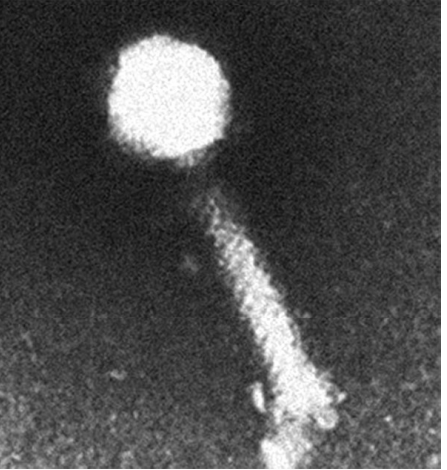
Pseudomonas aeruginosa is a notorious, opportunistic pathogen and has ability of biofilm formation making it possible to survive in extreme conditions. As antibiotics and disinfectants have shown limited activity, P. aeruginosa phage based treatments are proposed as a promising way for biofilm control. P. aeruginosa isolates and PB1 like phage particles were isolated from sewage samples collected from sewage treatment plants. PB1 like phage was featured with large burst size of 151PFU/cell, host inactivation in 6 hrs, 80% of host range and had icosahedral head with a diameter of 85X80nm and long non contractile tail of 135nm. PB1 like phages are suitable for lysis of broad range MDR Pseudomonas biofilms, which could be used in phage therapy.
References
- 1. Azizian R, Nasser A, Askari H, Kalani MT, Sadeghifard N, Pakzad I, et al. Sewage as a rich source of phage study against Pseudomonas aeruginosa PAO. Biologicals. 2015;43(4):238–41.
- 2. Bassetti M, Righi E, Vena A, Graziano E, Russo A, Peghin M. Antimicrobial resistance in the next 30 years, humankind, bugs, and drugs: A visionary approach. Intensive Care Med. 2017;43(10):1464–75.
- 3. Brzozowski M, Krukowska Z, Galant K, Jursa-Kulesza J, Kosik-Bogacka D. Genotypic characterisation and antimicrobial resistance of Pseudomonas aeruginosa strains isolated from patients of different hospitals and medical centres in Poland. BMC Infect Dis. 2020;20(1):693.
- 4. Cao Z, Zhang J, Niu YD, Cui N, Ma Y, Cao F, et al. Isolation and characterization of a “phiKMV-like” bacteriophage and its therapeutic effect on mink hemorrhagic pneumonia. PLoS One. 2015;10(1):e0116571.
- 5. Ciofu O, Tolker-Nielsen T. Tolerance and resistance of Pseudomonas aeruginosa biofilms to antimicrobial agents: How P. aeruginosa can escape antibiotics. Front Microbiol. 2019;10:913.
- 6. Harper DR, Enright MC. Bacteriophages for the treatment of Pseudomonas aeruginosa infections. J Appl Microbiol. 2011;111(1):1–7.
- 7. Department of Biotechnology. Indian priority pathogen list jointly developed by DBT and WHO India office [Internet]. New Delhi: Government of India; 2021 [cited 2026 Feb 9].
- 8. De Oliveira DMP, Forde BM, Kidd TJ, Harris PN, Schembri MA, Beatson SA, et al. Antimicrobial resistance in ESKAPE pathogens. Clin Microbiol Rev. 2020;33(3):e00181-19.
- 9. Diggle SP, Whiteley M. Microbe Profile: Pseudomonas aeruginosa: Opportunistic pathogen and lab rat. Microbiology (Reading). 2020;166(1):30–3.
- 10. Driscoll JA, Brody SL, Kollef MH. The epidemiology, pathogenesis and treatment of Pseudomonas aeruginosa infections. Drugs. 2007;67(3):351–68.
- 11. Duplessis C, Biswas B, Haniffa R, Eldridge M, Henry M, Quinones J, et al. Refractory Pseudomonas bacteremia in a 2-year-old sterilized by bacteriophage therapy. J Pediatric Infect Dis Soc. 2018;7(3):253–6.
- 12. El Didamony G, Askora A, Shehata AA. Isolation and characterization of T7-like lytic bacteriophages infecting multidrug resistant Pseudomonas aeruginosa isolated from Egypt. Curr Microbiol. 2015;70(6):786–91.
- 13. El Haddad L, Harb CP, Gebara MA, Stibich MA, Chemaly RF. A systematic and critical review of bacteriophage therapy against multidrug-resistant ESKAPE organisms in humans. Clin Infect Dis. 2019;69(1):167–78.
- 14. Marei EM. Isolation and characterization of Pseudomonas aeruginosa and its virulent bacteriophages. Pak J Biol Sci. 2020;23(4):491–500.
- 15. Essoh C, Latino L, Midoux C, Blouin Y, Loukou G, Nguetta SP, et al. Investigation of a large collection of Pseudomonas aeruginosa bacteriophages collected from a single environmental source in Abidjan, Cote d’Ivoire. PLoS One. 2015;10(6):e0130548.
- 16. Fu W, Forster T, Mayer O, Curtin JJ, Lehman SM, Morales S. Bacteriophage cocktail for the prevention of biofilm formation by Pseudomonas aeruginosa on catheters in an in vitro model system. Antimicrob Agents Chemother. 2010;54(1):397–404.
- 17. Hall-Stoodley L, Costerton JW, Stoodley P. Bacterial biofilms: From the natural environment to infectious diseases. Nat Rev Microbiol. 2004;2(2):95–108.
- 18. Hancock RE, Speert DP. Antibiotic resistance in Pseudomonas aeruginosa: Mechanisms and impact on treatment. Drug Resist Updat. 2000;3(4):247–55.
- 19. Harper DR, Parracho HM, Walker J, Sharp R, Hughes G, Werthén M, et al. Bacteriophages and biofilms. Antibiotics (Basel). 2014;3(3):270–84.
- 20. Harrison JJ, Turner RJ, Joo DA, Stan MA, Chan CS, Allan ND, et al. Ammonium cations exert synergistic bactericidal and antibiofilm activity against Pseudomonas aeruginosa. Antimicrob Agents Chemother. 2008;52(8):2870–81.
- 21. Hosu MC, Vasaikar S, Okuthe GE, Apalata T. Molecular detection of antibiotic-resistant genes in Pseudomonas aeruginosa from nonclinical environment: Public health implications in Mthatha, Eastern Cape province, South Africa. Int J Microbiol. 2021;2021:8861074.
- 22. Jamal M, Andleeb S, Jalil F, Imran M, Nawaz MA, Hussain T, et al. Isolation and characterization of a bacteriophage and its utilization against multidrug resistant Pseudomonas aeruginosa-2995. Life Sci. 2017;190:21–8.
- 23. Jurczak-Kurek A, Gąsior T, Nejman-Faleńczyk B, Bloch S, Dydecka A, Topka G, et al. Biodiversity of bacteriophages: Morphological and biological properties of a large group of phages isolated from urban sewage. Sci Rep. 2016;6:34338.
- 24. Kumari S, Harjai K, Chhibber S. Characterization of Pseudomonas aeruginosa PAO specific bacteriophages isolated from sewage samples. Am J Biomed Sci. 2009;1:91–102.
- 25. Marza JA, Soothill JS, Boydell P, Collyns TA. Multiplication of therapeutically administered bacteriophages in Pseudomonas aeruginosa infected patients. Burns. 2006;32(5):644–6.
- 26. Mulani MS, Kamble EE, Kumkar SN, Tawre MS, Pardesi KR. Emerging strategies to combat ESKAPE pathogens in the era of antimicrobial resistance: A review. Front Microbiol. 2019;10:539.
Data Sharing Statement
There are no additional data available. All raw data and code are available upon request.
Funding
This research received no funding.
Author Contributions
Whether all authors contributed significantly to the work and approve its publication.
Ethics Declaration
This article does not involve any human or animal subjects, and therefore does not require ethics approval.
Acknowledgements
We would like to express our gratitude to the patients, their families, and all those who have contributed to this study.
Conflicts of Interest
The authors report no conflicts of interest in this work.
About this article

Cite this article
Kumar JP, Pasha SM, Sudhan YG, et al. Isolation and characterization of Pseudomonas aeruginosa bacteriophages. J Microbiol Relat Res. 2023;9(1):9–16.
Licence:
Attribution-Non-commercial 4.0 International (CC BY-NC 4.0)This license enables reusers to distribute, remix, adapt, and build upon the material in any medium or format for noncommercial purposes only, and only so long as attribution is given to the creator
| Received | Accepted | Published |
|---|---|---|
| December 03, 2022 | December 23, 2022 | January 30, 2023 |
DOI: 10.21088/jmrr.2395.6623.9123.1
Keywords
Pseudomonas aeruginosaBacteriophagesPB1Cell lysisBiofilmSearch for Similar Articles
Similar Articles
- Vitiligo: A Comprehensive Review
- Seaweed-Derived Bioplastics: A Sustainable Alternative to Petroleum Based Plasti...
- Antibiogram of Bacterial Isolates from Critical Care Patients in Sharda Hospital...
- Prevalence and Antimicrobial Resistance Patterns of Staphylococcus aureus Isolat...
- Bacteriology of Burn Wound Infections and their Antibiogram
Article Level Metrics
Last UpdatedMonday 22 June 2026, 07:44:29 (IST)
505
Accesses
3
77
00
Citations
NA
NA
NA
Download citation
Article Keywords
Keyword Highlighting
Highlight selected keywords in the article text.
Timeline
| Received | December 03, 2022 |
| Accepted | December 23, 2022 |
| Published | January 30, 2023 |
licence
Attribution-Non-commercial 4.0 International (CC BY-NC 4.0)
This license enables reusers to distribute, remix, adapt, and build upon the material in any medium or format for noncommercial purposes only, and only so long as attribution is given to the creator