Full Text (PDF)
Indian Journal of Obstetrics and Gynecology 10(2):p 71-83, April – June 2022. | DOI: https://doi.org/10.21088/ijog.2321.1636.10222.8
Original Article
Is This A Fact? Hypertensive Disorder in 1st Pregnancy Recurs in 2nd Pregnancy
Nousheen Majeed, Asma Mufti, Samiya Mufti, Mohammad Muzaffar Jan
Author Information
Licence:
Attribution-Non-commercial 4.0 International (CC BY-NC 4.0)This license
enables reusers to distribute, remix, adapt, and build upon the material in any
medium or format for noncommercial purposes only, and only so long as
attribution is given to the creator.
Indian Journal of Obstetrics and Gynecology 10(2):p 71-83, April – June 2022. | DOI: https://doi.org/10.21088/ijog.2321.1636.10222.8
How Cite This Article:
Nousheen Majeed, Asma Mufti, Samiya Mufti, et. al./Is This A Fact? Hypertensive Disorder in 1st Pregnancy Recurs in 2nd Pregnancy/Indian J Obstet Gynecol. 2022;10(2):71–83.Timeline
Received : September 28, 2021
Accepted : November 12, 2021
Published : June 30, 2022
Abstract
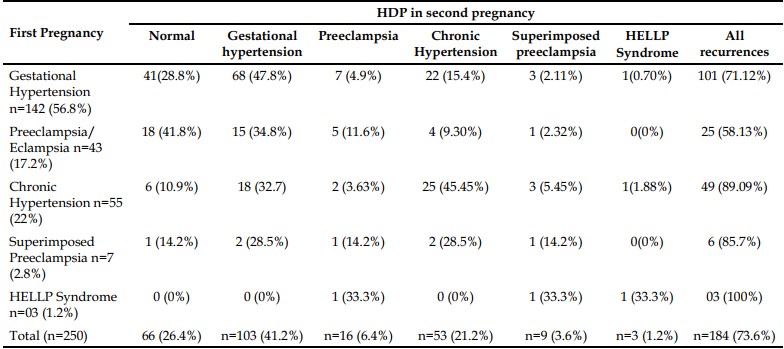
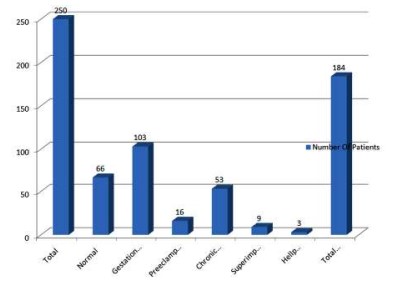
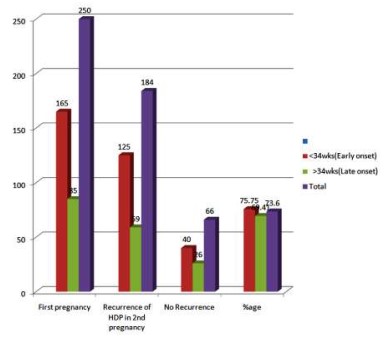
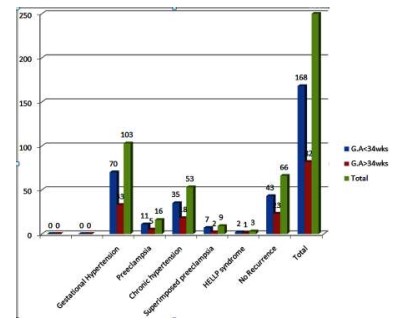
Background: Hypertensive disorder of pregnancy (HDP) entails a risk of recurrence in a subsequent pregnancy. Several risk factors have been associated with recurrence of hypertensive disorder in pregnancy. There is also evidence that the different clinical forms of HDP may be related to each other. Therefore, in HDP studies, it may be preferable to include all clinical forms of the hypertensive disorder not only in the 1st pregnancy, but also in later pregnancies. Aim: To study recurrence of Hypertensive Disorder of Pregnancy in 2nd Pregnancy with regard to the type and time of onset of hypertensive disorder in 1st pregnancy. Methodology: The study was conducted at department of obstetrics & gynecology Lalla Ded Hospital GMC Srinagar. 250 patients with history and maternity records of hypertensive disorder of pregnancy (HDP) in first pregnancy were followed on OPD basis till final outcome of second pregnancy to observe the recurrence of hypertensive disorder in second pregnancy with regard to type of hypertensive disorder and time of onset of hypertensive disorder in first pregnancy. Paired t-test & Chi-square test was used. Recurrence rate of HDP was reported as percentage along with its 95% confidence interval. Two sided p-values were reported and a p-value of <0.05 was considered statistically significant. Results: Out of 250 patients, 142 (56.8%) had gestational hypertension in 1st pregnancy with recurrence of different types of HDP of 101(71.12%) in present pregnancy. 43(17.2%) patients having preeclampsia/eclampsia in 1st pregnancy had recurrence of 25(58.13%) in present pregnancy. 55(22%) patients having Chronic hypertension in 1st pregnancy had recurrence of 49(89.09%) in present pregnancy.7(2.8%) patients diagnosed as having superimposed preeclampsia in 1st pregnancy had recurrence of 6(85.7%). Out of 3(1.2%) patients diagnosed as having HELLP syndrome in 1st pregnancy, the recurrence was 3(100%). Women who had HDP in their 1st pregnancy had a high risk of repeated HDP in the 2nd pregnancy, but not necessarily the same type. This risk was higher if the onset of hypertension in the 1st pregnancy was early (<34 weeks) of gestation and was associated independently with higher age of pregnant women (> 30 years), women belonging to urban areas and family history of HDP. Conclusion: Women who had HDP in their 1st pregnancy had a high risk of repeated HDP in the 2nd pregnancy, but not necessarily the same type. This risk was higher if the onset of hypertension in the 1st pregnancy was early (<34 weeks) of gestation and was associated independently with higher age of pregnant women (> 30 years), women belonging to urban areas, women with family history of HDP and also associated with higher cases of preterm and caesarean section deliveries.
References
- 1. Martin JN Jr,OwensMy,Keiser SD,etAl:Standardised Mississippi protocol treatment of 190 patients with HELLP syndrome:slowing disease progression and preventing new major maternal morbidity. Hypertense pregnancy31(1):79,2012.
- 2. Khan Ks. Wojdyla d, Say L, et al:WHO analysis of cause of maternal death:a systemic review. Lancer 367:1066,2006. References
- 3. Campbell DM, MacGillivray I, Carr-Hill R. Pre-eclampsia in second pregnancy. BJOG 1985;92:131-40.
- 4. Hargood JL, Brown MA. Pregnancy-induced hypertension: recurrence rate in second pregnancies. Med J Aust 1991; 154:376-7.
- 5. Zhang J, Troendle JF, Levine RJ. Risks of hypertensive disorders in the second pregnancy. Paediatr Perinat Epidemiol 2001;15:226-31.
- 6. Trogstad L, Skrondal A, Stoltenberg C, Magnus P, Nesheim BI, Eskild A. Recurrence risk of preeclampsia in twin and singleton pregnancies. Am J Med Genet A 2004;126:41-5.
- 7. Arngrimsson R, Bjornsson S, Geirsson RT, Bjornsson H, Walker J, Snaedal G. Genetic and familial predisposition to eclampsia and pre-eclampsia in a defined population. BJOG 1990;97:762-9.
- 8. Arngrimsson R, Sigurardottir S, Frigge ML, Bjarnadottir RI, Jonsson T, Stefansson H, et al. A genome-wide scan reveals a maternal susceptibility locus for pre-eclampsia on chromosome 2p13. Hum Mol Genet 1999; 8:1799-805.
- 9. Barden AE, Beilin LJ, Ritchie J, Walters BN, Graham D, Michael CA. Is proteinuric pre eclampsia a different disease in primigravida and multigravida? Clin Sci (Lond) 1999;97:475-83.
- 10. Chesley LC. History and epidemiology of preeclampsia- eclampsia. Clin Obstet Gynecol 1984;27:801-20.
- 11. Livingston JC, Sibai BM. Chronic hypertension in pregnancy. Obstet Gynecol Clin North Am 2001;28:447-63.
- 12. Ros HS, Cnattingius S, Lipworth L. Comparison of risk factors for preeclampsia and gestational hypertension in a population-based cohort study. Am J Epidemiol 1998;147:1062-70.
- 13. Roes EM, Sieben R, Raijmakers MT. Severe preeclampsia is associated with a positive family history of hypertension and hypercholesterolemia. Hypertens Pregnancy 2005; 24: 259.
- 14. Van Rijn BB, Hoeks LB, Bots ML Franx A. Outcomes of subsequent pregnancy after first pregnancy with early-onset preeclampsia. Am J Obstet Gynecol 2006; 195: 723-8.
- 15. Hjartardottir S, Leifsson BG, Geirsson, Steinth Orsdottir V. Recurrence of hypertensive disorder in second pregnancy. Am J Obstet Gynecol 2006; 194: 916-20.
- 16. Rasmussen S,Irgens LM, Albrechtsen S, Dalaker. Predicting pre-eclampsia in the second pregnancy from low birth weight in the first pregnancy. Obstet Gynecol. 2000 Nov; 96 (5Pt1):696-700.
- 17. Duckitt K, Harrington D. Risk factors for preeclampsia at antenatal booking: systematic review of controlled studies. BMJ. 2005; 330: 565.
- 18. Chesley LC.History and epidemiology of preeclampsia eclampsia.Clin Obstet Gy-necoL 1984;27:801-820.
- 19. Rabinowitz M, Bellinger D,LevitonA, Needleman H, Schoenbaum S. Pregnancy hypertension, blood pressure during labor, and blood lead levels.Hypertension.1987;10:447-451.
- 20. Eskenazi B,Bracken MB, Holford TR,Grady J.Exposure to organic solvents and hypertensive disorders of pregnancy.AmJ Ind Med 1988;14:177-188.
- 21. Marcoux S,Brisson J,Fabia J.The effect of leisure time physical activity on the risk of pre-eclampsia and gestational hyperten-sion.J Epidemiol Community Health.1989;43:147-152.
- 22. Campbell DM,MacGillivray I.Pre-ec-lampsia in second pregnancy.BrJ Obstet Gynecol 1985;92:131-140.
- 23. Belizan JM,Villar J,Repke J.The relation-ship between calcium intak and pregnancy-induced hypertension:up-to-date evidence.Am J Obstet GynecoL 1988;158:898-902.
- 24. Kionoff-Cohen H,Savitz DA,Cefalo RC,McCannMF.An Epidemiologic study of preeclampsia.JAMA.1989;262:2143-2147.
- 25. Saftlas AF,Olson DR,Franks AL, Atrash HK,Pokras R.Epidemiologyofpreeclamp-sia and eclampsia in the United States,1979-1986. AmJObstet GyncoL 1990,163:460-5.
- 26. Report of the National High Blood Pressure Education Program Working Group on High Blood Pressure in Pregnancy. Am J Obstet Gynecol. 07;183(1):S1–S22.
- 27. Report of the National High Blood Pressure Education Program Working Group on High Blood Pressure in Pregnancy. Am J Obstet Gynecol 2000;183:S1–22.
- 28. Barton JR, Sibai BM. Diagnosis and management of hemolysis, elevated liver enzymes, and low platelets syndrome. Clin Perinatol 2004;31:807–33, vii.
- 29. Brown CE, Cunningham FG, Pritchard JA. Convulsions in hypertensive, proteinuric primiparas more than 24 hours after delivery. Eclampsia or some other cause? J Reprod Med 1987;32:499–503.
- 30. Sibai BM. Diagnosis, prevention, and management of eclampsia. Obstet Gynecol. 2005;105(2):402–410.
- 31. Roberts JM, Pearson G, Cutler J, Lindheimer M. Summary of the NHLBI working group on research on hypertension during pregnancy. Hypertension.2003;41: 437–445.
- 32. WHO, 2004. Bethesda, MD. Global Burden of Disease for the Year 2001 by World Bank Region, for Use in Disease Control Priorities in Developing Countries, National Institutes of Health: WHO. Make every mother and child count. World Health Report, 2005, Geneva: WHO, 2005. 2nd ed.
- 33. Campbell DM, MacGillivray I, Carr-Hill R. Pre-eclampsia in second pregnancy. BJOG 1985;92:131-40.
- 34. Hargood JL, Brown MA. Pregnancy-induced hypertension: recurrence rate in second pregnancies. Med J Aust 1991;154:376-7.
- 35. Zhang J, Troendle JF, Levine RJ. Risks of hypertensive disorders in the second pregnancy. Paediatr Perinat Epidemiol 2001;15:226-31.
- 36. Trogstad L, Skrondal A, Stoltenberg C, Magnus P, Nesheim BI, Eskild A. Recurrence risk of preeclampsia in twin and singleton pregnancies. Am J Med Genet A 2004;126:41-5.
- 37. Hjartardottir S, Leifsson BG, Geirsson, Steinth Orsdottir V. Recurrence of hypertensive disorder in second pregnancy. Am J Obstet Gynecol 2006; 194: 916-20.
- 38. Hafiza Saima Naseem, Gul Fatima, Khadija Khaleel et al Recurrence of Pregnancy Induced Hypertension in Second Pregnancy Department of Obstetrics and Gynaecology, Sir Ganga Ram Hospital, Lahore. 142 P J M H S Vol. 8, NO. 1, JAN – MAR 2014.
- 39. Brown MA, Mackenzie C, Dunsmuir W, Roberts L, Ikin K, Matthews J, et al. Can we predict recurrence of pre-eclampsia or gestational hypertension? BJOG 2007;114:984–93
- 40. Dukler D, Porath A, Bashiri A, Erez O, Mazor M. Remote prognosis of primiparous women with preeclampsia. Eur J Obstet Gynecol Reprod Biol 2001;96:69–74.
- 41. Hernández-Díaz S, Toh S, Cnattingius S. Risk of pre-eclampsia in first and subsequent pregnancies: prospective cohort study. BMJ. 2009;338:b2255.
- 42. B. M. Sibai, C. Sarinoglu, and B. M. Mercer, “Eclampsia. VII. Pregnancy outcome after eclampsia and long-term prognosis,” American Journal of Obstetrics & Gynecology, vol. 166, pp. 1757–1763, 1992.
- 43. Tranquilli AL, Brown MA, Zeeman GG, Dekker G, Sibai BM. The definition of severe and earlyonset preeclampsia. Statements from the International Society for the Study of Hypertension in Pregnancy (ISSHP). Pregnancy Hypertension: An International Journal of Women's Cardiovascular Health. 2013;3(1):44-7.
- 44. NICE. Hypertension in pregnancy: the management of hypertensive disorders during pregnancy. . National Institute for Health and Clinical Excellence. 2012(Clinical guideline 107).
- 45. Bulletins--Obstetrics ACoP. ACOG practice bulletin. Diagnosis and management of preeclampsia and eclampsia. Number 33, January 2002. Obstetrics & Gynecology. 2002;99(1):159- 67.
- 46. Von Dadelszen P, Menzies JM, Payne B, Magee LA, Group PS. Predicting adverse outcomes in women with severe pre-eclampsia. Seminars in Perinatology. 2011;3 (3):152-7
- 47. Brown MA, Mangos G, Davis G, Homer C. The natural history of white coat hypertension during pregnancy. BJOG 2005;112:601-6.
- 48. Saudan P, Brown MA, Buddle ML, et al. Does gestational hypertension become preeclampsia? Br J Obstet Gynaecol 1998;105:1177–84.
- 49. Ashraf T. Eclampsia; maternal and perinatal mortality at BMC Complex Quetta. Professional Med J 2004; 11:171-5.
- 50. NICE. Hypertension in pregnancy: the management of hypertensive disorders during pregnancy. . National Institute for Health and Clinical Excellence. 2012(Clinical guideline 107).
- 51. Brown MA, Mackenzie C, Dunsmuir W, Roberts L, Ikin K, Matthews J, et al. Can we predict recurrence of pre-eclampsia or gestational hypertension? BJOG : an international journal of obstetrics and gynaecology. 2007;114(8):984-93.
- 52. McDonald SD, Best C, Lam K. The recurrence risk of severe de novo pre-eclampsia in singleton pregnancies: a population-based cohort. BJOG : an international journal of obstetrics and gynaecology. 2009;116(12):1578-84.
- 53. Cincotta RB, Brennecke SP. Family history of pre-eclampsia as a predictor for pre-eclampsia in primigravidas. Int J Gynaecol Obstet 1998;60:23-7.
- 54. Arngrimsson R, Bjornsson S, Geirsson RT, Bjornsson H, Walker JJ, Snaedal G. Genetic and familial predisposition to eclampsia and pre-eclampsia in a defined population. BJOG 1990;97:762-9.
- 55. Chesley LC, Annitto JE, Cosgrove RA. The familial factor in toxemia of pregnancy. Obstet Gynecol 1968;32:303-11.
- 56. Arngrimsson R, Sigurardottir S, Frigge ML, Bjarnadottir RI, Jonsson T, Stefansson H, et al. A genome-wide scan reveals a maternal susceptibility locus for pre-eclampsia on chromosome 2p13. Hum Mol Genet 1999;8:1799-805
- 57. Livingston JC, Sibai BM. Chronic hypertension in pregnancy. Obstet Gynecol Clin North Am 2001;28:447-63.
- 58. North RA, McCowan LM, Dekker GA, Poston L, Chan EH, Stewart AW, et al. Clinical risk prediction for pre-eclampsia in nulliparous women: development of model in international prospective cohort. BMJ. 2011;342:d1875.
- 59. Gofton EN, Capewell V, Natale R, Gratton RJ. Obstetrical intervention rates and maternal and neonatal outcomes of women with gestational hypertension. Am J OG. 2001;185(4):798-803.
- 60. Buchbinder A, Sibai BM, Caritis S, Macpherson C, Hauth J, Lindheimer MD, et al. Adverse perinatal outcomes are significantly higher in severe gestational hypertension than in mild preeclampsia. Am J OG. 2002;186(1):66-71.
- 61. Saudan P, Brown MA, Buddle ML, Jones M. Does gestational hypertension become preeclampsia? BJOG: An International Journal of Obstetrics & Gynaecology. 1998;105(11):1177-84.
- 62. Van Rijn BB, Hoeks LB, Bots ML Franx A. Outcomes of subsequent pregnancy after first pregnancy with early-onset preeclampsia. Am J Obstet Gynecol 2006; 195: 723-8.
- 63. Mostello D, Catlin T, Roman L, Holcomb W, Leet T. Preeclampsia in the parous women: who is at risk? Am J Obstet Gynecol 2002;187:425-9.
- 64. Knuist M, Bonsel GJ, Zondervan HA, Treffers PE. Intensification of fetal and maternal surveillance in pregnant women with hypertensive disorders. Int J Gynaecol Obstet 1998;61:127–33.
- 65. Cruz MO, Gao W, Hibbard JU. Obstetrical and perinatal outcomes among women with gestational hypertension, mild preeclampsia, and mild chronic hypertension. Am J Obstet Gynecol 2011;205:260 e1–9
- 66. Hall DR, Odendaal HJ, Steyn DW, Grove D. Expectant management of early onset, severe pre-eclampsia: maternal outcome. BJOG : an international journal of obstetrics and gynaecology. 2000;107(10):1252-7.
- 67. Bombrys AE, Barton JR, Nowacki EA, Habli M, Pinder L, How H, et al. Expectant management of severe preeclampsia at less than 27 weeks' gestation: maternal and perinatal outcomes according to gestational age by weeks at onset of expectant management. Am J OG. 2008;199(3):247.e1-6.
- 68. Bombrys AE, Barton JR, Habli M, Sibai BM. Expectant management of severe preeclampsia at 27(0/7) to 33(6/7) weeks' gestation: maternal and perinatal outcomes according to gestational age by weeks at onset of expectant management. American Journal of Perinatology. 2009;26(6):441-6.
- 69. Belghiti J, Kayem G, Tsatsaris V, Goffinet F, Sibai BM, Haddad B. Benefits and risks of expectant management of severe preeclampsia at less than 26 weeks gestation: the impact of gestational age and severe fetal growth restriction. Am J OG. 2011;205(5):465.e1-6.
- 70. Budden A, Wilkinson L, Buksh MJ, McCowan L. Pregnancy outcome in women presenting with pre-eclampsia at less than 25 weeks gestation. Australian & New Zealand Journal of Obstetrics & Gynaecology. 2006;46(5):407-12. 40
- 71. Gaugler-Senden IPM, Huijssoon AG, Visser W, Steegers EAP, de Groot CJM. Maternal and perinatal outcome of preeclampsia with an onset before 24 weeks' gestation. Audit in a tertiary referral center. European Journal of Obstetrics, Gynecology, & Reproductive Biology. 2006;128(1- 2):216-21.
- 72. Abdel-Hady E-S, Fawzy M, El-Negeri M, Nezar M, Ragab A, Helal AS. Is expectant management of early-onset severe preeclampsia worthwhile in low-resource settings? Archives of Gynecology & Obstetrics. 2010;282(1):23-7.
- 73. Magee LA, Yong PJ, Espinosa V, Cote AM, Chen I, von Dadelszen P. Expectant management of severe preeclampsia remote from term: a structured systematic review. Hypertension in Pregnancy. 2009;28(3):312-47.
- 74. Ganzevoort W, Rep A, Bonsel GJ, De Vries JI, Wolf H, investigators P. Dynamics and incidence patterns of maternal complications in early-onset hypertension of pregnancy. BJOG : an international journal of obstetrics and gynaecology. 2007;114(6):741-50.
- 75. Langenveld J, Ravelli ACJ, van Kaam AH, van der Ham DP, van Pampus MG, Porath M, et al. Neonatal outcome of pregnancies complicated by hypertensive disorders between 34 and 37 weeks of gestation: a 7 year retrospective analysis of a national registry. Am J OG. 2011;205(6):540.e1-7.
- 76. Habli M, Levine RJ, Qian C, Sibai B. Neonatal outcomes in pregnancies with preeclampsia or gestational hypertension and in normotensive pregnancies that delivered at 35, 36, or 37 weeks of gestation. Am J OG. 2007;197(4):406.e1-7.
- 77. Bakker R, Steegers EAP, Hofman A, Jaddoe VWV. Blood Pressure in Different Gestational Trimesters, Fetal Growth, and the Risk of Adverse Birth Outcomes: The Generation R Study. A J Epid. 2011;174(7):797-806.
- 78. Vreeburg SA, Jacobs DJ, Dekker GA, Heard AR, Priest KR, Chan A. Hypertension during pregnancy in South Australia, part 2: risk factors for adverse maternal and/or perinatal outcome - results of multivariable analysis. ANZJOG. 2004;44(5):410-8.
- 79. Ferrer RL, Sibai BM, Mulrow CD, Chiquette E, Stevens KR, Cornell J. Management of mild chronic hypertension during pregnancy: a review. Obstetrics and Gynecology. 2000;96(5 Pt 2):849- 60.
- 80. McCowan LM, Buist RG, North RA, Gamble G. Perinatal morbidity in chronic hypertension. BJOG: An International Journal of Obstetrics & Gynaecology. 1996;103(2):123-9.
- 81. Churchill D, Duley L, Thornton JG, Jones L. Interventionist versus expectant care for severe pre-eclampsia between 24 and 34 weeks' gestation. Cochrane Database of Systematic Reviews. 2013;7(CD003106).
- 82. Hutcheon JA, Lisonkova S, Joseph KS. Epidemiology of pre-eclampsia and the other hypertensive disorders of pregnancy. Best Practice & Research in Clinical Obstetrics & Gynaecology. 2011;25(4):391-403.
- 83. Roberts CL, Algert CS, Morris JM, Ford JB, Henderson-Smart DJ. Hypertensive disorders in pregnancy: a population-based study. Medical Journal of Australia. 2005;182 (7):332-5.
- 84. Ahmad AS, Samuelsen SO. Hypertensive disorders in pregnancy and fetal death at different gestational lengths: a population study of 2 121 371 pregnancies. BJOG: An International Journal of Obstetrics & Gynaecology. 2012;119(12):1521-8.
- 85. Neilson J. Preeclampsia and eclampsia. The Confidential Enquiry into Maternal and Child Health (CEMACH) Saving mothers lives: Reviewing maternal deaths to make motherhood safer 2003- 2005 London: 1998;61:127–33.
- 65. Cruz MO, Gao W, Hibbard JU. Obstetrical and perinatal outcomes among women with gestational hypertension, mild preeclampsia, and mild chronic hypertension. Am J Obstet Gynecol 2011;205:260 e1–9
- 66. Hall DR, Odendaal HJ, Steyn DW, Grove D. Expectant management of early onset, severe pre-eclampsia: maternal outcome. BJOG : an international journal of obstetrics and gynaecology. 2000;107(10):1252-7.
- 67. Bombrys AE, Barton JR, Nowacki EA, Habli M, Pinder L, How H, et al. Expectant management of severe preeclampsia at less than 27 weeks' gestation: maternal and perinatal outcomes according to gestational age by weeks at onset of expectant management. Am J OG. 2008;199(3):247.e1-6.
- 68. Bombrys AE, Barton JR, Habli M, Sibai BM. Expectant management of severe preeclampsia at 27(0/7) to 33(6/7) weeks' gestation: maternal and perinatal outcomes according to gestational age by weeks at onset of expectant management. American Journal of Perinatology. 2009;26(6):441-6.
- 69. Belghiti J, Kayem G, Tsatsaris V, Goffinet F, Sibai BM, Haddad B. Benefits and risks of expectant management of severe preeclampsia at less than 26 weeks gestation: the impact of gestational age and severe fetal growth restriction. Am J OG. 2011;205(5):465.e1-6.
- 70. Budden A, Wilkinson L, Buksh MJ, McCowan L. Pregnancy outcome in women presenting with pre-eclampsia at less than 25 weeks gestation. Australian & New Zealand Journal of Obstetrics & Gynaecology. 2006;46(5):407-12. 40
- 71. Gaugler-Senden IPM, Huijssoon AG, Visser W, Steegers EAP, de Groot CJM. Maternal and perinatal outcome of preeclampsia with an onset before 24 weeks' gestation. Audit in a tertiary referral center. European Journal of Obstetrics, Gynecology, & Reproductive Biology. 2006;128(1- 2):216-21.
- 72. Abdel-Hady E-S, Fawzy M, El-Negeri M, Nezar M, Ragab A, Helal AS. Is expectant management of early-onset severe preeclampsia worthwhile in low-resource settings? Archives of Gynecology & Obstetrics. 2010;282(1):23-7.
- 73. Magee LA, Yong PJ, Espinosa V, Cote AM, Chen I, von Dadelszen P. Expectant management of severe preeclampsia remote from term: a structured systematic review. Hypertension in Pregnancy. 2009;28(3):312-47.
- 74. Ganzevoort W, Rep A, Bonsel GJ, De Vries JI, Wolf H, investigators P. Dynamics and incidence patterns of maternal complications in early-onset hypertension of pregnancy. BJOG : an international journal of obstetrics and gynaecology. 2007;114(6):741-50.
- 75. Langenveld J, Ravelli ACJ, van Kaam AH, van der Ham DP, van Pampus MG, Porath M, et al. Neonatal outcome of pregnancies complicated by hypertensive disorders between 34 and 37 weeks of gestation: a 7 year retrospective analysis of a national registry. Am J OG. 2011;205(6):540.e1-7.
- 76. Habli M, Levine RJ, Qian C, Sibai B. Neonatal outcomes in pregnancies with preeclampsia or gestational hypertension and in normotensive pregnancies that delivered at 35, 36, or 37 weeks of gestation. Am J OG. 2007;197(4):406.e1-7.
- 77. Bakker R, Steegers EAP, Hofman A, Jaddoe VWV. Blood Pressure in Different Gestational Trimesters, Fetal Growth, and the Risk of Adverse Birth Outcomes: The Generation R Study. A J Epid. 2011;174(7):797-806.
- 78. Vreeburg SA, Jacobs DJ, Dekker GA, Heard AR, Priest KR, Chan A. Hypertension during pregnancy in South Australia, part 2: risk factors for adverse maternal and/or perinatal outcome - results of multivariable analysis. ANZJOG. 2004;44(5):410-8.
- 79. Ferrer RL, Sibai BM, Mulrow CD, Chiquette E, Stevens KR, Cornell J. Management of mild chronic hypertension during pregnancy: a review. Obstetrics and Gynecology. 2000;96(5 Pt 2):849- 60.
- 80. McCowan LM, Buist RG, North RA, Gamble G. Perinatal morbidity in chronic hypertension. BJOG: An International Journal of Obstetrics & Gynaecology. 1996;103(2):123-9.
- 81. Churchill D, Duley L, Thornton JG, Jones L. Interventionist versus expectant care for severe pre-eclampsia between 24 and 34 weeks' gestation. Cochrane Database of Systematic Reviews. 2013;7(CD003106).
- 82. Hutcheon JA, Lisonkova S, Joseph KS. Epidemiology of pre-eclampsia and the other hypertensive disorders of pregnancy. Best Practice & Research in Clinical Obstetrics & Gynaecology. 2011;25(4):391-403.
- 83. Roberts CL, Algert CS, Morris JM, Ford JB, Henderson-Smart DJ. Hypertensive disorders in pregnancy: a population-based study. Medical Journal of Australia. 2005;182(7):332-5.
- 84. Ahmad AS, Samuelsen SO. Hypertensive disorders in pregnancy and fetal death at different gestational lengths: a population study of 2 121 371 pregnancies. BJOG: An International Journal of Obstetrics & Gynaecology. 2012;119(12):1521-8.
- 85. Neilson J. Preeclampsia and eclampsia. The Confidential Enquiry into Maternal and Child Health (CEMACH) Saving mothers lives: Reviewing maternal deaths to make motherhood safer 2003- 2005 London:
Data Sharing Statement
There are no additional data available. All raw data and code are available upon request.
Funding
This research received no funding.
Author Contributions
All authors contributed significantly to the work and approve its publication.
Ethics Declaration
This article does not involve any human or animal subjects, and therefore does not require ethics approval.
Acknowledgements
We would like to express our gratitude to the patients, their families, and all those who have contributed to this study.
Conflicts of Interest
No conflicts of interest in this work.
About this article

Cite this article
Nousheen Majeed, Asma Mufti, Samiya Mufti, et. al./Is This A Fact? Hypertensive Disorder in 1st Pregnancy Recurs in 2nd Pregnancy/Indian J Obstet Gynecol. 2022;10(2):71–83.
Licence:
Attribution-Non-commercial 4.0 International (CC BY-NC 4.0)This license
enables reusers to distribute, remix, adapt, and build upon the material in any
medium or format for noncommercial purposes only, and only so long as
attribution is given to the creator.
| Received | Accepted | Published |
|---|---|---|
| September 28, 2021 | November 12, 2021 | June 30, 2022 |
DOI: https://doi.org/10.21088/ijog.2321.1636.10222.8
Keywords
Hypertension1st pregnancyRecurrence2nd pregnancySearch for Similar Articles
Similar Articles
- Fibromyoma: A Clinical Dilemma
- Optimizing Obstetric Care: A Review of Indications and Outcomes for First-Time C...
- A Rare Case of Geriatric Endometrial Adenocarcinoma Presenting with Nonpuerperal...
- Relationship between Hypothyroidism and Gestational Diabetes Mellitus: A Prospec...
- Influence of Maternal Anthropometry and Hemoglobin on Neonatal Anthropometry
Article Level Metrics
Last UpdatedTuesday 08 September 2026, 16:16:21 (IST)
3505
Accesses
11
580
00
Citations
NA
NA
NA
Download citation
Article Keywords
Keyword Highlighting
Highlight selected keywords in the article text.
Timeline
| Received | September 28, 2021 |
| Accepted | November 12, 2021 |
| Published | June 30, 2022 |
licence
Attribution-Non-commercial 4.0 International (CC BY-NC 4.0)
This license
enables reusers to distribute, remix, adapt, and build upon the material in any
medium or format for noncommercial purposes only, and only so long as
attribution is given to the creator.