Full Text (PDF)
Indian Journal of Obstetrics and Gynecology 14(2):p 69-72, May-August 2026. | DOI: https://doi.org/10.21088/ijog.2321.1636.14226.5
Case Report
Fibromyoma: A Clinical Dilemma
Rajeshwari L Khyade, Chandrajeetsingh Tale, Poonam Rayaskar
Author Information
Licence:
Attribution-Non-commercial 4.0 International (CC BY-NC 4.0)This license enables reusers to distribute, remix, adapt, and build upon the material in any medium or format for noncommercial purposes only, and only so long as attribution is given to the creator.
Indian Journal of Obstetrics and Gynecology 14(2):p 69-72, May-August 2026. | DOI: https://doi.org/10.21088/ijog.2321.1636.14226.5
How Cite This Article:
Rajeshwari L Khyade, Chandrajeetsingh Tale, Poonam Rayaskar. Fibromyoma: A Clinical Dilemma. Indian J Obstet Gynecol. 2026; 14(2): 69-72.Timeline
Received : June 09, 2026
Accepted : July 14, 2026
Published : August 30, 2026
Abstract
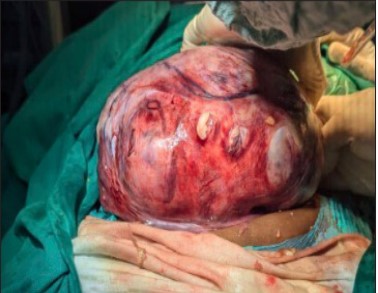
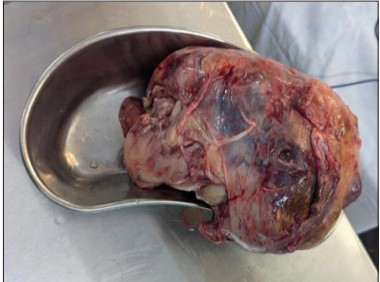
Background: Fibromyoma, or uterine leiomyoma, is the most common benign tumor of the female reproductive tract, affecting 50-80% of women by age 50. Despite its benign nature, it poses a significant clinical dilemma due to its variable presentation, impact on quality of life, and complex management decisions. Aim: This article discusses the diagnostic and therapeutic dilemmas associated with fibromyoma, focusing on challenges in clinical decision-making for symptomatic women. Discussion: The dilemma arises from several factors. First, most fibroids are asymptomatic, yet 25-30% cause menorrhagia, pelvic pain, pressure symptoms, or reproductive issues. Second, treatment must balance symptom relief with fertility preservation. Options include expectant management, medical therapy with GnRH agonists or SPRMs, minimally invasive procedures like uterine artery embolization and HIFU, and surgical approaches such as myomectomy or hysterectomy. Each has distinct risks, benefits, and recurrence rates. Third, differentiating benign fibroids from the rare leiomyosarcoma (<1%) preoperatively remains challenging. Fourth, fibroids in pregnancy can lead to red degeneration, preterm labor, and postpartum hemorrhage, yet many women have uneventful outcomes. Conclusion: Managing fibromyoma requires individualized care based on age, symptoms, fertility desires, and fibroid characteristics. A multidisciplinary approach with thorough counseling is essential. Further research is needed for reliable biomarkers to rule out malignancy and long-term fertility data for newer modalities.
References
- 1. NCCN Guidelines: Uterine Neoplasms (Version 1.2024).
- 2. WHO Classification of Tumors of Female Reproductive Organs, 5th Edition.
- 3. Prat J. FIGO staging for uterine sarcomas. Int J Gynecol Obstet. 2009.
- 4. Santos P, Cunha TM. Uterine sarcomas: clinical presentation and MRI features. Diagn Interv Radiol. 2015.
- 5. Williams Gynecology, 4th Edition — Chapter on Uterine Cancer.
- 6. Reproductive and oncologic outcome in young women with uterine sarcoma undergoing fertility sparing treatment: a systematic review Ther Adv Reprod Health 2024 sept.
- 7. Fertilty sparing surgery in Uterine Leiomyosarcoma. Gynecologic Oncology Vol 70 Issue 3 September 1998. managed 8 patients with Fertility Sparing Surgery. only one had disseminated recurrence. 7 were alive.
- 8. Fertility-sparing management of uterine adenosarcoma: case report and literature review. Facts, Views & Vision in ObGyn. 2021 Jan8;12 (4).315-318.
Data Sharing Statement
There are no additional data available. All raw data and code are available upon request.
Funding
This research received no funding.
Author Contributions
All authors contributed significantly to the work and approve its publication.
Ethics Declaration
This article does not involve any human or animal subjects, and therefore does not require ethics approval.
Acknowledgements
We would like to express our gratitude to the patients, their families, and all those who have contributed to this study.
Conflicts of Interest
No conflicts of interest in this work.
About this article

Cite this article
Rajeshwari L Khyade, Chandrajeetsingh Tale, Poonam Rayaskar. Fibromyoma: A Clinical Dilemma. Indian J Obstet Gynecol. 2026; 14(2): 69-72.
Licence:
Attribution-Non-commercial 4.0 International (CC BY-NC 4.0)This license enables reusers to distribute, remix, adapt, and build upon the material in any medium or format for noncommercial purposes only, and only so long as attribution is given to the creator.
| Received | Accepted | Published |
|---|---|---|
| June 09, 2026 | July 14, 2026 | August 30, 2026 |
DOI: https://doi.org/10.21088/ijog.2321.1636.14226.5
Keywords
FibromyomaUterine FibroidsLeiomyomaGynecological DilemmaMenorrhagiaMyomectomyHysterectomyInfertilityTreatment OptionsWomen’s HealthSearch for Similar Articles
Similar Articles
- A Cross Sectional Study on Prevalence of Bacterial Vaginosis in Preterm and Term...
- Altered Placental Insulin Signaling in the Absence of Systemic Insulin Resistanc...
- Maternal and Perinatal Outcome in Severe Pre-eclampsia in a Tertiary Care Center
- Optimizing Obstetric Care: A Review of Indications and Outcomes for First-Time C...
- A Rare Case of Geriatric Endometrial Adenocarcinoma Presenting with Nonpuerperal...
Article Level Metrics
Last UpdatedTuesday 20 October 2026, 04:49:43 (IST)
5487
Accesses
24
652
00
Citations
NA
NA
NA
Download citation
Article Keywords
Keyword Highlighting
Highlight selected keywords in the article text.
Timeline
| Received | June 09, 2026 |
| Accepted | July 14, 2026 |
| Published | August 30, 2026 |
licence
Attribution-Non-commercial 4.0 International (CC BY-NC 4.0)
This license enables reusers to distribute, remix, adapt, and build upon the material in any medium or format for noncommercial purposes only, and only so long as attribution is given to the creator.