Full Text (PDF)
Indian Journal of Obstetrics and Gynecology 14(2):p 61-68, May-August 2026. | DOI: https://doi.org/10.21088/ijog.2321.1636.14226.4
Review Article
Optimizing Obstetric Care: A Review of Indications and Outcomes for First-Time Caesarean in Multipara
Parneet Kaur, Rajni Singla, Anju null, Srushti Kalmegh
Author Information
Licence:
Attribution-Non-commercial 4.0 International (CC BY-NC 4.0)This license enables reusers to distribute, remix, adapt, and build upon the material in any medium or format for noncommercial purposes only, and only so long as attribution is given to the creator.
Indian Journal of Obstetrics and Gynecology 14(2):p 61-68, May-August 2026. | DOI: https://doi.org/10.21088/ijog.2321.1636.14226.4
How Cite This Article:
Rajni Singla, Parneet Kaur, Anju et. al, Optimizing Obstetric Care: A Review of Indications and Outcomes for First-Time Caesarean in Multipara. Indian J Obstet Gynecol. 2026; 14(2): 61-68.Timeline
Received : June 11, 2026
Accepted : July 20, 2026
Published : August 30, 2026
Abstract
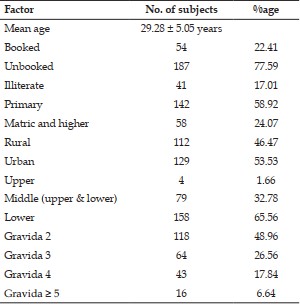
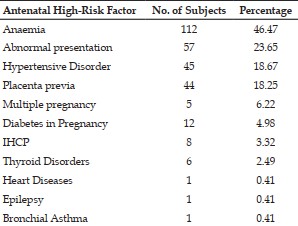
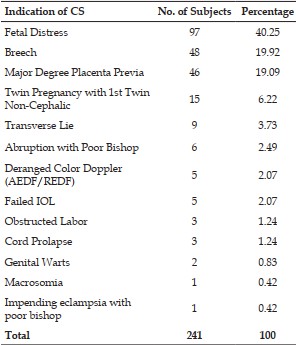
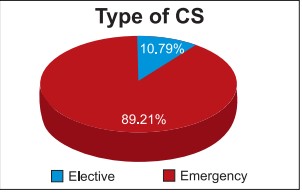
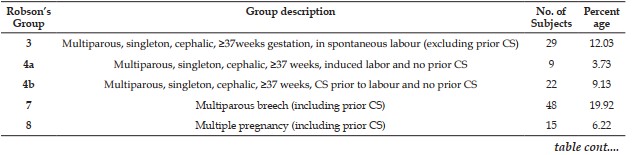
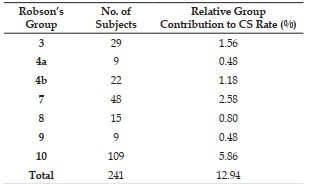
Introduction: Caesarean section is a life-saving obstetric intervention when appropriately indicated; however, its increasing use among multiparous women with previous successful vaginal deliveries has become a matter of clinical concern. Evaluating the factors contributing to primary caesarean section (CS) in this group is essential for optimizing maternal and neonatal outcomes and promoting evidence-based obstetric care. Objectives: To determine the incidence, indications, associated antenatal risk factors, maternal and neonatal outcomes, and Robson ten group distribution of primary caesarean sections in multiparous women. Methods: A prospective observational study was conducted in the Department of Obstetrics and Gynaecology, Government Medical College and Rajindra Hospital, Patiala, over a period of one year (2022–2023). Multiparous women with at least one previous vaginal delivery beyond 24 weeks of gestation who underwent their first caesarean section were included. Relevant demographic, clinical, obstetric, and neonatal data were collected and analysed. Caesarean sections were further categorized using Robson’s Ten-Group Classification System. Results: Among 3,759 deliveries, 241 women underwent primary caesarean section, yielding an incidence of 12.98%. Most participants were unbooked referrals and belonged to lower socioeconomic strata. Anaemia (46.47%) was the commonest antenatal risk factor. Emergency procedures accounted for 89.21% of surgeries. Foetal distress emerged as the leading indication for caesarean section (40.25%), followed by breech presentation (19.92%) and major placenta previa (19.09%). Maternal complications were infrequent, with postpartum haemorrhage and wound disruption being the most common. No maternal mortality was recorded. Robson Group 10 contributed the largest proportion of primary caesarean sections (45.23%). Conclusion: Foetal distress remains the predominant indication for primary caesarean section in multiparous women. Strengthening antenatal care, encouraging timely referrals, and applying Robson’s classification can facilitate targeted interventions, improve obstetric decision-making, and contribute to reducing avoidable caesarean deliveries.
References
- 1. Rothenberg KH. National Institutes of Health State-of-the-Science Conference Statement: cesarean delivery on maternal request. Obstet Gynecol. 2006;107(6):1386–97.
- 2. Mohan SS, Thippeveeranna C, Singh LR, Singh NN. Primary caesarean section in multiparous women: A clinical study from tertiary care centre in North East India. Int J Gynaecol Obstet. 2017;4(4):420– 3.
- 3. WHO Statement on Caesarean Section Rates. Geneva: World Health Organization; 2015 (WHO/RHR/15.02).
- 4. Boyle A, Reddy UM, Landy HJ, Huang CC, Driggers RW, Laughon SK. Primary cesarean delivery in the United States. Obstet Anesth Dig. 2014;34(3):150–1.
- 5. Somalwar S, Bansal R. Study of Primary Caesarean Section in Multiparous Women in Central India. J of Krishna Institute of Med Sci. 2020;9(4).
- 6. Aftab S, Kazi S, Ja A. Assessment of Pregnancy Outcome in Booked and Unbooked Women. Medical Channel. 2012;
- 7. Agrawal GP. Primary lower segment caesarean section in multipara: materno-fetal outcomes. Int J Reprod Contracept Obstet Gynecol. 2018;8(1):279.
- 8. Meena N, Parveen S, Nagar T, Meena NK. Study of indications of primary caesarean section in multigravida patients: A retrospective study. Asian J Med Sci. 2022;13(7):145–8.
- 9. Haberman S, Saraf S, Zhang J, Landy HJ, Branch DW, Burkman R, et al. Nonclinical parameters affecting primary cesarean rates in the United States. Am J Perinatol. 2014;31(3):213–22.
- 10. Samal R, Palai P, Ghose S. Clinical study of primary caesarean section in multiparous women in a tertiary care hospital. Int J Reprod Contracept Obstet Gynecol. 2016;1506–9.
- 11. Anbukkarasi S. A study of incidence and indications of primary cesarean section in multiparus women with outcome of pregnancy [Doctoral dissertation]. Chennai: Stanley Medical College, The Tamil Nadu Dr. M.G.R. Medical University; 2020.
- 12. Gattam L, Bindu PH. A study of Primary cesarean section in Multiparous women. Journal of Dental and Medical Sciences J of Dental and Med Sci. 2019;18(3).
- 13. Kumar S. A Clinical Study of Primary Cesarean Section in Multiparous Women. 2019.
- 14. Shagufta SN, Bhagat N. Study of Primary Caesarean Section in Multiparous Women in a Tertiary Care Centre. Int J Acad Med Pharm. 2023;5(1):745–8.
- 15. Desai E, Leuva H, Leuva B, Kanani M. A study of primary caesarean section in multipara. Int J Reprod Contracept Obstet Gynecol. 2013;320–4.
Data Sharing Statement
There are no additional data available. All raw data and code are available upon request.
Funding
This research received no funding.
Author Contributions
All authors contributed significantly to the work and approve its publication.
Ethics Declaration
This article does not involve any human or animal subjects, and therefore does not require ethics approval.
Acknowledgements
We would like to express our gratitude to the patients, their families, and all those who have contributed to this study.
Conflicts of Interest
No conflicts of interest in this work.
About this article

Cite this article
Rajni Singla, Parneet Kaur, Anju et. al, Optimizing Obstetric Care: A Review of Indications and Outcomes for First-Time Caesarean in Multipara. Indian J Obstet Gynecol. 2026; 14(2): 61-68.
Licence:
Attribution-Non-commercial 4.0 International (CC BY-NC 4.0)This license enables reusers to distribute, remix, adapt, and build upon the material in any medium or format for noncommercial purposes only, and only so long as attribution is given to the creator.
| Received | Accepted | Published |
|---|---|---|
| June 11, 2026 | July 20, 2026 | August 30, 2026 |
DOI: https://doi.org/10.21088/ijog.2321.1636.14226.4
Keywords
Primary Caesarean SectionMultiparaRobson ClassificationSearch for Similar Articles
Similar Articles
- A Cross Sectional Study on Prevalence of Bacterial Vaginosis in Preterm and Term...
- Altered Placental Insulin Signaling in the Absence of Systemic Insulin Resistanc...
- Maternal and Perinatal Outcome in Severe Pre-eclampsia in a Tertiary Care Center
- Fibromyoma: A Clinical Dilemma
- A Rare Case of Geriatric Endometrial Adenocarcinoma Presenting with Nonpuerperal...
Article Level Metrics
Last UpdatedTuesday 20 October 2026, 04:50:40 (IST)
5487
Accesses
48
652
00
Citations
NA
NA
NA
Download citation
Article Keywords
Keyword Highlighting
Highlight selected keywords in the article text.
Timeline
| Received | June 11, 2026 |
| Accepted | July 20, 2026 |
| Published | August 30, 2026 |
licence
Attribution-Non-commercial 4.0 International (CC BY-NC 4.0)
This license enables reusers to distribute, remix, adapt, and build upon the material in any medium or format for noncommercial purposes only, and only so long as attribution is given to the creator.