Full Text (PDF)
Indian Journal of Obstetrics and Gynecology 14(2):p 43-48, May-August 2026. | DOI: https://doi.org/10.21088/ijog.2321.1636.14226.1
Original Article
Influence of Maternal Anthropometry and Hemoglobin on Neonatal Anthropometry
Rifath Noorjahan, Shanthala S, M.G. Umakantha Adiga
Author Information
Licence:
Attribution-Non-commercial 4.0 International (CC BY-NC 4.0)This license enables reusers to distribute, remix, adapt, and build upon the material in any medium or format for noncommercial purposes only, and only so long as attribution is given to the creator.
Indian Journal of Obstetrics and Gynecology 14(2):p 43-48, May-August 2026. | DOI: https://doi.org/10.21088/ijog.2321.1636.14226.1
How Cite This Article:
Rifath Noorjahan, Shanthala S., M.G. Umakantha Adiga. Influence of Maternal Anthropometry and Hemoglobin on Neonatal Anthropometry. Indian J Obstet Gynecol. 2026; 14(2): 43-48.Timeline
Received : May 19, 2026
Accepted : June 13, 2026
Published : August 30, 2026
Abstract
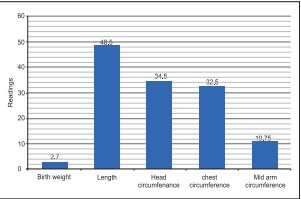
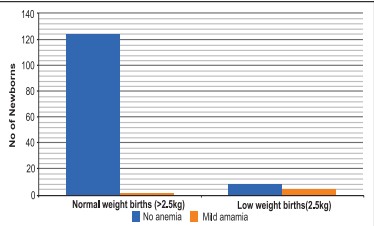
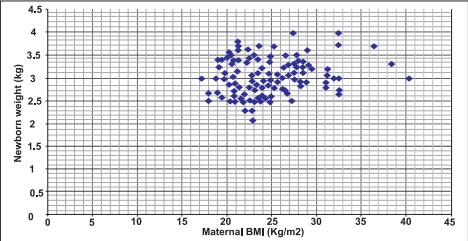
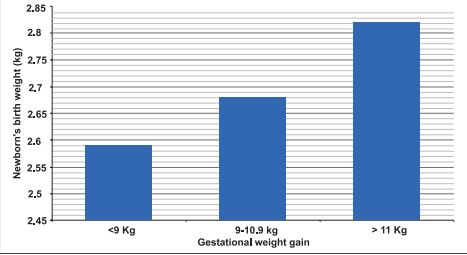
Background: Maternal anthropometric and hematological parameters are important determinants of fetal growth and neonatal anthropometric outcomes. Identification of simple maternal predictors may help in early detection of pregnancies at risk for adverse neonatal outcomes, particularly in resource-limited settings. Objectives: To evaluate the correlation between maternal anthropometric parameters and neonatal anthropometric measurements, and to assess the association between maternal hemoglobin levels and neonatal birth weight. Materials and Methods: This prospective longitudinal observational study was conducted at Sagar Hospitals from April 2019 to March 2020 among 150 pregnant women aged 18–35 years delivering singleton live neonates between 37–40 weeks of gestation. Maternal weight, height, body mass index (BMI), gestational weight gain, and hemoglobin levels were recorded. Neonatal anthropometric measurements including birth weight, crown–heel length, head circumference, chest circumference, and mid-arm circumference were measured within 24 hours of birth. Statistical analysis was performed using appropriate tests, with p<0.05 considered significant. Results: The mean maternal age was 28.03 years. Mild anemia was observed in 11.33% subjects, while 88.67% had normal hemoglobin levels. Mean neonatal birth weight was 2.70±0.28 kg. Low birth weight incidence was significantly higher among mildly anemic mothers compared to non-anemic mothers (29.41% vs 6.78%). Maternal anemia was significantly associated with lower neonatal birth weight, length, head circumference, chest circumference, and mid-arm circumference. Maternal BMI showed a significant positive correlation with neonatal birth weight (r=0.23, p=0.005). Maternal weight >50 kg and gestational weight gain >11 kg were associated with significantly higher neonatal birth weight, whereas maternal height showed no significant association with neonatal anthropometric measurements. Conclusion: Maternal hemoglobin status, BMI, maternal weight, and gestational weight gain significantly influence neonatal anthropometric outcomes, particularly birth weight. Routine maternal anthropometric assessment and hemoglobin estimation during antenatal care may serve as simple and cost-effective tools for identifying pregnancies at risk for adverse neonatal outcomes.
References
- 1. Pugh SJ, Albert PS, Kim S. Patterns of gestational weight gain and birthweight outcomes in the Eunice Kennedy Shriver National Institute of Child Health and Human Development Fetal Growth Studies-Singletons: a prospective study. Am J Obstet Gynecol 2017;217:346 e1–46 e11.
- 2. Ludwig DS, Currie J. The association between pregnancy weight gain and birthweight: a within- family comparison. Lancet 2010;376:984–90.
- 3. Catalano PM, Mele L, Landon MB. Inadequate weight gain in overweight and obese pregnant women: what is the effect on fetal growth? Am J Obstet Gynecol 2014;211:137 e1–7.
- 4. Davenport MH , Ruchat SM , Giroux . Timing of excessive pregnancy-related weight gain and offspring adiposity at birth. Obstet Gynecol 2013;122:255–61.
- 5. Widen EM, Factor-Litvak PR, Gallagher D. The Pattern of Gestational Weight Gain is Associated with Changes in Maternal Body Composition and Neonatal Size. Matern Child Health J. 2015;12(3):12-19.
- 6. Clausen T, Burski TK, Oyen N, Godang K, Bollerslev J.Maternal anthropometric and metabolic factors in the first half of pregnancy and risk of neonatal macrosomia in term pregnancies. A prospective study. Eur J Endocrinol. 2005;153:887–94.
- 7. Brooks AA, Johnson MR, Steer PJ, Pawson ME. Abdalla HI. Birth weight: nature or nurture? Early Hum Dev. 2010;42:29–35.
- 8. Kieffer EC, Tabaei BP, Carman WJ, Nolan GH, Guzman GR. The influence of maternal weight and glucose tolerance on infant birthweight in Latino mother-infant pairs. Am J Public Health. 2006;96:2201–8.
- 9. Lapolla A, Dalfra MG, Bonomo M, Castiglioni MT, Di Cianni G . Can plasma glucose and HbA1c predict fetal growth in mothers with different glucose tolerance levels? Diabetes Res Clin Pract. 2007;77:465–70.
- 10. Ashizawa K, Tanamachi N, Kato S, Kumakura C, Zhou XIA. Growth of height and leg length of children in Beijing and Xilinhot, China. Anthropol Sci. 2008;116:67–76.
- 11. Vasundhara D, Hemalatha R, Sharma S. Maternal MUAC and fetal outcome in an Indian tertiary care hospital: A prospective observational study. Matern Child Nutr. 2020;16(2):e12902.
- 12. Nagmoti SA, Walvekar PR, Mallapur. Association between body mass index of mother and anthropometry of newborn.Int J Med Res Health Sci. 2015;4(4):796-798.
- 13. Mitra S, Misra S, Nayak PK, Sahoo JP. Effect of maternal anthropometry and metabolic parameters on fetal growth. Indian J Endocr Metab 2012;16:754-8.
- 14. Motwani, Ankit Jain, Sudhakar C. Effect of maternal age and gestational weight gain on anthropometry of the newborn in semi urban area of Chhattisgarh, India.Int Journ cont ped.2019;6(6):34-41
- 15. Figueiredo, Gomes, Batista , Orrico , Porto, Cruz Piment et al. Maternal anemia and birth weight: A prospective cohort study. PLoS ONE .2019;14(3): e0212817.
- 16. Al-hajjiah, Almkhadree. The effect of maternal anemia on the anthropometric measurements in fullterm neonates. Asian Journal of Pharmaceutical and Clinical Research:2018:11(4) :422-34.
- 17. Ren A, Wang J. Low first-trimester hemoglobin and low birth weight, preterm birth and small for gestational age newborns. Int J Gynaecol Obstet. 2007 Aug;98(2):124-8.
- 18. Kaur M, Chauhan A, Manzar MD, Rajput MM. Maternal Anaemia and Neonatal Outcome: A Prospective Study on Urban Pregnant Women. J Clin Diagn Res. 2015 Dec;9(12):QC04-8.
- 19. Manisha Behal, Rajeev Vinayak, Anuj Sharma. Maternal anaemia and its effects on neonatal anthropometric parameters in patients attending a tertiary care institute of Solan. 2018;7(2):12-20.
- 20. Steer, Philip. Maternal hemoglobin concentration and birth weight. The American journal of clinical nutrition. 2000;71(2): 1285S-7S.
- 21. Rahmati S, Delpishe A, Azami M, Hafezi Ahmadi MR. Maternal Anemia during pregnancy and infant low birth weight: A systematic review and Meta-analysis. Int J Reprod Biomed. 2017;15(3):125-134.
- 22. Telatar B, Comert S, Vitrinel A, Erginoz E, Akin Y. The effect of maternal anemia on anthropometric measurements of newborns. Saudi Med J. 2009;30(3):409-412.
- 23. Papazian T, Abi Tayeh G, Sibai D, Hout H, Melki I, Rabbaa Khabbaz L. Impact of maternal body mass index and gestational weight gain on neonatal outcomes among healthy Middle-Eastern females. PLoS One. 2017;12(7):e0181255.
- 24. Nahar S, Mascie-Taylor C and Begum H. Maternal anthropometry as a predictor of birth weight. Public Health Nutrition. 2007; 10(9): 965-970.
- 25. Suliga E, Rokita W, Adamczyk-Gruszka O, Pazera G, Cieśla E, Głuszek S. Factors associated with gestational weight gain: a cross-sectional survey. BMC Pregnancy Childbirth. 2018;18(1):465.
Data Sharing Statement
There are no additional data available. All raw data and code are available upon request.
Funding
This research received no funding.
Author Contributions
All authors contributed significantly to the work and approve its publication.
Ethics Declaration
This article does not involve any human or animal subjects, and therefore does not require ethics approval.
Acknowledgements
We would like to express our gratitude to the patients, their families, and all those who have contributed to this study.
Conflicts of Interest
No conflicts of interest in this work.
About this article

Cite this article
Rifath Noorjahan, Shanthala S., M.G. Umakantha Adiga. Influence of Maternal Anthropometry and Hemoglobin on Neonatal Anthropometry. Indian J Obstet Gynecol. 2026; 14(2): 43-48.
Licence:
Attribution-Non-commercial 4.0 International (CC BY-NC 4.0)This license enables reusers to distribute, remix, adapt, and build upon the material in any medium or format for noncommercial purposes only, and only so long as attribution is given to the creator.
| Received | Accepted | Published |
|---|---|---|
| May 19, 2026 | June 13, 2026 | August 30, 2026 |
DOI: https://doi.org/10.21088/ijog.2321.1636.14226.1
Keywords
Maternal AnthropometryMaternal AnemiaBirth WeightNeonatal AnthropometryBody Mass IndexGestational Weight GainLow Birth WeightHemoglobinNeonatal OutcomesPregnancySearch for Similar Articles
Similar Articles
- A Cross Sectional Study on Prevalence of Bacterial Vaginosis in Preterm and Term...
- Altered Placental Insulin Signaling in the Absence of Systemic Insulin Resistanc...
- Maternal and Perinatal Outcome in Severe Pre-eclampsia in a Tertiary Care Center
- Fibromyoma: A Clinical Dilemma
- Optimizing Obstetric Care: A Review of Indications and Outcomes for First-Time C...
Article Level Metrics
Last UpdatedTuesday 20 October 2026, 04:49:43 (IST)
5487
Accesses
51
652
00
Citations
NA
NA
NA
Download citation
Article Keywords
Keyword Highlighting
Highlight selected keywords in the article text.
Timeline
| Received | May 19, 2026 |
| Accepted | June 13, 2026 |
| Published | August 30, 2026 |
licence
Attribution-Non-commercial 4.0 International (CC BY-NC 4.0)
This license enables reusers to distribute, remix, adapt, and build upon the material in any medium or format for noncommercial purposes only, and only so long as attribution is given to the creator.