Full Text (PDF)
Physiotherapy and Occupational Therapy Journal 18(1):p 79-85, Jan -March 2025. | DOI: 10.21088/potj.0974.5777.18125.10
Review Article
Investigating the Therapeutic Role of Immersive Virtual Reality in Mitigating Menopausal Symptoms: A Narrative Review
Krupa Tank, Krishna P. Sarvaiya, Parthkumar Devmurari, Prachi Shah
Author Information
Licence:
Attribution-Non-commercial 4.0 International (CC BY-NC 4.0)This license enables reusers to distribute, remix, adapt, and build upon the material in any medium or format for noncommercial purposes only, and only so long as attribution is given to the creator.
Physiotherapy and Occupational Therapy Journal 18(1):p 79-85, Jan -March 2025. | DOI: 10.21088/potj.0974.5777.18125.10
How Cite This Article:
Sarvaiya KP, Tank K, Devmurari P, et al. Investigating the therapeutic role of immersive virtual reality in mitigating menopausal symptoms: a narrative review. Physio Occup Ther Jr. 2025;18(1):79-85.Timeline
Received : January 16, 2025
Accepted : February 17, 2025
Published : March 21, 2025
Abstract
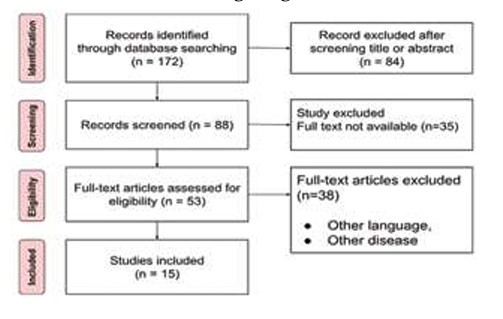
Background: Menopause, or the permanent cessation of the menstrual cycle, was a signicantphysiologicaltransitioninawoman'slife.Itwasfrequentlyassociated withsymptomssuchashot ashes,nightsweats,vaginaldryness,sleepdifculties, sexual dysfunction, depression, anxiety, memory loss, fatigue, headache, joint pain,weightgain,stressurineincontinence,andpelvic oormuscledysfunction. Traditional therapies mainly involved hormonal and pharmaceutical procedures, but other non-pharmaceutical ways were progressively investigated. Objective: This review explores the potential of immersive Virtual Reality (IVR) as an innovative, non-drug-based solution for managing menopause-related challenges. Methods: An extensive literature search was conducted to identify relevant studies that explored the use of immersive, semi-immersive, and non-immersive VR in alleviating menopausal symptoms. A total of 15 studies were analyzed to evaluate the effectiveness of IVR in addressing symptoms, including osteoporosis, cognitiveproblems,stressurinaryincontinence,hot ashes,anxiety,pelvic oor dysfunction, and overall well-being. Results: Thendings indicatedthat immersiveVRoffereduniquebenetssuch as enhanced engagement, real-time feedback, and personalized interventions. Evidence suggested signicant improvements in balance, cognitive function, muscle strength, and psychological health. IVR interventions also demonstrated potentialinmanagingsymptomssuchasstressurinaryincontinence,pelvic oor dysfunction,anxiety,andhot ashes,contributingtoimprovedoverallwell-being Conclusion: IVR offers a promising, non-pharmaceutical solution to improve menopausal women’s quality of life by effectively addressing physical and emotional symptoms.
References
- 1. Nambi G., Abdelbasset W.K., Moawd S.A., Sakr H.R., Elingamite, George J.S. Effect of virtual reality training on postmenopausal osteoporotic women. Arch Pharm Pract. 2020 Apr 1; 11(2).
- 2. Burdea G.C. Virtual rehabilitation--benefits and challenges. Methods Inf Med. 2003; 42(5): 519-23. PMID: 14654886.
- 3. Lange B.S., Requejo P., Flynn S.M., Rizzo A.A., Valero-Cuevas F.J., Baker L., Winstein C. The potential of virtual reality and gaming to assist successful aging with disability. Phys Med Rehabil Clin N Am. 2010 May; 21(2): 339-56. doi: 10.1016/j.pmr.2009.12.007. PMID: 20494281.
- 4. Gil-Gómez J.A., Lloréns R., Alcañiz M., Colomer C. Effectiveness of a Wii balance board-based system (eBaViR) for balance rehabilitation: a pilot randomized clinical trial in patients with acquired brain injury. J Neuroeng Rehabil. 2011 May 23; 8: 30. doi: 10.1186/1743-0003-8 30. PMID: 21600066; PMCID: PMC3120756.
- 5. Woodley S.J., Moller B., Clark A.R., Bussey M.D., Sangelaji B., Perry M., Kruger J. Digital technologiesforwomen’spelvic oormuscle training to manage urinary incontinence across their life course: scoping review. JMIR Mhealth Uhealth. 2023 Jul 5; 11:e44929. doi: 10.2196/44929. PMID: 37405818; PMCID: PMC10357376.
- 6. Jacobson L. Welcome to the virtual world. On the cutting edge of technology. 1993: 69-79.
- 7. Kalhan M., Singhania K., Choudhary P., Verma S., Kaushal P., Singh T. Prevalence of menopausal symptoms and its effect on quality of life among rural middle-aged women (40-60 years) of Haryana, India. Int J Appl Basic Med Res. 2020 Jul-Sep; 10(3): 183-8. doi: 10.4103/ ijabmr.IJABMR_428_19. Epub 2020 Jul 11. PMID: 33088741; PMCID: PMC7534715.
- 8. Burger H.G. The endocrinology of the menopause. J Steroid Biochem Mol Biol. 1999 Apr-Jun; 69(1-6): 31-5. doi: 10.1016/s0960 0760(98)00145-9. PMID: 10418978.
- 9. Butler L., Santoro N. The reproductive endocrinology of the menopausal transition. Steroids. 2011 Jun; 76(7): 627-35. doi: 10.1016/j. steroids.2011.02.026. Epub 2011 Mar 16. PMID: 21419147; PMCID: PMC3100375.
- 10. de Zambotti M., Yuksel D., Kiss O, Barresi G., Arra N., Volpe L, et al. A virtual reality based mind-body approach to downregulate psychophysiological arousal in adolescent insomnia. Digit Health. 2022 Jun 15; 8: 20552076221107887.
- 11. Rezaei M.K., Torkaman G., Bahrami F., Bayat N. The effect of six-week virtual reality training on the improvement of functional balance in women with Type-I osteoporosis: a preliminary study. Sport Sci Health. 2023; 19(1): 185-94. doi: 10.1007/s11332-022-01018-8. Epub 2022 Nov 15. PMID: 36408530; PMCID: PMC9665013.
- 12. Gilani M., Torkaman G., Bahrami F., Bayat N. Virtual reality exergaming capability to change muscle strategy during the limits of stability test and reduce fear of falling in primary osteoporotic women. Games Health J. 2023 Aug; 12(4): 310-22. doi: 10.1089/g4h.2022.0172. Epub 2023 Mar 20. PMID: 36940295.
- 13. Yilmaz N., Kösehasanoğulları M. The effectiveness of virtual reality exercise games on balance functions and fear of falling in women with osteoporosis. Rheumatol Int. 2024 Mar 22. doi: 10.1007/s00296-024-05569-6. Epub ahead of print. PMID: 38519809.
- 14. Duivon M., Perrier J., Joly F., Licaj I., Grellard J.M., Clarisse B., et al. Impact of breast cancer on prospective memory functioning assessed byvirtualrealityandin uenceofsleepquality and hormonal therapy: PROSOM-K study. BMC Cancer. 2018 Sep 3; 18(1): 866. doi: 10.1186/s12885-018-4762-2. PMID: 30176833; PMCID: PMC6122719.
- 15. Kim D.R., Moon E., Shin M.J., Yang Y.A., Park J.H. Effect of individual virtual reality cognitive training programs on cognitive function and depression in middle-aged women: randomized controlled trial. JMIR Ment Health. 2023 Oct 25; 10: e48912. doi: 10.2196/48912. PMID: 37878378; PMCID: PMC10632914.
- 16. Zangirolami-Raimundo J., Raimundo R.D., Silva Noll PRE, Dos Santos W.S., Leone C., Baracat E.C., et al. Postmenopausal women’s cognitive function and performance of virtual reality tasks. Climacteric. 2023 Oct; 26(5): 445 54. doi: 10.1080/13697137.2023.2190511. Epub 2023 Mar 31. PMID: 36999579.
- 17. Nagib A.B.L., Silva V.R., Martinho N.M., Marques A., Riccetto C., Botelho S. Can supervised pelvic oor muscle training through games therapy relieve urinary incontinence symptoms in climacteric women? A feasibility study. Rev Bras Ginecol Obstet. 2021 Jul; 43(7): 535-44. doi: 10.1055/s-0041 1733979. Epub 2021 Aug 30. PMID: 34461664; PMCID: PMC10301951.
- 18. Woodley S.J., Moller B., Clark A.R., Bussey M.D., Sangelaji B., Perry M., et al. Digital technologiesforwomen’spelvic oormuscle training to manage urinary incontinence across their life course: scoping review. JMIR Mhealth Uhealth. 2023 Jul 5; 11: e44929. doi: 10.2196/44929. PMID: 37405818; PMCID: PMC10357376.
- 19. Horesh D., Kohavi S., Shilony-Nalaboff L., Rudich N., Greenman D., Feuerstein J.S., et al.Virtual realitycombinedwitharticial intelligence (VR-AI) reduceshot ashes and improves psychological well-being in women with breast and ovarian cancer: a pilot study. Healthcare (Basel). 2022 Nov 11;10(11):2261. doi: 10.3390/healthcare10112261. 36421585; PMCID: PMC9690775. PMID:
- 20. Botelho S., Martinho N.M., Silva V.R., Marques J., Carvalho L.C., Riccetto C. Virtual reality: a proposal forpelvic oormuscle training. Int Urogynecol J. 2015 Nov; 26(11): 1709-12. doi: 10.1007/s00192-015-2698-5. Epub 2015 Apr 30. PMID: 25925487.
- 21. Martinho N.M., Silva V.R., Marques J., Carvalho L.C., Iunes D.H., Botelho S. The effects of training by virtual reality or gym ball on pelvic oor muscle strength in postmenopausal women: a randomized controlled trial. Braz J Phys Ther. 2016 Mar 22; 20(3): 248-57. doi: 10.1590/bjpt-rbf.2014.0148. PMID: 27437716; PMCID: PMC4946841.
- 22. Seo E.Y., Kim Y.S., Lee Y.J., Hur M.H. Virtual reality exercise program effects on body mass index, depression, exercise fun and exercise immersion in overweight middle-aged women: a randomized controlled trial. Int J Environ Res Public Health. 2023 Jan 4; 20(2): 900. doi: 10.3390/ijerph20020900. PMID: 36673656; PMCID: PMC9859405.
- 23. Sikka N., Shu L., Ritchie B., Amdur R.L., Pourmand A. Virtual reality-assisted pain, anxiety, and anger management in the emergency department. Telemed J E Health. 2019 Dec; 25(12): 1207-15. doi: 10.1089/ tmj.2018.0273. Epub 2019 Feb 20. PMID: 30785860.
- 24. Rutkowska A., Salvalaggio S., Rutkowski S., Turolla A. Use of virtual reality-based therapy in patients with urinary incontinence: a systematic review with meta-analysis. Int J Environ Res Public Health. 2022 May 18;19(10):6155. doi: 10.3390/ijerph19106155. PMID: 35627692; PMCID: PMC9141315.
- 25. Abrams P., Andersson K.E., Apostolidis A., Birder L., Bliss D., Brubaker L., et al. 6th International Consultation on Incontinence. Recommendations of the International ScienticCommittee:Evaluationandtreatment of urinary incontinence, pelvic organ prolapse, and fecal incontinence. Neurourol Urodyn. 2018; 37: 2271-2. doi: 10.1002/nau.23551.
- 26. Parry B.L. Towards improving recognition and management of perimenopausal transition.
- 27. Kurniawan R., Fudholi D.H., Jalan Putra D.P., Rakhmawati R. Virtual reality technology on health intervention for women: a literature review. IOP Conf Ser Mater Sci Eng. 2019 Feb 1; 482(1): 012028.
- 28. Daly R.M., Dalla Via J., Duckham R.L., Fraser S.F., Helge E.W. Exercise for the prevention of osteoporosis in postmenopausal women: an evidence-based guide to the optimal prescription. Braz J Phys Ther. 2019 Mar-Apr; 23(2): 170-80. doi: 10.1016/j.bjpt.2018.11.011. Epub 2018 Nov 22. PMID: 30503353; PMCID: PMC6429007.
Data Sharing Statement
There are no additional data available. All raw data and code are available upon request.
Funding
This research received no funding.
Author Contributions
All authors contributed significantly to the work and approve its publication.
Ethics Declaration
This article does not involve any human or animal subjects, and therefore does not require ethics approval.
Acknowledgements
We would like to express our gratitude to the patients, their families, and all those who have contributed to this study.
Conflicts of Interest
No conflicts of interest in this work.
About this article

Cite this article
Sarvaiya KP, Tank K, Devmurari P, et al. Investigating the therapeutic role of immersive virtual reality in mitigating menopausal symptoms: a narrative review. Physio Occup Ther Jr. 2025;18(1):79-85.
Licence:
Attribution-Non-commercial 4.0 International (CC BY-NC 4.0)This license enables reusers to distribute, remix, adapt, and build upon the material in any medium or format for noncommercial purposes only, and only so long as attribution is given to the creator.
| Received | Accepted | Published |
|---|---|---|
| January 16, 2025 | February 17, 2025 | March 21, 2025 |
DOI: 10.21088/potj.0974.5777.18125.10
Keywords
Immersive Virtual Reality • Virtual reality • Menopause • Menopausal symptomsImmersive Virtual RealityVirtual realityMenopauseMenopausal symptomsSearch for Similar Articles
Similar Articles
- Cross-Cultural Adaptation, Reliability, and Validity of the Gujarati Version of...
- Physiotherapy Management of Multiple Sclerosis: An Overview of Recent Technologi...
- Converging Technologies in Cardiopulmonary Physiotherapy: A Review of VR, AR, AI...
- Cross-Cultural Adaptation, Reliability, and Validity of the Gujarati Version of...
- Effects of Kinesiotaping in Lateral Epicondylitis: A Narrative Review
Article Level Metrics
Last UpdatedTuesday 28 July 2026, 21:13:51 (IST)
1956
Accesses
6
425
00
Citations
NA
NA
NA
Download citation
Article Keywords
Keyword Highlighting
Highlight selected keywords in the article text.
Timeline
| Received | January 16, 2025 |
| Accepted | February 17, 2025 |
| Published | March 21, 2025 |
licence
Attribution-Non-commercial 4.0 International (CC BY-NC 4.0)
This license enables reusers to distribute, remix, adapt, and build upon the material in any medium or format for noncommercial purposes only, and only so long as attribution is given to the creator.