Full Text (PDF)
Physiotherapy and Occupational Therapy Journal 19(2):p 117-128, April-June 2026. | DOI: https://doi.org/10.21088/potj.0974.5777.19226.4
Original Article
Cross-Cultural Adaptation, Reliability, and Validity of the Gujarati Version of the Pain Disability Questionnaire in Chronic Musculoskeletal Pain Disorders
Bid Dibyendunarayan Dhrubaprasad, Desai Khushi Lokeshkumar
Author Information
Licence:
Attribution-Non-commercial 4.0 International (CC BY-NC 4.0)This license enables reusers to distribute, remix, adapt, and build upon the material in any medium or format for noncommercial purposes only, and only so long as attribution is given to the creator.
Physiotherapy and Occupational Therapy Journal 19(2):p 117-128, April-June 2026. | DOI: https://doi.org/10.21088/potj.0974.5777.19226.4
How Cite This Article:
Desai Khushi Lokeshkumar, Bid Dibyendunarayan Dhrubaprasad. Cross-Cultural Adaptation, Reliability, and Validity of the Gujarati Version of the Pain Disability Questionnaire in Chronic Musculoskeletal Pain Disorders. Therapy Jr. 2026; 19(2): 117-128.Timeline
Received : April 30, 2026
Accepted : June 01, 2026
Published : June 30, 2026
Abstract
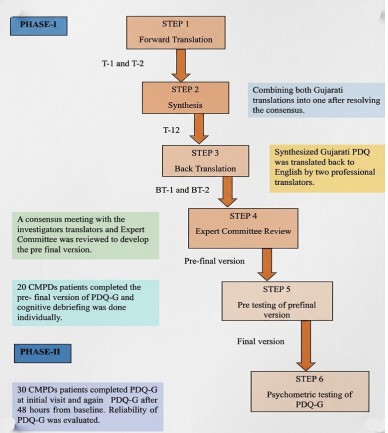
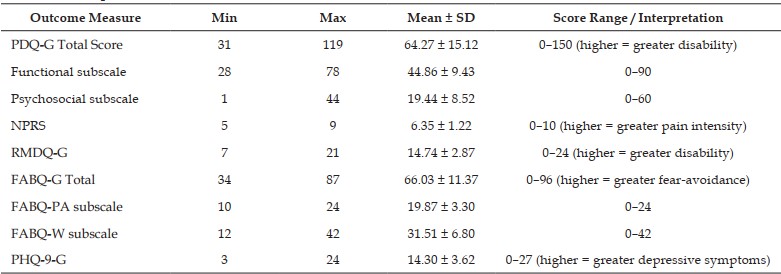
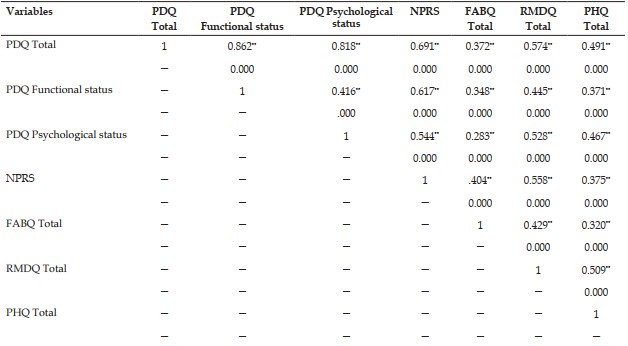
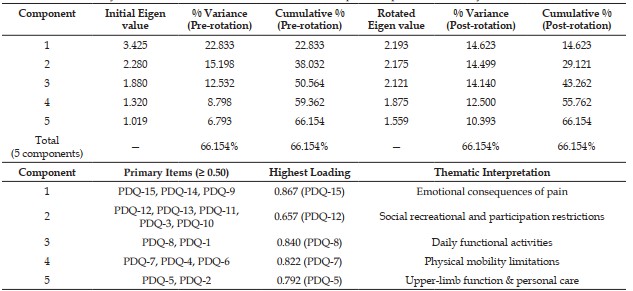
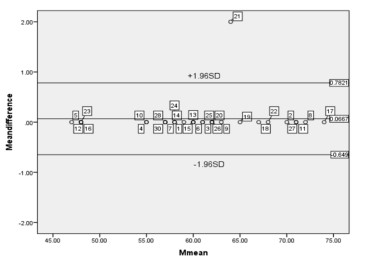
Background: Chronic musculoskeletal pain disorders (CMPDs) are a leading cause of global disability, imposing substantial functional, psychological, and socioeconomic burden. Validated and culturally adapted outcome measures are essential for the equitable and accurate assessment of pain-related disabilities across linguistically diverse populations. The Pain Disability Questionnaire (PDQ), a 15-item self-report instrument encompassing Functional and Psychosocial domains, has demonstrated strong psychometric properties across multiple languages; however, a validated Gujarati version is lacking. Objective: This study aimed to translate and culturally adapt the PDQ into Gujarati (PDQ-G) and evaluate its reliability and construct validity in individuals with CMPDs. Methods: This study was conducted in two sequential phases. Phase I involved cross-cultural adaptation following Beaton et al.’s internationally recognized guidelines, which comprise forward translation, back translation, expert committee review, and cognitive debriefing. Phase II involved the psychometric evaluation of 150 Gujarati-speaking adults (25-60 years) diagnosed with CMPDs and recruited from physiotherapy and orthopedic outpatient clinics in Surat, Gujarat, India. Internal consistency was assessed using Cronbach’s alpha, and testretest reliability was assessed using the intraclass correlation coefficient (ICC) in 30 participants. Construct validity was examined through convergent and divergent validity analyses using Pearson’s correlations with established measures, including the Numeric Pain Rating Scale (NPRS), Roland-Morris Disability Questionnaire-Gujarati (RMDQ-G), Fear- Avoidance Beliefs Questionnaire-Gujarati (FABQ-G), and Patient Health Questionnaire-9-Gujarati (PHQ-9-G). Exploratory factor analysis (EFA) was performed to investigate the underlying factor structures. Results: The PDQ-G demonstrated acceptable internal consistency (Cronbach’s α = 0.700) and excellent test-retest reliability (ICC = 0.999; 95% CI: 0.997–0.999), with a minimal Bland–Altman mean difference of 0.07 and narrow limits of agreement (−0.65 to 0.78). Construct validity was supported by strong convergent correlations with the NPRS (r = 0.691) and RMDQ (r = 0.574) scores. The PDQ-G total score showed a moderate correlation with the FABQ (r = 0.372) and PHQ (r = 0.491), indicating that fear-avoidance beliefs contribute meaningfully, albeit less dominantly, to overall pain-related disability than pain intensity or psychological distress. Exploratory factor analysis (EFA) revealed a five-factor solution Kaiser-Meyer-Olkin (KMO = 0.562; Bartlett’s p < 0.001) that collectively explained 66.154% of the total variance, with the first component accounting for 22.833% of the variance. Following varimax rotation, the variance was more evenly distributed across all five components (range: 10.393%–14.623%), and most items loaded strongly (≥0.50) on a single component, supporting the multidimensional construct of the PDQ-G. The mean total PDQ-G score was 64.27 ± 15.12, with 73.3% of participants classified as having a mild disability. Conclusion: The PDQ-G is a reliable, valid, and culturally appropriate instrument for assessing pain-related disability in Gujarati-speaking adults with CMPDs. It is suitable for use in both clinical and research settings.
References
- 1. Kelsey J.L., Hochberg M.C. Epidemiology of chronic musculoskeletal disorders. Annual review of public health. 1988; 9: 379-401.
- 2. Cieza A., Causey K., Kamenov K., Hanson S.W., Chatterji S., Vos T. Global estimates of the need for rehabilitation based on the Global Burden of Disease study 2019: a systematic analysis for the Global Burden of Disease Study 2019. Lancet (London, England). 2021; 396(10267): 2006-17.
- 3. Global, regional, and national burden of other musculoskeletal disorders, 1990-2020, and projections to 2050: a systematic analysis of the Global Burden of Disease Study 2021. The Lancet Rheumatology. 2023; 5(11): e670-e82.
- 4. Hoy D., Bain C., Williams G., March L., Brooks P., Blyth F., et al. A systematic review of the global prevalence of low back pain. 2012; 64(6): 2028-37.
- 5. Aaron R.V., Ravyts S.G., Carnahan N.D., Bhattiprolu K., Harte N., McCaulley C.C., et al. Prevalence of Depression and Anxiety Among Adults With Chronic Pain: A Systematic Review and Meta-Analysis. JAMA network open. 2025; 8(3): e250268.
- 6. Vlaeyen J.W.S., Linton S.J. Fear-avoidance and its consequences in chronic musculoskeletal pain: A state of the art. Pain. 2000; 85(3): 317-32.
- 7. Guy G.P.J., Miller G.F., Legha J.K., Rikard S.M., Strahan A.E., Mikosz C., et al. Economic Costs of Chronic Pain—United States, 2021. 2025; 63(9): 679-85.
- 8. Briggs A.M., Woolf A.D., Dreinhöfer K., Homb N., Hoy D.G., Kopansky-Giles D., et al. Reducing the global burden of musculoskeletal conditions. Bull World Health Organ. 2018; 96(5): 366-8.
- 9. WHO. International Classification of Functioning, Disability and Health (ICF) Geneva: World Health Organization; 2018 [Available from: https://www.who.int/standards/classifications/internationalclassification-of-functioning-disability-andhealth.
- 10. Fairbank J.C., Pynsent P.B. The Oswestry Disability Index. Spine. 2000; 25(22): 2940-52; discussion 52.
- 11. Roland M., Morris R. A study of the natural history of back pain. Part I: development of a reliable and sensitive measure of disability in low-back pain. Spine. 1983; 8(2): 141-4.
- 12. Ware J.E., Jr., Sherbourne C.D. The MOS 36-item short-form health survey (SF-36). I. Conceptual framework and item selection. Medical care. 1992; 30(6): 473-83.
- 13. Anagnostis C., Gatchel R.J., Mayer T.G. The pain disability questionnaire: a new psychometrically sound measure for chronic musculoskeletal disorders. Spine. 2004; 29(20): 2290-302; Discussion 303.
- 14. Gatchel R.J., Peng Y.B., Peters M.L., Fuchs P.N., Turk D.C. The biopsychosocial approach to chronic pain: scientific advances and future directions. Psychological bulletin. 2007; 133(4): 581-624.
- 15. Yoon J., Choi K.H., Kim T.W., Yang S.Y., Sim M.K. Reliability and validity of the korean version of the pain disability questionnaire. Annals of rehabilitation medicine. 2013; 37(6): 814-23.
- 16. Giordano P.C., Alexandre N.M., Rodrigues R.C., Coluci M.Z. The Pain Disability Questionnaire: A reliability and validity study. Revista latino-americana de enfermagem. 2012; 20(1): 76-83.
- 17. Knežević A., Čolović P., Jeremić-Knežević M., Demeši-Drljan Č, Simić-Panić D., Neblett R. Assessing the Functional Status of Patients with Chronic Pain-Cross Cultural Adaptation and Psychometric Properties of the Serbian Version of the Pain Disability Questionnaire. Int J Environ Res Public Health. 2021;18(13).
- 18. Modh J., Saini J., Kotecha K. A Novel Readability Complexity Score for Gujarati Idiomatic Text. International Journal of Advanced Computer Science and Applications. 2022.
- 19. Raulji J., Saini J., Pal K., Kotecha K. A Novel Framework for Sanskrit-Gujarati Symbolic Machine Translation System. International Journal of Advanced Computer Science and Applications. 2022.
- 20. Census of India 2011 - Language Atlas - INDIA - India. Censusindiagovin. 2022.
- 21. Nambi S.G. Reliability, validity, sensitivity and specificity of Guajarati version of the RolandMorris Disability Questionnaire. Journal of back and musculoskeletal rehabilitation. 2013; 26(2): 149-53.
- 22. Bid D.D., Soni N.C., Rathod PV, Ramalingam A.T., Sinha RKJNJIRM. Cross cultural adaptation, reliability and validity of Gujarati version of fear avoidance belief questionnaire in chronic low back pain. 2016; 7: 1-8.
- 23. Kroenke K., Spitzer R.L., Williams J.B. The PHQ-9: Validity of a brief depression severity measure. J Gen Intern Med. 2001; 16(9): 606-13.
- 24. Wasserman M., Renfrew M.R., Green A.R., Lopez L., Tan-McGrory A., Brach C., et al. Identifying and preventing medical errors in patients with limited English proficiency: Key findings and tools for the field. Journal for healthcare quality : official publication of the National Association for Healthcare Quality. 2014; 36(3): 5-16.
- 25. Beaton D.E., Bombardier C., Guillemin F., Ferraz M.B. Guidelines for the process of crosscultural adaptation of self-report measures. Spine. 2000; 25(24): 3186-91.
- 26. Bonett D.G. Sample size requirements for estimating intraclass correlations with desired precision. Statistics in medicine. 2002; 21(9): 1331-5.
- 27. Walter S.D., Eliasziw M., Donner A. Sample size and optimal designs for reliability studies. Statistics in medicine. 1998; 17(1): 101-10.
- 28. Wild D., Grove A., Martin M., Eremenco S., McElroy S., Verjee-Lorenz A., et al. Principles of Good Practice for the Translation and Cultural Adaptation Process for PatientReported Outcomes (PRO) Measures: Report of the ISPOR Task Force for Translation and Cultural Adaptation. 2005; 8(2): 94-104.
- 29. Farrar J.T., Young J.P., Jr., LaMoreaux L., Werth J.L., Poole M.R. Clinical importance of changes in chronic pain intensity measured on an 11-point numerical pain rating scale. Pain. 2001; 94(2): 149-58.
- 30. Polit D.F., Beck C.T. The content validity index: Are you sure you know what’s being reported? Critique and recommendations. Research in nursing & health. 2006; 29(5): 489-97.
- 31. Streiner D.L., Norman G.R., Cairney J. Health measurement scales: a practical guide to their development and use: Oxford university press; 2024.
- 32. Deyo R.A., Diehr P., Patrick D.L. Reproducibility and responsiveness of health status measures. Statistics and strategies for evaluation. Controlled clinical trials. 1991; 12(4 Suppl): 142s-58s.
- 33. Portney LG, Watkins MP. Foundations of clinical research: applications to practice: Pearson/ Prentice Hall Upper Saddle River, NJ; 2009.
- 34. Bland J.M., Altman D.G. Statistical methods for assessing agreement between two methods of clinical measurement. Lancet (London, England). 1986; 1(8476): 307-10.
- 35. Health measurement scales: a practical guide to their development and use (5th edition). Australian and New Zealand journal of public health. 2016; 40(3): 294-5.
- 36. Hair J.F., Black W.C., Babin B.J., Anderson R.E., Tatham R.L. Multivariate data analysis (Vol. 6). Upper Saddle River, NJ: Pearson Prentice Hall; 2006.
- 37. Terwee C.B., Bot S.D., de Boer M.R., van der Windt D.A., Knol D.L., Dekker J., et al. Quality criteria were proposed for measurement properties of health status questionnaires. Journal of clinical epidemiology. 2007; 60(1): 34-42.
Data Sharing Statement
There are no additional data available. All raw data and code are available upon request.
Funding
This research received no funding.
Author Contributions
All authors contributed significantly to the work and approve its publication.
Ethics Declaration
This article does not involve any human or animal subjects, and therefore does not require ethics approval.
Acknowledgements
We would like to express our gratitude to the patients, their families, and all those who have contributed to this study.
Conflicts of Interest
No conflicts of interest in this work.
About this article

Cite this article
Desai Khushi Lokeshkumar, Bid Dibyendunarayan Dhrubaprasad. Cross-Cultural Adaptation, Reliability, and Validity of the Gujarati Version of the Pain Disability Questionnaire in Chronic Musculoskeletal Pain Disorders. Therapy Jr. 2026; 19(2): 117-128.
Licence:
Attribution-Non-commercial 4.0 International (CC BY-NC 4.0)This license enables reusers to distribute, remix, adapt, and build upon the material in any medium or format for noncommercial purposes only, and only so long as attribution is given to the creator.
| Received | Accepted | Published |
|---|---|---|
| April 30, 2026 | June 01, 2026 | June 30, 2026 |
DOI: https://doi.org/10.21088/potj.0974.5777.19226.4
Keywords
Pain Disability QuestionnaireCross-cultural adaptationChronic musculoskeletal painGujaratiReliabilityValidationSearch for Similar Articles
Similar Articles
- Physiotherapy Management of Multiple Sclerosis: An Overview of Recent Technologi...
- Converging Technologies in Cardiopulmonary Physiotherapy: A Review of VR, AR, AI...
- Cross-Cultural Adaptation, Reliability, and Validity of the Gujarati Version of...
- Effects of Kinesiotaping in Lateral Epicondylitis: A Narrative Review
- Redefining Multidisciplinary Care: Evidence-Based Approaches for Advanced Health...
Article Level Metrics
Last UpdatedSunday 06 September 2026, 21:40:34 (IST)
2645
Accesses
29
475
00
Citations
NA
NA
NA
Download citation
Article Keywords
Keyword Highlighting
Highlight selected keywords in the article text.
Timeline
| Received | April 30, 2026 |
| Accepted | June 01, 2026 |
| Published | June 30, 2026 |
licence
Attribution-Non-commercial 4.0 International (CC BY-NC 4.0)
This license enables reusers to distribute, remix, adapt, and build upon the material in any medium or format for noncommercial purposes only, and only so long as attribution is given to the creator.