Full Text (PDF)
Indian Journal of Forensic Medicine and Pathology 16(1):p 17-23, January-March 2023. | DOI: https://doi.org/10.21088/ijfmp.0974.3383.16123.2
Original Article
Firing Pin Micro-Printing for Identification of Firearm
Bhoopesh Kumar Sharma, Vikhyaat Kumar, Megha Walia, Vineeta Saini, Yogesh Sharma
Author Information
Licence:
Attribution-Non-commercial 4.0 International (CC BY-NC 4.0)This license enables reusers to distribute, remix, adapt, and build upon the material in any medium or format for noncommercial purposes only, and only so long as attribution is given to the creator.
Indian Journal of Forensic Medicine and Pathology 16(1):p 17-23, January-March 2023. | DOI: https://doi.org/10.21088/ijfmp.0974.3383.16123.2
How Cite This Article:
Kumar V, Sharma BK, Walia M, et al. Firing pin micro-printing for identification of firearm. Indian J Forensic Med Pathol. 2023;16(1):17-23.Timeline
Received : October 21, 2022
Accepted : December 18, 2022
Published : March 30, 2023
Abstract
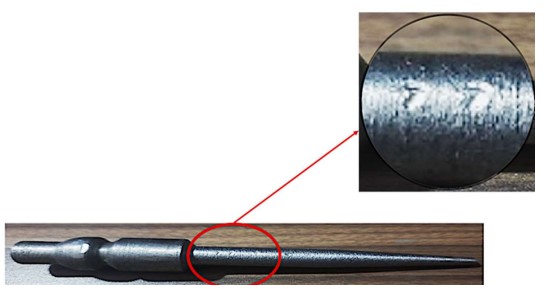
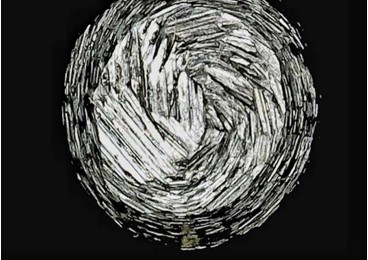
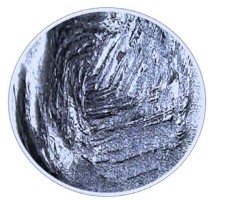
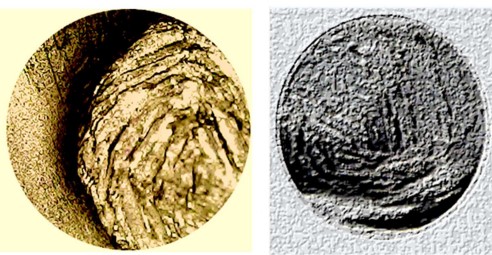
Any device of any kind that is built or modiöed to discharge a projectile of any kind using the force of an explosive or other types of energy is considered to be a örearm. The three basic components of a örearm are the breech, barrel, and stock. The öring pin and hammer are part of the breech. The öring is initiated when the hammer strikes the öring pin, which then forcefully impacts the percussion cap at the base of the cartridge containing the primary explosive substance. During this procedure, the öring pin leaves distinct markings on the percussion cap that help determine if the purported handgun can be positively or unfalsiöably identified during test öring. These markings, however, can occasionally be purposefully damaged or removed in order to lead the investigation officer or ballistic expert astray. Firing pin markings won’t be useful for identiöcation in these circumstances. The conceptual work in the current study involves using micro laser printing to engrave the serial number of örearms on the öring pin’s surface as well as precise markings at the öring pin’s tip. These carefully etched markings will make it easier to identify factory made weapons in shooting incident instances. However, the main goal of this effort was to increase the signiöcance of öring pin marks for the identiöcation and linkage of the öred cartridge case and örearm. Although there are other ways for identiöcation, such as breech marks, extractor marks, chamber marks, etc.
References
- 1. Braga, Anthony A., and Glenn L. Pierce. “Linking Crime Guns: The Impact of Ballistics Imaging Technology on the Productivity of the Boston Police Department's Ballistics Unit.” Journal of Forensic Sciences, vol. 49, no. 4, 2004, pp. 1–6., https://doi. org/10.1520/jfs2003205.
- 2. Veresenko, Yurii. “Opportunities for the Improvement of Technical Support of the ExpertCriminalistic Departments Mia Ukraine for the Fullfillment of Forensic and Ballistic Researches.” Modern Special Technics, 3(58), 2019, pp. 68–85., https://doi.org/10.36486/ mst2411-3816.2019.3(58).7.
- 3. Botch Jones, Sabra. “Forensic Evidence–a Shooting Incident.” Journal of Forensic Sciences & Criminal Investigation, vol. 10, no. 5, 2018, https://doi.org/10.19080/ jfsci.2018.10.555800.
- 4. Heard, Brian J. Handbook of Firearms and Ballistics Examining and Interpreting Forensic Evidence. Wiley-Blackwell, 2008.
- 5. Davison, Neil. ‘Non-Lethal’ Weapons in the 1990s.” 'Non-Lethal' Weapons, 2009, pp. 40–69., https://doi. org/10.1057/9780230233980_3.
- 6. Walker, Robert E. “The Frame, Firearm Components, and Firearm Accessories.” A Field Guide to Ghost Guns, 2021, pp. 47–62., https:// doi.org/10.4324/9781003044499-3.
- 7. Pal, Ajitesh, et al. “A Case Study on Identification of Firearm by Firing Pin Mark.” Journal of Advanced Microscopy Research, vol. 11, no. 2, 2016, pp. 149–151., https:// doi.org/10.1166/jamr.2016.1307.
- 8. Nichols, Ronald G. “Firearm and Tool mark Identification Criteria: A Review of the Literature, Part II.” Journal of Forensic Sciences, vol. 48, no. 2, 2003, p. 2002246., https://doi.org/10.1520/jfs2002246.
- 9. Sharma, B. R. “The Importance of Firing Pin Impressions in the Identification of Firearms.” The Journal of Criminal Law, Criminology, and Police Science, vol. 54, no. 3, 1963, p. 378., https://doi. org/10.2307/1141000.
- 10. Pirelli, Gianni. “Firearms.” Oxford Scholarship Online, 2018, https://doi.org/10.1093/ oso/9780190630430.003.0001.
- 11. Riva, Fabiano, and Christophe Champod. “Automatic Comparison and Evaluation of Impressions Left by a Firearm on Fired Cartridge Cases.” Journal of Forensic Sciences, vol. 59, no. 3, 2014, pp. 637–647., https://doi. org/10.1111/1556-4029.12382.
- 12. Ghani, Nor Azura, et al. “Firearm Identification Using Numerical Features of Centre Firing Pin Impression Image.” 2012 International Symposium on Computer Applications and Industrial Electronics (ISCAIE), 2012, https://doi. org/10.1109/iscaie.2012.6482115.
- 13. Manzalini, Valentina, et al. “Firing Pin Impressions: A Valuable Feature for Determining the Orientation of the Weapon at the Time of Shooting.” Forensic Science International, vol. 316, 2020, p. 110519., https://doi.org/10.1016/j. forsciint.2020.110519.
- 14. Suresh, R. “A Simple Method to Compare Firing Pin Marks Using Stereomicroscope and Microsoft Office (Windows 8) Tools.” Forensic Science International, vol. 277, 2017, https://doi. org/10.1016/j.forsciint.2017.05.024.
- 15. Underwood, Emily. “California Approves Publicly Funded Gun Research Center.” Science, vol. 352, no. 6293, 2016, pp. 1505– 1505., https://doi.org/10.1126/ science.352.6293.1505.
- 16. Geradts, Zeno J., et al. “Image Matching Algorithms for Breech Face Marks and Firing Pins in a Database of Spent Cartridge Cases of Firearms.” Forensic Science International, vol. 119, no. 1, 2001, pp. 97–106., https://doi.org/10.1016/ s0379-0738(00)00420-5.
- 17. Kamaruddin, SAADI Bin, et al. “Firearm Classification Using Neural Networks on Ring of Firing Pin Impression Images.” ADCAIJ: Advances in Distributed Computing and Artificial Intelligence Journal, vol. 1, no. 3, 2013, pp. 27–34., https://doi. org/10.14201/adcaij20121312734.
- 18. Kamaruddin, Saadi Bin, et al. “Firearm Recognition Based on Whole Firing Pin Impression Image via Back propagation Neural Network.” 2011 International Conference on Pattern Analysis and Intelligence Robotics, 2011, https://doi.org/10.1109/icpair. 2011.5976891.
- 19. Wilson, Charles M. “The Identification of Extractor Marks on Fired Shells.” Journal of Criminal Law and Criminology (1931-1951), vol. 29, no. 5, 1939, p. 724., https://doi. org/10.2307/1136860.
- 20. Sharma, B.K. et al. (2021) “Understanding the influence of 0.22 caliber bullets on different types of clothing materials for the estimation of possible caliber of projectile,” International Journal of Engineering Trends and Technology, 69(11), pp. 9–14. Available at: https:// doi.org/10.14445/22315381/ijettv69i11p202.
Data Sharing Statement
There are no additional data available. All raw data and code are available upon request.
Funding
This research received no funding.
Author Contributions
All authors contributed significantly to the work and approve its publication.
Ethics Declaration
This article does not involve any human or animal subjects, and therefore does not require ethics approval.
Acknowledgements
We would like to express our gratitude to the patients, their families, and all those who have contributed to this study.
Conflicts of Interest
No conflicts of interest in this work.
About this article

Cite this article
Kumar V, Sharma BK, Walia M, et al. Firing pin micro-printing for identification of firearm. Indian J Forensic Med Pathol. 2023;16(1):17-23.
Licence:
Attribution-Non-commercial 4.0 International (CC BY-NC 4.0)This license enables reusers to distribute, remix, adapt, and build upon the material in any medium or format for noncommercial purposes only, and only so long as attribution is given to the creator.
| Received | Accepted | Published |
|---|---|---|
| October 21, 2022 | December 18, 2022 | March 30, 2023 |
DOI: https://doi.org/10.21088/ijfmp.0974.3383.16123.2
Keywords
FirearmFiring MechanismPinMicro-PrintingIdentificationBallistic ExpertSearch for Similar Articles
Similar Articles
- Diatom Analysis in Thermophilic water bodies: A Study on Hot Water Springs of Ma...
- Morphometric Study of Supra-meatal Triangle and Mastoid process in the Adult dry...
- Histopathological Spectrum of Autopsy Cases: A One Year Retrospective Observatio...
- Forensic Differentiation of Manner of Death in Railway Fatalities: A FourCase Se...
- Understanding assault Patterns: A Cross-sectional study of Cases at Chri, Kelamb...
Article Level Metrics
Last UpdatedMonday 19 October 2026, 10:54:30 (IST)
16327
Accesses
23
3215
00
Citations
NA
NA
NA
Download citation
Article Keywords
Keyword Highlighting
Highlight selected keywords in the article text.
Timeline
| Received | October 21, 2022 |
| Accepted | December 18, 2022 |
| Published | March 30, 2023 |
licence
Attribution-Non-commercial 4.0 International (CC BY-NC 4.0)
This license enables reusers to distribute, remix, adapt, and build upon the material in any medium or format for noncommercial purposes only, and only so long as attribution is given to the creator.