Full Text (PDF)
Indian Journal of Agriculture Business 12(1):p 83-94, January 2026. | DOI: https://doi.org/10.21088/ijab.2454.7964.12126.9
Review Article
Feeding the Microbiome: A Growing Frontier in Pig Production
Abhilasha Singh, Kumar Govil, Mamta null, Nishtha Kushwah
Author Information
Licence:
Attribution-Non-commercial 4.0 International (CC BY-NC 4.0)This license enables reusers to distribute, remix, adapt, and build upon the material in any medium or format for noncommercial purposes only, and only so long as attribution is given to the creator.
Indian Journal of Agriculture Business 12(1):p 83-94, January 2026. | DOI: https://doi.org/10.21088/ijab.2454.7964.12126.9
How Cite This Article:
Abhilasha Singh, Kumar Govil, Mamta, et al. Feeding the Microbiome: A Growing Frontier in Pig Production. J Agri Busi 2026; 12(1): 83–94.Timeline
Received : September 23, 2025
Accepted : December 18, 2025
Published : June 20, 2026
Abstract
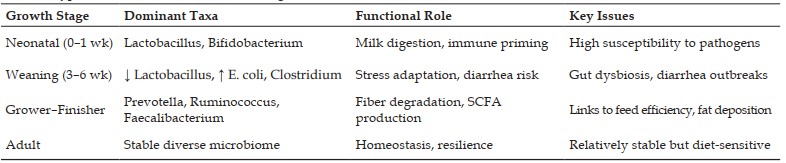
Pig production is a major contributor to global animal protein supply but faces challenges of high feed costs, disease risks, and restrictions on antibiotic growth promoters. Recent advances highlight the gut microbiome as a key regulator of nutrient utilization, immune function, and overall health in pigs. This review summarizes the development and composition of the gut microbiota across life stages and its roles in digestion, energy harvest, barrier protection, and immune modulation. Nutritional interventions such as prebiotics, probiotics, synbiotics, phytogenic compounds, organic acids, functional amino acids, enzymes, and unconventional feed resources are discussed for their ability to beneficially modulate the microbiome and enhance pig performance. In addition, emerging strategies including precision feeding, microbiome-informed biomarkers, multiomics integration, and next-generation approaches such as phage therapy, fecal microbiota transplantation, and engineered probiotics are explored. While these developments are promising, challenges remain in terms of mechanistic understanding, cost-effectiveness, regional adaptability, and standardization of microbiome-based interventions. The integration of host genetics, microbial ecology, and digital technologies holds future potential for precision and sustainable pig nutrition. Overall, feeding the microbiome represents a paradigm shift in swine production, offering avenues to improve productivity, animal welfare, and environmental sustainability in the post-antibiotic era.
References
- 1. Adeola, O., & Cowieson, A. J. (2011). Boardinvited review: Opportunities and challenges in using exogenous enzymes to improve nonruminant animal production. Journal of Animal Science, 89(10), 3189–3218.
- 2. Agus, A., Planchais, J., & Sokol, H. (2018). Gut microbiota regulation of tryptophan metabolism in health and disease. Nature Reviews Gastroenterology & Hepatology, 15(6), 323–338.
- 3. Barrangou, R., & Doudna, J. A. (2016). Applications of CRISPR technologies in research and beyond. Nature Biotechnology, 34(9), 933–941. https://doi.org/10.1038/nbt.3659.
- 4. Belkaid, Y., & Hand, T. W. (2014). Role of the microbiota in immunity and inflammation. Cell, 157(1), 121–141.
- 5. Berding, K., & Donovan, S. M. (2016). Diet can impact microbiota composition in children with autism spectrum disorder. Frontiers in Neuroscience, 10, 178. https://doi.org/10.3389/fnins.2016.00178.
- 6. Bergamaschi, M., Tiezzi, F., Howard, J., Huang, Y. J., Gray, K. A., Schillebeeckx, C., & Maltecca, C. (2020). Gut microbiome composition differences among breeds impact feed efficiency in swine. Microbiology Open, 9(4), e991. https://doi.org/10.1002/mbo3.991.
- 7. Biasato, I., Gasco, L., Dezzutto, D., Dabbou, S., Schiavone, A., & Gai, F. (2019). Black soldier fly larvae meal inclusion in pig diets: Effects on gut microbiota and immune responses. Journal of Animal Science and Biotechnology, 10, 12.
- 8. Canibe, N., & Jensen, B. B. (2012). Fermented liquid feed—Microbial and nutritional aspects and impact on enteric diseases in pigs. Animal Feed Science and Technology, 173(1–2), 17–40.
- 9. Clavijo, V., & Flórez, M. J. V. (2018). The gastrointestinal microbiome and its association with the control of pathogens in broilers and pigs: A review. Animal Feed Science and Technology, 241, 1–15. https://doi.org/10.1016/j.anifeedsci.2018.04.010.
- 10. Dowarah, R., Verma, A. K., Agarwal, N., Singh, P., & Singh, B. R. (2018). Selection and characterization of probiotic lactic acid bacteria and its impact on growth, nutrient digestibility,
- 11. FAO. (2023). FAOSTAT: Livestock Primary Data. Food and Agriculture Organization of the United Nations.
- 12. Fukuda, S., Toh, H., Hase, K., Oshima, K., Nakanishi, Y., Yoshimura, K., ... & Ohno, H. (2011). Bifidobacteria can protect from enteropathogenic infection through production of acetate. Nature, 469(7331), 543–547.
- 13. Furusawa, Y., Obata, Y., Fukuda, S., Endo, T. A., Nakato, G., Takahashi, D., ... & Ohno, H. (2013). Commensal microbe-derived butyrate induces differentiation of colonic regulatory T cells. Nature, 504(7480), 446–450.
- 14. Ganz, T. (2003). Defensins: Antimicrobial peptides of innate immunity. Nature Reviews Immunology, 3(9), 710–720.
- 15. Gibson, G. R., Hutkins, R., Sanders, M. E., Prescott, S. L., Reimer, R. A., Salminen, S. J., Scott, K., Stanton, C., Swanson, K. S., Cani, P. D., Verbeke, K., & Reid, G. (2017). Expert consensus document: The concept of prebiotics revisited. Nature Reviews Gastroenterology & Hepatology, 14(8), 491–502.
- 16. Gresse, R., Chaucheyras-Durand, F., Fleury, M. A., Van de Wiele, T., Forano, E., & BlanquetDiot, S. (2017). Gut microbiota dysbiosis in postweaning piglets: Understanding the keys to health. Trends in Microbiology, 25(10), 851–873. https://doi.org/10.1016/j.tim.2017.05.004.
- 17. Guevarra, R. B., Hong, S. H., Cho, J. H., Kim, B. R., Shin, J., Lee, J. H., Kang, B. N., Kim, Y. H., Wattanaphansak, S., Isaacson, R. E., & Kim, H. B. (2019). The dynamics of the piglet gut microbiome during the weaning transition in association with health and nutrition. Journal of Animal Science and Biotechnology, 10(1), 1–12. https://doi.org/10.1186/s40104-019-0364-5.
- 18. Haenen, D., Zhang, J., da Silva, C. S., Bosch, G., van der Meer, I. M., van Arkel, J., & Smidt, H.
- 19. Heo, J. M., Opapeju, F. O., Pluske, J. R., Kim, J. C., Hampson, D. J., & Nyachoti, C. M. (2013). Gastrointestinal health and function in weaned pigs: A review of feeding strategies to control post-weaning diarrhoea without using in-feed antimicrobial compounds. Journal of Animal Physiology and Animal Nutrition, 97(2), 207–237.
- 20. Hinton, A., Corrier, D. E., Spates, G. E., Norman, J. O., Ziprin, R. L., Beier, R. C., & DeLoach, J. R. (2021). Biological control of Salmonella typhimurium in young broiler chickens. Poultry Science, 69(1), 134–146.
- 21. Holman, D. B., Brunelle, B. W., Trachsel, J., & Allen, H. K. (2017). Meta-analysis to define a core microbiota in the swine gut. mSystems, 2(3), e00004-17.
- 22. Hu, J., Ma, L., Nie, Y., Chen, J., Zheng, W., Wang, X., Xie, C., Zheng, Z., Wang, Z., Yang, T., Xu, S., & Luo, Y. (2018). A microbiotaderived bacteriocin targets the host to confer diarrhea resistance in early-weaned piglets. Cell Host & Microbe, 24(6), 817–832. https://doi.org/10.1016/j.chom.2018.11.006.
- 23. Hu, R., He, Z., Liu, M., Tan, J., Zhang, H., Hou, D., Wu, S., & Tang, Z. (2022). Sodium butyrate supplementation improves gut morphology and growth in weaned piglets. Animal Nutrition, 8(1), 23–31.
- 24. Jha, R., & Berrocoso, J. F. D. (2016). Dietary fiber and protein fermentation in the intestine of swine and their interactive effects on gut health and on the environment: A review. Animal Feed Science and Technology, 212, 18–26.
- 25. Johansson, M. E. V., Larsson, J. M. H., & Hansson, G. C. (2011). The two mucus layers of colon are organized by the MUC2 mucin, whereas the outer layer is a legislator of host–microbial interactions. Proceedings of the National Academy of Sciences, 108(Suppl. 1), 4659–4665.
- 26. Joyce, S. A., & Gahan, C. G. (2016). The gut microbiota and the metabolic health of the host. Current Opinion in Gastroenterology, 32(2), 120–127.
- 27. Lallès, J. P., Bosi, P., Smidt, H., & Stokes, C. R. (2020). Nutritional management of gut health in pigs around weaning: Options and limitations. Animal Feed Science and Technology, 263, 114432.
- 28. Lee, S. H., Shinde, P. L., Choi, J. Y., Kwon, I. K., Lee, J. K., Pak, S. I., ... & Chae, B. J. (2019). Effects of dietary green tea catechins on growth performance, meat quality, and immune responses in finishing pigs. Journal of Animal Science, 87(6), 1738–1745.
- 29. Lei, X. G., Weaver, J. D., Mullaney, E., Ullah, A. H., & Azain, M. J. (2013). Phytase, a new life for an “old” enzyme. Annual Review of Animal Biosciences, 1, 283–309.
- 30. Li, Y., Guo, Y., Wen, Z., Jiang, X., Ma, X., & Han, X. (2022). Association of gut microbiota composition with feed efficiency traits in pigs. Animal Nutrition, 8(2), 183–194.
- 31. Liu, H., Zhang, J., Zhang, S., Yang, F., Thacker, P. A., & Ma, X. (2020). The role of maternal microbiota in shaping the intestinal microbiota of piglets at early life. Animal Nutrition, 6(4),
- 32. Liu, Y., Wang, X., Chen, Y., Yu, J., Zheng, P., He, J., ... & Chen, D. (2018). Dietary fiber–induced improvement in porcine intestinal barrier function involves enhanced mucosal immune responses and altered gut microbiota. Scientific Reports, 8, 2343.
- 33. Louis, P., & Flint, H. J. (2017). Formation of propionate and butyrate by the human colonic microbiota. Environmental Microbiology, 19(1), 29–41.
- 34. Ma, W., Zhang, Y., Li, Y., Zhao, J., Chen, Y., & Xu, Q. (2024). Molecular identification and probiotic potential of lactic acid bacteria isolates from pigs. Frontiers in Microbiology, 15, 1425738.
- 35. Markowiak, P., & Śliżewska, K. (2018). Effects of probiotics, prebiotics, and synbiotics on human and animal health. Nutrients, 10(11), 1723.
- 36. Mateos-Aparicio, I., Mateos, P. V., RedondoCuenca, A., Villanueva-Suárez, M. J., & ZapataRevilla, M. A. (2020). The influence of algae polysaccharides on gut microbiota and health: A review. Critical Reviews in Food Science and Nutrition, 60(1), 1–13.
- 37. McCormack, U. M., Curião, T., Buzoianu, S. G., Prieto, M. L., Ryan, T., Varley, P., Crispie, F., Magowan, E., Metzler-Zebeli, B. U., Berry, D., & Cotter, P. D. (2017). Exploring a possible link between the intestinal microbiota and feed efficiency in pigs. Applied and Environmental
- 38. Niu, Q., Li, P., Hao, S., Zhang, Y., Kim, S. W., Li, H., Ma, X., Gao, S., & He, L. (2019). Dynamic distribution of the gut microbiota and the relationship with apparent crude fiber digestibility and growth stages in pigs. Scientific Reports, 9(1), 1–10. https://doi.org/10.1038/s41598-019-51364-9.
- 39. NRC. (2012). Nutrient requirements of swine (11th Rev. ed.). Washington, DC: National Academies Press.
- 40. Partanen, K. H., & Mroz, Z. (1999). Organic acids for performance enhancement in pig diets. Nutrition Research Reviews, 12(1), 117–145.
- 41. Peng, L., Li, Z. R., Green, R. S., Holzman, I. R., & Lin, J. (2009). Butyrate enhances the intestinal barrier by facilitating tight junction assembly via activation of AMP-activated protein kinase. American Journal of Physiology-Gastrointestinal and Liver Physiology, 296(4), G710–G718.
- 42. Pieper, R., Bindelle, J., Rossnagel, B., Van Kessel, A., Leterme, P., & Zentek, J. (2012). Influence of dietary fibre on nutrient digestibility and microbial fermentation in growing pigs: A review. Livestock Science, 145(1–3), 121–131.
- 43. Pluske, J. R., Turpin, D. L., & Kim, J. C. (2018). Gastrointestinal tract (gut) health in the young pig. Animal Nutrition, 4(2), 187–196. https://doi.org/10.1016/j.aninu.2017.12.004.
- 44. Pohl, C. S., Medland, J. E., & Moeser, A. J. (2017). Early-life stress origins of gut microbiota
- 45. Pomar, C., Hauschild, L., Zhang, G. H., Pomar, J., & Lovatto, P. A. (2019). Precision feeding can significantly reduce feeding cost and nutrient excretion in growing pigs. Journal of Animal Science, 87(3), 912–924.
- 46. Ramayo-Caldas, Y., Mach, N., Lepage, P., Levenez, F., Denis, C., Lemonnier, G., ... & Estellé, J. (2019). Phylogenetic network analysis applied to pig gut microbiota identifies an ecosystem structure linked with growth traits. ISME Journal, 13(12), 2966–2977.
- 47. Schokker, D., Zhang, J., Vastenhouw, S. A., Heilig, H. G., Smidt, H., Rebel, J. M., & Smits, M. A. (2014). Long-lasting effects of earlylife antibiotic treatment and routine animal handling on gut microbiota composition and immune system in pigs. PLoS ONE, 9(2), e100401.
- 48. Singh, A., Verma, A. K., Agarwal, N., & Singh, B. R. (2023). Fermented cereal-based functional
- 49. Sun, H., Tang, J. W., Fang, C. L., Yao, X. H., Wu, Y. F., Wang, X., & Feng, J. (2022). Effects of Bacillus subtilis on growth performance, antioxidant capacity, and intestinal health in pigs under heat stress. Animal Science Journal, 93(1), e13676.
- 51. Trevisi, P., Luise, D., & Bosi, P. (2020). The role of the gut microbiota in pig health and production. Animal, 14(S1), s216–s226. https:// doi.org/10.1017/S1751731119003250.
- 52. Turnbaugh, P. J., Ley, R. E., Mahowald, M. A., Magrini, V., Mardis, E. R., & Gordon, J. I. (2006). An obesity-associated gut microbiome with increased capacity for energy harvest. Nature, 444(7122), 1027–1031.
- 53. van der Hee, B., & Wells, J. M. (2021). Microbial regulation of host physiology by short chain fatty acids. Trends in Microbiology, 29(8), 700–712. https://doi.org/10.1016/j.tim.2021.01.002.
- 54. Wang, J., Chen, L., Li, P., Li, X., Zhou, H., Wang, F., Li, D., Yin, Y., & Wu, G. (2018). Gene regulation and metabolomics in piglets with different growth rates induced by earlylife microbial intervention. Journal of Animal Science, 96(4), 1365–1379.
- 55. Wang, X., Tsai, T., Deng, F., Wei, X., Chai, J., Knapp, J., Apple, J., Maxwell, C. V., Lee, J. A., Li, Y., & Zhao, J. (2019). Longitudinal investigation of the swine gut microbiome from birth to market reveals stage and growth performance-associated bacteria. Microbiome, 7, 109. https://doi.org/10.1186/s40168-019-0721-7.
- 56. Wu, G. D., Chen, J., Hoffmann, C., Bittinger, K., Chen, Y. Y., Keilbaugh, S. A., Bewtra, M., Knights, D., Walters, W. A., Knight, R., Sinha, R., Gilroy, E., Gupta, K., Baldassano, R., Nessel, L., Li, H., Bushman, F. D., & Lewis, J. D. (2011). Linking long-term dietary patterns with gut microbial enterotypes. Science, 334(6052), 105–108.
- 57. Xu, J., Chen, N., Wu, Z., Song, Y., Zhang, Y., Wu, N., Zhang, F., & Xu, X. (2020). 16S rRNA gene sequencing reveals changes in the gut microbiota of pigs fed fermented feed. Applied Microbiology and Biotechnology, 104(3), 1303–1313.
- 58. Yang, H., Huang, X., Fang, S., Xin, W., Huang, L., & Chen, C. (2017). Unraveling the fecal microbiota and metagenomic functional capacity associated with feed efficiency in pigs. Frontiers in Microbiology, 8, 1555. https://doi. org/10.3389/fmicb.2017.01555.
- 59. Yu, M., Li, Z., Chen, W., Rong, T., Wang, G., Ma, X., & Zhang, S. (2018). The role of probiotics in pig nutrition and health. Journal of Animal Science and Biotechnology, 9, 60.
- 60. Zhang, F., Cui, B., He, X., Nie, Y., Wu, K., Fan, D., & Fecal Microbiota Transplantation Clinical Study Group. (2018). Microbiota transplantation: Concept, methodology, and strategy for its odernization. Protein & Cell, 9(5), 462–473. https://doi.org/10.1007/ s13238-018-0541-8.
- 61. Zhao, W., Wang, Y., Liu, S., Huang, J., Zhai, Z., He, C., Ding, J., Wang, J., Wang, H., Fan, W., Zhao, J., Meng, H., Chen, Y., & Wang, J. (2015). The dynamic distribution of porcine gut microbiota and its relationship with host growth performance. ISME Journal, 9(6), 1177–1187. https://doi.org/10.1038/ismej.2014.212.
- 62. Zhu, L., Zhao, J., Wang, J., Bai, S., Wang, Y., Yu, H., & Ding, X. (2021). Dietary fiber and gut microbiota in pig production: A review. Animal Nutrition, 7(1), 1–10. https://doi.org/10.1016/j.aninu.2020.08.005.
Data Sharing Statement
There are no additional data available. All raw data and code are available upon request.
Funding
This research received no funding.
Author Contributions
All authors contributed significantly to the work and approve its publication.
Ethics Declaration
This article does not involve any human or animal subjects, and therefore does not require ethics approval.
Acknowledgements
We would like to express our gratitude to the patients, their families, and all those who have contributed to this study.
Conflicts of Interest
No conflicts of interest in this work.
About this article

Cite this article
Abhilasha Singh, Kumar Govil, Mamta, et al. Feeding the Microbiome: A Growing Frontier in Pig Production. J Agri Busi 2026; 12(1): 83–94.
Licence:
Attribution-Non-commercial 4.0 International (CC BY-NC 4.0)This license enables reusers to distribute, remix, adapt, and build upon the material in any medium or format for noncommercial purposes only, and only so long as attribution is given to the creator.
| Received | Accepted | Published |
|---|---|---|
| September 23, 2025 | December 18, 2025 | June 20, 2026 |
DOI: https://doi.org/10.21088/ijab.2454.7964.12126.9
Keywords
Swine NutritionGut MicrobiotaProbioticsGrowth PerformanceImmune ModulationFeed AdditivesSearch for Similar Articles
Similar Articles
- Studies on Bee and Pollination is Changing Environment: A Review
- Cultivating Rosemary: A Guide to its Medicinal and Therapeutic Wonders
- Active Biodegradable Edible Packaging System: An Affluent Predisposition Towards...
- Routine Management Practices for Sustainable Dairy Production
- Diagnosis and Management of Diseases Caused by Abiotic and Biotic Stress in Vege...
Article Level Metrics
Last UpdatedWednesday 21 October 2026, 10:25:09 (IST)
3481
Accesses
45
496
00
Citations
NA
NA
NA
Download citation
Article Keywords
Keyword Highlighting
Highlight selected keywords in the article text.
Timeline
| Received | September 23, 2025 |
| Accepted | December 18, 2025 |
| Published | June 20, 2026 |
licence
Attribution-Non-commercial 4.0 International (CC BY-NC 4.0)
This license enables reusers to distribute, remix, adapt, and build upon the material in any medium or format for noncommercial purposes only, and only so long as attribution is given to the creator.