Full Text (PDF)
Indian Journal of Forensic Medicine and Pathology 15(4):p 225-229, October-December 2022. | DOI: https://doi.org/10.21088/ijfmp.0974.3383.15422.3
Original Article
Epidemiology of Snake Bite in A Medical College in Karnataka
Tyagaraju M.R, Chandrashekhar B. Bhuyyar, Dayanand Gannur, Uday Kumar, Shrikant. B, V. M Allagi
Author Information
Licence:
Attribution-Non-commercial 4.0 International (CC BY-NC 4.0)This license enables reusers to distribute, remix, adapt, and build upon the material in any medium or format for noncommercial purposes only, and only so long as attribution is given to the creator
Indian Journal of Forensic Medicine and Pathology 15(4):p 225-229, October-December 2022. | DOI: https://doi.org/10.21088/ijfmp.0974.3383.15422.3
How Cite This Article:
Bhuyyar CB, Tyagaraju MR, Gannur D, et al. Epidemiology of snake bite in a medical college in Karnataka. Indian J Forensic Med Pathol. 2022;15(4):225-229.Timeline
Received : September 02, 2022
Accepted : December 28, 2022
Published : December 30, 2022
Abstract
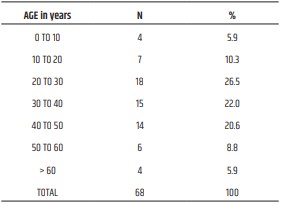
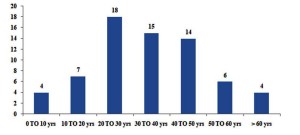
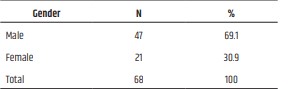
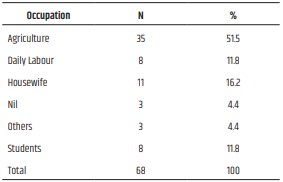
Snake bites are a cause of considerable morbidity and mortality worldwide. Out of 68 cases, the maximum was between the age group of 20 - 30 years (26%). 47 of 68 (69%) victims were male, and 31% of victims were female. More than half of the victims are farmers. 39 of 68 (>57%) victims belonged to a lower class of socioeconomic status. 24% were illiterates, and 76% were literates. Maximum victims, 91%, were from a rural region. A maximum number of victims, 68% had snake bites in the fields, followed by 19% snake bites at home. 56% of snake bites occurred in the rainy season and 26% in the winter season.
References
- 1. Mohapatra B, Warrell DA, Suraweera W, Bhatia P, Dhingra N, Jotkar RM. Snakebite Mortality in India: A Nationally Representative Mortality Survey. PLosNegi Trop Dis. 2011; 5(4): e1018.
- 2. Kasturiratne A, Wickremasinghe AR, de Silva N, Gunawardena NK, Pathmeswaran A. Estimating the global burden of snakebite: A literature analysis and modeling based on regional estimates of envenoming and deaths. PLoS Med.2008; 5(11): e218.
- 3. World Health Report 2004. Changing history. http://www.who.int/whr/ 2004 /en.
- 4. Whittaker R. Common Indian snakes: A field guide. New Delhi: McMillan India Limited; 2001.
- 5. Ganneru B, Sashidhar RB. Epidemiological profile of snakebite cases from Andhra Pradesh using immunoanalytical approach. Indian J Med Res 125, 2007 May:661-8. Available from:http://www.icmr.nic. in/ijmr/2007/may/ 0508.pdf.
- 6. Nuchhi UC, Shah RK, Reddy KSN. A study of snake bite poisoning in Gulbarga region (a five year study). Indian Journal of Forensic Medicine & Toxicology Year: 2009, 3(2).
- 7. Kulkarni ML, Anees S. Snake venom poisoning: experience with 633 cases. Indian Pediatr. 1994 Oct;31(10):1239-43.
- 8. Monteiro NP, Kanchan T, Bhagavath P, Pradeep Kumar G. Epidemiology of Cobra bite in Manipal, Southern India. J Indian Acad Forensic Med. 2010;32(3):224- 27.
- 9. Lal P, Dutta S, Rotti SB, Danabalan M, Kumar A. Epidemiological profile of snakebite cases admitted in JIPMER Hospital. Indian Journal of Community Medicine. 2001; 26(1): 36-38.
- 10. Shetty AK, Jirli SP. Incidence of Snake Bites in Belgaum. J Indian Acad Forensic Med.2010;32(3):139-41.
- 11. Bawaskar HS. Profile of snakebite envenoming in Western Maharashtra, India. Trans R Soc Trop Med Hyg. 2002 JanFeb;96(1):79-84.
- 12. Whitaker R, Whitaker S. Analysis of Snakebite Data from Pap pinisseriVishchikilsaSociety, Kannur, Kerala (India). Calicut Medical Journal 2005;4(2):e2.Available from: http:// www.calicutmedicaljournal.org/ 2006/4/2/e2.
Data Sharing Statement
There are no additional data available. All raw data and code are available upon request.
Funding
This research received no funding.
Author Contributions
All authors contributed significantly to the work and approve its publication.
Ethics Declaration
This article does not involve any human or animal subjects, and therefore does not require ethics approval.
Acknowledgements
We would like to express our gratitude to the patients, their families, and all those who have contributed to this study.
Conflicts of Interest
No conflicts of interest in this work.
About this article

Cite this article
Bhuyyar CB, Tyagaraju MR, Gannur D, et al. Epidemiology of snake bite in a medical college in Karnataka. Indian J Forensic Med Pathol. 2022;15(4):225-229.
Licence:
Attribution-Non-commercial 4.0 International (CC BY-NC 4.0)This license enables reusers to distribute, remix, adapt, and build upon the material in any medium or format for noncommercial purposes only, and only so long as attribution is given to the creator
| Received | Accepted | Published |
|---|---|---|
| September 02, 2022 | December 28, 2022 | December 30, 2022 |
DOI: https://doi.org/10.21088/ijfmp.0974.3383.15422.3
Keywords
SnakebiteVictimsFarmers.VictimsFarmers.Search for Similar Articles
Similar Articles
- Diatom Analysis in Thermophilic water bodies: A Study on Hot Water Springs of Ma...
- Morphometric Study of Supra-meatal Triangle and Mastoid process in the Adult dry...
- Histopathological Spectrum of Autopsy Cases: A One Year Retrospective Observatio...
- Forensic Differentiation of Manner of Death in Railway Fatalities: A FourCase Se...
- Understanding assault Patterns: A Cross-sectional study of Cases at Chri, Kelamb...
Article Level Metrics
Last UpdatedSunday 18 October 2026, 15:44:25 (IST)
16278
Accesses
20
3209
00
Citations
NA
NA
NA
Download citation
Article Keywords
Keyword Highlighting
Highlight selected keywords in the article text.
Timeline
| Received | September 02, 2022 |
| Accepted | December 28, 2022 |
| Published | December 30, 2022 |
licence
Attribution-Non-commercial 4.0 International (CC BY-NC 4.0)
This license enables reusers to distribute, remix, adapt, and build upon the material in any medium or format for noncommercial purposes only, and only so long as attribution is given to the creator