Full Text (PDF)
Indian Journal of Forensic Medicine and Pathology 11(4):p 255-264, Oct-Dec 2018. | DOI: 10.21088/ijfmp.0974.3383.11418.6
Original Article
Effect of Neural Mobilsation on EMG and Disabilty Index in Lumbar Radicular Pathology
Saurabh Sharma, Saurabh Sharma null
Author Information
Licence:
Attribution-Non-commercial 4.0 International (CC BY-NC 4.0)This license enables reusers to distribute, remix, adapt, and build upon the material in any medium or format for noncommercial purposes only, and only so long as attribution is given to the creator.
Indian Journal of Forensic Medicine and Pathology 11(4):p 255-264, Oct-Dec 2018. | DOI: 10.21088/ijfmp.0974.3383.11418.6
How Cite This Article:
Timeline
Received : September 19, 2018
Accepted : October 16, 2018
Published : November 30, 2018
Abstract
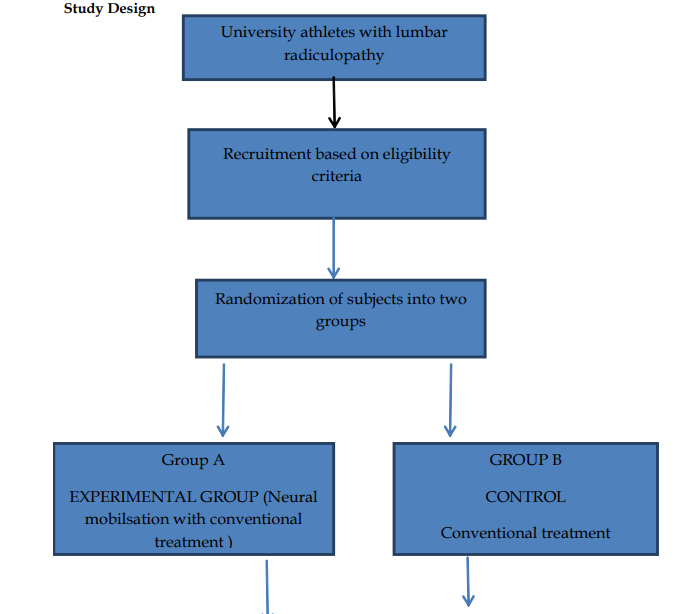
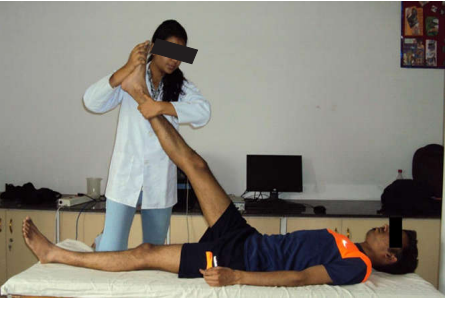
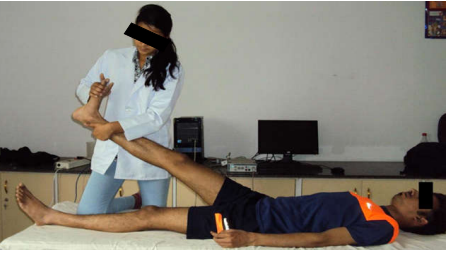
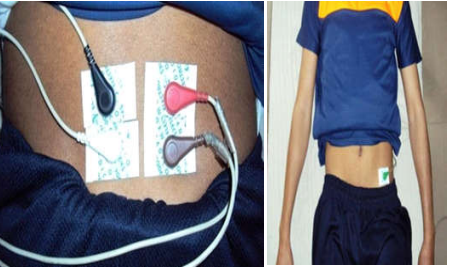
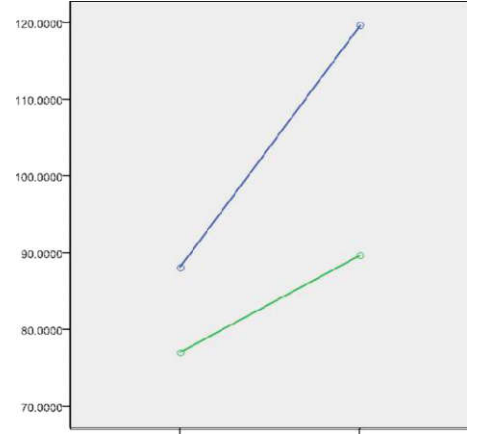
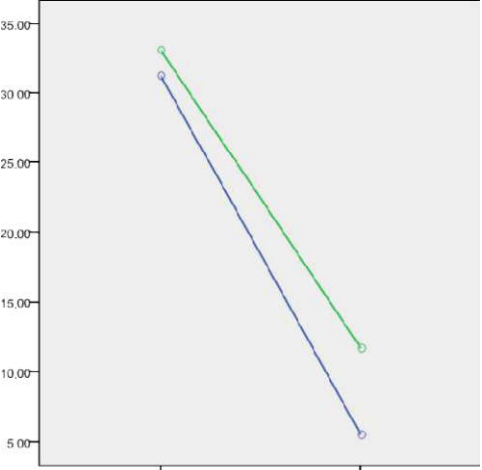
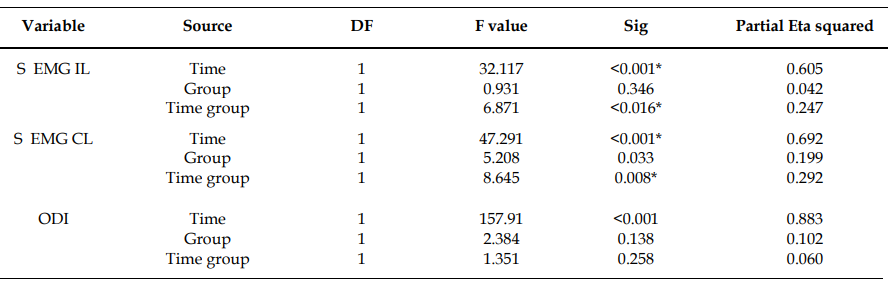
Background: Adverse neurodynamic tension is a commonly seen clinical condition. It is found in across all age groups. The lumbar radiculopathy can be quite disabling as well. Therefore we sought to find out the effect of neural mobilisation on muscle activity and the disability caused by this problem. Methods: 24 male athletes were recruited from university clinic after clinical diagnosis. They were allocated to two different arms ie experimental arm (Group A n=12, age-22.2±3.51) and conventional PT arm (Group B n=12, age 24.8±4.06). Measurements for s EMG of ipsilateral and contralateral multifidus and disability (Oswestry disability index) were taken at baseline and after 14 treatment sessions. Results: Mixed model ANOVA showed significant main effects for time F (1,21) = 32.11, p <0.001 and time-group interaction F (1,21) = 6.871, p = 0.016 while for group F (1,21) = 0.931, p = 0.346. there was more interaction effect in neural mobilisation group than conventional treatment group which implies that increase in ipsilateral and contralateral EMG is more in neural mobilization group. The disability index (ODI) improvement in both groups remained the same. Conclusion: lumbar radiculopathy patients had better clinical outcomes in terms of ipsilateral and contralateral EMG .The improvement is related to correction of the neural mobility impairment. Further studies are needed including randomized controlled trials to confirm these findings, neural mobilization effects as a standalone treatment and establish possible mechanism for neurodynamic treatment in lumbar radiculopathy.
References
- 1. Cho I, Jeon C, Lee S, Lee D, Hwangbo G. Effects of lumbar stabilization exercise on functional disability and lumbar lordosis angle in patients with chronic low back pain. J Phys Ther Sci. 2015;27(6):1983-5.
- 2. Boyd BS, Wanek L, Gray AT, Topp KS. Mechanosensitivity of the lower extremity nervous system during straight-leg raise neurodynamic testing in healthy individuals. J Orthop Sports Phys Ther. 2009;39(11):780-90.
- 3. Shacklock M. Clinical neurodynamics: a new system of musculoskeletal treatment. Oxford: Elsevier Health Sciences; 2005.
- 4. Sunderland S, Bradley KC. Stress-strain phenomena in human peripheral nerve trunks. Brain. 1961;84(1):102-19.
- 5. Wiederien RC, Feldman TD, Heusel LD, Loro WA, Moore JH, Ernst GP, et al. The effect of the median nerve compression test on median nerve conduction across the carpal tunnel. Electromyogr Clin Neurophysiol. 2001;42(7):413-21.
- 6. Butler DS. The sensitive nervous system. Adelaide: Noigroup Publications; 2000.
- 7. Kornberg C, Lew P. The effect of stretching neural structures on grade one hamstring injuries. J Orthop Sports Phys Ther. 1989;10(12):481-7.
- 8. Danneels L, Coorevits P, Cools A, Vanderstraeten G, Cambier D, Witvrouw E, et al. Differences in electromyographic activity in the multifidus muscle and the iliocostalis lumborum between healthy subjects and patients with sub-acute and chronic low back pain. Eur Spine J. 2002;11(1):13-9.
- 9. Min JH, Choi HS, Ihl Rhee W, Lee JI. Association between radiculopathy and lumbar multifidus atrophy in magnetic resonance imaging. J Back Musculoskelet Rehabil. 2013;26(2):175-81.
- 10. Renkawitz T, Boluki D, Grifka J. The association of low back pain, neuromuscular imbalance, and trunk extension strength in athletes. Spine J. 2006;6(6):673-83.
- 11. De Schepper EI, Overdevest GM, Suri P, Peul WC, Oei EH, Koes BW, et al. Diagnosis of lumbar spinal stenosis: an updated systematic review of the accuracy of diagnostic tests. Spine (Phila Pa 1976). 2013;38(8):E469-81.
- 12. Ahmed N, Khan Z, Chawla C. Comparison of Mulligan’s Spinal Mobilization with Limb Movement (SMWLM) and Neural Tissue Mobilization for the Treatment of Lumbar Disc Herniation: A Randomized Clinical Trial. J Nov Physiother. 2016;6(304):2.
- 13. Cleland JA, Childs JD, Palmer JA, Eberhart S. Slump stretching in the management of non-radicular low back pain: a pilot clinical trial. Man Ther. 2006;11(4):279-86.
- 14. McGill SM. Low back disorders: evidence-based prevention and rehabilitation. 3rd ed. Champaign (IL): Human Kinetics; 2015.
- 15. Stevens VK, Parlevliet TG, Coorevits PL, Mahieu NN, Bouche KG, Vanderstraeten GG, et al. The effect of increasing resistance on trunk muscle activity during extension and flexion exercises on training devices. J Electromyogr Kinesiol. 2008;18(3):434-45.
- 16. Macintosh JE, Valencia F, Bogduk N, Munro RR. The morphology of the human lumbar multifidus. Clin Biomech (Bristol, Avon). 1986;1(4):196-204.
- 17. Heales LJ, Vicenzino B, Macdonald DA, Hodges PW. Forearm muscle activity is modified bilaterally in unilateral lateral epicondylalgia: A case control study. Scand J Med Sci Sports. 2016;26(12):1382-90.
- 18. Freeman MD, Woodham MA, Woodham AW. The role of the lumbar multifidus in chronic low back pain: a review. PM R. 2010;2(2):142-6.
- 19. Kim S, Kim H, Chung J. Effects of spinal stabilization exercise on the cross-sectional areas of the lumbar multifidus and psoas major muscles, pain intensity, and lumbar muscle strength of patients with degenerative disc disease. J Phys Ther Sci. 2014;26(4):579-82.
- 20. Puntumetakul R, Areeudomwong P, Emasithi A, Yamauchi J. Effect of 10-week core stabilization exercise training and detraining on pain-related outcomes in patients with clinical lumbar instability. Patient Prefer Adherence. 2013;7:1189-99.
- 21. Sekendiz B, Cug M, Korkusuz F. Effects of Swiss-ball core strength training on strength, endurance, flexibility, and balance in sedentary women. J Strength Cond Res. 2010;24(11):3032-40.
- 22. Nagrale AV, Patil SP, Gandhi RA, Learman K. Effect of slump stretching versus lumbar mobilization with exercise in subjects with non-radicular low back pain: a randomized clinical trial. J Man Manip Ther. 2012;20(1):35-42.
- 23. Song CY, Lin SF, Huang CY, Wu HC, Chen CH, Hsieh CL. Validation of the Brief Pain Inventory in patients with low back pain. Spine (Phila Pa 1976). 2016;41(15):E937-42.
Data Sharing Statement
There are no additional data available. All raw data and code are available upon request.
Funding
This research received no funding.
Author Contributions
Whether all authors contributed significantly to the work and approve its publication.
Ethics Declaration
This article does not involve any human or animal subjects, and therefore does not require ethics approval.
Acknowledgements
We would like to express our gratitude to the patients, their families, and all those who have contributed to this study.
Conflicts of Interest
The authors report no conflicts of interest in this work.
About this article

Cite this article
Licence:
Attribution-Non-commercial 4.0 International (CC BY-NC 4.0)This license enables reusers to distribute, remix, adapt, and build upon the material in any medium or format for noncommercial purposes only, and only so long as attribution is given to the creator.
| Received | Accepted | Published |
|---|---|---|
| September 19, 2018 | October 16, 2018 | November 30, 2018 |
DOI: 10.21088/ijfmp.0974.3383.11418.6
Keywords
Lumbar RadiculopathyDisc HerniationNeural MobilisationEMGODISearch for Similar Articles
Similar Articles
- Diatom Analysis in Thermophilic water bodies: A Study on Hot Water Springs of Ma...
- Morphometric Study of Supra-meatal Triangle and Mastoid process in the Adult dry...
- Histopathological Spectrum of Autopsy Cases: A One Year Retrospective Observatio...
- Forensic Differentiation of Manner of Death in Railway Fatalities: A FourCase Se...
- Understanding assault Patterns: A Cross-sectional study of Cases at Chri, Kelamb...
Article Level Metrics
Last UpdatedSunday 18 October 2026, 14:51:06 (IST)
16275
Accesses
10
3209
00
Citations
NA
NA
NA
Download citation
Article Keywords
Keyword Highlighting
Highlight selected keywords in the article text.
Timeline
| Received | September 19, 2018 |
| Accepted | October 16, 2018 |
| Published | November 30, 2018 |
licence
Attribution-Non-commercial 4.0 International (CC BY-NC 4.0)
This license enables reusers to distribute, remix, adapt, and build upon the material in any medium or format for noncommercial purposes only, and only so long as attribution is given to the creator.