Full Text (PDF)
Indian Journal of Forensic Medicine and Pathology 17(4):p 233-240, OCT. DEC. 2024. | DOI: https://doi.org/10.21088/ijfmp.0974.3383.17424.2
Original Article
Computational Forensics & Machine Learning: Leveraging AI and Machine Learning for Intergenerational Analysis of Craniofacial Heritability of the Indian families using photographs
Author Information
Licence:
Attribution-Non-commercial 4.0 International (CC BY-NC 4.0)This license enables reusers to distribute, remix, adapt, and build upon the material in any medium or format for noncommercial purposes only, and only so long as attribution is given to the creator.
Indian Journal of Forensic Medicine and Pathology 17(4):p 233-240, OCT. DEC. 2024. | DOI: https://doi.org/10.21088/ijfmp.0974.3383.17424.2
How Cite This Article:
Sharma P, Verma P. Computational Forensics & Machine Learning: Leveraging AI and Machine Learning for Intergenerational Analysis of Craniofacial Heritability of the Indian families using photographs. Indian J Forensic Med Pathol. 2024;17(4):233-240.Timeline
Received : June 18, 2024
Accepted : August 23, 2024
Published : December 15, 2024
Abstract
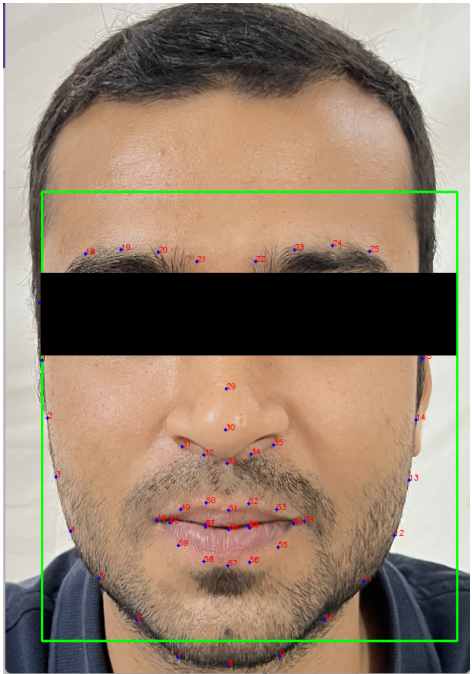
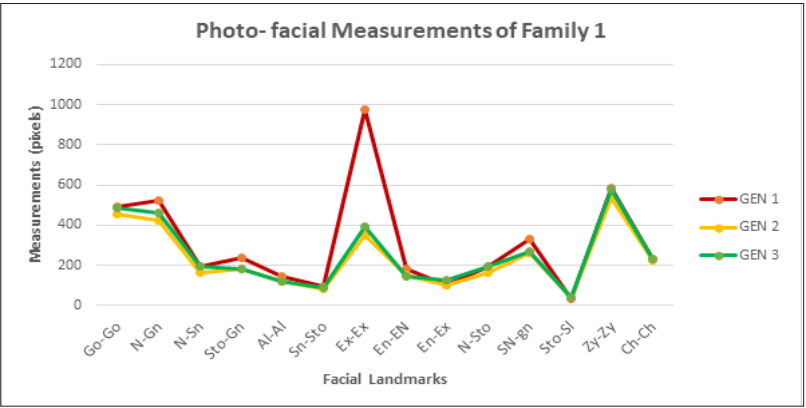
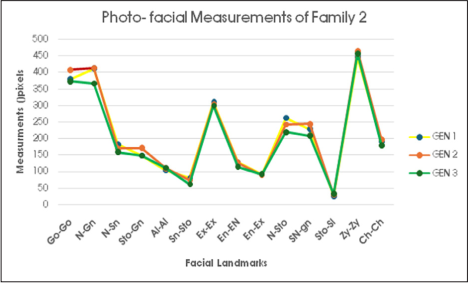
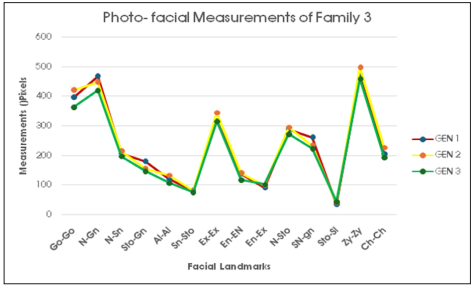
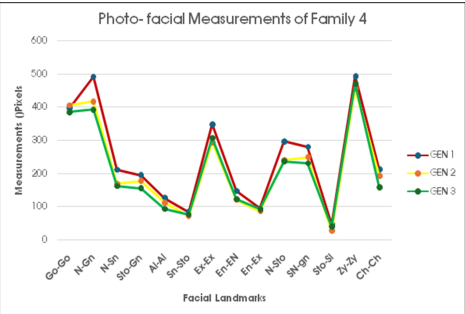
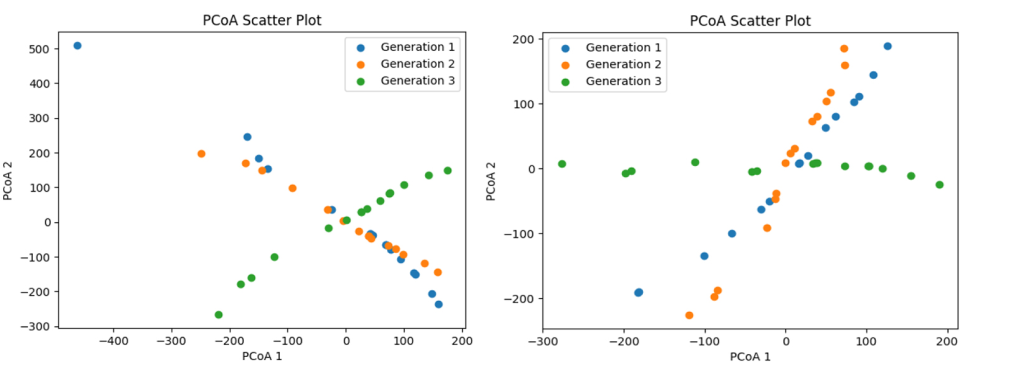
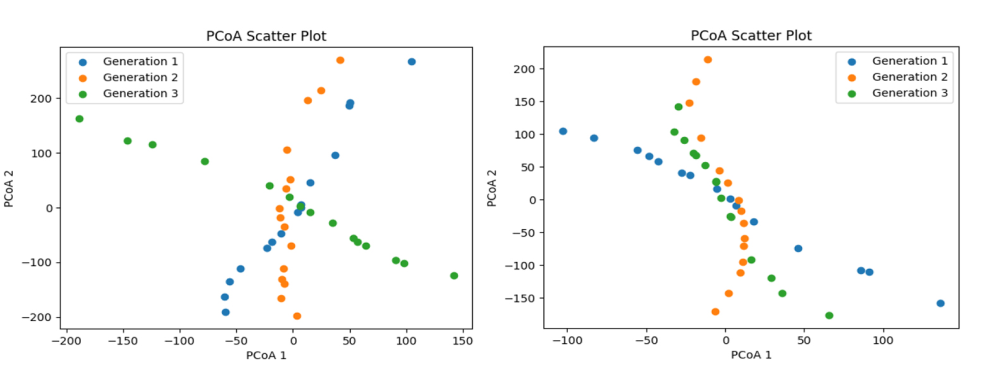
Background: Facial features are known to be highly heritable, exhibiting remarkable resemblance within families across generations. This inheritance pattern has significant implications in fields such as forensics, where reconstructing facial characteristics from limited ancestral data can aid in identification and investigation. Aims: This study aims to leverage artificial intelligence (AI) and machine learning techniques to conduct a comprehensive computational analysis of craniofacial heritability within Indian families. Methods: A dataset comprising facial photographs of three generations (grandparents, parents and children) from 51 Indian families were compiled. Computer vision algorithms were employed to extract precise anthropometric measurements from these images. Various statistical methods, including Pearson correlation, hypothesis testing (T-tests, ANOVA, chi-square) and dimensionality reduction techniques (PCA, PCoA), were applied to quantify intergenerational relationships. Furthermore, machine learning models, such as linear regression and random forest regression, were developed to predict descendant facial features from ancestral data. Results: Pearson Correlation Analysis revealed exceptionally strong positive correlations (r > 0.9) between ancestral and descendant facial measurements, supported by statistically significant p-values. Hypothesis tests failed to reject the null hypothesis of no difference between generations, indicating remarkable similarity. Dimensionality reduction visualizations depicted clustering patterns that illustrated familial resemblance and generational variations. Machine learning models achieved high predictive accuracy, with random forest regression outperforming linear regression, capturing complex non-linear hereditary patterns. Conclusions: This study demonstrates the powerful capabilities of AI and machine learning techniques in quantifying and elucidating the heritability of craniofacial morphology across generations. The findings conclusively establish that facial features are highly heritable within Indian families, with genetics playing a predominant role over environmental influences. These computational forensic methods advance our ability to reconstruct facial characteristics from limited ancestral data, enhancing forensic investigations and deepening our understanding of phenotypic inheritance.
References
- 1. Nakata M, Yu PL, Davis B, Nance WE. The use of genetic data in the prediction of craniofacial dimensions. Am J Orthod. 1974;66(1):2-14.
- 2. Tsagris M, Tsetsos F, Triantafyllidis A, Tsimikas J. Heritability of human facial features: a classical twin study. Genetica. 2018;146(4-5):375-84.
- 3. Claes P, Liberton DK, Daniels K, Rosana KM, Quillen EE, Pearson LN, et al. Modeling 3D facial shape from DNA. PLoS Genet. 2014;10(3):e1004224.
- 4. Shrimpton S, Daniels K, de Greef S, Tilotta F, Willems G, Vandermeulen D, et al. A spatially-dense regression study of facial form and tissue depth: towards an interactive tool for craniofacial reconstruction. Forensic Sci Int. 2014;234:103-10.
- 5. Roseman CC, Weaver TD. Multivariate apportionment of global human craniometric diversity. Am J Phys Anthropol. 2004;125(3):257-63.
- 6. Hubbard AR, Guatelli-Steinberg D, Irish JD. Do nuclear DNA and dental nonmetric data produce similar reconstructions of regional population history? An example from modern coastal Kenya. Am J Phys Anthropol. 2015;157(2):295-304.
- 7. Adhikari K, Fuentes-Guajardo M, Quinto-Sánchez M, MendozaRevilla J, Camilo Chacón-Duque J, Acuña-Alonzo V, et al. A genomewide association scan implicates DCHS2, RUNX2, GLI3, PAX1 and EDAR in human facial variation. Nat Commun. 2016;7:11616.
- 8. Zaidi AA, Mattern BC, Claes P, McEcoy B, Hughes C, Shriver MD. Investigating the case of human nose shape and climate adaptation. PLoS Genet. 2017;13(3):e1006616.
- 9. Majumder PP. The human genetic history of South Asia. Curr Biol. 2010;20(4):R184-7.
- 10. Basu A, Sarkar-Roy N, Majumder PP. Genomic reconstruction of the history of extant populations of India reveals five distinct ancestral components and a complex structure. Proc Natl Acad Sci U S A. 2016;113(6):1594-9.
- 11. Kumar A, Mishra A. Anatomical variations in the branching pattern of human aortic arch: a cadaveric study from Nepal. Eur J Anat. 2015 Jan 1;19(1):43-7.
- 12. Thies J, Zollhöfer M, Stamminger M, Theobalt C, Nießner M. Face2Face: Real-time face capture and reenactment of RGB videos. In: Proceedings of the IEEE Conference on Computer Vision and Pattern Recognition. 2016. p. 2387-95.
- 13. Djordjevic J, Zhurov AI, Richmond S; Visigen Consortium. Genetic and environmental contributions to facial morphological variation: a 3D population-based twin study. PLoS One. 2016;11(9):e0162250.
- 14. Weinberg SM, Parsons TE, Marazita ML, Maher BS. Heritability of face shape in twins: a preliminary study using 3D stereophotogrammetry and geometric morphometrics. Dent 3000. 2013;1(1):14.
- 15. Cole JB, Manyama M, Kimwaga E, Mathayo J, Larson JR, Liberton DK, et al. Genomewide Association Study of African Children Identifies Association of SCHIP1 and PDE8A with Facial Size and Shape. PLoS Genet. 2016;12(8):e1006174.
- 16. Karavaka SM, Halazonetis DJ, Spyropoulos MN. Configuration of facial features influences subjective evaluation of facial type. Am J Orthod Dentofacial Orthop. 2008;133(2):277-82.
- 17. Shaffer JR, Orlova E, Lee MK, Leslie EJ, Raffensperger ZD, Heike CL, et al. Genome-Wide Association Study Reveals Multiple Loci Influencing Normal Human Facial Morphology. PLoS Genet. 2016;12(8):e1006149.
- 18. Reich D, Thangaraj K, Patterson N, Price AL, Singh L. Reconstructing Indian population history. Nature. 2009;461(7263):489-94.
- 19. Mishra A, Singh C, Dwivedi A, Singh D, Biswal AK. Network forensics: an approach towards detecting cyber crime. In2021 International Conference in Advances in Power, Signal and Information Technology (APSIT) 2021 Oct 8 (pp. 1-6). IEEE.
- 20. Tara H, Mishra A. A comparative study of digital forensic tools for data extraction from electronic devices. J. Punjab Acad. Forensic Med. Toxicol. 2021,21(1):97-104.
- 21. Singh SK, Mishra A. Digital Forensics and Cybersecurity Tools. InAdvancements in Cybercrime Investigation and Digital Forensics 2023 (pp. 367-382). Apple Academic Press.
- 22. Yadav N, Mudgal D, Mishra A, Shukla S, Malik T, Mishra V. Harnessing fluorescent carbon quantum dots from natural resource for advancing sweat latent fingerprint recognition with machine learning algorithms for enhanced human identification. Plos one. 2024 Jan 4;19(1):e0296270.
- 23. Dwivedi A, Mishra A, Singh D. Cybersecurity and privacy issues of Blockchain technology. InBlockchain for Information Security and Privacy 2021 Nov 30 (pp. 69-94). Auerbach Publications.
- 24. Singla S, Subhash S, Mishra A. Network and Data Analysis Tools for Forensic Science. Modern Forensic Tools and Devices: Trends in Criminal Investigation. 2023 Nov 13:23-39.
- 25. Harisha A, Mishra A, Singh C, editors. Advancements in Cybercrime Investigation and Digital Forensics. CRC Press; 2023 Oct 6.
- 26. Tyagi V, Singh C, Singh SK, Mishra A. Tools and Protocols for the Analysis of Mobile Phones in Digital Forensics. InAdvancements in Cybercrime Investigation and Digital Forensics 2023 Oct 6 (pp. 229-245). Apple Academic Press.
Data Sharing Statement
There are no additional data available.
Funding
This research received no funding.
Author Contributions
All authors contributed significantly to the work and approve its publication.
Ethics Declaration
This article does not involve any human or animal subjects, and therefore does not require ethics approval.
Acknowledgements
Information not provide.
Conflicts of Interest
The authors report no conflicts of interest in this work.
About this article

Cite this article
Sharma P, Verma P. Computational Forensics & Machine Learning: Leveraging AI and Machine Learning for Intergenerational Analysis of Craniofacial Heritability of the Indian families using photographs. Indian J Forensic Med Pathol. 2024;17(4):233-240.
Licence:
Attribution-Non-commercial 4.0 International (CC BY-NC 4.0)This license enables reusers to distribute, remix, adapt, and build upon the material in any medium or format for noncommercial purposes only, and only so long as attribution is given to the creator.
| Received | Accepted | Published |
|---|---|---|
| June 18, 2024 | August 23, 2024 | December 15, 2024 |
DOI: https://doi.org/10.21088/ijfmp.0974.3383.17424.2
Keywords
Artificial intelligenceMachine learningDigital forensicsCraniofacial heritabilityComputational anthropometryFacial reconstructionSearch for Similar Articles
Similar Articles
- Diatom Analysis in Thermophilic water bodies: A Study on Hot Water Springs of Ma...
- Morphometric Study of Supra-meatal Triangle and Mastoid process in the Adult dry...
- Histopathological Spectrum of Autopsy Cases: A One Year Retrospective Observatio...
- Forensic Differentiation of Manner of Death in Railway Fatalities: A FourCase Se...
- Understanding assault Patterns: A Cross-sectional study of Cases at Chri, Kelamb...
Article Level Metrics
Last UpdatedMonday 19 October 2026, 10:57:08 (IST)
16327
Accesses
20
3215
00
Citations
NA
NA
NA
Download citation
Article Keywords
Keyword Highlighting
Highlight selected keywords in the article text.
Timeline
| Received | June 18, 2024 |
| Accepted | August 23, 2024 |
| Published | December 15, 2024 |
licence
Attribution-Non-commercial 4.0 International (CC BY-NC 4.0)
This license enables reusers to distribute, remix, adapt, and build upon the material in any medium or format for noncommercial purposes only, and only so long as attribution is given to the creator.