Full Text (PDF)
Indian Journal of Obstetrics and Gynecology 10(3):p 129-135, July-September 2022. | DOI: https://doi.org/10.21088/ijog.2321.1636.10322.15
Original Article
Comparison of Efficacy of Trans-Cervical Foleys Catheter and PGE2 Gel for Induction of Labour
Ishita Joshi, Salil Barsode, Vaishali Taralekar
Author Information
Licence:
Attribution-Non-commercial 4.0 International (CC BY-NC 4.0)This license enables reusers to distribute, remix, adapt, and build upon the material in any medium or format for noncommercial purposes only, and only so long as attribution is given to the creator.
Indian Journal of Obstetrics and Gynecology 10(3):p 129-135, July-September 2022. | DOI: https://doi.org/10.21088/ijog.2321.1636.10322.15
How Cite This Article:
Ishita Joshi, Salil Barsode, Vaishali Taralekar/Comparison of Efficacy of Trans-Cervical Foleys Catheter and PGE2 gel for Induction of Labour/Indian J Obstet Gynecol. 2022;10(3):129–135.Timeline
Received : March 21, 2022
Accepted : April 28, 2022
Published : September 30, 2022
Abstract
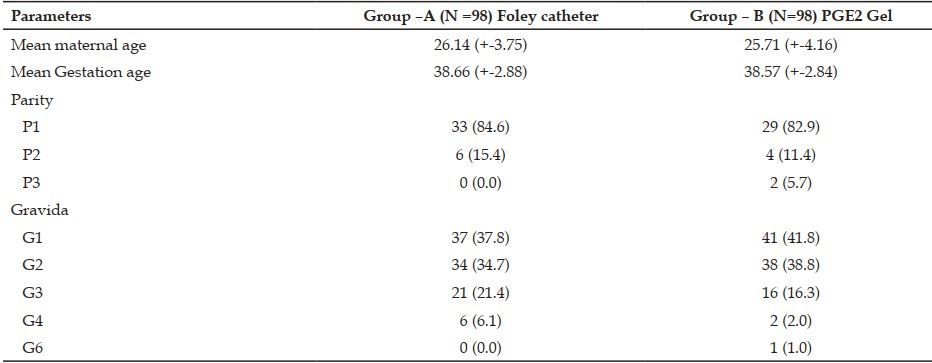
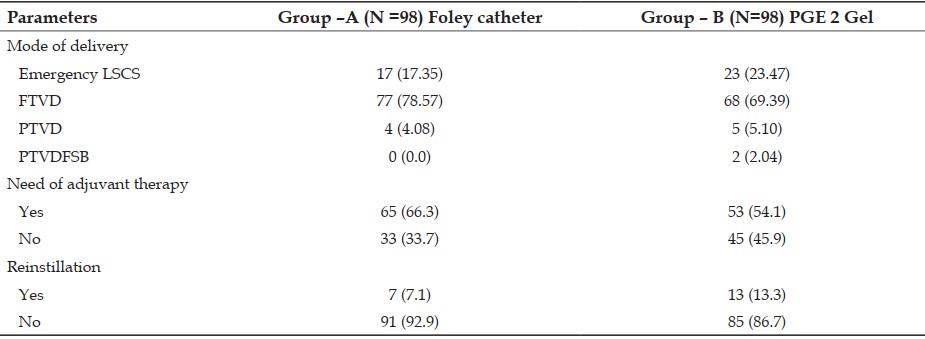
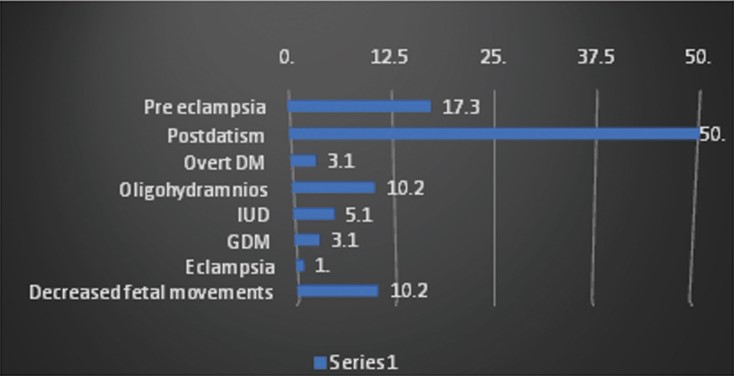
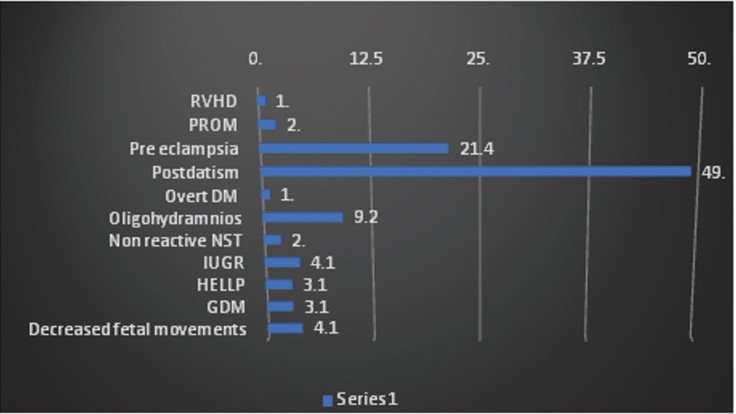
Background: Induction of labour is initiation of uterine contractions before the onset in order to vaginally deliver the fetoplacental unit. Common reasons for induction of labour (IOL) are post-term and hypertensive disorders of pregnancy. Many women who undergo induction do not have a favourable cervix, so some methods of cervical ripening either pharmaceutical or mechanical are used. Aim & Objective: To compare the effectiveness of the transcervical Foley catheter and the prostaglandin E2 (PGE2) gel for the induction of labour. Methodology: The clinical trial was conducted for a period of two years OBGY department of Bharati Vidyapeeth University, Pune. 196 pregnant women which included and randomly via block randomization divided into two groups. Group A had 98 women in whom the transcervical Foley catheter was inserted and Group B included 98 women in whom the PGE2 gel was inserted vaginally for IOL. Bishop’s score and duration from induction to onset of labour was calculated. Data analysis was done and appropriate statistical tests were used. Results: In Group A (37.8%) as well as in Group B (41.8%) most of the pregnancies were primigravida. The most common indication for induction in both groups was postdatism. The adjuvant therapy was required in 66.3% and 54.1% of women in Group A & B respectively. Significant higher median values were observed in Bishop’s score at 12 hours as compared to 0 hour in both the groups. No significant association was observed between mode of induction and need of adjuvant therapy and induction to onset hours in both groups. Conclusion: The study shows that both Foley's catheter and PGE2 gel are equally effective in pre induction cervical ripening.
References
- 1. Hutchison J, Mahdy H, Hutchison J. Stages of Labor. [Updated 2021 Aug 25].In: StatPearls [Internet]. Treasure Island (FL): Stat Pearls Publishing; 2021Jan-. Available from: https://www.ncbi.nlm.nih.gov/books/NBK544290/
- 2. Sharma JB, Malhotra M, Arora R. Incidential FitzHugh-Curtis syndrome atlaparos copy for benig ngynecologic conditions. International Journal of Gynecology & Obstetrics. 2002 Dec1;79(3):237-40.
- 3. Ezebialu IU, Eke AC, Eleje GU, Nwachukwu CE. Methods for assessing preinductioncervicalripening. Cochrane Database Syst Rev.2015 Jun 12;2015(6):CD010762.
- 4. Karjane NW, Brock EL, Walsh SW. Induction of labor using a foley balloon, with and without extraamniotic saline infusion. Obstet and Gynecol. 2006;107(2):234-9
- 5. Murmu S et al. Int J Reprod Contracept Obstet Gynecol. 2018 Aug;7(8):3122-3125.
- 6. Sherman DJ, Frenkel E, Toblin J, Arieli S, Caspi E, Bukovasky I. Ripening of the unfavourable cervix with extra-amniotic catheter balloon: clinical experience and review. Obst Gynecol Survey. 1996;51(10):621-7.
- 7. Arias F. Pharmacology of Oxytocin and Prostaglandins. Clinical Obst Gynecol. 2000;43(3):455-68.
- 8. Sandhu SK, Arora S. Preinduction cervical ripening with endocervical PGE2 gel and a placebo control study. J Obstetgynec India. 1994; 1:537-42.
- 9. Boulvain M, Kelly A, Lohse C, Stan C, Irion O. Mechanical methods for induction of labour. Cochrane database Syst Rev. 2001;(4):CD001233.
- 10. WHO Recommendations for Induction of Labour - PubMed - NCBI.
- 11. Dalui R, Suri V, Ray P, Gupta I. Comparison of extraamniotic Foley catheter and intracervical prostaglandin E2 gel for preinduction cervical ripening. Acta Obstet Gynecol Scand. 2005;84(4):362–7.
- 12. Hoffman M, Sciscione A, Bedder C, Shlossman P. The safety of the Foley catheter for preinduction cervical ripening in a low-risk population. Am J Obstet Gynecol. 2011;204(1): S121–2.
- 13. RevathiV,ArchanaI.Comparativestudyofefficacyo ftranscervicalprostaglandinE2gel and transcervica lFoley’scatheterforpre-inductioncervical ripening. JDentalMedSci (IOSR-JDMS).2015;14(4):42-6.
- 14. Alam A et al. Int J Reprod Contracept Obstet Gynecol. 2016 Aug;5(8):2644-2647.
- 15. World health organization. WHO recommendations for Induction of labour. Available at http://apps.who.int/iris/bitstream/handle/10665/44531/9789241501156_eng.pd f;jsessioni d=1BD89131A7ACA35B8C7EC28574A0A103?sequence=1
- 16. Mozurkewich, E.L., Chilimigras, J.L., Berman, D.R. et al. Methods of induction of labour: a systematic review. BMC Pregnancy Childbirth 11, 84 (2011). https://doi.org/10.1186/1471-2393-11-84
- 17. Kanada, Anjali & Jain, Mahima. (2019). A comparative study of intra-cervical Foley’s catheter and PGE2 gel for induction of labour at term. International Journal of Reproduction, Contraception, Obstetrics and Gynecology. 8. 3689. 10.18203/2320-1770.ijrcog20193799.
- 18. Ziyauddin F, Hakim S, Beriwal S. The transcervical Foley’s catheter versus the vaginal prostaglandin e2 gel in the induction of labour in a previous one caesarean section - a clinical study. J Clin Diagn Res. 2013 Jan;7(1):140-3.
- 19. Bembalgi, Shobha, Lavanya, & Vinutha M. B..
- 20. Deshmukh VL, Yelikar KA, Deshmukh AB. Comparative Study of Intra- cervical Foley’s Catheter and PGE (2) Gel for Pre-induction Ripening (Cervical). J Obstet Gynaecol India. 2011;61(4):418- 421. doi:10.1007/s13224- 011-0063-2
Data Sharing Statement
There are no additional data available. All raw data and code are available upon request.
Funding
This research received no funding.
Author Contributions
All authors contributed significantly to the work and approve its publication.
Ethics Declaration
This article does not involve any human or animal subjects, and therefore does not require ethics approval.
Acknowledgements
We would like to express our gratitude to the patients, their families, and all those who have contributed to this study.
Conflicts of Interest
No conflicts of interest in this work.
About this article

Cite this article
Ishita Joshi, Salil Barsode, Vaishali Taralekar/Comparison of Efficacy of Trans-Cervical Foleys Catheter and PGE2 gel for Induction of Labour/Indian J Obstet Gynecol. 2022;10(3):129–135.
Licence:
Attribution-Non-commercial 4.0 International (CC BY-NC 4.0)This license enables reusers to distribute, remix, adapt, and build upon the material in any medium or format for noncommercial purposes only, and only so long as attribution is given to the creator.
| Received | Accepted | Published |
|---|---|---|
| March 21, 2022 | April 28, 2022 | September 30, 2022 |
DOI: https://doi.org/10.21088/ijog.2321.1636.10322.15
Keywords
Labour InductionFoley’s catheterProstaglandinsBishop’s scorecervical ripeningSearch for Similar Articles
Similar Articles
- Fibromyoma: A Clinical Dilemma
- Optimizing Obstetric Care: A Review of Indications and Outcomes for First-Time C...
- A Rare Case of Geriatric Endometrial Adenocarcinoma Presenting with Nonpuerperal...
- Relationship between Hypothyroidism and Gestational Diabetes Mellitus: A Prospec...
- Influence of Maternal Anthropometry and Hemoglobin on Neonatal Anthropometry
Article Level Metrics
Last UpdatedTuesday 08 September 2026, 16:31:41 (IST)
3505
Accesses
11
580
00
Citations
NA
NA
NA
Download citation
Article Keywords
Keyword Highlighting
Highlight selected keywords in the article text.
Timeline
| Received | March 21, 2022 |
| Accepted | April 28, 2022 |
| Published | September 30, 2022 |
licence
Attribution-Non-commercial 4.0 International (CC BY-NC 4.0)
This license enables reusers to distribute, remix, adapt, and build upon the material in any medium or format for noncommercial purposes only, and only so long as attribution is given to the creator.