Full Text (PDF)
Physiotherapy and Occupational Therapy Journal 19(3):p 191-199, July - Sep 2026. | DOI: https://doi.org/10.21088/potj.0974.5777.19326.4
Original Article
Combination of Aerobic and Resistance Exercise’s Impact on the Cardiovascular Fitness of Office Workers Leading Sedentary Lifestyle
Sugasri Sureshkumar, K. Yogarajan, S. Mercy Clara, B.S. Santhosh Kanna
Author Information
Licence:
Attribution-Non-commercial 4.0 International (CC BY-NC 4.0)This license enables reusers to distribute, remix, adapt, and build upon the material in any medium or format for noncommercial purposes only, and only so long as attribution is given to the creator.
Physiotherapy and Occupational Therapy Journal 19(3):p 191-199, July - Sep 2026. | DOI: https://doi.org/10.21088/potj.0974.5777.19326.4
How Cite This Article:
K. Yogarajan, S. Mercy Clara, B.S. Santhosh Kanna, et al. Combination of Aerobic and Resistance Exercise’s Impact on the Cardiovascular Fitness of Office Workers Leading Sedentary Lifestyle. Therapy Jr. 2026; 19(3): 191-199.Timeline
Received : May 20, 2026
Accepted : June 22, 2026
Published : September 30, 2026
Abstract
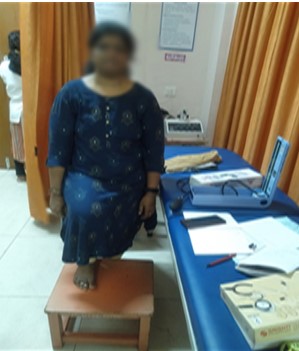
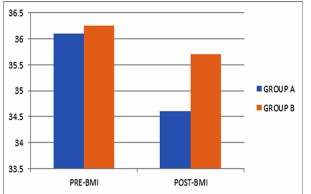
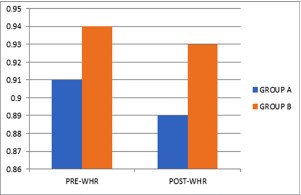
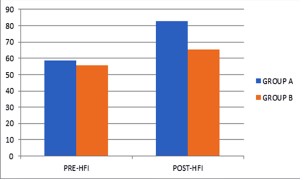
Background: Less than 25 minutes of regular exercise each day is considered a sedentary lifestyle. It is linked to metabolic syndrome and obesity, both of which raise the risk of cardiovascular illnesses and impaired cardiopulmonary function. This study assessed the impact of combination of resistance and aerobic exercise on cardiopulmonary fitness in office workers who maintain sedentary lifestyles. Methodology: Subjects between the ages of 25 and 50 were evaluated, chosen at random, and given their informed consent based on the inclusion and exclusion criteria. The participants were divided into two groups. They were assessed and assigned at random to one of two groups: group A received an intervention consisting of a combination of resistance and aerobic exercises under supervision, while group B received aerobic exercises under supervision. The aerobic exercise programme was given for 12 weeks (3 times a week) respectively. A pre test and post test data for the two groups were evaluated for cardiopulmonary fitness using body mass index, waist hip ratio, harward step test by using International Physical Activity Questionnaire – Category score 1-inactive. The data was collected, compiled and analysed. Conclusion: Both the groups showed significant differences on comparison and they have found to be effective in addressing cardio pulmonary fitness. Therefore, study concludes, that 6 weeks of combined aerobic and resistance exercises demonstrated more expected outcomes in improving cardiopulmonary fitness in office workers leading sedentary lifestyle and decrease body mass, Waist hip ratio in office workers.
References
- 1. Sharon Parry, Leon Straker et al. (4 April 2013) “The contribution of office work to sedentary behaviour associated risk”
- 2. World Health Organisation (4 Aril 2002) “Physical inactivity a leading cause of disease and disability, warns WHO”
- 3. Mark S. Tremblay, Salome Aubert et al. (10 June 2017) “Sedentary Behaviour Research Network (SBRN)-Terminology Consensus Project process and outcome”
- 4. Skyler Mann, Abdul-Hamid Hamad et al. (18 May 2018) “The problem of sedentary behaviour in the office workplace: A structured exercise program for primary prevention”
- 5. Vishnu D Udhan, Sharadchandra G. Wankhede et al. (August 2018) “Effect of Yoga on CardioRespiratory Health Markers: Physical Fitness Index and Maximum Oxygen Consumption (VO2 Max)”
- 6. Harsh Patel, Hassan Alkhawam et al. (26 February 2017) “Aerobic vs anaerobic exercise training effects on the cardiovascular system”
- 7. Carolyn Kisner and Lynn Allen Colby (2007) “Theraeutic Exercise Foundations And Techniques” 5th Edition.
- 8. Brandon S. Shaw, Gregory A. Brown et al. (1 September 2021) “Importance of Resistance Training In The Management of Cardiovascular Disease Risk”
- 9. P. Chinna Reddemma, Dr K. Madhavi (25 March 2015) “Effect of Aerobic Exercises on Cardio-Pulmonary Fitness In Computer Using Sedentary Individuals”.
- 10. Walid Soliman et al. (July 2011) “Evaluating the validity and reliability of Harvard step test to predict VO2 max in terms of the step height according to the knee joint angle”.
- 11. Linet Huchu et al. (August 2016) The Association Between Cardiorespiratory fitness and performance in a submaximal stepping test standardised for external workload”.
- 12. Dr P. Amuthamozhi, Dr V. Sivachandiran et al. (January 2020) “Evaluation of P hysical Fitness Among Student Population Using Modified Harvard Step Test”.
- 13. Hans Vangrunderbeek, Pascal Delheye (22 May 2013) “Stepping From Belgium to the United States and Back: The Conceptualization and Impact of the Harvard Step Test, 1942- 2012”
- 14. Arsha Krishnan, Gokul Suresh et al. (August 2022) “Physical Fitness Index of Medical Students In Thrissur, Kerela, India: A Crosssectional study”.
- 15. E.N. Keen, A.W. Sloan et al. (1 September 1958) “Observations on the Harvard step test”
- 16. Hoffmannp, Buncv, Leitner H., Pokan R., Guisl G., “Heart rate threshold related to lactate turn point and steady-state exercise on a cycle ergometer”. Eur 1 App. Physical occupational (1994, 69 (2), 132-9)
- 17. Marias G. Dupont L., Let M. Weissland T., “Spontaneously chosen crank rate radiation in submaximal arm exercise with inexperienced subjects. Effects on cardio respiratory and efficiency parameter”. Acta physiols and 2002 feb 174 (2): (37-45).
- 18. Smith P.M. Price M.J., Doherty M., “The influence of crank rate on peak O2 consumption during arm crank ergometry.”Sport Science 2001 December; 19 (12), 955-60.
- 19. Z voka C., H. Bell, E. Bavt Z- Holter. “Oxygen uptake/Heart rate relationship in leg and arm exercise, sitting and standing” “Journal of App Physiology-39 (1); 54-59.
- 20. Sagivm, Rotstein A., Ben-Sira D. Grodjinovsky A., “Physiological responses to wrist weights during endurance cycling in normal subjects” “Internal Rehab Medicine 1986, 8 (2); 79-8.
Data Sharing Statement
There are no additional data available. All raw data and code are available upon request.
Funding
This research received no funding.
Author Contributions
All authors contributed significantly to the work and approve its publication.
Ethics Declaration
The research was conducted in accordance to the ethical standards of National Institute for Empowerment of Person with Multiple Disabilities in Chennai. Written informed consent were provided by all participants prior to participation.
Acknowledgements
We would like to express our gratitude to the patients, their families, and all those who have contributed to this study.
About this article

Cite this article
K. Yogarajan, S. Mercy Clara, B.S. Santhosh Kanna, et al. Combination of Aerobic and Resistance Exercise’s Impact on the Cardiovascular Fitness of Office Workers Leading Sedentary Lifestyle. Therapy Jr. 2026; 19(3): 191-199.
Licence:
Attribution-Non-commercial 4.0 International (CC BY-NC 4.0)This license enables reusers to distribute, remix, adapt, and build upon the material in any medium or format for noncommercial purposes only, and only so long as attribution is given to the creator.
| Received | Accepted | Published |
|---|---|---|
| May 20, 2026 | June 22, 2026 | September 30, 2026 |
DOI: https://doi.org/10.21088/potj.0974.5777.19326.4
Keywords
Resistance exerciseLung functionCardiopulmonary fitnessSedentary life styleAerobic exerciseSearch for Similar Articles
Similar Articles
- Leadership in Physiotherapy: A Narrative Review
- Effectiveness of Low Level Laser Theapy in the Management of Temporomandibular J...
- The Impact of Air Pollution on Cardiopulmonary Health: Molecular Mechanisms, Pre...
- Efectiveness of Physiotherapy in Postpartum Women with Diastasis Recti: A Review
- Pain Neuroscience Education: Transforming Physiotherapy Practice
Article Level Metrics
Last UpdatedFriday 23 October 2026, 12:52:02 (IST)
4354
Accesses
24
739
00
Citations
NA
NA
NA
Download citation
Article Keywords
Keyword Highlighting
Highlight selected keywords in the article text.
Timeline
| Received | May 20, 2026 |
| Accepted | June 22, 2026 |
| Published | September 30, 2026 |
licence
Attribution-Non-commercial 4.0 International (CC BY-NC 4.0)
This license enables reusers to distribute, remix, adapt, and build upon the material in any medium or format for noncommercial purposes only, and only so long as attribution is given to the creator.