Full Text (PDF)
Physiotherapy and Occupational Therapy Journal 19(3):p 200-205, July - Sep 2026. | DOI: https://doi.org/10.21088/potj.0974.5777.19326.5
Original Article
Effectiveness of Low Frequency Ultrasound Therapy in Healing with Venous Ulcers: A Randomized Controlled Trial
P Shanmuga Raju, Rammohan C, Venkataramana N, Ravi Shankar Ravi, Purna Chandhra Shekhar S, Karthikeyan T, Bhgaya Seela S
Author Information
Licence:
Attribution-Non-commercial 4.0 International (CC BY-NC 4.0)This license enables reusers to distribute, remix, adapt, and build upon the material in any medium or format for noncommercial purposes only, and only so long as attribution is given to the creator.
Physiotherapy and Occupational Therapy Journal 19(3):p 200-205, July - Sep 2026. | DOI: https://doi.org/10.21088/potj.0974.5777.19326.5
How Cite This Article:
P Shanmuga Raju, Rammohan C, Venkataramana N, et al. Effectiveness of Low frequency Ultrasound Therapy in Healing with Venous Ulcers: A Randomized controlled trial. Therapy Jr. 2026; 19(3): 200-205.Timeline
Received : June 20, 2026
Accepted : July 24, 2026
Published : September 30, 2026
Abstract
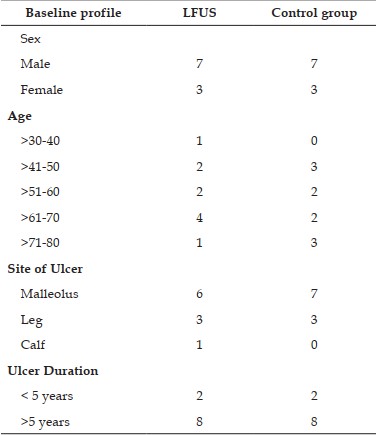
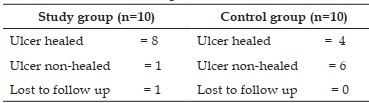
Aim: the aim of study was to evaluate the effect of low frequency ultrasound therapy (LFUST) in treatment of venous ulcers compared with standard wound care. Study Design: A single centre, prospective randomized clinical trial. Study setting: This study centre was Department of Physiotherapy & Rehabilitation, Chalmeda Anand Rao Institute of Medical Sciences, Karimnagar, Telangana. Study participants: Total 20 samples were included in this study. Patients with venous ulcer of >6 months duration. Study group were received low frequency ultrasound therapy delivered 3 MHz, continuous mode and applied treatment 10 minutes duration per day to 6 weeks plus standard care. Results: This study started in January 2026 and the follow-up period ended in June 2026, during which time, forty patients were selected as potential participants, of whom 30 were included in the study.There was a significantly reduce the wound size compared with standard care (p<0.05). Conclusion: Low frequency ultrasound therapy is effective, significantly reduce the wound size and improve blood circulation in venous ulcer. These findings indicate that LFUST serves as an effective adjunctive therapy for VLUs, improving the outcomes of standard treatment protocols.
References
- 1. Harris C, Duong R, Vanderheyden G, Byrnes B Cattryse R, Orr A, Keast D. Evaluation of a muscle pump-activating device for nonhealing venous leg ulcers. Int Wound J. 2017; 14:1189–1198.
- 2. Alvarez OM, Markowitz L, Parker R, Wendelken ME. Faster Healing and a Lower Rate of Recurrence of Venous Ulcers Treated with Intermittent Pneumatic Compression: Results of a Randomized Controlled Trial. Eplasty. 2020; 20:e6.
- 3. Byl NN, Mc Kenzie AL, Wong T, West J, Hunt TK. Incisional wound healing: a controlled study of low and high dose ultrasound. J Orthop Sports Phys Ther. 1993; 18: 619-628.
- 4. Nichter LS, Williams J. Ultrasonic wound debridement. Hand Surg. 1988; 13: 142-146.
- 5. Bonkemeyer Millan S, Gan R, Townsend PE. Venous ulcers: diagnosis and treatment. Am Fam Physician. 2019; 100:298-305
- 6. Hart J. The use of ultrasound therapy in wound healing J Wound Care. 1998; 7:25–8.
- 7. Peschen M, Weichenthal M, Schöpf E, Vanscheidt W. Low-frequency ultrasound treatment of chronic venous leg ulcers in an outpatient therapy Acta Derm Venereol. 1997; 77:311-4.
- 8. Mohr P, Stegmann W, Breitbart EW. Lowfrequency ultrasound treatment of chronic venous ulcers. Wound Repair Regen. 1997; 5:18-22.
- 9. Uhlemann C, Wollina U, Liebold K, Schreiber TU. Behandlung des Ulcus cruris venosum mit niederfrequentem Ultraschall (nf-US). Phys Rehab Kur Med. 2001; 11:216–20.
- 10. Baronski S, Ayello EA. Wound treatment option. In: Baronski S, Ayello EA, Mclntosh A,Galvan L, Scarborough P. Wound Care Essentials: Practice Principles, 2nd ed. New York, Lippincott Williams & Wilkins; 2008:156.
- 11. Ennis WJ, Valdes W, Gainer M, Meneses P: Evaluation of clinical effectiveness of MIST ultrasound therapy for the healing of chronic wounds. Adv Skin Wound Care 2006, 19, 437- 446.
- 12. Tan J, Abisi S, Smith A, Burnand KG. A painless method of ultrasonically assisted debridement of chronic leg ulcers: a pilot study. European J Vascular Endovascular Surg. 2007; 33(2): 234- 238.
- 13. Cole PS, Quisberg, J, Melin, MM. Adjuvant use of acoustic pressure wound therapy for treatment of chronic wounds: a retrospective analysis. J Wound, Ostomy, Continence Nursing. 2009; 36(2):171–177.
- 14. Kavros SJ, Miller JL, Hanna SW. Treatment of ischemic wounds with noncontact, lowfrequency ultrasound: the Mayo Clinic Experience, 2004-2006. Adv skin & wound care. 2007; 20(4): 221–226.
- 15. Callam, MJ, Harper DR., Dale JJ, Ruckely CV, Prescott RJ. A controlled trial of weekly ultrasound therapy in chronic leg ulceration. Lancet. 1987;VIII: 204-206.
Data Sharing Statement
There are no additional data available. All raw data and code are available upon request.
Funding
This research received no funding.
Author Contributions
All authors contributed significantly to the work and approve its publication.
Ethics Declaration
This article does not involve any human or animal subjects, and therefore does not require ethics approval.
Acknowledgements
We would like to express our gratitude to the patients, their families, and all those who have contributed to this study.
Conflicts of Interest
No conflicts of interest in this work.
About this article

Cite this article
P Shanmuga Raju, Rammohan C, Venkataramana N, et al. Effectiveness of Low frequency Ultrasound Therapy in Healing with Venous Ulcers: A Randomized controlled trial. Therapy Jr. 2026; 19(3): 200-205.
Licence:
Attribution-Non-commercial 4.0 International (CC BY-NC 4.0)This license enables reusers to distribute, remix, adapt, and build upon the material in any medium or format for noncommercial purposes only, and only so long as attribution is given to the creator.
| Received | Accepted | Published |
|---|---|---|
| June 20, 2026 | July 24, 2026 | September 30, 2026 |
DOI: https://doi.org/10.21088/potj.0974.5777.19326.5
Keywords
Venous ulcerLow frequencyUltrasound therapyMicrocirculationStandard careSearch for Similar Articles
Similar Articles
- Leadership in Physiotherapy: A Narrative Review
- Effectiveness of Low Level Laser Theapy in the Management of Temporomandibular J...
- The Impact of Air Pollution on Cardiopulmonary Health: Molecular Mechanisms, Pre...
- Efectiveness of Physiotherapy in Postpartum Women with Diastasis Recti: A Review
- Pain Neuroscience Education: Transforming Physiotherapy Practice
Article Level Metrics
Last UpdatedFriday 23 October 2026, 11:42:58 (IST)
4351
Accesses
20
739
00
Citations
NA
NA
NA
Download citation
Article Keywords
Keyword Highlighting
Highlight selected keywords in the article text.
Timeline
| Received | June 20, 2026 |
| Accepted | July 24, 2026 |
| Published | September 30, 2026 |
licence
Attribution-Non-commercial 4.0 International (CC BY-NC 4.0)
This license enables reusers to distribute, remix, adapt, and build upon the material in any medium or format for noncommercial purposes only, and only so long as attribution is given to the creator.