Full Text (PDF)
Physiotherapy and Occupational Therapy Journal 19(2):p 100-112, April-June 2026. | DOI: https://doi.org/10.21088/potj.0974.5777.19226.2
Original Article
Central Sensitization and its Association with Pain, Psychosocial Factors, Disability, Functional Muscle Performance, and Depression in Gujarati Speaking Adults with Chronic Low Back Pain: A Cross-Sectional Study
Bid Dibyendunarayan Dhrubaprasad, Dhameliya Pooja Ashokbhai
Author Information
Licence:
Attribution-Non-commercial 4.0 International (CC BY-NC 4.0)This license enables reusers to distribute, remix, adapt, and build upon the material in any medium or format for noncommercial purposes only, and only so long as attribution is given to the creator.
Physiotherapy and Occupational Therapy Journal 19(2):p 100-112, April-June 2026. | DOI: https://doi.org/10.21088/potj.0974.5777.19226.2
How Cite This Article:
Dhameliya Pooja Ashokbhai, Bid Dibyendunarayan Dhrubaprasad. Central Sensitization and Its Association with Pain, Psychosocial Factors, Disability, Functional Muscle Performance, and Depression in Gujarati-Speaking Adults with Chronic Low Back Pain: A Cross-Sectional Study. Therapy Jr. 2026; 19(2): 100-112.Timeline
Received : April 18, 2026
Accepted : May 20, 2026
Published : June 30, 2026
Abstract
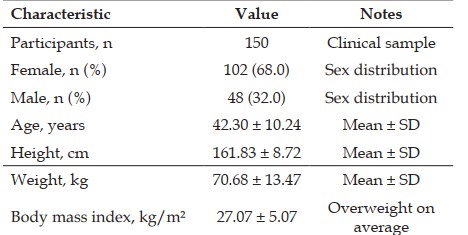
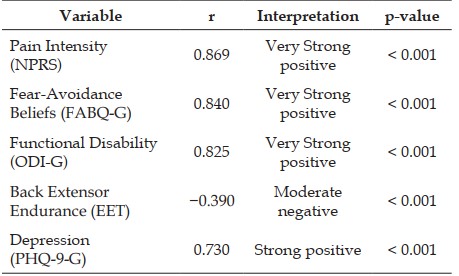
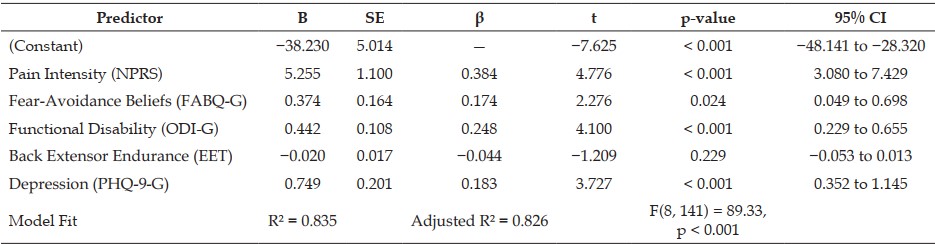
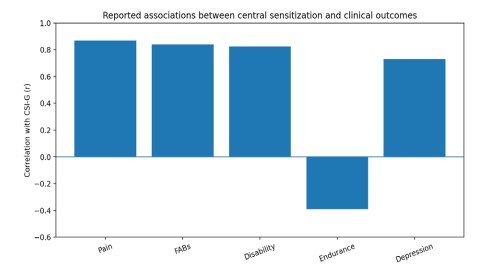
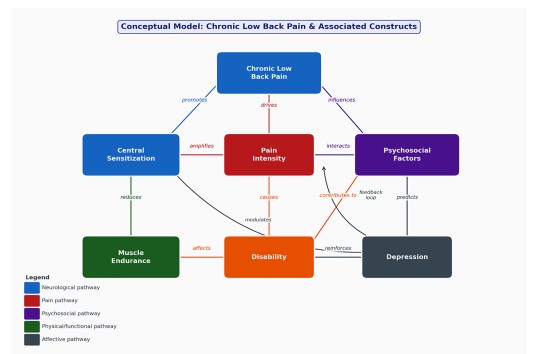
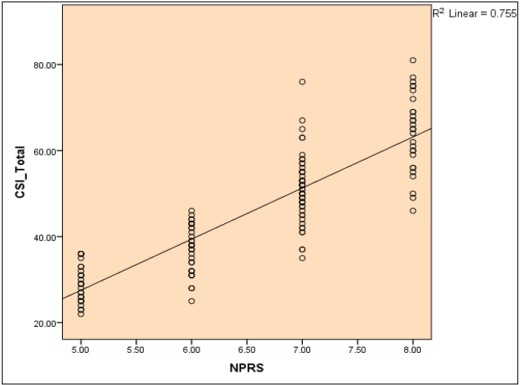
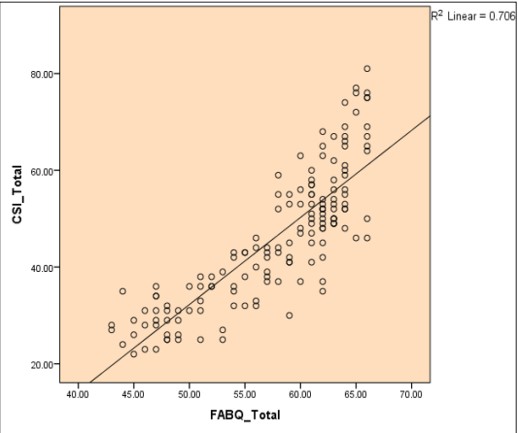
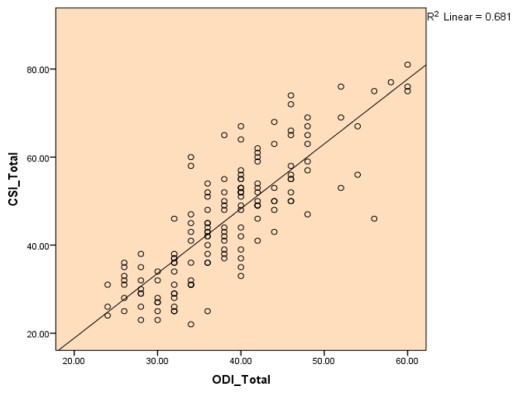
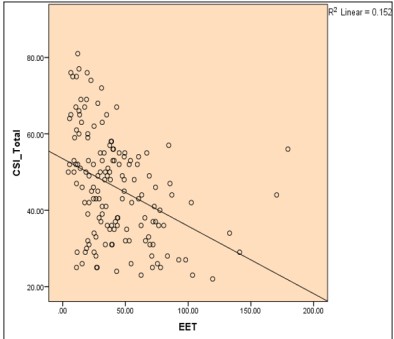
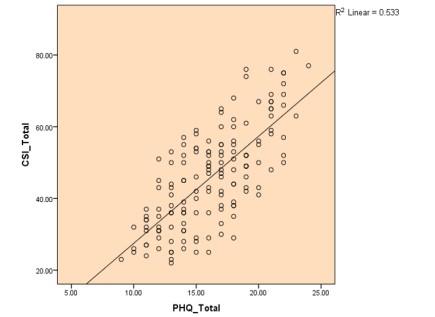
Background: Chronic low back pain (CLBP) is the leading cause of disability worldwide and is increasingly recognized as a condition characterized by central sensitization (CS). Despite the growing evidence of CS as a multidimensional driver of pain, psychosocial dysfunction, and physical impairment, research on the Indian population, particularly Gujarati-speaking adults, is scarce. Objective: To investigate the association between CS and pain intensity, fear–avoidance beliefs (FABs), functional disability, back extensor muscle endurance, and depression in Gujarati-speaking adults with CLBP. Methods: This cross-sectional study included 150 adults (102 females, 48 males; mean age, 42.30 ± 10.24 years) with CLBP from multiple physiotherapy and orthopedic clinics in Surat, Gujarat, India. CS was measured using the Central Sensitization Inventory Gujarati version (CSI-G). Additional instruments included the Numerical Pain Rating Scale (NPRS), Fear-Avoidance Beliefs Questionnaire–Gujarati (FABQ-G), Oswestry Disability Index–Gujarati (ODI-G), Extensor Endurance Test (EET), and Patient Health Questionnaire-9–Gujarati (PHQ-9-G). Pearson’s correlation and multiple linear regression analyses were performed using IBM SPSS v20.0. Results: CS was positively correlated with pain intensity (r = 0.869, p < 0.001), FABs (r = 0.840, p < 0.001), disability (r = 0.825, p < 0.001), and depression (r = 0.730, p < 0.001) and negatively correlated with back extensor endurance (r = −0.390, p < 0.001). Regression analysis identified pain intensity (β = 0.384), disability (β = 0.248), depression (β = 0.183), and fear-avoidance beliefs (FABs) (β = 0.174) as significant predictors of CS. Extensor endurance was not a significant independent predictor (p = 0.229). Conclusion: CS is very strongly associated with pain, psychosocial distress, and disability in Gujarati-speaking patients with CLBP. CS screening and biopsychosocial assessment should be routine in CLBP management, and interventional research is needed to test targeted treatments.
References
- 1. Hartvigsen J., Hancock M.J., Kongsted A., Louw Q., Ferreira M.L., Genevay S., et al. What low back pain is and why we need to pay attention. Lancet (London, England). 2018; 391(10137): 2356-67.
- 2. Global, regional, and national burden of low back pain, 1990-2020, its attributable risk factors, and projections to 2050: a systematic analysis of the Global Burden of Disease Study 2021. The Lancet Rheumatology. 2023; 5(6): e316-e29.
- 3. Foster N.E., Anema J.R., Cherkin D., Chou R., Cohen S.P., Gross D.P., et al. Prevention and treatment of low back pain: evidence, challenges, and promising directions. Lancet (London, England). 2018; 391(10137): 2368-83.
- 4. Shetty G.M., Jain S., Thakur H., Khanna K. Prevalence of low back pain in India: A systematic review and meta-analysis. Work. 2022; 73(2): 429-52.
- 5. Woolf C.J. Central sensitization: implications for the diagnosis and treatment of pain. Pain. 2011;152(3 Suppl):S2-s15.
- 6. Latremoliere A, Woolf CJ. Central sensitization: a generator of pain hypersensitivity by central neural plasticity. The journal of pain : official journal of the American Pain Society. 2009;10(9):895-926.
- 7. Ji R.R., Nackley A., Huh Y., Terrando N., Maixner W. Neuroinflammation and Central Sensitization in Chronic and Widespread Pain. Anesthesiology. 2018; 129(2): 343-66.
- 8. Arendt-Nielsen L., Morlion B., Perrot S., Dahan A., Dickenson A., Kress H.G., et al. Assessment and manifestation of central sensitisation across different chronic pain conditions. European journal of pain (London, England). 2018; 22(2): 216-41.
- 9. Aoyagi K., He J., Nicol A.L., Clauw D.J., Kluding P.M., Jernigan S., et al. A Subgroup of Chronic Low Back Pain Patients With Central Sensitization. The Clinical journal of pain. 2019; 35(11): 869-79.
- 10. Vlaeyen JWS, Linton SJ. Fear-avoidance model of chronic musculoskeletal pain: 12 years on. Pain. 2012; 153(6): 1144-7.
- 11. Hodges P.W., Moseley G.L. Pain and motor control of the lumbopelvic region: effect and possible mechanisms. Journal of electromyography and kinesiology: Official journal of the International Society of Electrophysiological Kinesiology. 2003; 13(4): 361-70.
- 12. Bair M.J., Robinson R.L., Katon W., Kroenke K. Depression and pain comorbidity: a literature review. Archives of internal medicine. 2003; 163(20): 2433-45.
- 13. Bid D., Neela S., Rathod P., Ramalingam T. Content Validity and Test-Retest Reliability of the Gujarati Version of the Central Sensitization Inventory. NJIRM. 2016; 7: 18-24.
- 14. Mayer T.G., Neblett R., Cohen H., Howard K.J., Choi Y.H., Williams M.J., et al. The development and psychometric validation of the central sensitization inventory. Pain practice : the official journal of World Institute of Pain. 2012; 12(4): 276-85.
- 15. Farrar J.T., Young J.P.J., LaMoreaux L., Werth J.L., Poole MR. Clinical importance of changes in chronic pain intensity measured on an 11-point numerical pain rating scale. Pain. 2001; 94(2): 149-58.
- 16. Bid D.D., Soni N.C., Rathod P.V., Ramalingam A.T., Sinha R.K. Cross Cultural Adaptation, Reliability and Validity of Gujarati Version of Fear Avoidance Belief Questionnaire in Chronic Low Back Pain. NJIRM. 2016; 7(6): 1-8.
- 17. Waddell G., Newton M., Henderson I., Somerville D., Main C.J. A Fear-Avoidance Beliefs Questionnaire (FABQ) and the role of fear-avoidance beliefs in chronic low back pain and disability. Pain. 1993; 52(2): 157-68.
- 18. Shah S., Balaganapathy M. Reliability and validity study of the Gujarati version of the Oswestry Disability Index 2.1a. J Back Musculoskelet Rehabil. 2017; 30(5): 1103-9.
- 19. Fairbank J.C., Pynsent P.B. The Oswestry Disability Index. Spine. 2000; 25(22): 2940-52; discussion 52.
- 20. Ito T., Shirado O., Suzuki H., Takahashi M., Kaneda K., Strax T.E. Lumbar trunk muscle endurance testing: an inexpensive alternative to a machine for evaluation. Archives of physical medicine and rehabilitation. 1996;77(1):75-9.
- 21. Kroenke K., Spitzer R.L., Williams J.B. The PHQ-9: validity of a brief depression severity measure. J Gen Intern Med. 2001; 16(9): 606-13.
- 22. den Bandt H.L., Paulis W.D., Beckwée D., Ickmans K., Nijs J., Voogt L. Pain Mechanisms in Low Back Pain: A Systematic Review With Meta-analysis of Mechanical Quantitative Sensory Testing Outcomes in People With Nonspecific Low Back Pain. The Journal of orthopaedic and sports physical therapy. 2019; 49(10): 698-715.
- 23. Arendt-Nielsen L., Morlion B., Perrot S., Dahan A., Dickenson A., Kress H.G., et al. Assessment and manifestation of central sensitisation across different chronic pain conditions. 2018;22(2):216-41.
- 24. Slepian P.M., Ankawi B., France C.R. Longitudinal Analysis Supports a FearAvoidance Model That Incorporates Pain Resilience Alongside Pain Catastrophizing. Annals of behavioral medicine: A publication of the Society of Behavioral Medicine. 2020; 54(5): 335-45.
- 25. Roussel NA, Nijs J., Meeus M., Mylius V., Fayt C., Oostendorp R. Central sensitization and altered central pain processing in chronic low back pain: fact or myth? Clin J Pain. 2013; 29(7): 625-38.
- 26. Malfliet A., Kregel J., Coppieters I., De Pauw R., Meeus M., Roussel N., et al. Effect of Pain Neuroscience Education Combined With Cognition-Targeted Motor Control Training on Chronic Spinal Pain: A Randomized Clinical Trial. JAMA Neurol. 2018; 75(7): 808-17.
- 27. Ito T., Shirado O., Suzuki H., Takahashi M., Kaneda K., Strax T.E. Lumbar trunk muscle endurance testing: An inexpensive alternative to a machine for evaluation. Archives of Physical Medicine and Rehabilitation. 1996; 77(1): 75-9.
- 28. Tagliaferri S.D., Miller C.T., Owen P.J., Mitchell U.H., Brisby H., Fitzgibbon B., et al. Domains of Chronic Low Back Pain and Assessing Treatment Effectiveness: A Clinical Perspective. Pain practice : the official journal of World Institute of Pain. 2020; 20(2): 211-25.
- 29. Tagliaferri S.D., Miller C.T., Owen P.J., Mitchell U.H., Brisby H., Fitzgibbon B., et al. Domains of Chronic Low Back Pain and Assessing Treatment Effectiveness: A Clinical Perspective. 2020; 20(2): 211-25.
- 30. Anderson B., Meyster V. Treatment of a Patient With Central Pain Sensitization Using Graded Motor Imagery Principles: A Case Report. Journal of chiropractic medicine. 2018; 17 4: 264-7.
- 31. Lotze M., Moseley G. Clinical and neurophysiological effects of progressive movement imagery training for pathological pain. The journal of pain. 2022.
- 32. Scerbo T., Colasurdo J., Dunn S., Unger J., Nijs J., Cook C. Measurement Properties of the Central Sensitization Inventory: A Systematic Review. Pain practice : the official journal of World Institute of Pain. 2018;18(4):544-54.
- 33. Neblett R., Cohen H., Choi Y., Hartzell M.M., Williams M., Mayer T.G., et al. The Central Sensitization Inventory (CSI): establishing clinically significant values for identifying central sensitivity syndromes in an outpatient chronic pain sample. The journal of pain : official journal of the American Pain Society. 2013; 14(5): 438-45.
- 34. Louw A, Diener I, Butler DS, Puentedura EJ. The effect of neuroscience education on pain, disability, anxiety, and stress in chronic musculoskeletal pain. Arch Phys Med Rehabil. 2011; 92(12): 2041-56.
- 35. Gräper P., Scafoglieri A., Clark J., Hallegraeff J. Sensory Profiles Predict Symptoms of Central Sensitization in Low Back Pain: A Predictive Model Research Study. Journal of Clinical Medicine. 2024; 13.
- 36. Dahmani D., Taik F., Berrichi I., Fourtassi M., Abourazzak F. Impact of central sensitization on pain, disability and psychological distress in patients with knee osteoarthritis and chronic low back pain. BMC Musculoskeletal Disorders. 2023; 24.
Data Sharing Statement
There are no additional data available. All raw data and code are available upon request.
Funding
This research received no funding.
Author Contributions
All authors contributed significantly to the work and approve its publication.
Ethics Declaration
This article does not involve any human or animal subjects, and therefore does not require ethics approval.
Acknowledgements
We would like to express our gratitude to the patients, their families, and all those who have contributed to this study.
Conflicts of Interest
No conflicts of interest in this work.
About this article

Cite this article
Dhameliya Pooja Ashokbhai, Bid Dibyendunarayan Dhrubaprasad. Central Sensitization and Its Association with Pain, Psychosocial Factors, Disability, Functional Muscle Performance, and Depression in Gujarati-Speaking Adults with Chronic Low Back Pain: A Cross-Sectional Study. Therapy Jr. 2026; 19(2): 100-112.
Licence:
Attribution-Non-commercial 4.0 International (CC BY-NC 4.0)This license enables reusers to distribute, remix, adapt, and build upon the material in any medium or format for noncommercial purposes only, and only so long as attribution is given to the creator.
| Received | Accepted | Published |
|---|---|---|
| April 18, 2026 | May 20, 2026 | June 30, 2026 |
DOI: https://doi.org/10.21088/potj.0974.5777.19226.2
Keywords
Central sensitizationChronic low back painFear-avoidance beliefsOswestry Disability IndexDepressionBiopsychosocial modelPHQ-9Search for Similar Articles
Similar Articles
- Cross-Cultural Adaptation, Reliability, and Validity of the Gujarati Version of...
- Physiotherapy Management of Multiple Sclerosis: An Overview of Recent Technologi...
- Converging Technologies in Cardiopulmonary Physiotherapy: A Review of VR, AR, AI...
- Cross-Cultural Adaptation, Reliability, and Validity of the Gujarati Version of...
- Effects of Kinesiotaping in Lateral Epicondylitis: A Narrative Review
Article Level Metrics
Last UpdatedSunday 06 September 2026, 18:44:23 (IST)
2641
Accesses
42
474
00
Citations
NA
NA
NA
Download citation
Article Keywords
Keyword Highlighting
Highlight selected keywords in the article text.
Timeline
| Received | April 18, 2026 |
| Accepted | May 20, 2026 |
| Published | June 30, 2026 |
licence
Attribution-Non-commercial 4.0 International (CC BY-NC 4.0)
This license enables reusers to distribute, remix, adapt, and build upon the material in any medium or format for noncommercial purposes only, and only so long as attribution is given to the creator.