Full Text (PDF)
Indian Journal of Obstetrics and Gynecology 12(2):p 63-69, April - June 2024. | DOI: https://doi.org/10.21088/ijog.2321.1636.12224.3
Original Article
Can Probiotics Play a Major Role as an Adjunctive Therapy in Treatment of Bacterial Vaginosis?
Himani Malviya, Bandana Sharma, Pavika Lal, Rashmi Yadav, Divya Dwivedi
Author Information
Licence:
Attribution-Non-commercial 4.0 International (CC BY-NC 4.0)This license enables reusers to distribute, remix, adapt, and build upon the material in any medium or format for noncommercial purposes only, and only so long as attribution is given to the creator.
Indian Journal of Obstetrics and Gynecology 12(2):p 63-69, April - June 2024. | DOI: https://doi.org/10.21088/ijog.2321.1636.12224.3
How Cite This Article:
Bandana Sharma, Pavika Lal, Rashmi Yadav et al. Can Probiotics Play a Major Role as an Adjunctive Therapy in Treatment of Bacterial Vaginosis?. Indian J Obstet Gynecol. 2024;12(2):63-69.Timeline
Received : April 30, 2024
Accepted : May 26, 2024
Published : June 30, 2024
Abstract
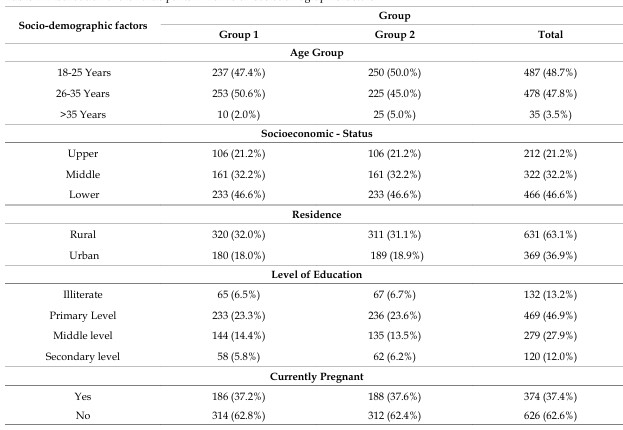
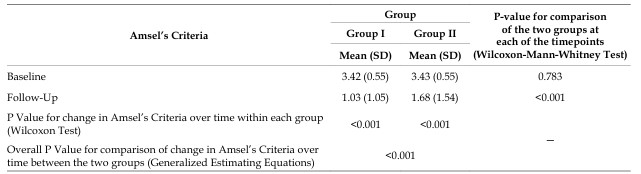
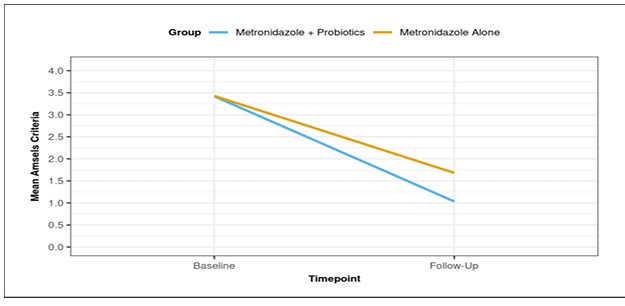
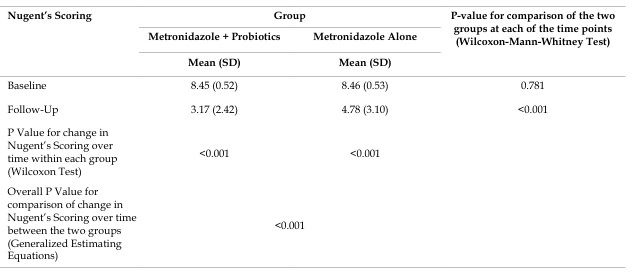
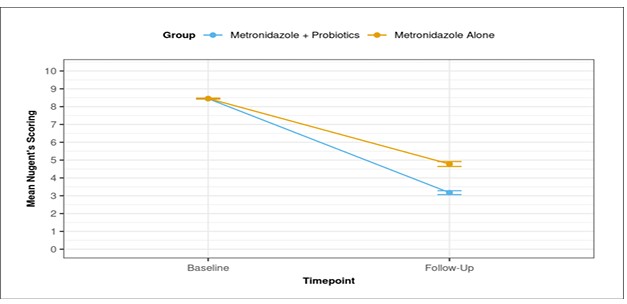
Background: Bacterial Vaginosis is one of the most common causes of abnormal vaginal discharge in women of reproductive age, which can have a major impact on quality of life. Although the treatment course of oral metronidazole for 7 days results in curative rate of 70%–80% at four weeks of treatment, but is associated with high rates of recurrence occurred within twelve months, reaching up to 40%–50%. Methods: A Randomized Prospective Interventional Study was done on 1000 reproductive age group females (pregnant or non-pregnant) diagnosed with bacterial vaginosis from November 2020 to October 2022 at department of Obstetrics & Gynaecology, Kanpur. The study group were divided into two subgroups - Group 1 were given metronidazole 500 mg for 7 days and probiotics for 14 days and group 2 were given metronidazole 500 mg for 7 days and placebo for 14 days. The patients were followed after 3 months to know the recurrence. Results: Majority of patients belonged to rural background (63.1%) with lower socioeconomic (46.6%) and belong to age group 20-35 years. It was observed that there was significant change in Amsel’s criteria and Nugent’s scoring in Group 1 as compared to Group 2. The rate of recurrence at the end of the treatment for Amsel’s criteria in group 1 were 1.03 as compared to group 2 was 1.68 and for Nugent’s scoring, the rate of recurrence at the end of treatment in group 1 was 3.17 as compared to group 2 was 4.78. Conclusion: Probiotics can be considered as one the adjuvant therapy for treating bacterial vaginosis and re-establishing equilibrium in the vaginal microflora thus, preventing the recurrences.
References
- 1. Ziyadi S., Homayouni A., Mohammad-Alizadeh Charandabi S. et al, Probiotics Prebiotics & Symbiotic. Elsevier Inc.; Amsterdam, The Netherlands: 2016. Chapter 49—Probiotics and Usage in Bacterial Vaginosis; pp.55–659.
- 2. Balkus J.E., Srinivasan S., Anzala O., Kimani J., et al, Impact of periodic presumptive treatment for bacterial vaginos is on the vaginal microbiome among women participating in the Preventing Vaginal Infections trial, Infectious Disease. 2017 march 1; 215: jiw 622. doi: 10.1093/infdis/jiw622.
- 3. XZhou, SJ Bent, MG Schneider, CC Davis, et al, Characterization of vaginal microbial communities in adult healthy women using cultivation-independent methods, microbiology, 2004 Aug;150(Pt mic.0.26905-0. 8):2565-2573,doi:10.1099/
- 4. A Vasquez, T Jakobsson, S Ahrne, U Forsum et al, Vaginal Lactobacills flora of healthy Swedish women, clinical microbiology, 2002 Aug;40(8):2746 9.doi:10.1128/JCM.40.8.2746-2749.2002.
- 5. J Butron, P Cardieux, G Reid, Improved understanding of the bacterial vaginal microbiota of women before and after probiotic instillation, Appl environmicrobiology, 2003 Jan; 69(1):97-101. doi:10.1128/AEM.69.1.97-101.2003.
- 6. Koumans EH, Sternberg M, Bruce C, McQuillan G, Kendrick, Sutton M, Markowitz LE. The prevalence of Bacterial Vaginosis.
- 7. Austin MN, Beigi RH, Meyn LA, Hillier SL. Microbiologic response to treatment ofbacterial vaginosis with topical clindamycin or metronidazole, J Clin Microbiol, 2005, vol. 43(pg. 4492-7) thesis of data, Clin Infect Dis, 2002, vol. 35Suppl 2(pg. 72)
- 8. Sobel JD, Schmitt C, Meriwether C. Long-term follow-up of patients with bacterial vaginosis treated with oral metronidazole and topical clindamycin, J Infect Dis, 1993, vol. 167 (pg. 783-4).
- 9. Centers for Disease Control and Prevention Sexually transmitted diseases treatment Guidel 2002 MMWR Recomm Rep, 2002, vol. 51(pg. 1-78).
- 10. Koumans EH, Markowitz LE, Hogan V, for the CDC BV Working Group. Indications for therapy and treatment recommendations for bacterial vaginosis in nonpregnant and pregnant women: a syn8
- 11. Mtebe V Majigo, Paschal Kashindye, Zachariah Mtulo, Agricola Joachim, Bacterial vaginosis, the leading cause of genital discharge among women presenting with vaginal infection in Dar es Salaam, Tanzania, African Health Sciences, 2021 Jun; 21(2):531-537.doi:10.4314/ahs.v21i2.7.
- 12. Yiewou Margueri the Kamga, John Palle Ngunde, and Jane-Francis K.T. Akoachere, Prevalence of bacterial vaginosis and associated risk factors in pregnant women receiving antenatal care at the Kumba Health District (KHD), Cameroon, BMC Pregnancy Childbirth. 2019;19:166.May10. doi:10.1186/s12884-019-2312-9.
- 13. T. Ashraf-Ganjoe, Risk factors for bacterial vaginosis in women attending a hospital in Kerman, Islamic Republic of Iran, Eastern Mediterranean HealthJournal,Vol.11,No.3,2005.
- 14. Nadia Recine, Ettore Palma, Lavinia Domenici, Margherita Giorgini et al, restoring vaginal microbiota: biological control of bacterial vaginosis. A prospective case-control study using Lactobacillus romanosus BMX 54 as anadjuvant treatment against bacterial vaginosis, Archives of Gynecology and Obstetrics volume 293, pages101–107, 5 july 2015
- 15. R.S. Vigneshwari, Ram babu, T. Jeyaseelansenthinath, P. Revathi et al, role of probiotics in treatment of bacterial vaginosis, International Journal of scientific and technology, research volume 3, issue 4, April 2014
- 16. Chieng WK, Abdul Jalal MI, Bedi JS, Zainuddin A A, et al, Probiotics, apromising therapy to reduce the recurrence of bacterial vaginosis in women? asystematic review and meta-analysis of randomized controlled trials, Front. Nutr. 9:938838. doi:10.3389/fnut.2022.938838,2022September20
- 17. H.-F. LIU, N. YI, A systematic review and meta analysis on the efficacy of probiotics for bacterial vaginosis, European Review for Medical and Pharmacological Sciences 2022;26:90-98.
Data Sharing Statement
There are no additional data available. All raw data and code are available upon request.
Funding
This research received no funding.
Author Contributions
All authors contributed significantly to the work and approve its publication.
Ethics Declaration
This article does not involve any human or animal subjects, and therefore does not require ethics approval
Acknowledgements
We would like to express our gratitude to the patients, their families, and all those who have contributed to this study.
Conflicts of Interest
No conflicts of interest in this work.
About this article

Cite this article
Bandana Sharma, Pavika Lal, Rashmi Yadav et al. Can Probiotics Play a Major Role as an Adjunctive Therapy in Treatment of Bacterial Vaginosis?. Indian J Obstet Gynecol. 2024;12(2):63-69.
Licence:
Attribution-Non-commercial 4.0 International (CC BY-NC 4.0)This license enables reusers to distribute, remix, adapt, and build upon the material in any medium or format for noncommercial purposes only, and only so long as attribution is given to the creator.
| Received | Accepted | Published |
|---|---|---|
| April 30, 2024 | May 26, 2024 | June 30, 2024 |
DOI: https://doi.org/10.21088/ijog.2321.1636.12224.3
Keywords
Bacterial VaginosisReproductive age group femalesProbioticsRecurrenceSearch for Similar Articles
Similar Articles
- Fibromyoma: A Clinical Dilemma
- Optimizing Obstetric Care: A Review of Indications and Outcomes for First-Time C...
- A Rare Case of Geriatric Endometrial Adenocarcinoma Presenting with Nonpuerperal...
- Relationship between Hypothyroidism and Gestational Diabetes Mellitus: A Prospec...
- Influence of Maternal Anthropometry and Hemoglobin on Neonatal Anthropometry
Article Level Metrics
Last UpdatedTuesday 08 September 2026, 18:10:11 (IST)
3507
Accesses
8
580
00
Citations
NA
NA
NA
Download citation
Article Keywords
Keyword Highlighting
Highlight selected keywords in the article text.
Timeline
| Received | April 30, 2024 |
| Accepted | May 26, 2024 |
| Published | June 30, 2024 |
licence
Attribution-Non-commercial 4.0 International (CC BY-NC 4.0)
This license enables reusers to distribute, remix, adapt, and build upon the material in any medium or format for noncommercial purposes only, and only so long as attribution is given to the creator.