Full Text (PDF)
Indian Journal of Surgical Nursing 15(1):p 21-24, Jan-April 2026. | DOI: https://doi.org/10.21088/ijsn.2277.467X.15126.4
Review Article
Bionic Eye: A Review
Elsy Jeya Priyam ER, Jaivin Jaisingh J.
Author Information
Licence:
Attribution-Non-commercial 4.0 International (CC BY-NC 4.0)This license enables reusers to distribute, remix, adapt, and build upon the material in any medium or format for noncommercial purposes only, and only so long as attribution is given to the creator.
Indian Journal of Surgical Nursing 15(1):p 21-24, Jan-April 2026. | DOI: https://doi.org/10.21088/ijsn.2277.467X.15126.4
How Cite This Article:
Elsy Jeya Priyam ER, Jaivin Jaisingh J.. Bionic Eye: A Review. J Surg. Nurs. 2026; 15(1): 21-24Timeline
Received : October 06, 2025
Accepted : November 12, 2025
Published : April 30, 2026
Abstract
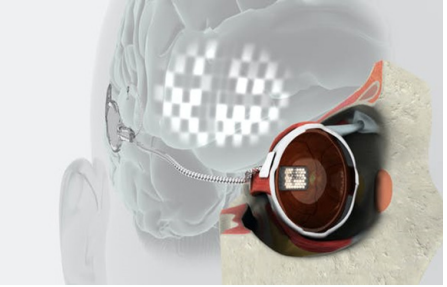
Bionic eyes, or visual prostheses, represent a transformative advancement in restorative medicine for the millions worldwide suffering from blindness. Unlike cosmetic prosthetic eyes, these functional implants use micro-electrodes to stimulate surviving neurons in the retina, optic nerve, or visual cortex, bypassing damaged tissue. Currently, recipients perceive a “flashing mosaic” of light spots known as phosphenes, which requires specialized training to interpret. While existing models such as the Argus II and Bionic Vision Australia devices provide enough functional vision for basic navigation and object localization, they remain limited by low electrode density and a lack of color perception. Future developments focusing on higher-resolution electrode arrays and cortical stimulation (like the Orion system) aim to broaden eligibility to patients with glaucoma or optic nerve trauma, ultimately striving to more closely replicate natural sight.
References
- 1. Nowik K, Langwińska-Wośko E, Skopiński P, Nowik KE, Szaflik JP. Bionic eye review - An update, (in eng). J Clin Neurosci. 2020; 78:8–19. 10.1016/j.jocn.2020.05.041 [DOI] [PubMed]
- 2. Ayton LN, et al. First-in-human trial of a novel suprachoroidal retinal prosthesis, (in eng). PLoS ONE. 2014;9(12):e115239. 10.1371/ journal.pone.0115239 [DOI] [PMC free article] [PubMed] [Google Scholar]
- 3. World Health Organization (WHO). (2021). World report on vision. Geneva: WHO. (accessed.
- 4. Bourne RRA et al. Magnitude, temporal trends, and projections of the global prevalence of blindness and distance and near vision impairment: a systematic review and metaanalysis, (in eng), Lancet Glob Health, 2017; 5(9):e888-e897, 10.1016/s2214-109x(17)30293-0 [DOI] [PubMed]
- 5. Flaxman SR et al. Global causes of blindness and distance vision impairment 1990–2020: a systematic review and meta-analysis, (in eng), Lancet Glob Health, 2017; 59(12): e1221-e1234, 10.1016/s2214-109x(17)30393-5 [DOI] [PubMed]
- 6. Kolb H. Roles of Amacrine Cells by Helga Kolb, in Webvision: The Organization of the Retina and Visual System, H. Kolb, E. Fernandez, B. Jones, and R. Nelson Eds. Salt Lake City (UT): University of Utah Health Sciences Center Copyright: © 2025 Webvision. 1995.
- 7. Nassi JJ, Callaway EM. Parallel processing strategies of the primate visual system, (in eng), Nat Rev Neurosci, 2009; 10(5): 360 –72, 10.1038/nrn2619 [DOI] [PMC free article] [PubMed]
- 8. Wandell BA, Dumoulin SO, Brewer AA. Visual field maps in human cortex, (in eng), Neuron, 2007; 56(2): 366–83, 10.1016/j. neuron.2007.10.012 [DOI] [PubMed]
- 9. Weiland JD, Humayun MS. Retinal prosthesis, (in eng). IEEE Trans Biomed Eng. May 2014; 61(5): 1412–24. 10.1109/tbme.2014.2314733 [DOI] [PMC free article] [PubMed]
- 10. Goodale MA, Milner AD. Separate visual pathways for perception and action, (in eng). Trends neurosci. 1992; 15: 20– 5. 10.1016/0166- 2236(92)90344-8. [DOI] [PubMed]
- 11. Allin S, Eckel E, Markham H, Brewer BR. Recent trends in the development and evaluation of assistive robotic manipulation devices. Phys Med Rehabil Clin N Am. 2010
- 12. Bach-y-Rita P, Kercel WS. Sensory substitution and the human-machine interface. Trends Cogn Sci. 2003
- 13. https://pmc.ncbi.nlm.nih.gov/articles/ PMC3326660
- 14. TNOA Journal of Ophthalmic Science and Research 59(1): pp. 52-55, Jan–Mar 2021.
Data Sharing Statement
There are no additional data available. All raw data and code are available upon request.
Funding
This research received no funding.
Author Contributions
All authors contributed significantly to the work and approve its publication.
Ethics Declaration
This article does not involve any human or animal subjects, and therefore does not require ethics approval.
Acknowledgements
We would like to express our gratitude to the patients, their families, and all those who have contributed to this study.
Conflicts of Interest
No conflicts of interest in this work.
About this article

Cite this article
Elsy Jeya Priyam ER, Jaivin Jaisingh J.. Bionic Eye: A Review. J Surg. Nurs. 2026; 15(1): 21-24
Licence:
Attribution-Non-commercial 4.0 International (CC BY-NC 4.0)This license enables reusers to distribute, remix, adapt, and build upon the material in any medium or format for noncommercial purposes only, and only so long as attribution is given to the creator.
| Received | Accepted | Published |
|---|---|---|
| October 06, 2025 | November 12, 2025 | April 30, 2026 |
DOI: https://doi.org/10.21088/ijsn.2277.467X.15126.4
Keywords
Bionic Eye (or Visual Prosthesis)Phosphenes (light perception)Retinitis Pigmentosa • Micro-electrodesRetinal DegenerationArtificial VisionCortical ImplantOptic Nerve StimulationFunctional VisionNeuroprostheticsSearch for Similar Articles
Similar Articles
- Total Anomalous Pulmonary Venous Connection (TAPVC) Presenting with Respiratory...
- Dandy–Walker Syndrome (DWS): Clinical Features, Diagnosis, and Nursing Managemen...
- Benign Prostatic Hyperplasia: A Comprehensive Evidence-Based Review of Etiopatho...
- Challenges Faced During Data Collection on Substance abuse Prevention among Coll...
- Effectiveness of structured Teaching Programme on Knowledge Regarding Health Haz...
Article Level Metrics
Last UpdatedMonday 19 October 2026, 06:16:37 (IST)
2170
Accesses
41
313
00
Citations
NA
NA
NA
Download citation
Article Keywords
Keyword Highlighting
Highlight selected keywords in the article text.
Timeline
| Received | October 06, 2025 |
| Accepted | November 12, 2025 |
| Published | April 30, 2026 |
licence
Attribution-Non-commercial 4.0 International (CC BY-NC 4.0)
This license enables reusers to distribute, remix, adapt, and build upon the material in any medium or format for noncommercial purposes only, and only so long as attribution is given to the creator.