Full Text (PDF)
Journal of Plastic Surgery and Transplantation 1(2):p 59-61, July-Dec 2021. | DOI: NA
Original Article
Application of Innovative Soft Compression Bandage Technique in Amputation Stump Dressings Our Experience
Ravi Kumar Chittoria, Neljo Thomas, Padmalakshmi Bharathi Mohan, Shijina Koliyath, Imran Pathan, Nishad Kerakkada
Author Information
Licence:
Attribution-Non-commercial 4.0 International (CC BY-NC 4.0)This license enables reusers to distribute, remix, adapt, and build upon the material in any medium or format for noncommercial purposes only, and only so long as attribution is given to the creator.
Journal of Plastic Surgery and Transplantation 1(2):p 59-61, July-Dec 2021. | DOI: NA
How Cite This Article:
Thomas N, Chittoria RK, Mohan PB, et al. Application of Innovative Soft Compression Bandage Technique in Amputation Stump Dressings Our Experience. J Plast Surg Transplant. 2021;1(2):59-61.Timeline
Received : November 21, 2021
Accepted : December 25, 2021
Published : December 30, 2021
Abstract
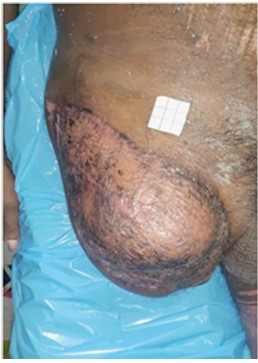
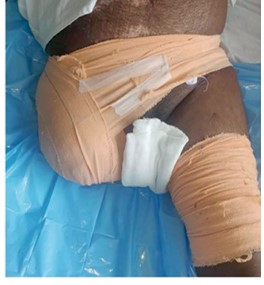
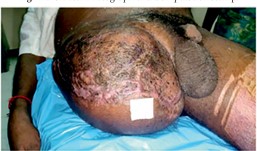
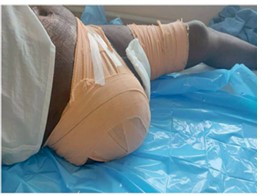
Limb amputations for various etiologies are one of the most common causes for disability and resulting social and financial losses at present. Higher the level of amputation more difficult it is to treat the stump and also more delayed is the rehabilitation. Therefore various therapeutic techniques for dressing the amputation stump have been described over the years to aid in fast recovery and to avoid local stump complications. In this case report a similar innovative method of dressing a above knee amputation stump has been described.
References
- 1. Barmparas G, Inaba K, Teixeira PG, Dubose JJ, Criscuoli M, Talving P, Plurad D, Green D, Demetriades D. Epidemiology of posttraumatic limb amputation: a National Trauma Databank analysis. The American Surgeon. 2010 Nov;76(11):1214-22.
- 2. Banerjee S, Adcock L. Rigid Dressings for Edema Management for Leg Amputation: A Review of Clinical and Cost-Effectiveness.
- 3. Dhivya S, Padma VV, Santhini E. Wound dressings–a review. BioMedicine. 2015 Dec;5(4):1-5.
- 4. Kayssi A, de Mestral C, Forbes TL, Roche-Nagle G. Predictors of hospital readmissions after lower extremity amputations in Canada. Journal of vascular surgery. 2016 Mar1;63(3):688-95.
- 5. Sumpio B, Shine SR, Mahler D, Sumpio BE. A comparison of immediate postoperative rigid and soft dressings for below-knee amputations. Annals of vascular surgery. 2013 Aug 1;27(6):774-80.
- 6. Kwah LK, Webb MT, Goh L, Harvey LA. Rigid dressings versus soft dressings for transtibial amputations. Cochrane Database of Systematic Reviews.2019(6).
Data Sharing Statement
There are no additional data available.
Funding
This research received no funding.
Author Contributions
All authors contributed significantly to the work and approve its publication.
Ethics Declaration
None
Acknowledgements
No Information Provided
About this article

Cite this article
Thomas N, Chittoria RK, Mohan PB, et al. Application of Innovative Soft Compression Bandage Technique in Amputation Stump Dressings Our Experience. J Plast Surg Transplant. 2021;1(2):59-61.
Licence:
Attribution-Non-commercial 4.0 International (CC BY-NC 4.0)This license enables reusers to distribute, remix, adapt, and build upon the material in any medium or format for noncommercial purposes only, and only so long as attribution is given to the creator.
| Received | Accepted | Published |
|---|---|---|
| November 21, 2021 | December 25, 2021 | December 30, 2021 |
DOI: NA
Keywords
AmputationCrepe BandageCompression DressingSearch for Similar Articles
Similar Articles
- Application of Amnion Allograft in Treatment of Thermal Burns
- Bio-cellulose Dressing in the Management of Deep Second-Degree Burns: Our Experi...
- Autologous Whole Blood Clot Matrix in the Management of SecondDegree Burns
- CT Image Reconstruction & 3D Reconstruction CT in Plastic Surgery: A Review
- Out of Love and Affection: A Medicolegal Paradox for Denying Gains Vs Pleading C...
Article Level Metrics
Last UpdatedSaturday 24 October 2026, 22:37:23 (IST)
1122
Accesses
8
539
00
Citations
NA
NA
NA
Download citation
Article Keywords
Keyword Highlighting
Highlight selected keywords in the article text.
Timeline
| Received | November 21, 2021 |
| Accepted | December 25, 2021 |
| Published | December 30, 2021 |
licence
Attribution-Non-commercial 4.0 International (CC BY-NC 4.0)
This license enables reusers to distribute, remix, adapt, and build upon the material in any medium or format for noncommercial purposes only, and only so long as attribution is given to the creator.