Full Text (PDF)
Indian Journal of Forensic Medicine and Pathology 18((2 Suppl)):p 114-122, April-June 2025. | DOI: https://doi.org/10.21088/ijfmp.0974.3383.18225.11
Original Article
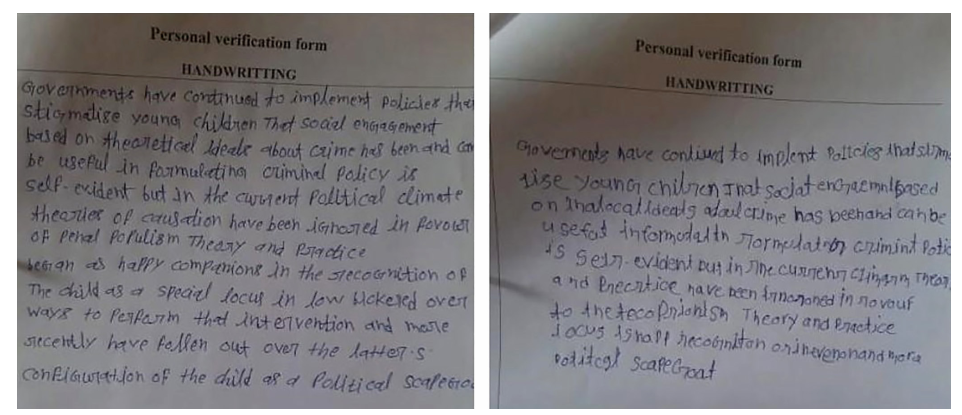
Analysis of Handwriting of Juveniles in Conflict with the Law: An Insight into Forensic Psychology
Shalinee Dwivedi Research Scholar, Anugya Agarwal, Pooja Kataria, Suneet Kumar
Author Information
Licence:
Attribution-Non-commercial 4.0 International (CC BY-NC 4.0)This license enables reusers to distribute, remix, adapt, and build upon the material in any medium or format for noncommercial purposes only, and only so long as attribution is given to the creator.
Indian Journal of Forensic Medicine and Pathology 18((2 Suppl)):p 114-122, April-June 2025. | DOI: https://doi.org/10.21088/ijfmp.0974.3383.18225.11
How Cite This Article:
Dwivedi S, Agarwal A, Kataria P, et al. Analysis of Handwriting of Juveniles in Conflict with the Law: An Insight into Forensic Psychology. Indian J Forensic Med Pathol. 2025;18(2 Suppl):114-122.Timeline
Received : May 06, 2024
Accepted : June 10, 2024
Published : June 30, 2025
Abstract
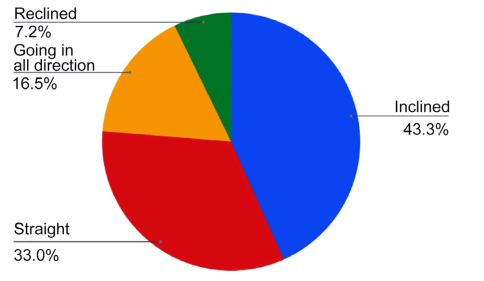
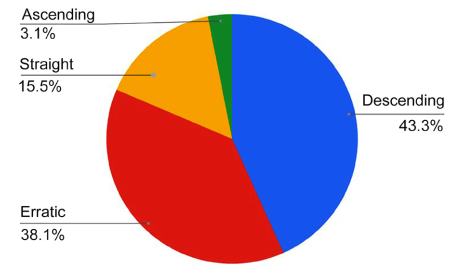
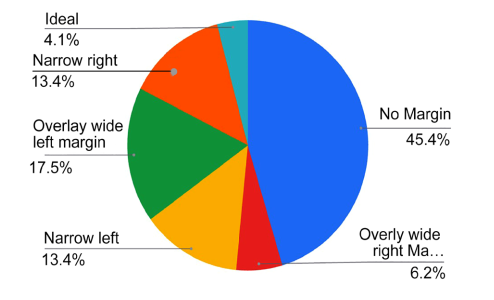
Context: The rise in juvenile delinquency in India highlights the need for alternative methods of profiling. Graphology provides a non-invasive way to examine behavioral and emotional characteristics by analyzing handwriting. Aims: To examine the handwriting of juveniles in conflict with the law and identify psychological and behavioral indicators that may aid in forensic profiling and rehabilitation efforts. Settings and Design: A cross-sectional observational study conducted at observation homes in Prayagraj, Mirzapur, and Chitrakoot, Uttar Pradesh, involving juveniles aged 12 to 18 years. Methods and Material: Handwriting samples from 100 juveniles were assessed based on ten parameters: Slant, Baseline, Margins, Spacing, Pen Pressure, Size, Speed, Zones, Letter Formation, and Connecting Strokes. Interpretations were drawn from established graphological frameworks. Statistical analysis used: Descriptive statistics and frequency distributions were used to identify prominent handwriting features and their association with behavioral traits. Results: Inclined slants (43.3%), descending baselines (43.3%), and heavy pen pressure (76.3%) were commonly observed, correlating with emotional suppression, disillusionment, and assertiveness. Spacing patterns and zone emphasis suggested issues with trust and ambition, while slow writing speed (81.4%) indicated passivity. Conclusions: Handwriting analysis can offer valuable psychological insights when used alongside conventional forensic tools. It has the potential to support early detection of distress and guide individualized rehabilitation efforts.
References
- 1. Klein F. Gestalt Graphology: Exploring the Mystery and Complexity of Human Nature Through Handwriting Analysis. Universe; 2007.
- 2. Panchasi R. Graphology and the science of individual identity in modern france. Configurations. 1996; 4(1): 1-31.
- 3. Ploog H. Handwriting Psychology: Personality reflected in handwriting. iUniverse; 2013.
- 4. Deshmukh I., Agrawal P., Khursale A, Lahane N, Sonune H. Graphology-Based Behavior Prediction: Case Study Analysis. Springer; 2023: 129-141.
- 5. Sankhla M.S., Parihar K., Daksh J., Kumar R., Agrawal P., Vaishnav L. Indian Juvenile Depression And Future Criminal Behavioral Forensic Analysis of Udaipur District Population.
- 6. Seifer M. The definitive book of handwriting analysis: the complete guide to interpreting personalities, detecting forgeries, and revealing brain activity through the science of graphology. Red Wheel/Weiser; 2008.
- 7. Brook L. Chillis R. Your personality in handwriting. Adasane & Associates, Inc.; 2008.
- 8. Boroujeni A.A.J., Roohani A., Hasanimanesh A. The impact of extroversion and introversion personality types on EFL learners’ writing ability. Theory and Practice in Language Studies. 2015; 5(1): 212.
- 9. Karami A. Relationship Between Personality and Handwriting Using Eysenck Test. International Journal of Psychological and Brain Sciences. 2017; 2(2): 28-39.
- 10. Costa P.T., McCrae R.R. Primary traits of Eysenck’s PEN system: Three-and five-factor solutions. Journal of personality and social psychology. 1995; 69(2): 308.
- 11. Sloan D.M., Marx B.P. Taking pen to hand: evaluating theories underlying the written disclosure paradigm. Clinical psychology: Science and practice. 2004; 11(2): 121.
- 12. Ugurlu B., Kandemir R., Carus A., Abay E. An expert system for determining the emotional change on a critical event using handwriting features. TEM Journal. 2016; 5(4): 480.
- 13. Likforman-Sulem L., Esposito A., FaundezZanuy M., Clémençon S., Cordasco G. Emothaw: A novel database for emotional state recognition from handwriting and drawing. IEEE Transactions on Human-Machine Systems. 2017; 47(2): 273-284.
- 14. Cordasco G., Scibelli F., Faundez-Zanuy M., Likforman-Sulem L., Esposito A. Handwriting and drawing features for detecting negative moods. Quantifying and Processing Biomedical and Behavioral Signals 27. 2019: 73-86.
- 15. James K.H. The importance of handwriting experience on the development of the literate brain. Current Directions in Psychological Science. 2017; 26(6): 502-508.
- 16. Maldarelli J.E, Kahrs B.A., Hunt S.C., Lockman JJ. Development of early handwriting: Visual-motor control during letter copying. Developmental psychology. 2015; 51(7): 879.
- 17. Kiefer M., Spitzer M. How Handwriting Shapes Literacy Acquisition and General Cognition: Phenomena and Cognitive Mechanisms. Routledge International Handbook of Visual-motor skills, Handwriting, and Spelling. Routledge; 2023: 111-122.
- 18. Morris R.N. Forensic handwriting identification: fundamental concepts and principles. 2020;
- 19. Mishra A. Handwriting Recognition using Neural Networks, Deep Learning and Support Vector Machines. Deep Learning and Support Vector Machines (March 4, 2021). 2021;
- 20. Greening C., Sagar V., Leedham C. Handwriting identification using global and local features for forensic purposes. IET; 1995: 272-278.
- 21. Kamath V., Ramaswamy N., Navin K., Desai V., Kulkarni S.M. Development of an automated handwriting analysis system. 2011;
- 22. Houmani N., Garcia-Salicetti S., Dorizzi B. On assessing the robustness of pen coordinates, pen pressure and pen inclination to time variability with personal entropy. IEEE; 2009: 1-6.
- 23. Graham S., Weintraub N., Berninger V.W. The relationship between handwriting style and speed and legibility. The journal of educational research. 1998: 290-296.
- 24. bin Abdl K.M., Hashim S.Z.M. Handwriting identification: a direction review. IEEE; 2009: 459-463.
- 25. Karlsdottir R. Print-script as Initial Handwriting Style I: effects on the development of handwriting. Scandinavian Journal of Educational Research. 1996; 40(2): 161-174.
- 26. Kedar S., Nair V., Kulkarni S. Personality identification through handwriting analysis: a review. International Journal of Advanced Research in Computer Science and Software Engineering. 2015; 5(1): 548-556.
- 27. El-Hajj R., Likforman-Sulem L., Mokbel C. Arabic handwriting recognition using baseline dependent features and hidden Markov modeling. IEEE; 2005: 893-897.
- 28. Grace N., Rinehart N., Enticott P., Johnson B. Do children with ASD have difficulty handwriting under time pressure? Research in Autism Spectrum Disorders. 2017; 37: 21-30.
- 29. Gavrilescu M., Vizireanu N. Predicting the Big Five personality traits from handwriting. EURASIP Journal on Image and Video Processing. 2018; 2018: 1-17.
Data Sharing Statement
There are no additional data available. All raw data and code are available upon request.
Funding
"This research received no funding.
Author Contributions
All authors contributed significantly to the work and approve its publication.
Ethics Declaration
This article does not involve any human or animal subjects, and therefore does not require ethics approval.
Acknowledgements
We would like to express our gratitude to the patients, their families, and all those who have contributed to this study.
Conflicts of Interest
No conflicts of interest.
About this article

Cite this article
Dwivedi S, Agarwal A, Kataria P, et al. Analysis of Handwriting of Juveniles in Conflict with the Law: An Insight into Forensic Psychology. Indian J Forensic Med Pathol. 2025;18(2 Suppl):114-122.
Licence:
Attribution-Non-commercial 4.0 International (CC BY-NC 4.0)This license enables reusers to distribute, remix, adapt, and build upon the material in any medium or format for noncommercial purposes only, and only so long as attribution is given to the creator.
| Received | Accepted | Published |
|---|---|---|
| May 06, 2024 | June 10, 2024 | June 30, 2025 |
DOI: https://doi.org/10.21088/ijfmp.0974.3383.18225.11
Keywords
GraphologyJuvenile delinquencyHandwriting analysisForensic psychologyRehabilitationSearch for Similar Articles
Similar Articles
- Diatom Analysis in Thermophilic water bodies: A Study on Hot Water Springs of Ma...
- Morphometric Study of Supra-meatal Triangle and Mastoid process in the Adult dry...
- Histopathological Spectrum of Autopsy Cases: A One Year Retrospective Observatio...
- Forensic Differentiation of Manner of Death in Railway Fatalities: A FourCase Se...
- Understanding assault Patterns: A Cross-sectional study of Cases at Chri, Kelamb...
Article Level Metrics
Last UpdatedSunday 18 October 2026, 19:25:36 (IST)
16288
Accesses
77
3209
00
Citations
NA
NA
NA
Download citation
Article Keywords
Keyword Highlighting
Highlight selected keywords in the article text.
Timeline
| Received | May 06, 2024 |
| Accepted | June 10, 2024 |
| Published | June 30, 2025 |
licence
Attribution-Non-commercial 4.0 International (CC BY-NC 4.0)
This license enables reusers to distribute, remix, adapt, and build upon the material in any medium or format for noncommercial purposes only, and only so long as attribution is given to the creator.