Full Text (PDF)
Indian Journal of Research in Anthropology 12(1):p 69-83, January-June 2026. | DOI: https://doi.org/10.21088/ijra.2454.9118.12126.7
Review Article
An Anthropological Study of Violence against Women in Indian Urban Slums: A Review Article
Author Information
Licence:
Attribution-Non-commercial 4.0 International (CC BY-NC 4.0)This license enables reusers to distribute, remix, adapt, and
build upon the material in any medium or format for noncommercial purposes
only, and only so long as attribution is given to the creator.
Indian Journal of Research in Anthropology 12(1):p 69-83, January-June 2026. | DOI: https://doi.org/10.21088/ijra.2454.9118.12126.7
How Cite This Article:
Pooja Yadav, Prashant Khattri. An Anthropological Study of Violence against Women in Indian Urban Slums: A Review Article. Ind J Res Anthropol 2026; 12(1): 69-83Timeline
Received : December 08, 2025
Accepted : February 07, 2026
Published : June 30, 2026
Abstract
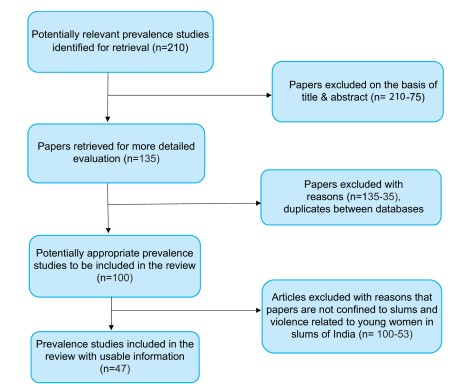
Objective: Poverty, overcrowding, and inadequate resources are major factors in the vulnerability of women in slums. Women are victims of verbal, psychological, and physical abuse from their partners. The hostile condition of urban slums, social marginalisation, and subdued jobs in a patriarchal world make women easy targets for such abuses. This review paper aims to explore the multifaceted dimensions of violence, underlying causes such as Physical, Sexual, Emotional, or Psychological harm, Verbal, and it also shows how poverty and the constructed subjugation of women are prevalent in such an urban and modernised part of a city. Social marginalisation, patriarchal norms, and subdued economic opportunities reinforce women’s subjugation, while children growing up in such households face intergenerational risks. Addressing violence against women in slums requires an anthropological perspective to understand how cultural norms, socio-economic conditions shape women’s resilience and access to support systems. Methodology: This research was searched on PubMed, Scopus, WHO, Google Scholar, and other relevant search engines to identify articles that focused on violence against women in urban slums of India. This research includes 47 studies that satisfied the inclusion criteria for this review. Narrative Review and thematic &content analysis were used for detecting themes, which gives a theoretical and analytical perspective of the study. Results: The prevalence of any form of violence against women, as reported in the studies, ranged from 15% to 59.3%. Violence can lead to physical and mental health problems, including injuries, anxiety, and depression. The major risk factors identified were husband’s alcohol abuse, women justifying the violence inflicted on them, low educational levels of women and men, dowry issues, and age differences between the spouses. It is evident from the review that urban slum women experience persistent violence.
References
- 1. Agarwal S., Satyavada A., Kaushik, S., and Kumar R(2007) Urbanization, urban poverty and health of the urban poor: Status, challenges and the way forward. Demography India, 36(1): 121–134.
- 2. Agnes F., (1992), Protecting women against violence? Review of a decade of legislation, 1980–89”. Economic and Political Weekly. 19–33.
- 3. Ahmad J., Khan M., Mozumdar A., and Varma S., (2016). Gender-based violence in rural Uttar Pradesh, India: Prevalence and association with reproductive health behaviours. Journal of Interpersonal Violence, 31(19). 3111– 3128.
- 4. Ali P.A., and Naylor P.B. (2013). Intimate partner violence: A narrative review of the biological and psychological explanations for its causation. Aggression and Violent Behavior. 18(3). 373-382.
- 5. Ambrosio Z.D. (2008). Advocating for Comprehensive Assessments on Domestic Violence cases”, Family Court Review: An interdisciplinary journal. 46(4): 654-669
- 6. Begum S., Donta B., Nair S. and Prakasam C.P., Sociodemographic factors associated with domestic violence in urban slums, Mumbai, Maharashtra, India. Indian J Med Res.141(6)783-8.
- 7. Berg M.J., Kremelberg D, Dwivedi P, Verma S., Schensul J., Gupta J., Chandran D., and Singh S.K., (2010). The effects of husband’s alcohol consumption on married women in three lowincome areas of greater Mumbai. AIDS and Behaviour. 14(1). 126–135.
- 8. Bourdieu P., and Wacquant L. (2004). Symbolic violence. In N. Scheper-Hughes & P. Bourgois (Eds.), Violence in war and peace). Malden, MA: Blackwell Publishing. 272-274.
- 9. Bourgois P., (2004). The continuum of violence in war and peace: Post-cold war lessons from El Salvador. In N. Scheper-Hughes & P. Bourgois (Eds.), Violence in war and peace Malden, MA Blackwell Publishing. 425–434.
- 10. Buss D.M. and Shackelford T.K. (1997). Human aggression in evolutionary psychological perspective review. Clinical psychology 17(6), 605-619.
- 11. Campbell J., Jones A.S., Dienemann J., Kub J., Schollenberger J., O’Campo P.A., Gielen C. and Wynne C., Intimate partner violence and physical health consequences, Archives of Internal Medicine, 162(10):1157-1163.
- 12. Campbell J.C. (2002). Health consequences of intimate partner violence. The Lancet, 359, 93(14): 1331-1336.
- 13. Campbell J.C. and Soeken K.L. (1999), “Women’s responses to battering over time: an analysis of change”, Journal of Interpersonal Violence 14(1): 21–40.
- 14. Cohen B., (2006). Urbanization in developing countries: Current trends, future projections, and key challenges for sustainability. Technology in Society. 28. 63–80. doi:10.1016/j.techsoc. 2005. 10.005.
- 15. Crime in India (2019), National Crime Records Bureau. Ministry of Home Affairs. 2.79.
- 16. Das S., Bapat U., More N.S., Alcock, G., Joshi W., Pantvaidya S. and Osrin D. (2013). Intimate partner violence against women during and after pregnancy: A cross-sectional study in Mumbai slums. BMC Public Health. 13 (1), 817. https://doi.org/10.1186/1471-2458-13-817.
- 17. Dauer S. (2014) Anthropological Approaches to Gender-based Violence and Human Rights, Gender, Development, and Globalization Program 304(2): 1-16.
- 18. Dutton D. & Strachan C.E. (1987). Motivational needs for power and spouse specific assertiveness in assaultive and non-assaultive men.Violence Victim 12(3), 145–156.
- 19. Eliasson M. (1997). Men’s violence against women Stockholm. Natur & Kultur.
- 20. Ellsberg M., Caldera T., Herrer and Kullgren G. (1999). Domestic violence and emotional distress among Nicaraguan women: Results from a population-based study, American Psychologist 54(1): 30–36.
- 21. Ferguson B., (2004). Tribal warfare. In N. Scheper-Hughes & P. Bourgois (Eds.), Violence in war and peace Malden, MA: Blackwell Publishing. 69–76.
- 22. Flanzer J.P. (1993). Alcohol and other drugs are key causal agents of violence. In Gelles, Current Controversies on Family Violence. Sage, Thousand Oaks, CA, 182–196.
- 23. Grisso J.A., Schwarz D.F., Hirschinger N., Sammel M., Brensinger C, Santanna J, Lowe R.A., Anderson E., Shaw L.M., Bethel C.A., Teeple L. (1999) Violent injuries among women in an urban area. N Engl J Med. 1999 Dec 16; 341(25): 1899-905. DOI: 10.1056/NEJM199912163412506. PMID: 10601510.
- 24. Hald G.M., Malamuth, N.M. and Yuen C. (2010). Pornography and attitudes supporting violence against women: revisiting the relationship in nonexperimental studies. Aggressive Behavior. 36(1): 14-20.
- 25. Hilberman E. (1980). The ‘‘wife-beaters wife’’ reconsidered. American Journal of Psychiatry 137(11): 1136–1347.
- 26. International Institute for Population Sciences & ICF International. (2017). National family health Survey (NFHS-4) 2015-16. International Institute for Population Sciences.
- 27. Jejeebhoy S.J., (1998). Wife-beating in rural India: A husband’s, right? Evidence from survey data. Economic and Political Weekly 33: 855–862
- 28. Jocano F.L. (1973). Experience and perspectives in a slum neighborhood: An anthropological view. Philippine Sociological Review. 223-228.
- 29. Johnson K. (2014), “1 in 6 Indian city dwellers live in conditions ‘Unfit for human habitation 30. Johnson S.B., Frattaroli S., Campbell J., Wright J., Pearson-Fields A.S. and Cheng T.L. (2005).I Know What Love Means.” Gender-based violence in the lives of urban adolescents”. Journal of Women’s Health. 14(2): 172-179
- 31. Jungari S. and Chinchore S. (2020). “Perception, prevalence, and determinants of intimate partner violence during pregnancy in urban slums of Pune, Maharashtra, India”. Journal of Interpersonal Violence.
- 32. Khan A. (2016). Anthropological Research in Urban Slums: Some Notes from the Field. Development Studies (DS) View No 2.
- 33. McCauley J., Kern D., Kolodner E., Dill K, Schroeder L., DeChant H.K. (1995). The ‘‘Battering syndrome’’: Prevalence and clinical symptoms of domestic violence in primary care internal medicine practices”. Annals of Internal Medicine 123: 737–746.
- 34. McCauley J., Kern D.E., Kolodner K., Schroeder A.F., DeChant H.E., Ryden J., Bass E.B. and Derogatis L.R., Maman, Campbell J.C., Sweat M. and Gielen A.C. (2000). The intersection of HIV and violence: directions for future research and interventions. Soc Sci Med, 50(45): 459–78.
- 35. Merry S.E. (2003). Human Rights Law and the Demonization of Culture. In PoLAR: Political and Legal Anthropology Review 26(1): 55-77
- 36. Mili D. (2011), Migration and healthcare: Access to healthcare services by migrants settled in Shivaji Nagar slum of Mumbai, India. The health, 2(3): 82–85.
- 37. Moitra S. (1996). Women, Heritage and Violence. Papyrus
- 38. Montgomery M.R. (2008). The urban transformation of the developing world. Science. 319: 761–764. doi:10.1126/science. 1153012.
- 39. Nayak M.B., Byrne C.A., Martin M.K. and Abraham A.G. (2003). Attitudes toward violence against women: A cross-nation study. Sex Roles. 49(7-8): 333-342.
- 40. Nayak, M.B., Byrne, C.A., Martin, M.K., & Abraham, A.G. (2003). Attitudes toward violence against women: A cross-nation study. Sex Roles, 49(7-8): 333-342.
- 41. Pandey G.K., Dutt D. and Banerjee B. (2009). Partner and relationship factors in domestic violence: Perspectives of women from a slum in Calcutta India. Journal of Interpersonal Violence. 24(7): 1175–1191.
- 42. Ranganathan M., Heise L., Peterman A., Roy S. and Hidrobo M. (2021). Cross-disciplinary intersections between public health and economics in intimate partner violence research. SSM Population Health, 14 (2): 100-822
- 43. Reciprocal altruism and warfare: A case from the Ecuadorian Amazon. In L. Cronk, N. Chagnon, & W. Irons (Eds.), Adaptation and human behavior: An anthropological perspective (pp. 417–436). Hawthorne, NY: Aldine de Gruyter.
- 44. Riches D. (1986). The phenomenon of violence. In D. Riches (Ed.), Anthropology of violence Oxford, UK: Basil Blackwell Ltd. 1-27.
- 45. Rouland, Norbert (1992). Anthropologia giuridica. MilanoGiuffré.
- 46. Roy D., Lees M.H., Palavalli B., Pfeffer K. andSloot M.P. (2014). The emergence of slums: A contemporary view on simulation models. Environmental Modelling & Software. 59(2): 76–90
- 47. RTI International (2014). Strengthening community networks to prevent intimate partner violence in Karnataka, Available from: http://www.rti.org/brochures/rti_ipv_india. pdf, accessed on August 26, 2014
- 48. Samiti M.J.A. (2017). Violence against-womenthe-hidden-health-burden, The battle against fear and discrimination: The impact of violence against women in Uttar Pradesh and Rajasthan.
- 49. Scheper-Hughes, N. and Bourgois P. (2004). Introduction: Making sense of violence. In N. Scheper-Hughes & P. Bourgois (Eds.), Violence in war and peace (pp. 1 32). Malden, MA: Blackwell Publishing.
- 50. Shrivastava P.S. and Shrivastava S.R. (2013). A study of spousal domestic violence in an urban slum of Mumbai”. Int J Prev Med4(1): 27-32
- 51. Silverman J.G., Balaiah D., Ritter J., Dasgupta A., Boyce S.C., Decker M.R., Naik D.D., Nair S., Saggurti and Raj A. (2016). Maternal morbidity associated with violence and maltreatment from husbands and in-laws: Findings from Indian slum communities. Reproductive Health, 13(1):109-115. https://doi.org/10.1186/s12978-016 0223-z
- 52. Sinha A., Mallik S., Sanyal D., Dasgupta S., Pal D, Mukherjee A. (2012), Domestic violence among ever married women of reproductive age group in a slum area of Kolkata. Indian J Public Health, (56): 6-31.
- 53. Taylor S.E., Peplau L.A. and Sears D. (2006). Attitudes and Attitude Change. Social Psychology (12): 132-168
- 54. The Hindu Marriage Act. 1955. New Delhi, India: Professional Book Publishers; 2002
- 55. UN-Habitat (2003). The challenge of slums - global report on human settlements. Report, United Nations Human Settlements Programme, UK, London.
- 56. UN-Habitat. (2010). State of the cities 2010- 11 - cities for all: Bridging the urban divide. Report, United Nations Human Settlements Programme, UK, London.
- 57. United Nations (2014). Declaration on the Elimination of Violence against Women”. United Nations. 292, 99-108.
- 58. United Nations, Declaration on the Elimination of Violence against Women, Retrieved from www.un-documents.net/a48r104.htm on 11.10.14.
- 59. United Nations. (2015). The millennium development goals report 2015. New York, NY: United Nations.
- 60. Whitehead N. (2004). Rethinking anthropology of violence. Anthropology Today. 20(5): 1–2
- 61. World Bank (1993). Investing in health: World development indicators. Report, World Development Report. New York: Oxford University Press.
- 62. World Health Organization (2013). Global and regional estimates of violence against women: prevalence and health effects of intimate partner violence and non-partner sexual violence.
Data Sharing Statement
There are no additional data available. All raw data and code are available upon request.
Funding
This research received no funding.
Author Contributions
All authors contributed significantly to the work and approve its publication.
Ethics Declaration
This article does not involve any human or animal subjects, and therefore does not require ethics approval.
Acknowledgements
We would like to express our gratitude to the patients, their families, and all those who have contributed to this study.
Conflicts of Interest
No conflicts of interest in this work.
About this article

Cite this article
Pooja Yadav, Prashant Khattri. An Anthropological Study of Violence against Women in Indian Urban Slums: A Review Article. Ind J Res Anthropol 2026; 12(1): 69-83
Licence:
Attribution-Non-commercial 4.0 International (CC BY-NC 4.0)This license enables reusers to distribute, remix, adapt, and
build upon the material in any medium or format for noncommercial purposes
only, and only so long as attribution is given to the creator.
| Received | Accepted | Published |
|---|---|---|
| December 08, 2025 | February 07, 2026 | June 30, 2026 |
DOI: https://doi.org/10.21088/ijra.2454.9118.12126.7
Keywords
Violence Against WomenGender-Based ViolenceIntimate Partner Violence and HealthUrban SlumsSearch for Similar Articles
Similar Articles
- Contemporary Issues and Challenges in Women’s Weavers in the Varanasi Silk Saree...
- Understanding through Traversing the Corridors of History: Richness of Indian He...
- Challenges and Opportunities in Digital Preservation of Intangible Culture Herit...
- Assessment of Nutritional Indicators: A Comparative Study among Pre-School Child...
- Prenatal and Postnatal Health-Seeking Behaviour among the Muria Tribe of Bastar...
Article Level Metrics
Last UpdatedFriday 23 October 2026, 12:25:25 (IST)
2456
Accesses
28
529
00
Citations
NA
NA
NA
Download citation
Article Keywords
Keyword Highlighting
Highlight selected keywords in the article text.
Timeline
| Received | December 08, 2025 |
| Accepted | February 07, 2026 |
| Published | June 30, 2026 |
licence
Attribution-Non-commercial 4.0 International (CC BY-NC 4.0)
This license enables reusers to distribute, remix, adapt, and
build upon the material in any medium or format for noncommercial purposes
only, and only so long as attribution is given to the creator.