Full Text (PDF)
Journal of Nurse Midwifery and Maternal Health 10(3):p 101-104, September - December 2024. | DOI: https://doi.org/10.21088/jnmmh.2454.7506.10324.3
Original Article
A Study to Determine the Effectiveness of Pelvic Floor Exercise in Reducing Dysmenorrhea among Adolescent Girls
Author Information
Licence:
Attribution-Non-commercial 4.0 International (CC BY-NC 4.0)This license enables reusers to distribute, remix, adapt, and build upon the material in any medium or format for noncommercial purposes only, and only so long as attribution is given to the creator.
Journal of Nurse Midwifery and Maternal Health 10(3):p 101-104, September - December 2024. | DOI: https://doi.org/10.21088/jnmmh.2454.7506.10324.3
How Cite This Article:
Bhavika Rathod. A Study to Determine the Effectiveness of Pelvic Floor Exercise in Reducing Dysmenorrhea among Adolescent Girls. J Nurse Midwifery Matern Health. 2024;10(3):101-104.Timeline
Received : November 15, 2024
Accepted : December 11, 2024
Published : December 30, 2024
Abstract
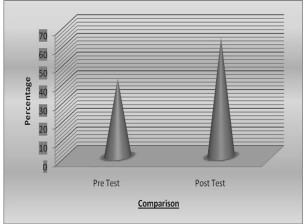
A study was conducted to determine the effectiveness of pelvic floor exercise in reducing dysmenorrhea among adolescent Girls. 50 students were selected by non-probability convenient sampling technique.Data were collected by pain assessment scale and structured knowedge questionnaire. The mean scores of Pre-test knowledge score & Post-test knowledge score are 14.57 & 22.06. The co-relation value are 0.98 respectively (r>1). So there is a positive co-relation between Pre-test knowledge score & Post-test knowledge score. The overall knowledge score shows that there was positive improvement score 6.69 which is greater than the table value 2.021 and found to be highly significant at the level of p<0.05 hence it is evident that the pelvic floor exercise is effective in reducing dysmenorrhea.
References
- 1. Akerland M. Pathophysiology of dysmenorrhea. Acta Obstet Gynecol 1979; 87(Suppl):27–32.
- 2. Rosenwaks Z, Seegar-Jones G. Menstrual pain: its origin and pathogenesis. J Reprod Med 1980; 25(4):207–12.
- 3. Jamieson DJ, Steege JF. The prevalence of dysmenorrhea, dyspareunia, pelvic pain, and irritable bowel syndrome in primary care practices. Obstet Gynecol 1996; 87(1):55–8.
- 4. Ng TP, Tan NC, Wansaicheong GK. A prevalence study of dysmenorrheal in female residents aged 15–54 years in Clementi Town, Singapore. Ann Acad Med Singapore 1992; 21(3):323–7.
- 5. Strinic T, Bukovic D, Pavelic L, Fajdic J. Herman I, Stipic I, et al. Anthropological and clinical
- 6. characteristics in adolescent women with dysmenorrhea. Coll Antropol 2003; 27(2):707–11.
- 7. Andersch B, Milsom I. An epidemiologic study of young women with dysmenorrhea. Am J Obstet Gynecol 1982; 144(6):655–60.
- 8. Hirata M, Kumabe K, Inoue Y. Relationship between the frequency of menstrual pain and body weight in female adolescents. Nippon Koshu Eisei Zasshi 2002; 49(6):516–24.
- 9. Pawlowski B. Prevalence of menstrual pain in relation to the reproductive life history of women from the Mayan rural community. Ann Hum Biol 2004; 31(1):1–8.
- 10. Pullon S, Reinken J, Sparrow M. Prevalence of dysmenorrhea in Wellington women. N Z Med J 1988; 101(839):52–4.
- 11. Zondervan KT, Yudkin PL, Vessey MP, Dawes MG, Barlow DH, Kennedy SH. The prevalence of chronic pelvic pain in women in the United Kingdom: a systematic review. Br J Obstet Gynaecol 1998; 105(1):93–9.
- 12. Twigg J. Dysmenorrhea. Curr Obstet Gynaecol 2002; 12:341–5
Data Sharing Statement
There are no additional data available. All raw data and code are available upon request.
Funding
This research received no funding.
Author Contributions
All authors contributed significantly to the work and approve its publication.
Ethics Declaration
This article does not involve any human or animal subjects, and therefore does not require ethics approval.
Acknowledgements
We would like to express our gratitude to the patients, their families, and all those who have contributed to this study.
Conflicts of Interest
No conflicts of interest in this work.
About this article

Cite this article
Bhavika Rathod. A Study to Determine the Effectiveness of Pelvic Floor Exercise in Reducing Dysmenorrhea among Adolescent Girls. J Nurse Midwifery Matern Health. 2024;10(3):101-104.
Licence:
Attribution-Non-commercial 4.0 International (CC BY-NC 4.0)This license enables reusers to distribute, remix, adapt, and build upon the material in any medium or format for noncommercial purposes only, and only so long as attribution is given to the creator.
| Received | Accepted | Published |
|---|---|---|
| November 15, 2024 | December 11, 2024 | December 30, 2024 |
DOI: https://doi.org/10.21088/jnmmh.2454.7506.10324.3
Keywords
EffectivenessPelvic Floor ExerciseDysmenorrheaAdolescent girlsSearch for Similar Articles
Similar Articles
- Psychological Distress and Quality of Life Among Parents of Children with Cancer...
- We Must be Aware about Water Birth: An Overview
- Digital Health Literacy Among Mothers and Its Impact on Neonatal Outcomes: An In...
- Effectiveness of Vedio assisted Technique Programme on knowledge regarding Techn...
- A Comprehensive review of Uterine Prolapse: Etiology, Diagnosis of Management
Article Level Metrics
Last UpdatedTuesday 29 September 2026, 16:32:23 (IST)
1780
Accesses
11
293
00
Citations
NA
NA
NA
Download citation
Article Keywords
Keyword Highlighting
Highlight selected keywords in the article text.
Timeline
| Received | November 15, 2024 |
| Accepted | December 11, 2024 |
| Published | December 30, 2024 |
licence
Attribution-Non-commercial 4.0 International (CC BY-NC 4.0)
This license enables reusers to distribute, remix, adapt, and build upon the material in any medium or format for noncommercial purposes only, and only so long as attribution is given to the creator.