Full Text (PDF)
Indian Journal of Forensic Medicine and Pathology 19(2):p 193-198, April - June 2026. | DOI: https://doi.org/10.21088/ijfmp.0974.3383.19226.11
Original Article
A Questionnaire-Based Cross-Sectional Study on the Prevalence of Substance Abuse among Age 17 to 25 Years in the Chengalpattu Population with Medico-Legal Perspectives
Unnamalai R.M, Dipayan Deb Barman, Vivek Valliappan
Author Information
Licence:
Attribution-Non-commercial 4.0 International (CC BY-NC 4.0)This license enables reusers to distribute, remix, adapt, and build upon the material in any medium or format for noncommercial purposes only, and only so long as attribution is given to the creator.
Indian Journal of Forensic Medicine and Pathology 19(2):p 193-198, April - June 2026. | DOI: https://doi.org/10.21088/ijfmp.0974.3383.19226.11
How Cite This Article:
Unnamalai R.M., Dipayan Deb Barman, Vivek Valliappan. A Questionnaire-Based Cross-Sectional Study on the Prevalence of Substance Abuse among Age 17 to 25 Years in the Chengalpattu Population with Medico-Legal Perspectives. Indian J Forensic Med Pathol. 2026; 19(2): 193-198.Timeline
Received : March 17, 2026
Accepted : June 22, 2026
Published : June 30, 2026
Abstract
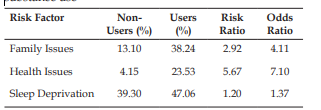
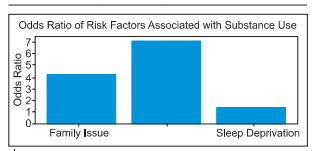
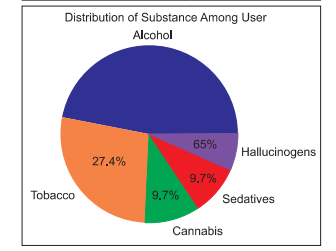
Background: Substance abuse among young individuals represents a growing public health concern with significant social, psychological, and medico-legal implications. The age group of 17–25 years constitutes a vulnerable transitional phase during which initiation of substance use may result in dependence, health deterioration, academic impairment, and legal consequences.¹ Aim: To determine the prevalence and patterns of substance abuse among individuals aged 17–25 years in the Chengalpattu population and to assess associated medico-legal perspectives. Methodology: A questionnaire-based cross-sectional study was conducted among participants aged 17–25 years residing in Chengalpattu district. Data on socio-demographic characteristics, substance use patterns, reasons for initiation, frequency of use, features suggestive of dependence, and associated behavioral and medico-legal issues were collected using a structured questionnaire. Descriptive and inferential statistical analyses were performed. Results: The overall prevalence of substance use was 9.8%. Alcohol was the most commonly used substance, followed by tobacco and cannabis. A proportion of substance users exhibited features suggestive of dependence. Substance use showed associations with family-related issues, health problems, sleep deprivation, and medico-legal concerns, including exposure to violence.
References
- 1. Nawi A.M., Mohammad Z., Tahereh H., et al. Risk and protective factors of drug abuse among adolescents: a systematic review. Malays J Med Sci. 2021; 28(1): 1–15.
- 2. Dhawan A., Basu D. Understanding alcohol and illicit drug use in young college students. Indian J Psychol Med. 2024; 46(1): 1–10.
- 3. Ambwani R., Singh A. Substance use in India – policy implications. J Fam Med Prim Care. 2020; 9(3): 1209–1212.
- 4. Li X., Kasaie P., Varghese C., et al. Global burden of substance use disorders in adolescents aged 10–24 years, 1990–2021. Sci Rep. 2025; 15: 11266.
- 5. Liu Y., Wang H., Chen X., et al. Global burden of substance use disorders among adolescents, 1990–2021. Front Public Health. 2025; 13: 1345678.
- 6. Zhou H., Li X., et al. Burden of mental disorders and substance use among global youths: findings from GBD 2021. Transl Psychiatry. 2025; 15: 353.
- 7. Ministry of Social Justice and Empowerment. Magnitude of substance use in India. New Delhi: Government of India; 2019.
- 8. Sharma A., Singh V., Gupta P., et al. Tobacco and alcohol use among adolescents in Northern India. Indian J Community Med. 2023; 48(4): 567–573.
- 9. Grover S., Avasthi A., Basu D., et al. Psychosocial stressors and substance use in Indian college students. Indian J Psychiatry. 2022; 64(3): 245–252.
- 10. Benegal V., Chand P.K., Obot I.S. Patterns of substance use in India. Natl Med J India. 2020; 33(2): 88–94.
- 11. Patel V., Flisher A.J., Hetrick S., McGorry P. Mental health of young people: A global public-health challenge. Lancet. 2007; 369(9569): 1302–1313.
- 12. Kumar R., Selvam P., Arumugam B., et al. Prevalence of substance abuse in Chengalpattu district: a community-based study. J Public Health India. 2024; 10(2): 45–52.
- 13. Singh P., Sharma R., Mehta G. Medico-legal aspects of substance abuse in India. J Indian Acad Forensic Med. 2021; 43(2): 112–120.
- 14. Murugan S., Ramesh V., Karthik M., et al. Forensic implications of youth substance abuse in semi-urban India. Med Sci Law. 2022; 62(4): 278–285.
- 15. World Health Organization. Cross-sectional surveys for substance use epidemiology. Geneva: WHO; 2021. Unnamalai R.M., Dipayan Deb Barman, Vivek Valliappan. A Questionnaire-Based Cross Sectional Study on the Prevalence of Substance Abuse among Age 17 to 25 Years in the Chengalpattu Population with Medico Legal Perspectives.198 Indian Journal of Forensic Medicine and Pathology IJFMP/Volume 19 Number 2 April–June 2026
- 16. Indian Council of Medical Research. National ethical guidelines for biomedical and health research involving human participants. New Delhi: ICMR; 2017.
- 17. Daniel J. Stratified sampling: theory and practice. Int J Soc Res Methodol. 2012; 15(1): 23–34.
- 18. Naing L., Winn T., Rusli B.N. Practical issues in calculating the sample size for prevalence studies. Arch Orofac Sci. 2006; 1: 9–14.
- 19. Centers for Disease Control and Prevention. Informed consent in behavioral health studies. MMWR Recomm Rep. 2018; 67(RR-2): 1–15.
- 20. Boateng G.O., Neilands T.B., Frongillo E.A., Melgar-Quiñonez H.R., Young S.L. Best practices for developing and validating scales for health, social, and behavioral research. Front Public Health. 2018; 6: 149.
- 21. McHugh M.L. The chi-square test of independence. Biochem Med (Zagreb). 2013; 23(2): 143–149.
- 22. Benegal V., Paul G., Murthy P. Substance use disorders in India: epidemiology and implications. Indian J Psychiatry. 2019; 61(Suppl 2): S203–S210.
- 23. George S., Kuttichira P. Patterns of substance use among college students in South India. Kerala J Psychiatry. 2018; 31(1): 12–18.
- 24. Hall W., Degenhardt L. Adverse health effects of non-medical cannabis use. Lancet. 2009; 374(9698): 1383–1391.
- 25. Kandel D.B. Stages and pathways of drug involvement: examining the gateway hypothesis. Cambridge: Cambridge University Press; 2002.
- 26. Barman D.D., Mukesh M. Opioid toxicity crisis: a view into the challenges and opportunities ahead—A narrative review. J Forensic Leg Med. 2025; 99: 102597.
- 27. Steinberg L. Risk taking in adolescence: new perspectives from brain and behavioral science. Curr Dir Psychol Sci. 2007;16(2):55–59.
- 28. Casey B.J., Getz S., Galvan A. The adolescent brain. Dev Rev. 2008; 28(1): 62–77.
- 29. Velleman R., Templeton L. Impact of parents’ substance misuse on children: an update. Adv Psychiatr Treat. 2016; 22(2): 108–117.
- 30. Darke S., Kaye S., McKetin R., Duflou J. Major physical and psychological harms of methamphetamine use. Drug Alcohol Rev. 2008; 27(3): 253–262. 31. DiMaio V.J.M., DiMaio D. Forensic pathology. 2nd ed. Boca Raton: CRC Press; 2001.
Data Sharing Statement
There are no additional data available. All raw data and code are available upon request.
Funding
This research received no funding.
Author Contributions
All authors contributed significantly to the work and approve its publication.
Ethics Declaration
This article does not involve any human or animal subjects, and therefore does not require ethics approval."
Acknowledgements
We would like to express our gratitude to the patients, their families, and all those who have contributed to this study.
Conflicts of Interest
No conflicts of interest in this work.
About this article

Cite this article
Unnamalai R.M., Dipayan Deb Barman, Vivek Valliappan. A Questionnaire-Based Cross-Sectional Study on the Prevalence of Substance Abuse among Age 17 to 25 Years in the Chengalpattu Population with Medico-Legal Perspectives. Indian J Forensic Med Pathol. 2026; 19(2): 193-198.
Licence:
Attribution-Non-commercial 4.0 International (CC BY-NC 4.0)This license enables reusers to distribute, remix, adapt, and build upon the material in any medium or format for noncommercial purposes only, and only so long as attribution is given to the creator.
| Received | Accepted | Published |
|---|---|---|
| March 17, 2026 | June 22, 2026 | June 30, 2026 |
DOI: https://doi.org/10.21088/ijfmp.0974.3383.19226.11
Keywords
Substance abuseTobaccoAlcoholmedicolegal issuesChengalpattu populationSearch for Similar Articles
Similar Articles
- Diatom Analysis in Thermophilic water bodies: A Study on Hot Water Springs of Ma...
- Morphometric Study of Supra-meatal Triangle and Mastoid process in the Adult dry...
- Histopathological Spectrum of Autopsy Cases: A One Year Retrospective Observatio...
- Forensic Differentiation of Manner of Death in Railway Fatalities: A FourCase Se...
- Understanding assault Patterns: A Cross-sectional study of Cases at Chri, Kelamb...
Article Level Metrics
Last UpdatedWednesday 21 October 2026, 08:46:54 (IST)
16495
Accesses
133
3225
00
Citations
NA
NA
NA
Download citation
Article Keywords
Keyword Highlighting
Highlight selected keywords in the article text.
Timeline
| Received | March 17, 2026 |
| Accepted | June 22, 2026 |
| Published | June 30, 2026 |
licence
Attribution-Non-commercial 4.0 International (CC BY-NC 4.0)
This license enables reusers to distribute, remix, adapt, and build upon the material in any medium or format for noncommercial purposes only, and only so long as attribution is given to the creator.