Full Text (PDF)
Indian Journal of Anatomy 13(1):p 31-37, January – March 2024. | DOI: https://doi.org/10.21088/ija.2320.0022.13124.4
Original Article
A Method of Teaching Learning Embryology Models by Preparing the Labeled Photographs with a Set of Questions and Students’ Perception
Rucha R. Kulkarni, K. D. Khushale null, Md. Arboddin null
Author Information
Licence:
Attribution-Non-commercial 4.0 International (CC BY-NC 4.0)This license enables reusers to distribute, remix, adapt, and build upon the material in any medium or format for noncommercial purposes only, and only so long as attribution is given to the creator.
Indian Journal of Anatomy 13(1):p 31-37, January – March 2024. | DOI: https://doi.org/10.21088/ija.2320.0022.13124.4
How Cite This Article:
Kulkarni RR, Khushale KD, Arboddin M. A method of teaching learning embryology models by preparing the labeled photographs with a set of questions and students’ perception. Ind J Anat. 2024;13(1):31-37.Timeline
Received : March 13, 2024
Accepted : March 27, 2024
Published : May 30, 2024
Abstract
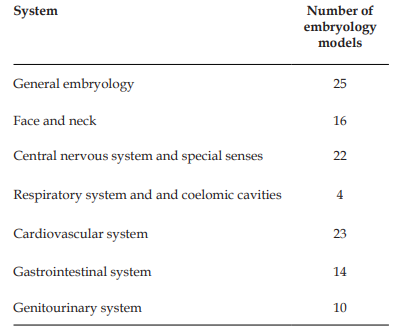
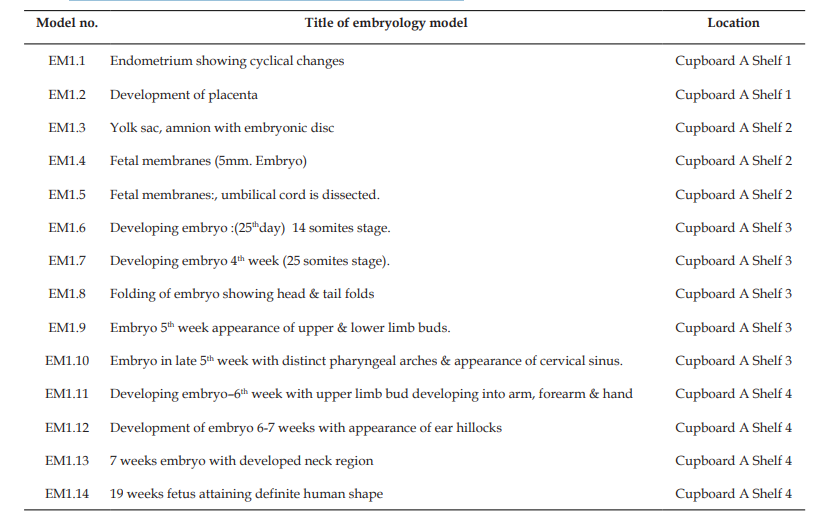
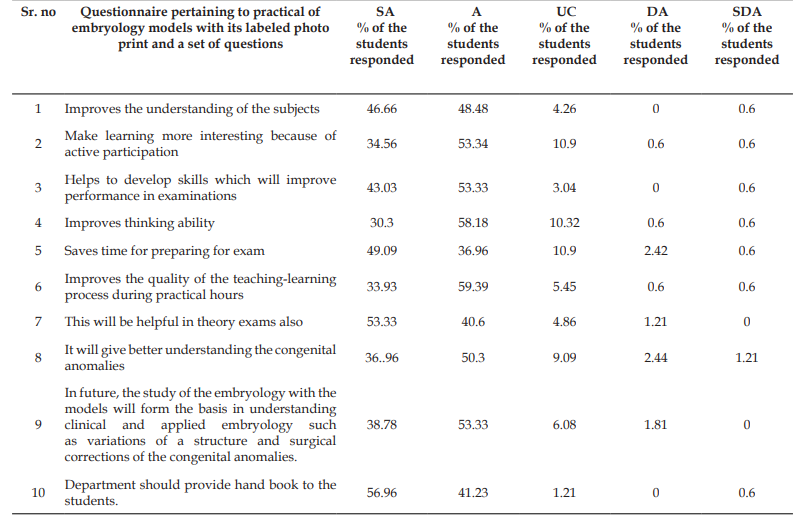
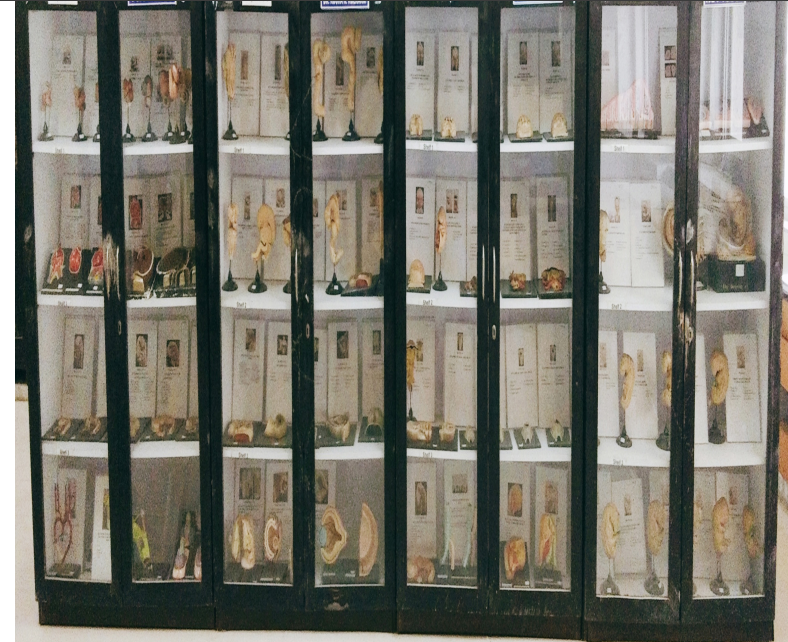
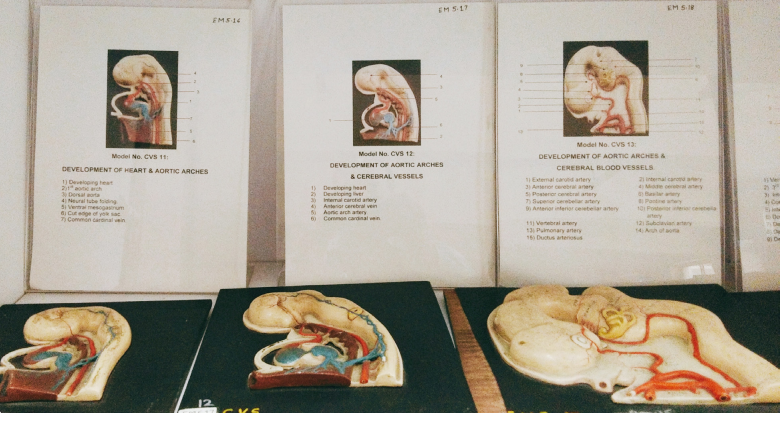
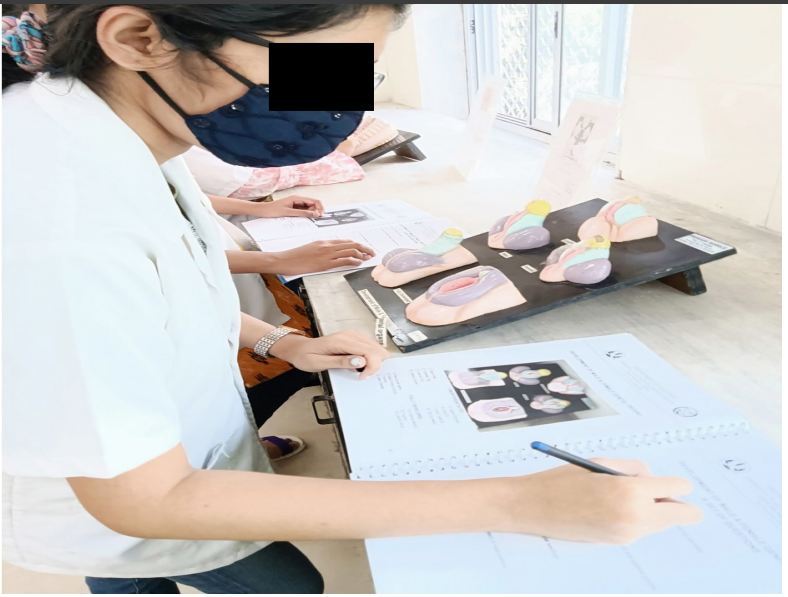
Introduction: Embryology forms an important part of Anatomy in medical curriculum. Knowledge of embryonic development is crucial to grasp the intricate topographic relations of organs in the human body and to understand congenital malformations. Embryology is not only difficult to imagine and understand by the students, also difficult to comprehend & reproduce in exam. In classes for human embryology, it is common to use artificial models to represent the different phases of development. The use of this tool has the purpose of facilitating learning, since the students can see and touch the models. Use of artificial models enables learning, since the students can appreciate the three-dimensional (3D) aspects of the structures. To facilitate the learning of embryology and improve the performance of the students in examinations new method of teaching-learning embryology models is introduced. To implement this method, each embryology model in the Department of Anatomy was photographed. In the photograph, parts of the model were labeled. The print out of the labeled photograph was taken. Based on each model, a set of questions on topics of ‘Must know’ part of curriculum was prepared. When practicals of embryology models were conducted, to study the model students were provided with a labeled photograph along with a set of questions. To get feedback of this teaching method the questionnaire was given to the students. The questionnaire was based on five point Likert scale. Conclusions: A method of Teaching-Learning embryology models by preparing the labeled photographs with a set of questions is beneficial to the students to prepare for theory and practical examinations. It enhances and improves the understanding of the subject and thinking ability.
References
- 1. Moore KL, Persaud TVN. The developing human: clinically oriented embryology. 8th ed. Philadelphia: Saunders Elsevier; 2008. p. 7-8.
- 2. Sadler TW. Langman’s medical embryology. 8th ed. Philadelphia: Lippincott Williams & Wilkins; 2000. p. xii.
- 3. Robertson AB, Oyedele O. The decline of embryology instruction within medical schools worldwide: Options for adapting. UBC Med J. 2019;10(2):39-40.
- 4. Chekrouni N, Kleipool RP, de Bakker BS. The impact of using three-dimensional digital models of human embryos in the biomedical curriculum. Ann Anat. 2020;227:151430.
- 5. Mehta G, Mokhasi V, Shamkuwar S. Learning embryology: fun or fear? Students’ perspective. Int J Anat Res. 2019;7(4.2):7127-7131.
- 6. Vinay G, Veerapu N. A comparison of self-directed learning and lecture methods for teaching embryology among first year medical students. Sch Int J Anat Physiol. 2020;3(1):10-14.
- 7. Aversi-Ferreira TA, Aversi-Ferreira RA, Nascimento GN, Nyamdavaa N, Araujo MF, Ribeiro PP, et al. Teaching embryology using models construction in practical classes. Int J Morphol. 2012;30(1):188-195.
- 8. Kamkhedkar SG, Malgaonkar AA, Kartikeyan S. Three–dimensional embryology models as teaching aids for first-year medical students. Int J Biomed Res. 2017;8(4):177-181.
- 9. Pattanshetti SV, Dixit D, Bhimalli S, Virupaxi RD. M.B.B.S. undergraduate learner’s perspective regarding embryology teaching learning methodologies. Ind J Anat. 2018;7(5):522-527.
- 10. Khushale KD, Bhosale YJ, Shyamkishore K. Preparing histology charts for 1st MBBS students and perception of students and faculty. Indian J Clin Anat Physiol. 2017;4(1):118-122.
Data Sharing Statement
There are no additional data available. All raw data and code are available upon request.
Funding
This research received no funding.
Author Contributions
Whether all authors contributed significantly to the work and approve its publication.
Ethics Declaration
This article does not involve any human or animal subjects, and therefore does not require ethics approval.
Acknowledgements
We would like to express our gratitude to the patients, their families, and all those who have contributed to this study.
Conflicts of Interest
The authors report no conflicts of interest in this work.
About this article

Cite this article
Kulkarni RR, Khushale KD, Arboddin M. A method of teaching learning embryology models by preparing the labeled photographs with a set of questions and students’ perception. Ind J Anat. 2024;13(1):31-37.
Licence:
Attribution-Non-commercial 4.0 International (CC BY-NC 4.0)This license enables reusers to distribute, remix, adapt, and build upon the material in any medium or format for noncommercial purposes only, and only so long as attribution is given to the creator.
| Received | Accepted | Published |
|---|---|---|
| March 13, 2024 | March 27, 2024 | May 30, 2024 |
DOI: https://doi.org/10.21088/ija.2320.0022.13124.4
Keywords
EmbryologyTeaching Learning Methodologies3D Embryology modelsa set of questionsSearch for Similar Articles
Similar Articles
- Supernumerary Pulmonary Vein: A Rare Anatomical Variation Observed During Cadave...
- Elongated Styloid Process: Anatomical Variations and Their Clinical Relevance: A...
- Bridging the Gap Between Dissection and Surgery: The Role of Soft Embalming in M...
- A Cadaveric Study of Retro Hepatic Segment of Inferior Vena Cava and Ostia Venae...
- Estimation of Stature from Forearm Length in Medical Undergraduate Students of a...
Article Level Metrics
Last UpdatedSunday 20 September 2026, 21:54:15 (IST)
5038
Accesses
21
601
00
Citations
NA
NA
NA
Download citation
Article Keywords
Keyword Highlighting
Highlight selected keywords in the article text.
Timeline
| Received | March 13, 2024 |
| Accepted | March 27, 2024 |
| Published | May 30, 2024 |
licence
Attribution-Non-commercial 4.0 International (CC BY-NC 4.0)
This license enables reusers to distribute, remix, adapt, and build upon the material in any medium or format for noncommercial purposes only, and only so long as attribution is given to the creator.