Full Text (PDF)
International Journal of Food, Nutrition & Dietetics 12(3):p 154-162, September - December 2024. | DOI: https://doi.org/10.21088/ijfnd.2322.0775.12324.7
Review Article
Unfolding the Impact of Artificial Sweetners on Gut Microbiome Leading to Metabolic Disease: Obesity & Diabetes Mellitus
Author Information
Licence:
Attribution-Non-commercial 4.0 International (CC BY-NC 4.0)This license enables reusers to distribute, remix, adapt, and build upon the material in any medium or format for noncommercial purposes only, and only so long as attribution is given to the creator.
International Journal of Food, Nutrition & Dietetics 12(3):p 154-162, September - December 2024. | DOI: https://doi.org/10.21088/ijfnd.2322.0775.12324.7
How Cite This Article:
Nancy Sahni, Urvashi Rana, Unfolding the Impact of Artificial Sweetners on Gut Microbiome Leading to Metabolic Disease: Obesity & Diabetes Mellitus. Int J Food Nutr Diet. 2024;12(3):154-162.Timeline
Received : November 30, 2024
Accepted : December 10, 2024
Published : December 30, 2024
Abstract
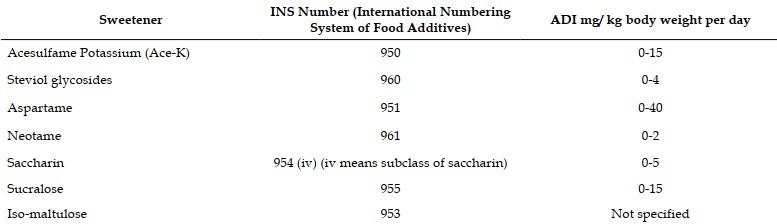
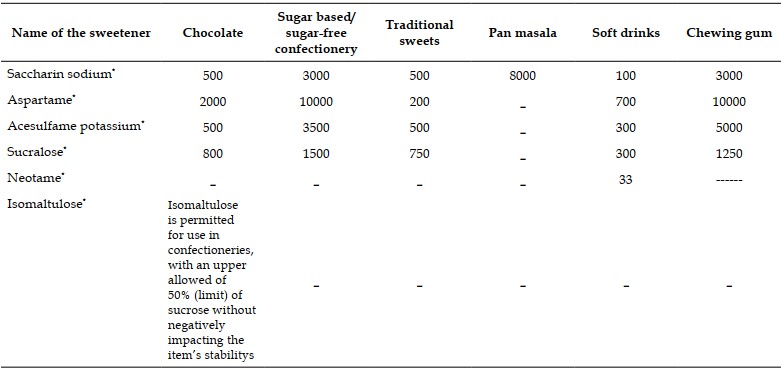
Artificial sweeteners (AS) are in high demand due to their low-calorie content. They are used as sugar substitutes by diabetic and obese people, however current research indicates that NSS use may contribute to metabolic disorders. The FSSAI has cleared the use of six artificial sweeteners within acceptable amounts to improve tolerance and ensure safe use. However, many popular nutraceuticals and protein powders contain artificial sweeteners without mentioning how much are used, which may exceed the FSSAI’s limits at the expense of the consumer’s health.The health effects of these non-caloric sweeteners are still debated since they are metabolized differently, and their metabolic end products have been connected to gut microbiota, glucose intolerance, and weight gain. Although long-term human studies on artificial sweeteners are rare, an effort has been made to analyse previous evidence to consolidate the relation of AS with health issues.
References
- 1. Paul, R., & Bandyopadhyay, D. (2020). Are Artificial Sweeteners Safe and Useful: What does the Evidence Suggest?. Journal, Indian Academy of Clinical Medicine, 21(3-4).
- 2. Pearlman, M., Obert, J., & Casey, L. (2017). The association between artificial sweeteners and obesity. Current gastroenterology reports, 19, 1-8.
- 3. Food Products Standards and Food Additives Amendment Regulations (2015). https:// www.fssai.gov.in/upload/uploadfiles/files/ Gazette_Notification_Steviol(1).pdf Accessed on 2 November 2022.
- 4. Food Safety and Standards (Food Products Standards And Food Additives) Regulations(2011). https://fssai.gov.in/upload/uploadfiles/files/ Food_Additives_Regulations.pdfAccessed on 31 October 2022.
- 5. Chowdhury, A. I., Rahanur Alam, M., Raihan, M. M., Rahman, T., Islam, S., & Halima, O. (2022). Effect of stevia leaves (Stevia rebaudiana Bertoni) on diabetes: A systematic review and meta analysis of preclinical studies. Food Science & Nutrition, 10(9), 2868-2878.
- 6. Evaluations of the Joint FAO/WHO Expert Committee on Food Additives (2022).https:// apps.who.int/food-additives-contaminants-jecfadatabase /. Accessed on 30 October 2022.
- 7. Thursby, E., & Juge, N. (2017, May 16). Introduction to the human gut microbiota. Biochemical Journal. https://doi.org/10.1042/bcj20160510
- 8. Shil, A., &Chichger, H. (2021). Artificial sweeteners negatively regulate pathogenic characteristics of two model gut bacteria, E. coli and E. faecalis. International journal of molecular sciences, 22(10), 5228.
- 9. Fava, F., Rizzetto, L., & Tuohy, K. (2018, December 18). Gut microbiota and health: connecting actors across the metabolic system. Proceedings of the Nutrition Society. https://doi.org/10.1017/ s0029665118002719
- 10. Christopher L. Gentile, Tiffany L. Weir.(2018). The gut microbiota at the intersection of diet and human health.Science362,776-780. 10.1126/science. aau5812
- 11. Ruiz Ojeda, F. J., Plaza Díaz, J., Sáez-Lara, M. J., & Gil, N. (2019, January 1). Effects of Sweeteners on the Gut Microbiota: A Review of Experimental Studies and Clinical Trials. Advances in Nutrition. https://doi.org/10.1093/advances/nmy037
- 12. Walbolt, J., & Koh, Y. (2020). Non-nutritive Sweeteners and Their Associations with Obesity and Type 2 Diabetes. Journal of obesity & metabolic syndrome, 29(2), 114–123. https://doi. org/10.7570/jomes19079
- 13. Sanyaolu, A., Marinkovic, A., Gosse, J., Likaj, L., Ayodele, O., Okorie, C., & Verner, O. (2018). Artificial sweeteners and their association with Diabetes: A review. J Pub Health Catalog, 1(4), 86- 88.
- 14. Suez, J., Korem, T., Zilberman-Schapira, G., Segal, E., &Elinav, E. (2015). Non-caloric artificial sweeteners and the microbiome: findings and challenges. Gut microbes, 6(2), 149-155.
- 15. Swithers, S. E. (2015). Not so sweet revenge: unanticipated consequences of high-intensity sweeteners. The Behavior Analyst, 38, 1-17.
- 16. Hrncir, T., Hrncirova, L., Kverka, M., Hromadka, R., Machova, V., Trckova, E., ... & TlaskalovaHogenova, H. (2021). Gut microbiota and NAFLD: pathogenetic mechanisms, microbiota signatures, and therapeutic interventions. Microorganisms, 9(5), 957.
- 17. Méndez-García, L. A., Bueno-Hernández, N., CidSoto, M. A., De León, K. L., Mendoza-Martínez, V. M., Espinosa-Flores, A. J., Carrero-Aguirre, M., Esquivel-Velázquez, M., León-Hernández, M., Viurcos-Sanabria, R., Ruíz-Barranco, A., CotaArce, J. M., Álvarez-Lee, A., De León-Nava, M. A., Meléndez, G., & Escobedo, G. (2022). Ten-Week Sucralose Consumption Induces Gut Dysbiosis and Altered Glucose and Insulin Levels in Healthy Young Adults. Microorganisms, 10(2), 434. https:// doi.org/10.3390/microorganisms10020434
- 18. Gerasimidis, K., Bryden, K., Chen, X., Papachristou, E., Verney, A., Roig, M., ... & Parrett, A. (2020). The impact of food additives, artificial sweeteners and domestic hygiene products on the human gut microbiome and its fibre fermentation capacity. European journal of nutrition, 59, 3213-3230.
- 19. Bander, Z. A., Nitert, M. D., Mousa, A., &Naderpoor, N. (2020, October 19). The Gut Microbiota and Inflammation: An Overview. International Journal of Environmental Research and Public Health. https://doi.org/10.3390/ijerph17207618
- 20. Bian, X., Tu, P., Chi, L., Gao, B., Ru, H., & Lu, K. (2017). Saccharin induced liver inflammation in mice by altering the gut microbiota and its metabolic functions. Food and Chemical Toxicology, 107, 530- 539.
- 21. Shil, A., Olusanya, O., Ghufoor, Z., Forson, B., Marks, J., &Chichger, H. (2020). Artificial sweeteners disrupt tight junctions and barrier function in the intestinal epithelium through activation of the sweet taste receptor, T1R3. Nutrients, 12(6), 1862.
- 22. Santos, P. S., Caria, C. R. P., Gotardo, E. M. F., Ribeiro, M. L., Pedrazzoli, J., &Gambero, A. (2018). Artificial sweetener saccharin disrupts intestinal epithelial cells’ barrier function in vitro. Food & function, 9(7), 3815-3822.
- 23. Kasti, A. N., Nikolaki, M. D., Synodinou, K. D., Katsas, K. N., Petsis, K., Lambrinou, S., ... & Triantafyllou, K. (2022). The effects of stevia consumption on gut bacteria: friend or foe?. Microorganisms, 10(4), 744.
- 24. Pasqualli, T., Chaves, P. E. E., Pereira, C. L. D. V., Serpa, E. A., Oliveira, L. F. S. D., & Machado, M. M. (2020). Steviol, the active principle of the stevia sweetener, causes a reduction of the cells of the immunological system even consumed in low concentrations. Immunopharmacology and Immunotoxicology, 42(5), 504-508.
- 25. Koliada, A., Syzenko, G., Moseiko, V., Budovska, L., Puchkov, K., Perederiy, V., Gavalko, Y., Dorofeev, A. E., Romanenko, M., Tkach, S., Sineok, L., Lushchak, O., &Vaiserman, A. (2017, May 22). Association between body mass index and Firmicutes/Bacteroidetes ratio in an adult Ukrainian population. BMC Microbiology. https:// doi.org/10.1186/s12866-017-1027-1
- 26. Liauchonak, I., Qorri, B., Dawoud, F., Riat, Y., & Szewczuk, M. R. (2019). Non-Nutritive Sweeteners and Their Implications on the Development of Metabolic Syndrome. Nutrients, 11(3), 644. https:// doi.org/10.3390/nu11030644
- 27. Stojanov, S., Berlec, A., & Štrukelj, B. (2020, November 1). The Influence of Probiotics on the Firmicutes/Bacteroidetes Ratio in the Treatment of Obesity and Inflammatory Bowel disease. Microorganisms. https://doi.org/10.3390/ microorganisms8111715
- 28. Lazăr, V., Diţu, L. M., Pîrcălăbioru, G. G., Picu, A., Petcu, L., Cucu, N., &Chifiriuc, M. C. (2019, March 13). Gut Microbiota, Host Organism, and Diet Trialogue in Diabetes and Obesity. Frontiers in Nutrition. https://doi.org/10.3389/ fnut.2019.00021
- 29. Kho, Z. Y., & Lal, S. K. (2018, August 14). The Human Gut Microbiome – A Potential Controller of Wellness and Disease. Frontiers in Microbiology. https://doi.org/10.3389/fmicb.2018.01835
- 30. Christofides, E. A. (2021). Point: Artificial sweeteners and obesity—not the solution and potentially a problem. Endocrine Practice, 27(10), 1052-1055.
- 31. Blaak, E. E., Canfora, E. E., Theis, S., Frost, G., Groen, A. K., Mithieux, G., Nauta, A., Scott, K. P., Stahl, B., Van Harsselaar, J., Van Tol, R., Vaughan, E. E., & Verbeke, K. (2020, September 1). Short chain fatty acids in human gut and metabolic health. Beneficial Microbes. https://doi.org/10.3920/bm2020.0057
- 32. Farup, P. G., Lydersen, S., & Valeur, J. (2019, October 1). Are Nonnutritive Sweeteners Obesogenic? Associations between Diet, Faecal Microbiota, and Short-Chain Fatty Acids in Morbidly Obese Subjects. Journal of Obesity (Print). https://doi. org/10.1155/2019/4608315
- 33. Vamanu, E., Pelinescu, D., Gatea, F., & Sârbu, I. (2019, July 15). Altered in Vitro Metabolomic Response of the Human Microbiota to Sweeteners. Genes. https://doi.org/10.3390/genes10070535
- 34. Ruanpeng, D., Thongprayoon, C., Cheungpasitporn, W., &Harindhanavudhi, T. (2017, April 11). Sugar and artificially sweetened beverages linked to obesity: a systematic review and meta-analysis. QJM. https://doi.org/10.1093/qjmed/hcx068
- 35. Hodge, A., Bassett, J. K., Milne, R. L., English, D. R., & Giles, G. G. (2018, February 21). Consumption of sugar-sweetened and artificially sweetened soft drinks and risk of obesity-related cancers. Public Health Nutrition. https://doi.org/10.1017/ s1368980017002555
- 36. Malik, V., & Hu, F. B. (2022, January 21). The role of sugar-sweetened beverages in the global epidemics of obesity and chronic diseases. Nature Reviews. Endocrinology. https://doi.org/10.1038/s41574- 021-00627-6
- 37. Meng, Y., Li, S., Khan, J., Dai, Z., Chang, L. T., Hu, X., Shen, Q., & Xue, Y. (2021, July 30). Sugar- and Artificially Sweetened Beverages Consumption Linked to Type 2 Diabetes, Cardiovascular Diseases, and All-Cause Mortality: A Systematic Review and Dose-Response Meta-Analysis of Prospective Cohort Studies. Nutrients. https://doi. org/10.3390/nu13082636
- 38. Qin, P., Li, Q., Zhao, Y., Chen, Q., Sun, X., Liu, Y., Li, H., Wang, T., Chen, X., Zhou, Q., Guo, C., Zhang, D., Tian, G., Liu, D., Qie, R., Han, M., Huang, S., Wu, X., Yang, L., . . . Zhang, M. (2020, June 11). Sugar and artificially sweetened beverages and risk of obesity, type 2 diabetes mellitus, hypertension, and all-cause mortality: a dose–response metaanalysis of prospective cohort studies. European Journal of Epidemiology. https://doi.org/10.1007/ s10654-020-00655-y
- 39. Drouin-Chartier, J., Zheng, Y., Li, Y., Malik, V., Pan, A., Bhupathiraju, S. N., Tobias, D. K., Manson, J. E., Willett, W. C., & Hu, F. B. (2019, October 3). Changes in Consumption of Sugary Beverages and Artificially Sweetened Beverages and Subsequent Risk of Type 2 Diabetes: Results From Three Large Prospective U.S. Cohorts of Women and Men. Diabetes Care. https://doi.org/10.2337/dc19-0734
- 40. Gardener, H., Moon, Y., Rundek, T., Elkind, M. S., & Sacco, R. L. (2018, May 1). Diet Soda and Sugar-Sweetened Soda Consumption in Relation to Incident Diabetes in the Northern Manhattan Study. Current Developments in Nutrition. https://doi. org/10.1093/cdn/nzy008
- 41. Chia, C. W., Shardell, M., Tanaka, T., Liu, D. D., Gravenstein, K. S., Simonsick, E. M., Egan, J. M., & Ferrucci, L. (2016, November 23). Chronic LowCalorie Sweetener Use and Risk of Abdominal Obesity among Older Adults: A Cohort Study. PloS One. https://doi.org/10.1371/journal. pone.0167241
- 42. Ong, K. L., Stafford, L. K., McLaughlin, S., Boyko, E. J., Vollset, S. E., Smith, A. E., Dalton, B., Duprey, J., Cruz, J. A., Hagins, H., Lindstedt, P. A., Aali, A., Abate, Y. H., Abate, M. D., Abbasian, M., AbbasiKangevari, Z., Abbasi, Kangevari, M., ElHafeez, S. A., Abd, Rabu, R., Vos, T. (2023, July 1). Global, regional, and national burden of diabetes from 1990 to 2021, with projections of prevalence to 2050: a systematic analysis for the Global Burden of Disease Study 2021. The Lancet. https://doi.org/10.1016/ s0140-6736(23)01301-6
- 43. Debras, C., Deschasaux, M., Chazelas, E., Sellem, L., Druesne-Pecollo, N., Esseddik, Y., De Edelenyi, F. S., Agaësse, C., De, A., Lutchia, R., Julia, C., Kesse-Guyot, E., Allès, B., Galán, P., Herçberg, S., Huybrechts, I., Cosson, E., Tatulashvili, S., Srour, B., &Touvier, M. (2023, July 25). Artificial Sweeteners and Risk of Type 2 Diabetes in the Prospective NutriNet-Santé Cohort. Diabetes Care. https://doi. org/10.2337/dc23-0206
- 44. Decker, K. J. (n.d.). Potential Mechanisms for NNSInduced Metabolic Deviances: Satiety Hormone Secretion and Alterations in the Gut Microbiota. Digital Commons@DePaul. https://via.library. depaul.edu/depaul-disc/vol7/iss1/5/
- 45. Pepino, M. Y., Tiemann, C. D., Patterson, B. W., Wice, B. M., & Klein, S. (2013). Sucralose affects glycemic and hormonal responses to an oral glucose load. Diabetes care, 36(9), 2530-2535.
- 46. Romo-Romo, A., Aguilar-Salinas, C. A., BritoCórdova, G. X., Gómez-Díaz, R. A., & AlmedaValdes, P. (2018). Sucralose decreases insulin sensitivity in healthy subjects: a randomized controlled trial. The American journal of clinical nutrition, 108(3), 485-491.
- 47. Janssen, J. A. M. J. L. (2021, July 21). Hyperinsulinemia and Its Pivotal Role in Aging, Obesity, Type 2 Diabetes, Cardiovascular Disease and Cancer. International Journal of Molecular Sciences. https://doi.org/10.3390/ijms22157797
- 48. Suez, J., Cohen, Y., Valdés-Mas, R., Mor, U., DoriBachash, M., Federici, S., Zmora, N., Leshem, A., Heinemann, M., Linevsky, R., Zur, M., Brik, R. B. Z., Bukimer, A., Eliyahu-Miller, S., Metz, A., Fischbein, R., Sharov, O., Malitsky, S., Itkin, M., . . . Elinav, E. (2022, September 1). Personalized microbiomedriven effects of non-nutritive sweeteners on human glucose tolerance. Cell. https://doi.org/10.1016/j. cell.2022.07.016
- 49. Lertrit, A., Srimachai, S., Saetung, S., Chanprasertyothin, S., Chailurkit, L., Areevut, C., Katekao, P., Ongphiphadhanakul, B., &Sriphrapradang, C. (2018, November 1). Effects of sucralose on insulin and glucagon-like peptide-1 secretion in healthy subjects: a randomized, doubleblind, placebo-controlled trial. Nutrition. https:// doi.org/10.1016/j.nut.2018.04.001
- 50. Tandel, K. R. (2011). Sugar substitutes: Health controversy over perceived benefits. Journal of Pharmacology and Pharmacotherapeutics, 2(4), 236-243.
- 51. Klein S., Gastaldelli A., Yki-Jarvinen H. & Scheerer P. E. (2022). Why does obesity cause diabetes?. Perspective. 34(1)11-20. https://doi.org/10.1016/j. cmet.2021.12.012
- 52. Ng, A. C., Delgado, V., Borlaug, B. A., & Bax, J. J. (2020, November 13). Diabesity: the combined burden of obesity and diabetes on heart disease and the role of imaging. Nature Reviews. Cardiology (Print). https://doi.org/10.1038/ s41569-020-00465-5
- 53. Wondmkun, Y. T. (2020). Obesity, Insulin Resistance, and Type 2 Diabetes: Associations and Therapeutic Implications. Diabetes, Metabolic Syndrome and Obesity, 13, 3611–3616. https://doi. org/10.2147/DMSO.S275898
- 54. Vasanthakumar, J., &Kambar, S. (2020, January 1). Prevalence of obesity among type 2 diabetes mellitus patients in urban areas of Belagavi. Indian Journal of Health Sciences and Biomedical Research KLEU. https://doi.org/10.4103/kleuhsj. kleuhsj_221_18
- 55. Barber, T. M., Kyrou, I., Randeva, H. S., & Weickert, M. O. (2021, January 7). Mechanisms of Insulin Resistance at the Crossroad of Obesity with Associated Metabolic Abnormalities and Cognitive Dysfunction. International Journal of Molecular Sciences. https://doi.org/10.3390/ijms22020546
- 56. Fagherazzi, G., Gusto, G., Affret, A., Mancini, F. R., Dow, C., Balkau, B., Clavel, Chapelon, F., Bonnet, F., &Boutron, Ruault, M. (2017, January 1). Chronic Consumption of Artificial Sweetener in Packets or Tablets and Type 2 Diabetes Risk: Evidence from the E3N-European Prospective Investigation into Cancer and Nutrition Study. Annals of Nutrition & Metabolism. https://doi.org/10.1159/000458769
- 57. Muscogiuri, G., Cantone, E., Cassarano, S., Tuccinardi, D., Barrea, L., Savastano, S., & Colao, A. (2019, April 1). Gut microbiota: a new path to treat obesity. International Journal of Obesity Supplements. https://doi.org/10.1038/s41367- 019-0011-7
Data Sharing Statement
There are no additional data available. All raw data and code are available upon request.
Funding
This research received no funding.
Author Contributions
All authors contributed significantly to the work and approve its publication.
Ethics Declaration
This article does not involve any human or animal subjects, and therefore does not require ethics approval.
Acknowledgements
We would like to express our gratitude to the patients, their families, and all those who have contributed to this study.
Conflicts of Interest
No conflicts of interest in this work.
About this article

Cite this article
Nancy Sahni, Urvashi Rana, Unfolding the Impact of Artificial Sweetners on Gut Microbiome Leading to Metabolic Disease: Obesity & Diabetes Mellitus. Int J Food Nutr Diet. 2024;12(3):154-162.
Licence:
Attribution-Non-commercial 4.0 International (CC BY-NC 4.0)This license enables reusers to distribute, remix, adapt, and build upon the material in any medium or format for noncommercial purposes only, and only so long as attribution is given to the creator.
| Received | Accepted | Published |
|---|---|---|
| November 30, 2024 | December 10, 2024 | December 30, 2024 |
DOI: https://doi.org/10.21088/ijfnd.2322.0775.12324.7
Keywords
Artificial sweetenersDysbiosisGut microbiomeDiabetes and metabolic diseasesSearch for Similar Articles
Similar Articles
- Smart and Sustainable Packaging Approaches for Reducing Heavy Metal Contaminatio...
- Traditional Rhythms for Modern Health: Seed Cycling in the Management of Women’s...
- School-Based Nutrition Education Improves Knowledge and Consumption of Omega-3-R...
- Nutrition as Precision Therapy in Rare Genetic Diseases: Moving beyond Supportiv...
- A Review on Health Risks Associated with the Repetitive use of Cooking Oil and D...
Article Level Metrics
Last UpdatedMonday 07 September 2026, 02:46:30 (IST)
1797
Accesses
4
247
00
Citations
NA
NA
NA
Download citation
Article Keywords
Keyword Highlighting
Highlight selected keywords in the article text.
Timeline
| Received | November 30, 2024 |
| Accepted | December 10, 2024 |
| Published | December 30, 2024 |
licence
Attribution-Non-commercial 4.0 International (CC BY-NC 4.0)
This license enables reusers to distribute, remix, adapt, and build upon the material in any medium or format for noncommercial purposes only, and only so long as attribution is given to the creator.