Full Text (PDF)
International Journal of Food, Nutrition & Dietetics 12(3):p 141-152, September - December 2024. | DOI: https://doi.org/10.21088/ijfnd.2322.0775.12324.6
Review Article
Millets: A Nutrient-Rich Marvel in Cuisine
Haris Chandra Sahoo, Subrata Mishra
Author Information
Licence:
Attribution-Non-commercial 4.0 International (CC BY-NC 4.0)This license enables reusers to distribute, remix, adapt, and build upon the material in any medium or format for noncommercial purposes only, and only so long as attribution is given to the creator.
International Journal of Food, Nutrition & Dietetics 12(3):p 141-152, September - December 2024. | DOI: https://doi.org/10.21088/ijfnd.2322.0775.12324.6
How Cite This Article:
Haris Chandra Sahoo Subrata Mishra Millets: A Nutrient-Rich Marvel in Cuisine. Int J Food Nutr Diet. 2024;12(3):141-152.Timeline
Received : July 22, 2024
Accepted : August 23, 2024
Published : December 30, 2024
Abstract
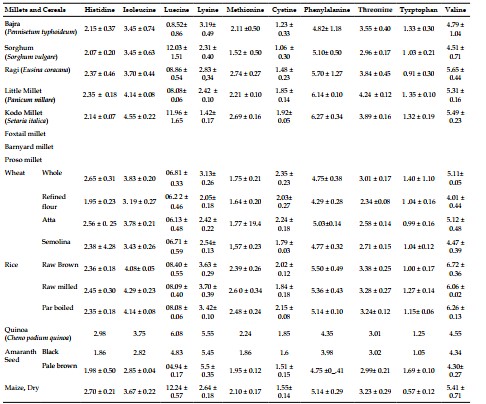
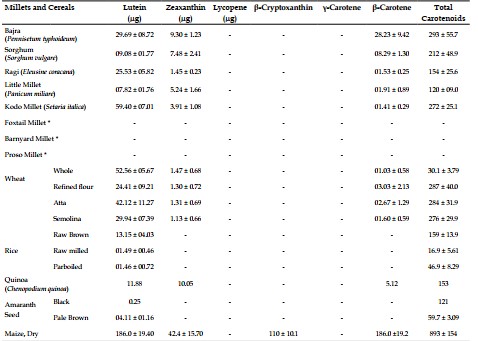
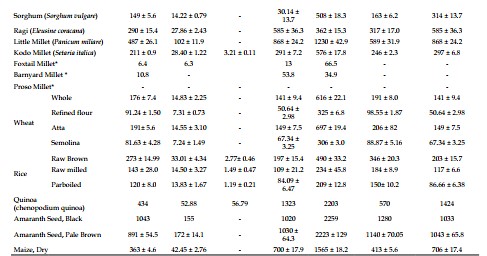
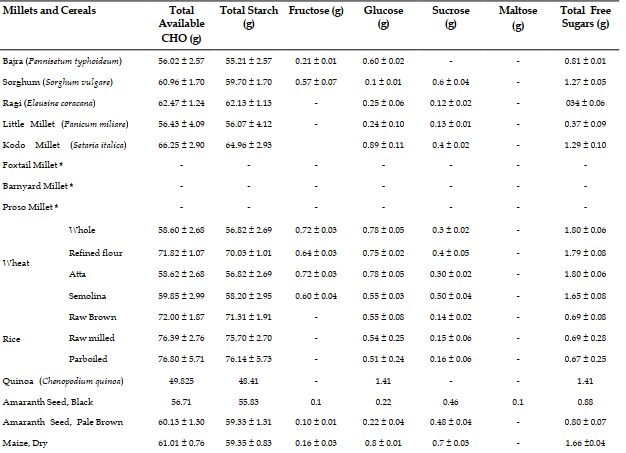
Millets, often regarded as ancient grains, have experienced a resurgence in popularity due to their remarkable nutritional profile and versatile applications in modern culinary endeavors. This review explores the diverse uses of millets in food items, shedding light on their health benefits, culinary versatility, and potential contribution to sustainable and inclusive agriculture.
References
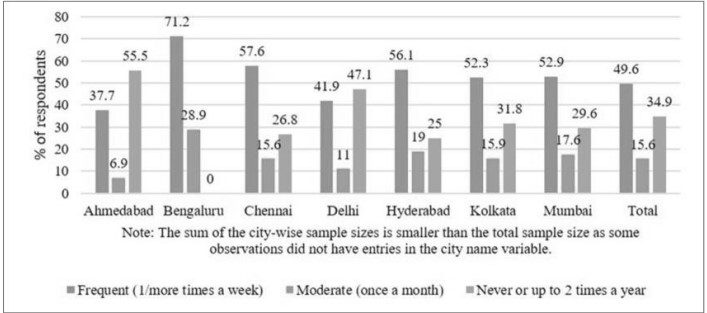
- 1. J. Kane-P., Seetha A., Takuji W. T., Rosemary B., Muralidhar B., Shweta U., Parkavi K., Karuna M., Raghavendra H., Ashok K. J., Swamikannu N. (2021). Assessing Millets and Sorghum Consumption Behavior in Urban India: A Large-Scale Survey, 10.3389/fsufs.2021.680777
- 2. Vetriventhan M., Azevedo, V. C. R., Upadhyaya, H. D., Kane-Potaka, J., Anitha, S., Prabhakar Govindaraj, M., et al. (2020). Genetic and genomic resources, and breeding for accelerating improvement of small millets: current status and future interventions. Nucleus 63, 217–239. doi: 10.1007/s13237-020- 00322-3
- 3. Saleh, S. M. A., Zhang, Q., Chen, J., and Shen, Q. (2013). Millet grains: nutritional quality, processing, and potential health benefits. Comprehens. Rev. Food Sci. Food Saf. 12, 281–295. doi: 10.1111/1541- 4337.12012
- 4. Radhika, G., Van, D. M. R., Sudha, V., Ganesan, A., and Mohan, V. (2009). Refined grain consumption and the metabolic syndrome in urban Asian Indians (Chennai Urban Rural Epidemiology Study 57). Metab. Clin. Exp. 58, 675–681. doi: 10.1016/j. metabol.2009.01.008
- 5. Hui Li, Han S., Huo Y., Ma G., Sun Z., Li H., Hou S. & Han Y. (2022), Comparative metabolomic and transcriptomic analysis reveals a coexpression network of the carotenoid metabolism pathway in the panicle of Setaria italica, 10.1186/s12870-022- 03467-2
- 6. Huo Y., Pang X., Feng H., Hao R., Zhang R., Wang Y., Wang H., Zhang B., and Han Y. (2024), Effect of Ultraviolet B Radiation on the Biosynthesis of Carotenoids in Foxtail Millet Grains, 10.3390/ agriculture14020289.
- 7. Borrell, A. K., van Oosterom, E. J., Mullet, J. E., George-Jaeggli, B., Jordan, D. R., Klein, P. E., & Hammer, G. L. (2020). Stay-green alleles individually enhance grain yield in sorghum under drought by modifying canopy development and water uptake patterns. New Phytologist, 230(2), 759-772.
- 8. Vadez, V., Kholová, J., Medina, S., Kakkera, A., Anderberg, H., & Transa, S. (2013). Osmotic adjustment and transpiration in grain sorghum (Sorghum bicolor L. Moench) under high salinity and drought. Field Crops Research, 91(1), 48-56.
- 9. Mace, E. S., Tai, S., Gilding, E. K., Li, Y., Prentis, P. J., Bian, L., ... & Jordan, D. R. (2013). Whole-genome sequencing reveals untapped genetic potential in Africa’s indigenous cereal crop sorghum. Nature communications, 4(1), 1-9.
- 10. Tao, Y., Mace, E. S., Tai, S., Cruickshank, A., Campbell, B. C., Zhao, X., ... & Jordan, D. R. (2019). Whole- genome analysis of candidate genes associated with seed size and weight in sorghum Sorghum bicolor (L.) Moench using high-density SNP marker data. G3: Genes, Genomes, Genetics, 9(12), 4015-4029.
- 11. Taylor, J. R. N., Belton, P. S., Beta, T., & Duodu, K. G. (2016). Increasing the utilisation of sorghum, millets and pseudocereals: Developments in the science of their phenolic phytochemicals, biofortification and protein functionality. Journal of Cereal Science, 70, 137-148.
- 12. Saleh, A. S., Zhang, Q., Chen, J., Shen, Q. (2013). Millet grains: Nutritional quality, processing, and potential health benefits. Comprehensive Reviews in Food Science and Food Safety, 12(3), 281-295.
- 13. Dykes, L., & Rooney, L. W. (2006). Phenolic compounds in cereal grains and their health benefits. Cereal Foods World, 51(6), 258-264.
- 14. Awika, J. M., Rooney, L. W., Wu, X., Prior, R. L., Cisneros-Zevallos, L. (2004). Screening methods to measure antioxidant activity of sorghum (Sorghum bicolor) and sorghum products. Journal of Agricultural and Food Chemistry, 52(13), 4388-94.
- 15. Chapagain, A. K., & Raizada, A. (2017). Life cycle assessment of Canadian-grown sweet sorghum for biofuel production. Biomass and Bioenergy, 98, 60-70.
- 16. Mullet, J. E., Rooney, W. L., Klein, P. E., Morishige, D. T., & Duplechin, J. (2014). Sorghum bicolor—a genetic model for the study of the millets: Prospects and promises. The Plant Genome, 7(3), 1-9.
- 17. Rooney, W. L., Blumenthal, J., Bean, B., & Mullet, J. E. (2007). Designing sorghum as a dedicated bioenergy feedstock. Biofuels, Bioproducts and Biorefining, 1(2), 147-57.
- 18. Wangari, C., Mwema, C., Siambi, M., Silim, S., Ubwe, R., Malesi, K., et al. (2020). Changing perception through a participatory approach by involving adolescent school children in evaluating Smart Food dishes in school feeding programs real-time experience from Central and Northern Tanzania. Ecol. Food Nutr. 59, 472–485. doi: 10.1080/03670244.2020.1745788.
- 19. Willett, W., Rockström, J., Loken, B., Springmann, M., Lang, T., Vermeulen, S., et al. (2021). Food in the Anthropocene: the EAT-Lancet Commission on healthy diets from sustainable food systems. Lancet Commiss. 393, 447–492. doi: 10.1016/ S0140-6736(18)31788-4reedhar, S. K. P., and Shaji, S. (2017). Comparative KAP study on ragi, a forgotten wonder grain with oats among South Indian families. Curr. Res. Diab. Obes. J. 3, 1–4. doi: 10.19080/CRDOJ.2017.03.555601
- 20. Syah, A., and Yuliati, L. N. (2017). The influence of values and attitude toward healthy food selection at student of Bogor Agricultural University. J. Consum. Sci. 2, 57–65. doi: 10.29244/jcs.2.2.57-65
- 21. Tsusaka, W. T., and Otsuka, K. (2013). “The declining impacts of climate on crop yields during the Green Revolution in India: 1972 to 2002,” in An African Green Revolution: Finding Ways to Boost Productivity on Small Farms, eds K. Otsuka and D. F. D. Larson (dordrecht: Springer), 71–94. doi: 10.1007/978-94- 007-5760-8_4
- 22. Umanath, M., Balasubramaniam, R., and Paramasivam, R., (2018). Millets consumption probability and demand in india an application of heckman sample selection model. Econ. Affairs 63, 1033–1044. doi: 10.30954/0424-2513.4.2018.29
- 23. Ushakumari, R. S., Latha, S., and Malleshi, G. N. (2004). The functional properties of popped, flaked, extruded and roller-dried foxtail millet (Setaria italica). Int. J. Food Sci. Technol. 39, 907–915. doi: 10.1111/j.1365-2621.2004.00850.x
- 24. Anbukkani, P., Balaji, S. J., and Nithyashree, M. L. (2017). Production and consumption of minor millets in India- a structural break analysis. Ann. Agric. Res. 38, 1–8.
- 25. Anitha, S., Botha, R., Kane-Potaka, J., Givens, D. I., Rajendran, A., Tsusaka, T. W., et al. (2021b). Can millet consumption help to manage hyperlipidaemia and obesity- a systematic review and meta- analysis. Front. Nutr. doi: 10.3389/ fnut.2021.700778
- 26. Anitha, S., Govindaraj, M., and Kane-Potaka, J. (2019a). Balanced amino acid and higher micronutrients in millets complements legumes for improved human dietary nutrition. Cereal Chemistry. 1-11. doi: 10.1002/cche.10227
- 27. Anitha, S., Htut, T. T., Tsusaka, W. T., Jalagam, A., and Kane-Potaka, J. (2019b). Potential for smart food products: use of millets and pigeonpea to fill the nutrition gap in rural Myanmar. J. Sci. Food Agric. 100, 394–400. doi: 10.1002/jsfa.10067.29. Anitha, S., Kane-Potaka, J., Tsusaka, T. W., Botha, R., Rajendran, A., Givens, D. I., et al. (2021a). A systematic review and meta-analysis of the potential of millets and sorghum for managing and preventing diabetes mellitus. Front. Nutr. doi: 10.3389/fnut.2021.687428
Data Sharing Statement
There are no additional data available. All raw data and code are available upon request.
Funding
This research received no funding.
Author Contributions
All authors contributed significantly to the work and approve its publication.
Ethics Declaration
This article does not involve any human or animal subjects, and therefore does not require ethics approval.
Acknowledgements
We would like to express our gratitude to the patients, their families, and all those who have contributed to this study.
Conflicts of Interest
No conflicts of interest in this work.
About this article

Cite this article
Haris Chandra Sahoo Subrata Mishra Millets: A Nutrient-Rich Marvel in Cuisine. Int J Food Nutr Diet. 2024;12(3):141-152.
Licence:
Attribution-Non-commercial 4.0 International (CC BY-NC 4.0)This license enables reusers to distribute, remix, adapt, and build upon the material in any medium or format for noncommercial purposes only, and only so long as attribution is given to the creator.
| Received | Accepted | Published |
|---|---|---|
| July 22, 2024 | August 23, 2024 | December 30, 2024 |
DOI: https://doi.org/10.21088/ijfnd.2322.0775.12324.6
Keywords
MilletsNutritionFibreDietHealth Graphical AbstractSearch for Similar Articles
Similar Articles
- Smart and Sustainable Packaging Approaches for Reducing Heavy Metal Contaminatio...
- Traditional Rhythms for Modern Health: Seed Cycling in the Management of Women’s...
- School-Based Nutrition Education Improves Knowledge and Consumption of Omega-3-R...
- Nutrition as Precision Therapy in Rare Genetic Diseases: Moving beyond Supportiv...
- A Review on Health Risks Associated with the Repetitive use of Cooking Oil and D...
Article Level Metrics
Last UpdatedMonday 07 September 2026, 02:45:54 (IST)
1797
Accesses
5
247
00
Citations
NA
NA
NA
Download citation
Article Keywords
Keyword Highlighting
Highlight selected keywords in the article text.
Timeline
| Received | July 22, 2024 |
| Accepted | August 23, 2024 |
| Published | December 30, 2024 |
licence
Attribution-Non-commercial 4.0 International (CC BY-NC 4.0)
This license enables reusers to distribute, remix, adapt, and build upon the material in any medium or format for noncommercial purposes only, and only so long as attribution is given to the creator.