Full Text (PDF)
Indian Journal of Anesthesia and Analgesia 12(2):p 93-96, April -June 2025. | DOI: https://doi.org/10.21088/ijaa.2349.8471.12225.1
Original Article
Transversus Abdominis Plane Block for Postoperative Pain Management: A Systematic Review and Meta-Analysis of Randomized Controlled Trials
Sheikh Abdul Mannan, Hina Khurshid, Ms. Illiyin
Author Information
Licence:
Attribution-Non-commercial 4.0 International (CC BY-NC 4.0)This license enables reusers to distribute, remix, adapt, and build upon the material in any medium or format for noncommercial purposes only, and only so long as attribution is given to the creator.
Indian Journal of Anesthesia and Analgesia 12(2):p 93-96, April -June 2025. | DOI: https://doi.org/10.21088/ijaa.2349.8471.12225.1
How Cite This Article:
Mannan SA, Khurshid H, Illiyin. Transversus abdominis plane (TAP) block for postoperative pain management: a systematic review and meta-analysis of randomized controlled trials. Ind J Anesth Analg. 2025;12(2):93-96.Timeline
Received : February 12, 2025
Accepted : May 14, 2025
Published : June 23, 2025
Abstract
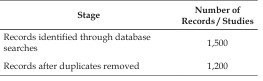
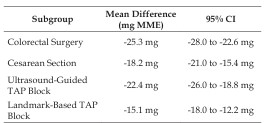
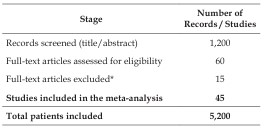
Background: The transversus abdominis plane (TAP) block is a regional anesthesia technique increasingly used for postoperative pain management in abdominal and pelvic surgeries. Although its use has expanded in recent years, questions remain regarding its comparative efficacy, safety, and optimal clinical application. Objective: To evaluate the effectiveness of TAP blocks in reducing postoperative opioid consumption and pain scores, as well as in minimizing opioid-related adverse events compared with systemic analgesia or placebo. Methods: A systematic review and meta-analysis of randomized controlled trials (RCTs) published between 2010 and 2023 was performed. Primary outcomes were 24-hour opioid consumption [in morphine milligram equivalents (MME)] and pain scores [measured on a Visual Analog Scale (VAS)]. Secondary outcomes included the incidence of adverse events such as nausea, vomiting, and local anesthetic systemic toxicity (LAST). Database searches were conducted in PubMed, EMBASE, the Cochrane Library, and ClinicalTrials.gov. Two independent reviewers extracted data and assessed study quality using the Cochrane Risk of Bias Tool 2.0. Data were pooled using a random-effects model (RevMan 5.4), with mean differences (MD) reported for continuous outcomes and risk ratios (RR) for dichotomous outcomes. Results: Forty-five RCTs comprising 5,200 patients met the inclusion criteria. TAP blocks reduced 24-hour opioid consumption by 45% (MD: -20.1 mg MME, 95% CI: -24.3 to -15.9; p < 0.001) and resting pain scores by 2.1 VAS points at 12 hours (95% CI: -2.7 to -1.5; p < 0.001). Dynamic pain scores over 24 hours were also significantly improved (MD: -1.8, 95% CI: -2.3 to -1.3; p < 0.001). Subgroup analysis revealed that patients undergoing colorectal surgeries experienced the greatest opioid-sparing effect (MD: -25.3 mg) compared to caesarean sections (MD: -18.2 mg). No significant differences in complications were noted (RR = 0.9, 95% CI: 0.7–1.2), with LAST occurring in only 0.04% of patients. Moderate heterogeneity (I² = 55%) was observed across the studies. Conclusion: TAP blocks provide a safe and effective opioid-sparing modality for postoperative analgesia in abdominal surgeries. Their incorporation into Enhanced Recovery After Surgery (ERAS) protocols, particularly for open abdominal procedures, is recommended. Future research should focus on standardizing the block technique and local anesthetic dosing to further optimize outcomes.
References
- 1. Gan T.J. Poorly controlled postoperative pain: prevalence, consequences, and prevention. J Pain Res. 2017; 10: 2287-2298. doi:10.2147/JPR. S144066.
- 2. Rafi A.N. Abdominal field block: A new approach via the lumbar triangle. Anaesthesia. 2001; 56(10): 1024-1026. doi:10.1046/j.1365- 2044.2001.02279-40.x.
- 3. 3. Sterne J.A.C., Savovic J., Page M.J., et al. RoB 2: a revised tool for assessing risk of bias in randomised trials. BMJ. 2019; 366: l4898. doi:10.1136/bmj.l4898.
- 4. Baeriswyl M., Kirkham K.R., Kern C., Albrecht E. The analgesic efficacy of ultrasound-guided transversus abdominis plane block vs. epidural analgesia after abdominal surgery: A systematic review and meta-analysis. Anaesthesia. 2018; 73(9): 1094-1107. doi:10.1111/anae.14345.
- 5. Mishriky B.M., George R.B., Habib A.S. Transversus abdominis plane block for analgesia after cesarean delivery: A systematic review and meta-analysis. Can J Anaesth. 2012; 59(8): 766-778. doi:10.1007/s12630-012-9749-x.
- 6. El-Boghdadly K, Wolmarans M, Stengel AD, et al. Transversus abdominis plane block for abdominal surgery: A systematic review and meta-analysis of randomized controlled trials. Br J Anaesth. 2021; 126(3): 731-741. doi:10.1016/j.bja.2020.11.026.
- 7. Tulgar S., Selvi O., Senturk O., et al. Comparison of ultrasound-guided erector spinae plane block and transversus abdominis plane block for postoperative analgesia in laparoscopic cholecystectomy: a randomized controlled trial. J Clin Anesth. 2019; 57: 31-36. doi:10.1016/j.jclinane.2019.03.012.
- 8. Neal JM, Barrington MJ, Fettiplace MR, et al. The Third American Society of Regional Anesthesia and Pain Medicine Practice Advisory on Local Anesthetic Systemic Toxicity. Reg Anesth Pain Med. 2018; 43(2): 113- 123. doi:10.1097/AAP.0000000000000720.
- 9. Gustafsson UO, Scott MJ, Hubner M, et al. Guidelines for perioperative care in elective colorectal surgery: Enhanced Recovery After Surgery (ERAS®) Society recommendations 2018. World J Surg. 2019;43(3):659-695. doi:10.1007/s00268-018-4844-y.
- 10. McDonnell JG, O’Donnell B, Curley G, et al. The analgesic efficacy of transversus abdominis plane block after abdominal surgery: A systematic review. Reg Anesth Pain Med. 2008; 33(2):193-209. doi:10.1097/ AAP.0b013e318157c4de.
Data Sharing Statement
There are no additional data available.
Funding
This research received no funding.
Author Contributions
All authors contributed significantly to the work and approve its publication."
Ethics Declaration
Not applicable (systematic review of published data)
Acknowledgements
Information not provide.
Conflicts of Interest
The authors report no conflicts of interest in this work.
About this article

Cite this article
Mannan SA, Khurshid H, Illiyin. Transversus abdominis plane (TAP) block for postoperative pain management: a systematic review and meta-analysis of randomized controlled trials. Ind J Anesth Analg. 2025;12(2):93-96.
Licence:
Attribution-Non-commercial 4.0 International (CC BY-NC 4.0)This license enables reusers to distribute, remix, adapt, and build upon the material in any medium or format for noncommercial purposes only, and only so long as attribution is given to the creator.
| Received | Accepted | Published |
|---|---|---|
| February 12, 2025 | May 14, 2025 | June 23, 2025 |
DOI: https://doi.org/10.21088/ijaa.2349.8471.12225.1
Keywords
TAP blockPost-operative painRegional anesthesiaOpioid-sparingMeta-analysisSearch for Similar Articles
Similar Articles
- Awake Fibreoptic Intubation for Airway Management in Massive Thyroid Enlargement...
- A Case of Thoracotomy with One Lung Ventilation for Carcinoma Oesophagus
- A Case of Empyema for Thoracotomy and Decortication-Anaesthesia Management
- Full Mouth Rehabilitation in a 3-Year-Old Female Child with Repaired Tetralogy o...
- Do Gel Manicures Affect SpO2 Readings ? A Clinical Investigation
Article Level Metrics
Last UpdatedMonday 13 July 2026, 05:08:10 (IST)
5647
Accesses
18
678
00
Citations
NA
NA
NA
Download citation
Article Keywords
Keyword Highlighting
Highlight selected keywords in the article text.
Timeline
| Received | February 12, 2025 |
| Accepted | May 14, 2025 |
| Published | June 23, 2025 |
licence
Attribution-Non-commercial 4.0 International (CC BY-NC 4.0)
This license enables reusers to distribute, remix, adapt, and build upon the material in any medium or format for noncommercial purposes only, and only so long as attribution is given to the creator.