Full Text (PDF)
Indian Journal of Anesthesia and Analgesia 12(2):p 97-105, April -June 2025. | DOI: https://doi.org/10.21088/ijaa.2349.8471.12225.2
Original Article
Comparison Between Pre-Procedural Ultrasound Assisted Midline Approach and Landmark Technique in Obese Surgical Patients under Lumbar Subarachnoid Block
Author Information
Licence:
Attribution-Non-commercial 4.0 International (CC BY-NC 4.0)This license enables reusers to distribute, remix, adapt, and build upon the material in any medium or format for noncommercial purposes only, and only so long as attribution is given to the creator.
Indian Journal of Anesthesia and Analgesia 12(2):p 97-105, April -June 2025. | DOI: https://doi.org/10.21088/ijaa.2349.8471.12225.2
How Cite This Article:
Sharmeela EM. Comparison between pre-procedural ultrasound assisted midline approach and landmark technique in obese surgical patients under lumbar subarachnoid block. Ind J Anesth Analg. 2025;12(2):97-105.Timeline
Received : December 23, 2024
Accepted : February 01, 2025
Published : June 23, 2025
Abstract
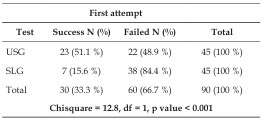
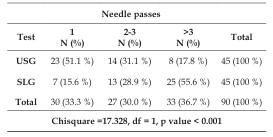
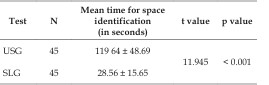
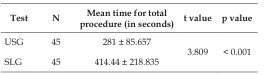
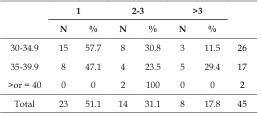
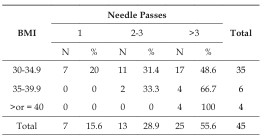
Background and Objectives: Obesity presents significant challenges in neuraxial anesthesia due to difficult surface anatomical landmarks, leading to increased failure rates and complications. Since Bier first described spinal anesthesia in 1899, the traditional method for identifying the subarachnoid space has been through anatomical landmarks. Conventional palpation techniques often prove unreliable in these patients. Neuraxial ultrasound aims to enhance accuracy by visualizing sonoanatomy, potentially improving success rates and patient outcomes. This study was done to evaluate the effectiveness of preprocedural ultrasound-assisted midline approach compared to the traditional landmark-guided technique in obese patients undergoing lumbar subarachnoid block. Methods: A prospective observational study was conducted in 90 obese patients (BMI > 25 kg/m²) aged between 18 and 80 years scheduled for elective surgery under spinal anesthesia at Travancore Medical College, Kollam. Patients were divided into two groups: ultrasound-assisted (USG) and surface landmarkguided (SLG). Detailed history, physical examination, and informed consent were obtained. A portable USG machine with curved array probe was utilised for pre procedure marking. Key variables measured included first-attempt success rate, number of needle passes, time for space identification, and total procedure time. Data was analysed using statistical package for social sciences version 25. Results: The first-attempt success rate was significantly higher in the USG group (51.1%) compared to the SLG group (15.6%). The mean time for space identification was longer in the USG group (119.64 ± 48.69 seconds) than in the SLG group (28.56 ± 15.65 seconds), but the total procedure time was shorter in the USG group (281 ±85.657 seconds) compared to the SLG group (414.44 ± 218.835 seconds). Patient satisfaction and reduced number of needle passes were also better in the USG group. Conclusion: This study demonstrates that the ultrasound-guided technique significantly improves the first attempt success rate of spinal anesthesia and enhances patient satisfaction in obese patients. Despite the longer time required for space identification, the overall procedure time is reduced with ultrasound guidance. These findings suggest that incorporating ultrasound guidance into clinical practice could enhance the efficacy of spinal anesthesia in obese patients, highlighting its potential as a valuable tool in modern anesthetic practice.
References
- 1. Harrison D.A., Langham B.T. Spinal anaesthesia for urological surgery: A survey of failure rate, postdural puncture headache and patient satisfaction. Anaesthesia. 1992 Oct; 47(10): 902-3.
- 2. Flaatten H., Felthaus J., Larsen R., Bernhardsen S., Klausen H. Postural post‐dural puncture headache after spinal and epidural anaesthesia. A randomised, doublevblind study. Acta anaesthesiologica scandinavica. 1998 Aug; 42(7): 759-64.
- 3. Auroy Y., Narchi P., Messiah A., Litt L., Rouvier B., Samii K. Serious complications related to regional anesthesia: results of a prospective survey in France. The Journal of the American Society of Anesthesiologists. 1997 Sep 1; 87(3): 479-86.
- 4. Broadbent C.R., Maxwell W.B., Ferrie R., Wilson D.J., Gawne-Cain M, Russell R. Ability of anaesthetists to identify a marked lumbar interspace. Anaesthesia. 2000 Nov; 55(11): 1122-6.
- 5. Khan M.A., Gupta M., Sharma S., Kasaudhan S. A comparative study of ultrasound assisted versus landmark technique for combined spinal-epidural anaesthesia in patients undergoing lower limb orthopaedic surgery. Indian Journal of Anaesthesia. 2022 Apr 1; 66(4): 272-7.
- 6. Chin K.J., Karmakar M.K., Peng P.: Ultrasonography of the adult thoracic and lumbar spine for central neuraxial blockade. Anesthesiology 2011; 114: 1459–1485.
- 7. Karmakar M.K., Li X., Ho. A.M., Kwok W.H., Chui P.T.: Real-time ultrasound-guided paramedian epidural access: evaluation of a novel in-plane technique. Br J Anaesth 2009; 102: 845–854.
- 8. Karmakar M.K.: Ultrasound for central neuraxial blocks. Tech Reg Anesth Pain Manag 2009; 13: 161–170.
- 9. Bogin I.N., Stulin I.D.: Application of the method of 2-dimensional echospondylography for determining landmarks in lumbar punctures. Zh Nevropatol Psikhiatr Im S S Korsakova 1971; 71: 1810–1.
- 10. Porter R.W., Wicks M., Ottewell D.: Measurement of the spinal canal by diagnostic ultrasound. J Bone Joint Surg Br 1978; 60- B:481–484.
- 11. Cork R.C., Kryc J.J., Vaughan R.W: Ultrasonic localization of the lumbar epidural space. Anesthesiology 1980; 52: 513–516.
- 12. Currie J.M.: Measurement of the depth to the extradural space using ultrasound. Br J Anaesth 1984; 56: 345–347.
- 13. Grau T., Leipold R.W., Conradi R., Martin E.: Ultrasound control for presumed difficult epidural puncture. Acta Anaesthesiol Scand 2001; 45: 766–771.
- 14. Grau T., Leipold R.W., Conradi R., Martin E., Motsch J.: Ultrasound imaging facilitates localization of the epidural space during combined spinal and epidural anesthesia. Reg Anesth Pain Med 2001; 26: 64–67. 15. Grau T., Leipold R.W., Conradi R., Martin E., Motsch J.: Efficacy of ultrasound imaging in obstetric epidural anesthesia. J Clin Anesth 2002; 14: 169–175.
- 16. Grau T., Leipold R.W., Fatehi S., Martin E., Motsch J.: Real-time ultrasonic observation of combined spinal-epidural anaesthesia. Eur J Anaesthesiol 2004; 21: 25–31.
- 17. Chin K.J., Ramlogan R., Arzola C., Singh M., Chan V.: The utility of ultrasound imaging in predicting ease of performance of spinal anesthesia in an orthopedic patient population. Reg Anesth Pain Med 2013; 38: 34–38.
- 18. Chin K.J., Perlas A., Singh M., Arzola C., Prasad A., Chan V., Brull R. An ultrasound-assisted approach facilitates spinal anesthesia for total joint arthroplasty. Can J Anaesth. 2009 Sep; 56(9): 643-50. doi: 10.1007/s12630-009-9132-8. Epub 2009 Jun 23. PMID: 19548051.
- 19. Chin K.J., Perlas A., Chan V., Brown-Shreves D., Koshkin A., Vaishnav V. Ultrasound imaging facilitates spinal anesthesia in adults with difficult surface anatomic landmarks. Anesthesiology. 2011 Jul; 115(1): 94-101. doi: 10.1097/ALN.0b013e31821a8ad4. PMID: 21572316.
- 20. Furness G., Reilly M.P., Kuchi S.: An evaluation of ultrasound imaging for identification of lumbar intervertebral level. Anaesthesia 2002; 57: 277–280.
- 21. Locks G.F., Almeida M.C., Pereira A.A.: Use of the ultrasound to determine the level of lumbar puncture in pregnant women. Rev Bras Anestesiol 2010; 60: 13–19.
- 22. Pula R., Gooty S., Thakur N., Sharathchandra B. Dural sac cross-sectional area measured using ultrasound to modify the dosage of local anaesthetic in spinal anaesthesia for transurethral resection of prostate surgery: A prospective, double blind, randomised controlled study. Indian J Anaesth. 2022 Oct; 66(10): 719-723. doi: 10.4103/ija.ija_244_22. Epub 2022 Oct 19. PMID: 36437974; PMCID: PMC9698297.
- 23. Gnaho A., Nguyen V., Villevielle T., Frota M., Marret E., Gentili M.E.: Assessing the depth of the subarachnoid space by ultrasound. Rev Bras Anestesiol 2012; 62: 520–530.
- 24. Weed J.T., Taenzer A.H., Finkel K.J., Sites B.D.: Evaluation of pre-procedure ultrasound examination as a screening tool for difficult spinal anaesthesia*. Anaesthesia 2011; 66: 925– 930.
- 25. Margarido C.B., Arzola C., Balki M., Carvalho J.C.: Anesthesiologists’ learning curves for ultrasound assessment of the lumbar spine. Can J Anaesth 2010; 57: 120–126.
- 26. Vallejo M.C., Phelps A.L., Singh S., Orebaugh S.L., Sah N.: Ultrasound decreases the failed labor epidural rate in resident trainees. Int J Obstet Anesth 2010; 19: 373–378.
- 27. Rizk M.S., Zeeni C.A., Bouez J.N., Bteich N.J., Sayyid S.K., Alfahel W.S., Siddik-Sayyid S.M. Preprocedural ultrasound versus landmark techniques for spinal anesthesia performed by novice residents in elderly: a randomized controlled trial. BMC anesthesiology. 2019 Dec; 19: 1-8.
- 28. Chitrambika P., Madhu Gupta, Mohd Anas Khan. Comparative study of ultrasound assisted versus conventional surface landmark guided technique for combined spinal epidural anaesthesia in patients with increased body mass index and difficult surface anatomy of lower back and spinal deformity. Indian journal of clinical anesthesia. 2022; 9(2): 247- 253.
- 29. Bhardwaj D., Thakur L., Sharma S., Rana S., Gupta B., Sharma C. Comparative evaluation of three techniques for paramedian subarachnoid block: point-of-care preprocedural ultrasound assisted, real-time ultrasound guided and landmark based. Indian Journal of Anaesthesia. 2022 Mar 1; 66 (Suppl 2): S102-7.
- 30. Onwochei, Desire; Nair, Ganeshkrishna; Young, Bruce; Desai, Neel. Conventional landmark palpation versus preprocedural ultrasound for neuraxial procedures in nonobstetric patients: A systematic review with meta-analysis and trial sequential analysis of randomised controlled trials. European Journal of Anaesthesiology 38(): pp. S73-S86, August 2021.
- 31. Jiang, L., Zhang, F., Wei, N. et al. Could preprocedural ultrasound increase the firstpass success rate of neuraxial anesthesia in obstetrics? A systematic review and metaanalysis of randomized controlled trials. J Anesth 34, 434–444 (2020).
- 32. Chen, Luying M.D.*; Huang, Jieling M.D.*; Zhang, Yuling M.D.*; Qu, Bo M.D.†; Wu, Xinyuan M.D.‡; Ma, Wuhua M.D., PhD‡; Li, Yuhui M.D.‡. Real-Time Ultrasound–Guided Versus Ultrasound-Assisted Spinal Anesthesia in Elderly Patients With Hip Fractures: A Randomized Controlled Trial. Anesthesia & Analgesia 134(2): pp. 400-409, February 2022.
- 33. Srinivasan K.K., Iohom G., Loughnane F., Lee P.J. Conventional landmark-guided midline versus preprocedure ultrasound-guided paramedian techniques in spinal anesthesia. Anesthesia & Analgesia. 2015 Oct 1; 121(4): 1089-96.
- 34. Sahin, T., Balaban, O., Sahin, L. et al. A randomized controlled trial of preinsertion ultrasound guidance for spinal anaesthesia in pregnancy: outcomes among obese and lean parturients. J Anesth 28, 413–419 (2014).
- 35. Creaney M., Mullane D., Casby C., Tan T. Ultrasound to identify the lumbar space in women with impalpable bony landmarks presenting for elective caesarean delivery under spinal anaesthesia: a randomised trial. International journal of obstetric anesthesia. 2016 Dec 1; 28: 12-6.
- 36. Li, Mengzhu M.D.; Ni, Xiu M.D.; Xu, Zhendong PhD; Shen, Fuyi M.D.; Song, Yingcai M.D.; Li, Qian M.D.; Liu, Zhiqiang PhD. Ultrasound-Assisted Technology Versus the Conventional Landmark Location Method in Spinal Anesthesia for Cesarean Delivery in Obese Parturients: A Randomized Controlled Trial. Anesthesia & Analgesia 129(1): pp. 155- 161, July 2019.
- 37. Ravi, Parli Raghavan; Naik, Sudarshan; Joshi, Mukund C1; Singh, Seema2. Realtime ultrasound-guided spinal anaesthesia vs pre–procedural ultrasound-guided spinal anaesthesia in obese patients. Indian Journal of Anaesthesia 65(5): pp. 356-361, May 2021.
- 38. Tawfik M.M., Atallah M.M., Elkharboutly W.S., Allakkany N.S., Abdelkhalek M. Does preprocedural ultrasound increase the firstpass success rate of epidural catheterization before Cesarean delivery? A randomized controlled trial. Anesth Analg 2017; 124: 851e6.
- 39. Park S.K., Cheun H., Kim Y.W., Bae J., Yoo S., Kim W.H., Lim Y.J., Kim J.T. Ultrasoundassisted spinal anesthesia: A randomized comparison between midline and paramedian approaches. Journal of Clinical Anesthesia. 2022 Sep 1; 80: 110823.
- 40. Lee P.J., Tang R., Sawka A., Krebs C., Vaghadia H. Brief report: real-time ultrasound-guided spinal anesthesia using Taylor’s approach. Anesth Analg. 2011 May; 112(5): 1236-8. doi: 10.1213/ANE.0b013e31820ec53c. Epub 2011 Mar 3.
- 41. Sidiropoulou T., Christodoulaki K., Siristatidis C. Pre-Procedural Lumbar Neuraxial Ultrasound-A Systematic Review of Randomized Controlled Trials and Meta-Analysis. Healthcare (Basel). 2021 Apr 17; 9(4): 479.
- 42. Bae J., Park S.K., Yoo S., Lim Y.J., Kim J.T. Influence of age, laterality, patient position, and spinal level on the interlamina space for spinal puncture. Regional Anesthesia & Pain Medicine. 2020 Jan 1; 45(1): 27-31. 43. Ghisi D., Tomasi M., Giannone S., et al. A randomized comparison between Accuro and palpation-guided spinal anesthesia for obese patients undergoing orthopedic surgery. Reg Anesth Pain Med 2020; 45: 63e6.
- 44. Weiniger C.F., Carvalho B., Ronel I., et al. A randomized trial to investigate needle redirections/re-insertions using a handheld ultrasound device versus traditional palpation for spinal anesthesia in obese women undergoing cesarean delivery. Int J Obstet Anesth 2022; 49, 103229.
- 45. Kamimura Y., Yamamoto N., Shiroshita A., Miura T., Tsuji T., Someko H., Imai E., Kimura R., Sobue K. Comparative efficacy of ultrasound guidance or conventional anatomical landmarks for neuraxial puncture in adult patients: a systematic review and network meta-analysis. British Journal of Anaesthesia. 2023 Oct 6.
- 46. Carvalho J.C. Ultrasound-facilitated epidurals and spinals in obstetrics. Anesthesiology clinics. 2008 Mar 1; 26(1): 145-58.
Data Sharing Statement
There are no additional data available.
Funding
This research received no funding.
Author Contributions
All authors contributed significantly to the work and approve its publication.
Ethics Declaration
This article does not involve any human or animal subjects, and therefore does not require ethics approval.
Acknowledgements
Information not provide.
Conflicts of Interest
The authors report no conflicts of interest in this work.
About this article

Cite this article
Sharmeela EM. Comparison between pre-procedural ultrasound assisted midline approach and landmark technique in obese surgical patients under lumbar subarachnoid block. Ind J Anesth Analg. 2025;12(2):97-105.
Licence:
Attribution-Non-commercial 4.0 International (CC BY-NC 4.0)This license enables reusers to distribute, remix, adapt, and build upon the material in any medium or format for noncommercial purposes only, and only so long as attribution is given to the creator.
| Received | Accepted | Published |
|---|---|---|
| December 23, 2024 | February 01, 2025 | June 23, 2025 |
DOI: https://doi.org/10.21088/ijaa.2349.8471.12225.2
Keywords
Ultrasound-guidedSpinal anesthesiaObese patientsLandmark-guidedLumbar subarachnoid blockSearch for Similar Articles
Similar Articles
- Awake Fibreoptic Intubation for Airway Management in Massive Thyroid Enlargement...
- A Case of Thoracotomy with One Lung Ventilation for Carcinoma Oesophagus
- A Case of Empyema for Thoracotomy and Decortication-Anaesthesia Management
- Full Mouth Rehabilitation in a 3-Year-Old Female Child with Repaired Tetralogy o...
- Do Gel Manicures Affect SpO2 Readings ? A Clinical Investigation
Article Level Metrics
Last UpdatedMonday 13 July 2026, 10:00:16 (IST)
5648
Accesses
17
678
00
Citations
NA
NA
NA
Download citation
Article Keywords
Keyword Highlighting
Highlight selected keywords in the article text.
Timeline
| Received | December 23, 2024 |
| Accepted | February 01, 2025 |
| Published | June 23, 2025 |
licence
Attribution-Non-commercial 4.0 International (CC BY-NC 4.0)
This license enables reusers to distribute, remix, adapt, and build upon the material in any medium or format for noncommercial purposes only, and only so long as attribution is given to the creator.