Full Text (PDF)
Journal of Pharmaceutical and Medicinal Chemistry 10(1):p 25-31, Jan-June 2024. | DOI: https://doi.org/10.21088/jpmc.2395.6615.10124.3
Review Article
Transferosomes: Novel Therapeutic Approach using Drug Delivery
Sandhiya null, N Deepa, Salma R, Rajavignesh S, Santhanalakshmi K, Shanmuga Sundaram S
Author Information
Licence:
Attribution-Non-commercial 4.0 International (CC BY-NC 4.0)This license enables reusers to distribute, remix, adapt, and build upon the material in any medium or format for noncommercial purposes only, and only so long as attribution is given to the creator.
Journal of Pharmaceutical and Medicinal Chemistry 10(1):p 25-31, Jan-June 2024. | DOI: https://doi.org/10.21088/jpmc.2395.6615.10124.3
How Cite This Article:
Sandhiya, N Deepa, Salma R et al. Transferosomes: Novel therapeutic approach using Drug Delivery. J Pharmaceut Med Chem. 2024;10(1):25-31.Timeline
Received : April 23, 2024
Accepted : May 18, 2024
Published : June 28, 2024
Abstract
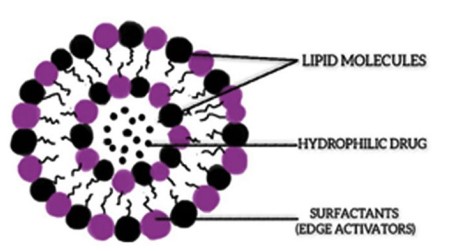
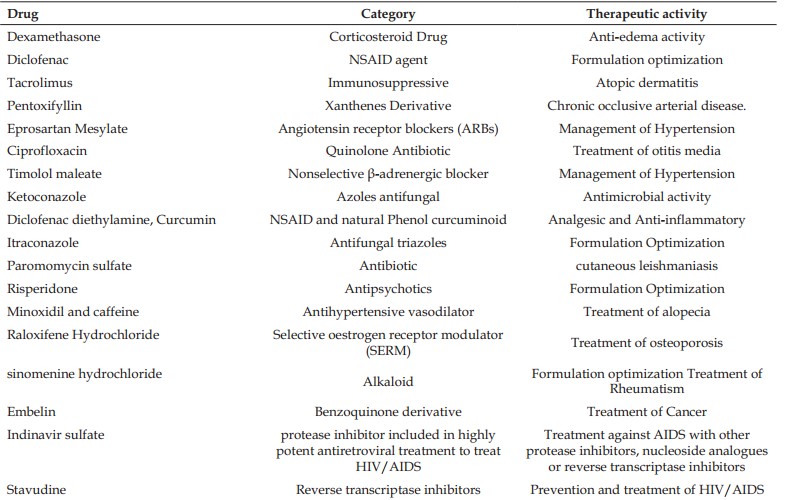
Recent years have seen a signiÀcant increase in interest in innovative drug delivery systems because of their advantages over traditional medication administration methods. This work presents a novel method of drug delivery by discussing the idea of a herbal medication in transferosomes. Transferosomes are extremely pliable vesicles that have recently been presented as novel medication carriers. They have the ability to transport large molecules through intact mammalian skin. The use of lipid vesicles as a drug delivery method for skin therapy is still controversial, despite garnering more attention this year; most relevant papers emphasise the localization effect of liposomes, with the transport mechanisms mentioned in a few cases, depending on the formulation. A novel and cutting edge medication delivery technique called transferosomes has been created to get around the clarity issue and break through the skin barrier along the transcutaneous gradient. These are certain kinds of liposomes that have phosphatidylcholine water as an edge activator, or that contain it. Biocompatible and biodegradable properties are two advantages of transferosomes. It prevents the medicinal product from being broken down by metabolism.When coupled to generate transferosomes, both hydrophilic and hydrophobic compounds have a wider range of solubility. These carriers are extremely adaptable and excellent at holding a wide range of medications, regardless of their size, molecular weight, polarity, or form. Transferosomes have the ability to transport both high and low molecular weight drugs, including insulin, sex hormone, albumin, corticosteroids, and anti-cancer medicines. Many medications, including those used to treat cancer, atopic dermatitis, hypertension, anti-edema, analgesics, anti-inÁammatory agents, and cutaneous leishmaniasis, exhibit activity in transferosomes.
References
- 1. Cevc G. Material transport across permeability barriers by means of lipid vesicles. In: Lipowsky R, editor. Handbook of physics of biological systems. Vol. I. Vol. 9. Amsterdam: Elsevier Science; 1994. p. 441–466.
- 2. Cevc G, Blume G, Schatzlein A, et al. The skin: a pathway for the systemic treatment with patches and lipid-based agent carriers. Adv Drug Deliv Rev. 1996;18:349–378.
- 3. Cevc G, Schatzleinand A, Blume G. Transdermal drug carriers: basic properties, optimization and transfer-efficiency in the case of epicutaneously applied peptides. J Control Release. 1995;36:3–16.
- 4. Mezei M, Gulasekharn V. Liposomes a selective drug delivery system for topical route of administration, 1. Lotion dosages form. Life Sci. 1980;26:1473–1477.
- 5. Fresta M, Puglisi G. Application of liposomes as potential cutaneous drug delivery system: in vitro in vivo investigation with radioactivity labeled vesicles. J Drug Target. 1996;4:95–101.
- 6. Romero EL, Morilla MJ. Highly deformable and highly fluid vesicles as potential drug delivery systems: theoretical and practical considerations. Int J Nanomedicine. 2013;8:3171–3186. [PMC free article] [PubMed] [Google Scholar]
- 7. Cevc G, Vierl U, Mazgareanu S. Functional characterisation of novel analgesic product based on self-regulating drug carriers. Int J Pharm. 2008;360(1–2):18–28. [PubMed] [Google Scholar]
- 8. Niki E, Traber MG. A history of vitamin E. Ann Nutr Metab. 2012;61(3):207–212. [PubMed] [Google Scholar]
- 9. Niki E. Role of vitamin E as a lipid-soluble peroxyl radical scavenger: in vitro and in vivo evidence. Free Radic Biol Med. 2014;66:3–12. [PubMed] [Google Scholar]
- 10. Rozman B, Gasperlin M, Tinois-Tessoneaud E, Pirot F, Falson F. Simultaneous absorption of vitamins C and E from topical microemulsions using reconstructed human epidermis as a skin model. Eur J Pharm Biopharm. 2009;72(1):69–75. [PubMed] [Google Scholar]
- 11. Jovanovic SV, Jankovic I, Josimovic L. Electrontransfer reactions of alkylperoxy radicals. J Am Chem Soc. 1992;114(23):9018–9021. [Google Scholar]
- 12. Brigelius-Flohé R, Traber MG. Vitamin E: function and metabolism. FASEB J. 1999;13(10):1145–1155. [PubMed] [Google Scholar]
- 13. Rai, S.; Pandey, V.; Rai, G. Transfersomes as versatile and flexible nano-vesicular carriers in skin cancer therapy: The state of the art. Nano Rev.Exp. 2017, 8, 1325708.
- 14. Akram MW, Jamshaid H, Rehman FU, Zaeem M, Khan JZ, Zeb A. Transfersomes: a Revolutionary Nanosystem for Efficient Transdermal Drug Delivery. AAPS PharmSciTech. 2021 Dec 1;23(1):7. doi: 10.1208/s12249-021-02166-9. PMID: 34853906.
- 15. Walve JR, Bakliwal SR, Rane BR, Pawar SP. Transferosomes: A surrogated carrier for transdermal drug delivery system. Int J App Bio Pharm Tech. 2011; 2 (1):201-214.
- 16. Jain S., Jain P. Transferosomes: A novel vesicular carrier for enhanced transdermal delivery: development, characterization and performance evaluation, Drug Dev. Ind. Pharm. 2003; 29:1013- 1026
- 17. Priyanka R., Shipra D., “Transferosomes: A Novel Carrier For Transdermal Drug Delivery System” International Journal Of pharmacy & Technology, April-2012; 4(1): 1854-1865.
- 18. Verma D.D., Verma S., Blume G., Fahr A. “Particle Size of liposomes influences dermal Delivery of substances into skin” International Journal of Pharmaceutical, 2003; 258: 141-151.
- 19. Ascenso, A.; Batista, C.; Cardoso, P.; Mendes, T.; Praça, F.G.; Bentley, M.V.L.B.; Raposo, S.; Simões, S. Development, characterization, and ski n delivery studies of related ultradeformable vesicles: Transfersomes, ethosomes, and transethosomes. Int. J. Nanomed. 2015, 10, 5837–5851.
- 20. Vasanth, S.; Dubey, A.; Ravi, G.S.; Lewis, S.A.; Ghate, V.M.; El-Zahaby, S.A.; Hebbar, S. Development and investigation of vitamin c-enriched adapalene-loaded transfersome gel: A collegial approach for the treatment of acne vulgaris. AAPS Pharm. Sci. Tech. 2020, 21, 61.
- 21. Chen, J.; Lu, W.-L.; Gu, W.; Lu, S.-S.; Chen, Z.- P.; Cai, B.-C. Skin permeation behavior of elastic liposomes: Role of formulation ingredients. Ex pert Opin. Drug Deliv. 2013, 10, 845–856
- 22. Duangjit, S.; Opanasopit, P.; Rojanarata, T.; Ngawhirunpat, T. Effect of edge activator on characteristic and in vitro skin permeation of meloxicam loaded in elastic liposomes. Adv. Mater. Res. 2011, 194, 537–540.
- 23. Jacob, L.; Anoop, K.R. A review on surfactants as edge activators in ultradeformable vesicles for enhanced skin delivery. Int. J. Pharma Bio Sci. 2 013, 4, 337–344.
- 24. Kim, B.; Cho, H.-E.; Moon, S.H.; Ahn, H.-J.; Bae, S.; Cho, H.-D.; An, S. Transdermal delivery systems in cosmetics. Biomed. Dermatol. 2020, 4, 1–12
- 25. Van Hoogevest P., Wendel A. The use of natural and synthetic phospholipids as pharmaceutical excipients. Eur. J. Lipid Sci. Technol. 2014;116:1088– 1107. doi: 10.1002/ejlt.201400219. [PMC free article] [PubMed] [CrossRef] [Google Scholar]
- 26. MirAfzali Z., Thompson C.S., Tallua K. Microencapsulation in the Food Industry: A Practical Implementation Guide. Academic Press; Cambridge, MA, USA: 2014. Chapter 13—Application of liposomes in the food industry; pp. 139–150. [Google Scholar]
- 27. Grit M., Crommelin D.J. Chemical stability of liposomes: Implications for their physical stability. Chem. Phys. Lipids. 1993;64:3–18. doi: 10.1016/0009- 3084(93)90053-6. [PubMed] [CrossRef] [Google Scholar]
- 28. Iskandarsyah, Rahmi A.D., Pangesti D.M. Comparison of the characteristics of transfersomes and protransfersomes containing azelaic acid. J. Young-Pharm. 10;2018:S11–S15. doi: 10.5530/ jyp.2018.2s.3. [CrossRef] [Google Scholar]
- 29. Jiang T., Wang T., Li T., Ma Y., Shen S., He B., Mo R. Enhanced transdermal drug delivery by transfersome-embedded oligopeptide hydrogel for topical chemotherapy of melanoma. ACS Nano. 2018;12:9693–9701. doi: 10.1021/acsnano.8b03800. [PubMed] [CrossRef] [Google Scholar]
- 30. Dharmendra Solanki et al Transferosomes- A review World Journal of Pharmacy and Pharmaceutical Sciences Volume 5, Issue 10, 435-449.
- 31. Cevc, G.; Schatzlein, A.G.; Richardsen, H. Ultradeformable lipid vesicles can penetrate the skin and other semi-permeable barriers unfragmented. Evidence from double label CLSM experiments and direct size measurements. Biochim. et Biophys. Acta (BBA)-Biomembr. 2002, 1564, 21–30.
- 32. Rajan, R.; Jose, S.; Mukund, V.P.B.; Vasudevan, D.T. Transferosomes—A vesicular transdermal delivery system for enhanced drug permeation. J . Adv. Pharm. Technol. Res. 2011, 2, 138–143.
- 33. Cevc, G. Lipid vesicles and other colloids as drug carriers on the skin. Adv. Drug Deliv. Rev. 2004, 56, 675–711.
- 34. Walve, J.R.; Bakliwal, S.R.; Rane, B.R.; Pawar, S.P. Transfersomes: A surrogated carrier for transdermal drug delivery system. Int. J. Appl. Biol. Pharm. Technol. 2011, 2, 204–213.
- 35. Sivannarayana, P.; Rani, A.P.; Saikishore, V.; VenuBabu, C.; SriRekha, V. Transfersomes: Ultra deformable vesicular carrier systems in transder mal drug delivery system. Res. J. Pharm. Dos. Forms Technol. 2012, 4, 243–255.
- 36. Madhumitha V, Sangeetha S. Transferosomes: A Novel Vesicular Drug Delivery System for Enhanced Permeation through Skin. Res J Pharm Technol. 2020;13(5):2493-501.
- 37. Trotta, M., Peira, E., Carlotti, M.E., Gallarate, M. Deformable liposomes for dermal administration of methot.
- 38. El Maghraby, G.M., Williams, A.C., Barry, B.W. Skin delivery of oestradiol from lipid vesicles: importance of liposome structure. International Journal of Pharmaceutics 2000; 204: 159-169.
- 39. Gangwar S, Singh S, Garg G. Ethosomes: A novel tool for drug delivery through skin. J Pharm Res 2010;3: 688-91.
- 40. Zhaowu Z, Xiaoli W, Yangde Z, Nianfeng L. Prepration of matrine ethosome, its percutaneous permeation in vitro and anti inflammatory activity in vivo in rats. J Liposome Res 2009;19: 155-62.
- 41. Modi CD, Bharadia PD. Transfersomes: new dominants for transdermal drug delivery. American Journal of Pharm Tech Research. 2012;2(3):71-91.
- 42. Pandey S, Goyani M, Devmurari V, Fakir J. Transferosomes: a novel approach for transdermal drug delivery. Der Pharmacia Lettre. 2009;1(2):143- 50.
- 43. Kodi SR, Reddy MS. Transferosomes: A Novel Topical Approach. Journal of Drug Delivery and Therapeutics.2023;13(2):126-31.
- 44. Cevc G, Blume G. Lipid vesicles penetrate into skin owing to the transdermal osmotic gradients and hydration force. Biochim Biophys Acta. 1992;1104:226–232. PubMed Web of Science ®Google Scholar
- 45. Cevc, G. Grbauer, D; Schatzlein, A; Blume, G. Biochem. Acta. 1998, 201-215.
Data Sharing Statement
There are no additional data available. All raw data and code are available upon request.
Funding
This research received no funding.
Author Contributions
All authors contributed significantly to the work and approve its publication.
Ethics Declaration
This article does not involve any human or animal subjects, and therefore does not require ethics approval.
Acknowledgements
We would like to express our gratitude to the patients, their families, and all those who have contributed to this study.
Conflicts of Interest
No conflicts of interest in this work.
About this article

Cite this article
Sandhiya, N Deepa, Salma R et al. Transferosomes: Novel therapeutic approach using Drug Delivery. J Pharmaceut Med Chem. 2024;10(1):25-31.
Licence:
Attribution-Non-commercial 4.0 International (CC BY-NC 4.0)This license enables reusers to distribute, remix, adapt, and build upon the material in any medium or format for noncommercial purposes only, and only so long as attribution is given to the creator.
| Received | Accepted | Published |
|---|---|---|
| April 23, 2024 | May 18, 2024 | June 28, 2024 |
DOI: https://doi.org/10.21088/jpmc.2395.6615.10124.3
Keywords
Novel drug SystemTypesClassificationMethods of PreparationSearch for Similar Articles
Similar Articles
- Pharmaceutical Care in Primary Healthcare: A Study of Nurses
- Artificial Intelligence in Pharmaceutical Research and Development: From Target...
- Developing a Structured Teaching Program for Precision Medicine in Nursing Pract...
- Comprehensive Scientific Review on the Natural Process of Aging, Anti-Aging Mech...
- Formulation and Evaluation of Curcumin Lozenges to Treat Throat Infections
Article Level Metrics
Last UpdatedMonday 26 October 2026, 22:20:13 (IST)
1383
Accesses
9
118
00
Citations
NA
NA
NA
Download citation
Article Keywords
Keyword Highlighting
Highlight selected keywords in the article text.
Timeline
| Received | April 23, 2024 |
| Accepted | May 18, 2024 |
| Published | June 28, 2024 |
licence
Attribution-Non-commercial 4.0 International (CC BY-NC 4.0)
This license enables reusers to distribute, remix, adapt, and build upon the material in any medium or format for noncommercial purposes only, and only so long as attribution is given to the creator.