Full Text (PDF)
Indian Journal of Library and Information Sciences 17(3):p 195-208, September - December 2023. | DOI: https://doi.org/10.21088/ijlis.0973.9548.17323.3
Review Article
Studies on Research data Management Systems and the Organization of Universities Research Institutes: A Systematic Review
Author Information
Licence:
Attribution-Non-commercial 4.0 International (CC BY-NC 4.0)This license enables reusers to distribute, remix, adapt, and build upon the material in any medium or format for noncommercial purposes only, and only so long as attribution is given to the creator.
Indian Journal of Library and Information Sciences 17(3):p 195-208, September - December 2023. | DOI: https://doi.org/10.21088/ijlis.0973.9548.17323.3
How Cite This Article:
R. Padmavathi, P. Sethuraj/Studies on Research data Management Systems and the Organization of Universities Research Institutes: A Systematic Review/ Indian J Lib Inf Sci 2023; 17 (3):195–208.Timeline
Received : April 15, 2023
Accepted : May 31, 2023
Published : December 25, 2023
Abstract
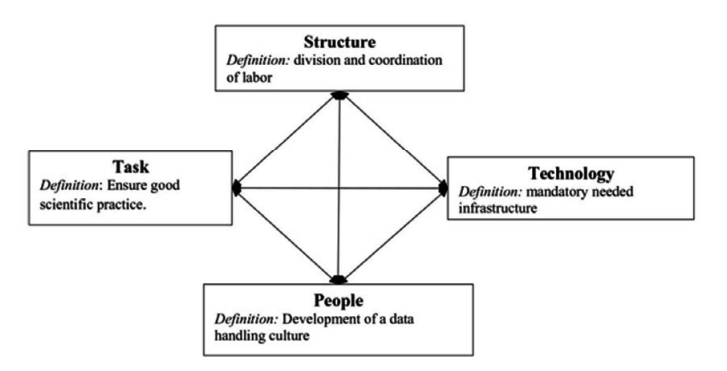
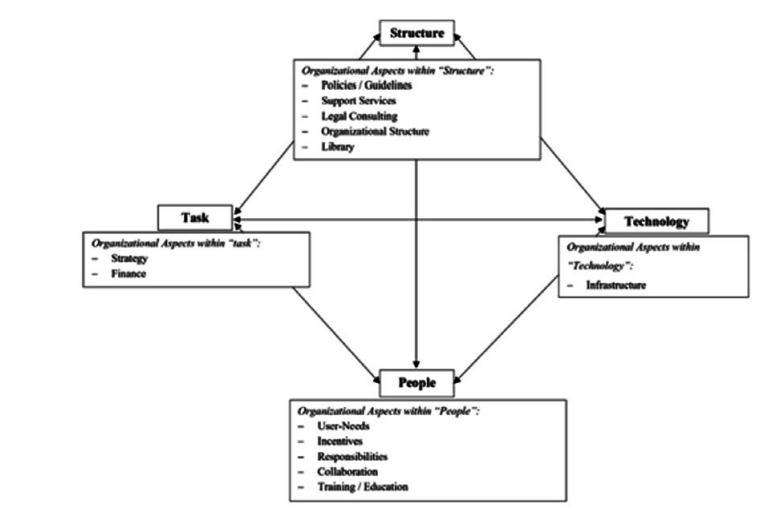
New technological developments, the availability of big data, and the creation of research platforms open a variety of opportunities to generate, store, and analyze research data. To ensure the sustainable handling of research data, the European Commission as well as scientific commissions have recently highlighted the importance of implementing a research data management system (RDMS) in higher education institutes (HEI) which combines technical as well as organizational solutions. A deep understanding of the requirements of research data management (RDM), as well as an overview of the different stakeholders, is a key prerequisite for the implementation of an RDMS. Based on a scientific literature review, the aim of this study is to answer the following research questions: “What organizational factors need to be considered when implementing an RDMS? How do these organizational factors interact with each other and how do they constrain or facilitate the implementation of an RDMS?” The structure of the analysis is built on the four components of Leavitt’s classical model of organizational change: task, structure, technology, and people. The findings reveal that the implementation of RDMS is strongly impacted by the organizational structure, infrastructure, labor culture as well as strategic considerations. Overall, this literature review summarizes different approaches for the implementation of an RDMS. It also identifies areas for future research.
References
- 1. ANDS. (2013). Research data management in practice. Caulfield East, Victoria: Australian National Data Service.
- 2. ANDS. (2017). Creating a data management framework: ANDS Guide. Caulfield East, Victoria: Australian National Data Service.
- 3. Avuglah, B. K. (2016). Developing an implementation plan for Research Data Management (RDM) at the University of Ghana. (Masters Dissertation). University of Pretoria.
- 4. Awre, C., Baxter, J., Clifford, B., et al. (2015). Research data management as a “wicked problem”. Library Review, 64(4/5): 356–371.
- 5. Ball, J. (2013). Research data management for libraries: getting started. Insights, 26(3): 256–260.
- 6. Beitz, A., Groenewegen, D., Harboe-Ree, C., Macmillan, W., & Searle, S. (2014). Case study 3: Monash University, a strategic approach. In: Pryor, G., Jones, S. & Whyte, A. (Eds.), Delivering research data management services: fundamentals of good practice (pp. 163–190). London: Facet Publishing.
- 7. Brewerton, A. (2012). Re-skilling for research: investigating the needs of researchers and how library staff can best support them. New Review of Academic Librarianship, 18(1): 96–110.
- 8. Chigwada, J., Chiparausha, B., & Kasiroori, J. (2017). Research data management in research institutions in Zimbabwe. Data Science Journal, 16(31): 1–9.
- 9. Chiware, E. R., & Becker, D. A. (2018). Research data management services in southern Africa: a readiness survey of academic and research libraries. African Journal of Library Archives and Information Science, 28(1): 1–16.
- 10. Conrad, S., Shorish, Y., Whitmire, A. L., & Hswe, P. (2017). Building professional development opportunities in data services for academic librarians. IFLA Journal, 43(1): 65–80.
- 11. Cox, A. M., & Pinfield, S. (2014). Research data management and libraries: current activities and future priorities. Journal of Librarianship and Information Science, 46(4): 299–316.
- 12. Cox, A., Verbaan, E., & Sen, B. (2012). Upskilling liaison librarians for research data management. Ariadne, 70.
- 13. Cox, A. M., & Verbaan, E. (2016). How academic librarians, IT staff, and research administrators perceive and relate to research. Library & Information Science Research, 38(4): 319–326.
- 14. Creswell, J. W. (2009). Research design: qualitative, quantitative, and mixed methods approaches (3rd ed.). London: Sage.
- 15. Creswell, J. W. (2013). Qualitative inquiry and research design: choosing among five approaches (3rd ed.). Los Angeles, CA: Sage.
- 16. Crowston, K., & Qin, J. (2011). A capability maturity model for scientific data management: evidence from the literature. Proceedings of the Association for Information Science and Technology, 48(1): 1–9.
- 17. Davidson, J., Jones, S., Molloy, L., & Kejser, U. B. (2014). Emerging good practice in managing research data and research information within UK universities. Procedia Computer Science, 33: 215–222.
- 18. Henderson, M. E., & Knott, T. L. (2015). Starting a research data management program based in a university library. Medical Reference Services Quarterly, 34(1): 47–59.
- 19. Hey, T., Tansley, S., & Tolle, K. M. (Eds.). (2009). The fourth paradigm: data-intensive scientific discovery. Redmond, WA: Microsoft Research.
- 20. Higman, R., & Pinfield, S. (2015). Research data management and openness: the role of data sharing in developing institutional policies and practices. Program: Electronic Library and Information Systems, 49(4): 364–381.
- 21. Hiom, D., Fripp, D., Gray, S., Snow, K., & Steer, D. (2015). Research data management at the University of Bristol: charting a course from project to service. Program: Electronic Library and Information Systems, 49(4): 475–493.
- 22. Hodson, S., & Molloy, L. (2014). Case study 5: Development of institutional RDM services by projects in the JISC managing research data programmes. In: Pryor, G., Jones, S., & Whyte, A. (Eds.), Delivering Research Data Management Services (pp. 205–237). London: Facet Publishing.
- 23. Jones, S., Duke, M., Rans, J., & Welgert, V. (2015). Meeting the requirements of the EPSRC research data policy. JISC.
- 24. Jones, S., Pryor, G., & Whyte, A. (2012). Developing research data management capability: the view from a national support service. Proceedings of the 9th International Conference on Preservation of Digital Objects (iPRES), Toronto, 142–149.
- 25. Jones, S., Pryor, G., & Whyte, A. (2013). How to develop research data management services: a guide for HEIs. DCC How-to Guides. Edinburgh: Digital Curation Centre.
- 26. Jones, S. (2014). CARDIO: Collaborative Assessment of Research Data Infrastructure and Objectives. SlideShare.
- 27. Kahn, M., Higgs, R., Davidson, J., & Jones, S. (2014). Research data management in South Africa: how we shape up. Australian Academic & Research Libraries, 45(4): 296–308.
- 28. Khokhar, M., Schwamm, H., Krug, J., & Albin-Clark, A. (2017). Data Management Administration Online (DMA Online). Procedia Computer Science, 106: 291–298.
- 29. Lynch, C., & Carleton, D. E. (2009). Lecture: impact of digital scholarship on research libraries. Journal of Library Administration, 49(3): 227–244.
- 30. Lyon, L., Ball, A., Duke, M., & Day, M. (2012). Developing a community capability model framework for data-intensive research. Proceedings of the 9th International Conference on Preservation of Digital Objects (iPRES), Toronto, 9–16.
- 31. Pickard, A. J. (2008). Research methods in information. London: Facet.
- 32. Procter, R., Halfpenny, P., & Voss, A. (2012). Research data management: opportunities and challenges for HEIs. In: Pryor, G. (Ed.), Managing Research Data (pp. 135–150). London: Facet.
- 33. Pryor, G. (2013). A maturing process of engagement: raising data capabilities in UK higher education. International Journal of Digital Curation, 8(2): 181–193.
- 34. Pryor, G. (2014). A patchwork of change. In: Pryor, G., Jones, S., & Whyte, A. (Eds.), Delivering research data management services: fundamentals of good practice (pp. 1–19). London: Facet.
- 35. Rans, J., & Jones, S. (2013). RDM strategy: moving from plans to action. DCC RDM Services Case Studies. Edinburgh: Digital Curation Centre.
- 36. Rice, R., & Haywood, J. (2011). Research data management initiatives at University of Edinburgh. International Journal of Digital Curation, 6(2): 232–244.
- 37. Sallans, A., & Lake, S. (2014). Data management assessment and planning tools. In: Ray, J. M. (Ed.), Research data management: practical strategies for information professionals (pp. 87–108). West Lafayette, IN: Purdue University Press.
- 38. Searle, S., Wolski, M., Simons, N., & Richardson, J. (2015). Librarians as partners in research data service development at Griffith University. Program: Electronic Library and Information Systems, 49(4): 440–460.
- 39. Ssebulime, J. B., van Deventer, M., & Pienaar, H. (2018). The role academic libraries could play in developing research data management services: a case of Makerere University. (Preprint).
- 40. Takeda, K., et al. (2010). Data management for all: the institutional data management blueprint project. Presentation at the 6th International Digital Curation Conference.
- 41. UG. (2014). University of Ghana Strategic Plan, 2014–2024. University of Ghana.
- 42. Van Deventer, M., & Pienaar, H. (2015). Research data management in a developing country: a personal journey. International Journal of Digital Curation, 10(2): 33–47.
- 43. Wang, M. (2013). Academic Library, e-Science/e-Research, and data services in a broader context. Proceedings of the ACRL 2013 Conference, Indianapolis.
- 44. Whyte, A. (2012). Emerging infrastructure and services for research data management and curation in the UK and Europe. In: Pryor, G. (Ed.), Managing Research Data (pp. 205–234). London: Facet.
- 45. Whyte, A., & Allard, S. (Eds.). (2014). How to discover requirements for research data management services. DCC How-to Guides. Edinburgh: Digital Curation Centre.
- 46. Whyte, A., Molloy, L., Beagrie, N., & Houghton, J. (2014). What to measure? Towards metrics for research data management. In: Ray, J. M. (Ed.), Research data management: practical strategies for information professionals (pp. 275–302). West Lafayette, IN: Purdue University Press.
- 47. Wilson, J. A., Martinez-Uribe, L., Fraser, M. A., & Jeffreys, P. (2011). An institutional approach to developing research data management infrastructure. International Journal of Digital Curation, 6(2): 274–287.
- 48. Wong, G. K. (2009). Exploring research data hosting at the HKUST institutional repository. Serials Review, 35(3): 125–132.
- 49. Yin, R. K. (2009). Case study research: Design and methods (4th ed.). Los Angeles, CA: Sage.
Data Sharing Statement
There are no additional data available. All raw data and code are available upon request.
Funding
This research received no funding.
Author Contributions
All authors contributed significantly to the work and approve its publication.
Ethics Declaration
This article does not involve any human or animal subjects, and therefore does not require ethics approval.
Acknowledgements
We would like to express our gratitude to the patients, their families, and all those who have contributed to this study.
Conflicts of Interest
No conflicts of interest in this work.
About this article

Cite this article
R. Padmavathi, P. Sethuraj/Studies on Research data Management Systems and the Organization of Universities Research Institutes: A Systematic Review/ Indian J Lib Inf Sci 2023; 17 (3):195–208.
Licence:
Attribution-Non-commercial 4.0 International (CC BY-NC 4.0)This license enables reusers to distribute, remix, adapt, and build upon the material in any medium or format for noncommercial purposes only, and only so long as attribution is given to the creator.
| Received | Accepted | Published |
|---|---|---|
| April 15, 2023 | May 31, 2023 | December 25, 2023 |
DOI: https://doi.org/10.21088/ijlis.0973.9548.17323.3
Keywords
Data handlingInformation infrastructureOrganizationOrganizational changeResearch data managementResearch data management system.Information infrastructureOrganizationOrganizational changeResearch data managementResearch data management system.Search for Similar Articles
Similar Articles
- Scientometric Portrait of Dr. Anil Kumar Dhiman, an Information Scientist-Part I...
- A Study on Humanities Students’ Literacy Skills at Alagappa University in Using...
- Awareness and Utilization of Artificial Intelligence Tools (ChatGPT) among Stude...
- Global Trends on Artificial Intelligence in Science Research: A Scientometric Ob...
- Information Needs of Persons with Visual Impairments: A Socioeconomic Analysis
Article Level Metrics
Last UpdatedThursday 10 September 2026, 05:15:23 (IST)
3923
Accesses
15
738
00
Citations
NA
NA
NA
Download citation
Article Keywords
Keyword Highlighting
Highlight selected keywords in the article text.
Timeline
| Received | April 15, 2023 |
| Accepted | May 31, 2023 |
| Published | December 25, 2023 |
licence
Attribution-Non-commercial 4.0 International (CC BY-NC 4.0)
This license enables reusers to distribute, remix, adapt, and build upon the material in any medium or format for noncommercial purposes only, and only so long as attribution is given to the creator.