Full Text (PDF)
Indian Journal of Cancer Education and Research 13(1):p 31-34, Jan-June 2025. | DOI: https://doi.org/10.21088/ijcer.2455.8621.10125.4
Review Article
Splanchnic Plexus Neurolysis for Pain Management in Pancreatic Cancer
Author Information
Licence:
Attribution-Non-commercial 4.0 International (CC BY-NC 4.0)This license enables reusers to distribute, remix, adapt, and build upon the material in any medium or format for noncommercial purposes only, and only so long as attribution is given to the creator.
Indian Journal of Cancer Education and Research 13(1):p 31-34, Jan-June 2025. | DOI: https://doi.org/10.21088/ijcer.2455.8621.10125.4
How Cite This Article:
1. Kumar N. Splanchnic Plexus Neurolysis for Pain Management in Pancreatic Cancer. Indian J Cancer Educ Res. 2025;13(1):31-34.Timeline
Received : January 02, 2025
Accepted : February 03, 2025
Published : June 30, 2025
Abstract
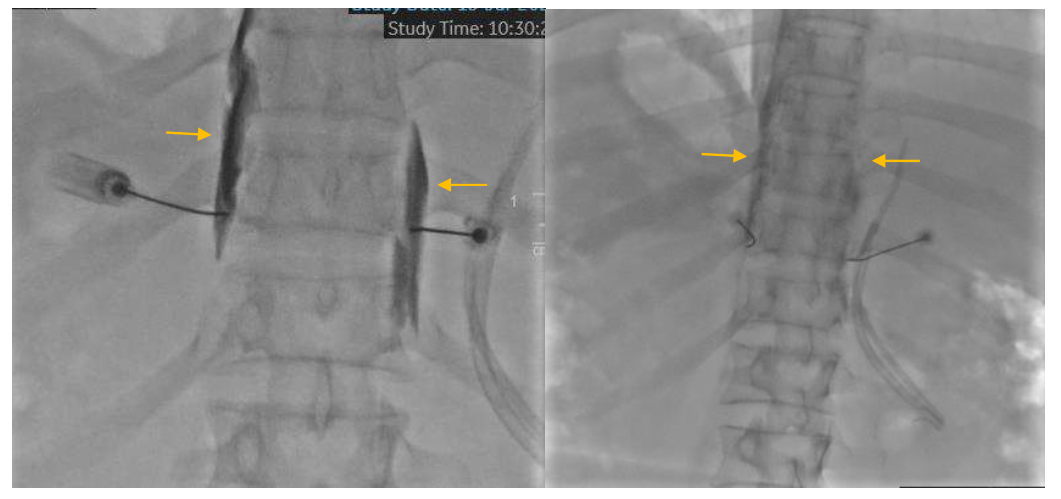
Pancreatic cancer is a highly aggressive malignancy often diagnosed at an advanced stage, leading to significant pain that severely affects patient’s quality of life. The pain is primarily due to tumour invasion of the splanchnic nerves, which transmit nociceptive signals from the pancreas and surrounding structures. Traditional analgesic treatments, such as opioids, often become inadequate over time, prompting the need for alternative palliative interventions. Splanchnic plexus neurolysis (SPN) is a minimally invasive procedure that involves the chemical or thermal disruption of the splanchnic nerves, offering effective pain relief for patients with advanced pancreatic cancer. This procedure can be performed percutaneously or through endoscopic ultrasound (EUS) guidance. SPN has shown to significantly reduce pain, decrease opioid use, and improve overall functional status and quality of life in many patients. This case report explores the use of SPN in a patient with advanced pancreatic cancer and discusses its role in palliative care.
References
- 1. Dobosz, Lukasz, Maciej Kaczor, and Tomasz J. Stefaniak. “Pain in pancreatic cancer: review of medical and surgical remedies.” ANZ journal of surgery 86.10 (2016): 756-761
- 2. Mercadante, Sebastiano, et al. “Breakthrough pain in patients with abdominal cancer pain.” The Clinical Journal of Pain 30.6 (2014): 510-514.
- 3. Cousins, Michael J., and Phillip O. Bridenbaugh, eds. Neural blockade in clinical anesthesia and management of pain. Vol. 494. Lippincott Williams & Wilkins, 1998.
- 4. Ahmed, Arif, and Divesh Arora. “Fluoroscopy-guided neurolytic splanchnic nerve block for intractable pain from upper abdominal malignancies in patients with distorted celiac axis anatomy: an effective alternative to celiac plexus neurolysis-a retrospective study.” Indian Journal of Palliative Care 23.3 (2017): 274.
- 5. Ozyalçın, N. Suleyman, et al. “Efficacy of coeliac plexus and splanchnic nerve blockades in body and tail located pancreatic cancer pain.” European Journal of Pain 8.6 (2004): 539-545.
- 6. Chen, Minghui, et al. “Clinical research of percutaneous bilateral splanchnic nerve lesion for pain relief in patients with pancreatic cancer under X-ray guidance.” International Journal of Clinical and Experimental Medicine 8.11 (2015): 20092
- 7. Schmulewitz, N., and R. Hawes. “EUS-guided celiac plexus neurolysis–technique and indication.” Endoscopy 35.08 (2003): S49-S53
- 8. Koyyalagunta, Dhanalakshmi, et al. “The effectiveness of alcohol versus phenol based splanchnic nerve neurolysis for the treatment of intra-abdominal cancer pain.” Pain Physician 19.4 (2016): 281
- 9. Novy, Diane M., et al. “Effectiveness of splanchnic nerve neurolysis for targeting location of cancer pain: using the pain drawing as an outcome variable.” Pain Physician 19.6 (2016): 397.
- 10. Daosong Dong, Mingfang Zhao, Jingmei Zhang, Ming Huang, Yanwei Wang, Liang Qi, Cheng-fu Wan, Xue Yu, Tao Song; Neurolytic Splanchnic Nerve Block and Pain Relief, Survival, and Quality of Life in Unresectable Pancreatic Cancer: A Randomized Controlled Trial. Anesthesiology 2021; 135:686–698
Data Sharing Statement
There are no additional data available. All raw data and code are available upon request.
Funding
This research received no funding.
Author Contributions
All authors contributed significantly to the work and approve its publication."
Ethics Declaration
This article does not involve any human or animal subjects, and therefore does not require ethics approval.
Acknowledgements
Thanks to Department of Medical gastroenterology for involving department of interventional radiology in the management of this patient
Conflicts of Interest
No conflicts of interest.
About this article

Cite this article
1. Kumar N. Splanchnic Plexus Neurolysis for Pain Management in Pancreatic Cancer. Indian J Cancer Educ Res. 2025;13(1):31-34.
Licence:
Attribution-Non-commercial 4.0 International (CC BY-NC 4.0)This license enables reusers to distribute, remix, adapt, and build upon the material in any medium or format for noncommercial purposes only, and only so long as attribution is given to the creator.
| Received | Accepted | Published |
|---|---|---|
| January 02, 2025 | February 03, 2025 | June 30, 2025 |
DOI: https://doi.org/10.21088/ijcer.2455.8621.10125.4
Keywords
Splanchnic Plexus NeurolysisPancreatic CancerPain ManagementPalliative CareOpioidSearch for Similar Articles
Similar Articles
- Unusual Presentation of Solitary Metastasis to the Right Metacarpal Bone in Rena...
- Technical Feasibility and Planning Challenges of Delivering Total Body Irradiat...
- Excellent Response Rates with Bortezomib - Cyclophosphamide – Dexamethasone (VCD...
- Optimizing Postoperative Radiation Therapy in Ewing’s Sarcoma with Lung Metasta...
- Current Therapeutic Strategies Targeting Tyrosine Kinase Receptor in Colon Canc...
Article Level Metrics
Last UpdatedWednesday 30 September 2026, 08:35:15 (IST)
1909
Accesses
32
289
00
Citations
NA
NA
NA
Download citation
Article Keywords
Keyword Highlighting
Highlight selected keywords in the article text.
Timeline
| Received | January 02, 2025 |
| Accepted | February 03, 2025 |
| Published | June 30, 2025 |
licence
Attribution-Non-commercial 4.0 International (CC BY-NC 4.0)
This license enables reusers to distribute, remix, adapt, and build upon the material in any medium or format for noncommercial purposes only, and only so long as attribution is given to the creator.