Full Text (PDF)
Indian Journal of Cancer Education and Research 14(1):p 07-13, Jan -June 2026. | DOI: 10.21088/ijcer.2321.9815.14126.1
Original Article
Optimizing Postoperative Radiation Therapy in Ewing’s Sarcoma with Lung Metastasis: A Case of Whole Lung Bath Irradiation
Virendra Bhandari, Chinnamuthu Mahendran, Rajendiran Gomathi, Vadivel Naveen Prasath, Nayantara Pitaliya, Deepika Malik.
Author Information
Licence:
Attribution-Non-commercial 4.0 International (CC BY-NC 4.0)This license enables reusers to distribute, remix, adapt, and build upon the material in any medium or format for noncommercial purposes only, and only so long as attribution is given to the creator.
Indian Journal of Cancer Education and Research 14(1):p 07-13, Jan -June 2026. | DOI: 10.21088/ijcer.2321.9815.14126.1
How Cite This Article:
Chinnamuthu Mahendran, Rajendiran Gomathi, Vadivel Naveen Prasath, et al. Optimizing Postoperative Radiation Therapy in Ewing’s Sarcoma with Lung Metastasis: A Case of Whole Lung Bath Irradiation. Ind J Canc Educ Res 2025; 14(1): 07-13Timeline
Received : December 13, 2025
Accepted : January 16, 2026
Published : June 30, 2026
Abstract
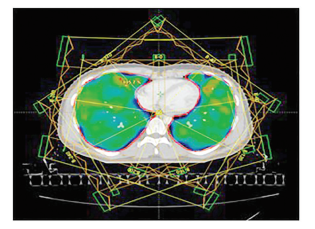
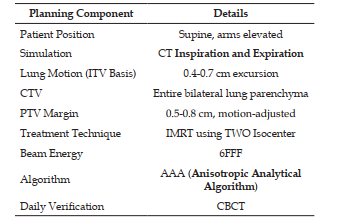
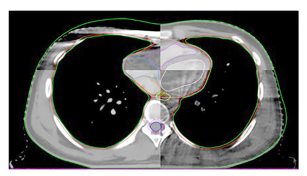
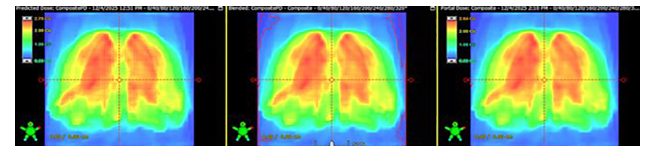
Introduction: Ewing’s sarcoma (ES) is a rare but highly aggressive malignancy, predominantly affecting children and young adults, with a characteristic presentation of bone or soft tissue involvement. Whole lung irradiation (WLI) is used in the treatment of pulmonary metastases, especially following chemotherapy and surgical resection of the primary tumor. The purpose of this study was to assess the effectiveness of whole-lung irradiation in a young adult patient with metastatic Ewing’s sarcoma. Patient Information & Systemic Therapy: A young adult with progressively worsening tibial pain and swelling was diagnosed with Ewing’s sarcoma after imaging and biopsy confirmed the presence of the tumor. Neoadjuvant chemotherapy (VAC/IE) was administered, followed by surgical resection of the femoral tumor. Interim imaging showed significant reduction in pulmonary metastases, prompting the decision to proceed with whole lung irradiation. Material and Methods: The patient underwent whole-lung irradiation using a high-precision radiation therapy technique. A thermoplastic mask was employed for immobilization during CT scanning and radiation treatment. The radiation planning utilized Varian Somavision for tumor volume delineation, and the treatment plan was created using IMRT (Intensity-Modulated Radiation Therapy) with a Halcyon Elite 4.0 machine. The patient was treated with 18 Gy in 12 fractions. The breath-hold technique was utilized to minimize respiratory motion during radiation delivery. Cone Beam CT (CBCT) and portal dosimetry were employed to verify treatment accuracy. Results: The radiation dose was successfully delivered to the target volume (PTV), with a high degree of precision, as evidenced by dosimetric parameters. The V95% was above 95%, indicating that 95% of the target volume received the prescribed dose. The homogeneity index (P-HI) and conformity index (CI) showed favorable dose distribution, ensuring the target volume received a uniform dose while sparing surrounding healthy tissues. Critical organs such as the heart, esophagus, and liver received doses within safe limits, and no significant adverse effects were observed. Conclusion: Whole-lung irradiation using IMRT and advanced techniques like the breath-hold method and cone beam CT verification represents a promising strategy for managing pulmonary metastases in Ewing’s sarcoma. This individualized treatment plan maximized the therapeutic dose to metastatic lesions while minimizing risks to healthy organs, highlighting the potential for optimizing radiation therapy in this patient population.
References
- 1. Ewing J. Classics in oncology. Diffuse endothelioma of bone. James Ewing. Proceedings of the New York pathological society, 1921. CA Cancer J Clin. 1972; 22: 95-98 2. 2. L.Ries, M.
- 2. Smith, J. G. Gurney et al., Cancer Incidence and Survival among Children and Adolescents: United States SEER Program 1975–1995, National Cancer Institute, 1999.
- 3. C. Rodriguez-Galindo, S.L. Spunt, and A.S. Pappo, “Treatment of ewing sarcoma family of tumors: current status and outlook for the future,” Medical and Pediatric Oncology, vol. 40, no. 5, pp. 276–287, 2003.
- 4. D. West, R. Womer et al., Study Progress Report on AEWS0031: Trial of Chemotherapy Intensification through Interval Compression in Ewing Sarcoma and Related Tumors, Children’s Oncology Group, 2007.
- 5. Grier H.E., Krailo M.D., Tarbell N.J., et al. Addition of Ifosfamide and Etoposide to Standard Chemotherapy for Ewing’s Sarcoma and Primitive Neuroectodermal Tumor of Bone. N Engl J Med. 2003;348:694–701.
- 6. Paulino A.C., Fowler B.Z. Whole Lung Irradiation in Children: Dosimetric, Clinical, and Technical Considerations. Int J Radiat Oncol Biol Phys. 2005;63(3):801–807.
- 7. Nesbit M.E., Gehan E.A., Burgert E.O., et al. Multimodal therapy for the management of primary, nonmetastatic Ewing’s Sarcoma of bone: a long-term follow-up of the first intergroup study. Journal of Clinical Oncology. 1990; 8(10): 1664–1674. doi: 10.1200/ JCO.1990.8.10.1664.
- 8. Kalapurakal J.A., Zhang Y., Kepka A., et al. Cardiac-sparing whole lung IMRT in children with lung metastasis. International Journal of Radiation Oncology, Biology, Physics. 2013; 85(3): 761–767. doi: 10.1016/j. ijrobp.2012.05.036.
- 9. Jaffe N., Paed D., Traggis D., Salian S., Cassady J.R. Improved outlook for Ewing’s sarcoma with combination chemotherapy (vincristine, actinomycin D and cyclophosphamide) and radiation therapy. Cancer. 1976; 38 (5, table 1): 1925–1930. doi: 10.1002/1097-0142(197611)38:5<1925::aidcncr2820380510>3.0.co;2-j.
Data Sharing Statement
There are no additional data available. All raw data and code are available upon request.
Funding
This research received no funding.
Author Contributions
All authors contributed significantly to the work and approve its publication.
Ethics Declaration
This article does not involve any human or animal subjects and therefore does not require ethics approval.
Acknowledgements
We would like to express our gratitude to the patients, their families, and all those who have contributed to this study.
Conflicts of Interest
No conflicts of interest in this work.
About this article

Cite this article
Chinnamuthu Mahendran, Rajendiran Gomathi, Vadivel Naveen Prasath, et al. Optimizing Postoperative Radiation Therapy in Ewing’s Sarcoma with Lung Metastasis: A Case of Whole Lung Bath Irradiation. Ind J Canc Educ Res 2025; 14(1): 07-13
Licence:
Attribution-Non-commercial 4.0 International (CC BY-NC 4.0)This license enables reusers to distribute, remix, adapt, and build upon the material in any medium or format for noncommercial purposes only, and only so long as attribution is given to the creator.
| Received | Accepted | Published |
|---|---|---|
| December 13, 2025 | January 16, 2026 | June 30, 2026 |
DOI: 10.21088/ijcer.2321.9815.14126.1
Keywords
SurgicalVolumeSignificantChemotherapySearch for Similar Articles
Similar Articles
- Unusual Presentation of Solitary Metastasis to the Right Metacarpal Bone in Rena...
- Technical Feasibility and Planning Challenges of Delivering Total Body Irradiat...
- Excellent Response Rates with Bortezomib - Cyclophosphamide – Dexamethasone (VCD...
- Current Therapeutic Strategies Targeting Tyrosine Kinase Receptor in Colon Canc...
- Advanced Adenoid Cystic Carcinoma with Widespread Visceral and Skeletal Metastas...
Article Level Metrics
Last UpdatedWednesday 21 October 2026, 09:24:07 (IST)
2073
Accesses
26
293
00
Citations
NA
NA
NA
Download citation
Article Keywords
Keyword Highlighting
Highlight selected keywords in the article text.
Timeline
| Received | December 13, 2025 |
| Accepted | January 16, 2026 |
| Published | June 30, 2026 |
licence
Attribution-Non-commercial 4.0 International (CC BY-NC 4.0)
This license enables reusers to distribute, remix, adapt, and build upon the material in any medium or format for noncommercial purposes only, and only so long as attribution is given to the creator.