Full Text (PDF)
Indian Journal of Cancer Education and Research 14(1):p 21-27, Jan -June 2026. | DOI: 10.21088/ijcer.2321.9815.14126.3
Original Article
Technical Feasibility and Planning Challenges of Delivering Total Body Irradiation Using Halcyon Elite O Ring Gantry
Virendra Bhandari, Chinnamuthu Mahendran, Rajendiran Gomathi, Priyusha Bagdare, Deepika Malik, Vadivel Naveen Prasath, Asha Lodhi
Author Information
Licence:
Attribution-Non-commercial 4.0 International (CC BY-NC 4.0)This license enables reusers to distribute, remix, adapt, and build upon the material in any medium or format for noncommercial purposes only, and only so long as attribution is given to the creator.
Indian Journal of Cancer Education and Research 14(1):p 21-27, Jan -June 2026. | DOI: 10.21088/ijcer.2321.9815.14126.3
How Cite This Article:
Chinnamuthu Mahendran, Rajendiran Gomathi, Priyusha Bagdare, et al. Technical Feasibility and Planning Challenges of Delivering Total Body Irradiation Using Halcyon Elite O-Ring Gantry. Ind J Canc Educ Res 2025; 14(1): 21-27.Timeline
Received : December 13, 2025
Accepted : January 17, 2026
Published : June 30, 2026
Abstract
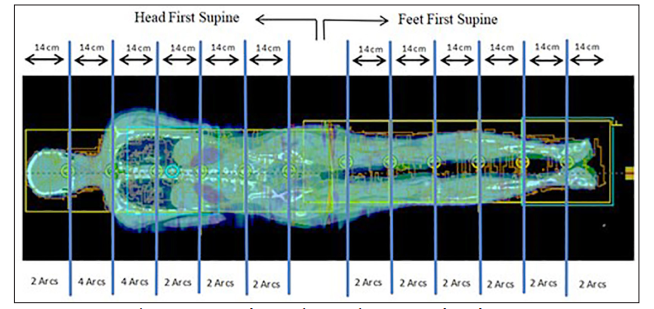
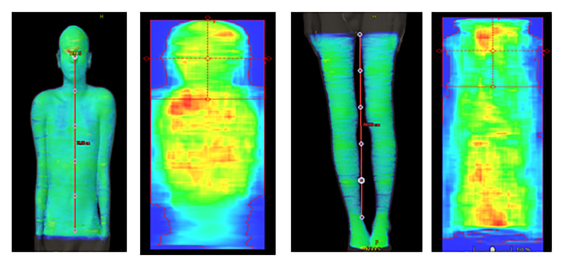
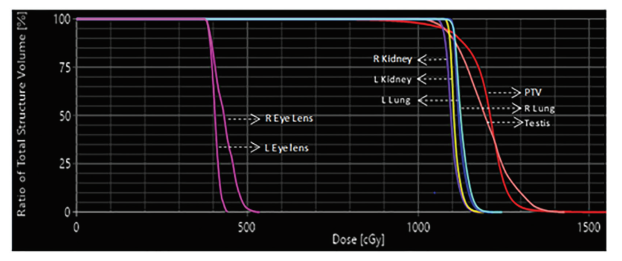
Purpose: Total Body Irradiation (TBI) is a critical component of conditioning regimens prior to hematopoietic stem cell transplantation (HSCT). This report presents the first clinical implementation of VMAT-based TBI for a 19-year-old male patient using a Halcyon™ Elite linear accelerator, with treatment planning performed in Eclipse™ Treatment Planning System (TPS) version 17.0. The prescribed dose was 12 Gy delivered in 10 fractions, consistent with a reducedintensity conditioning protocol. Methods: The patient was simulated in head-first supine (HFS) positions using vaclock immobilization and full-body support. A planning target volume (PTV) was defined by cropping 3 mm from the external contour to avoid build-up issues. MAT plans were created using 12 isocenters with 6 MV flattening-filter-free (FFF) beams. The treatment was planned using Eclipse v17.0, with emphasis on achieving uniform PTV coverage while minimizing dose to critical organs-atrisk (OARs) including lungs, kidneys, lenses, and testes. Pre-treatment quality assurance (QA) was performed with portal dosimetry. Results: The treatment plan achieved adequate PTV coverage, with D95% of 10.76 Gy, ensuring acceptable dose homogeneity (HI = 0.26). The mean doses to the left and right lungs were 11.45 Gy and 11.48 Gy, respectively. The mean kidney doses were 11.09 Gy for the left kidney and 10.98 Gy for the right kidney. The doses to the lenses (5.38 Gy) and testes (14.27 Gy) remained within institutional tolerance limits. The total monitor units (MU) delivered were 2704.9.The total beam-on time per fraction was approximately 15 minutes, with overall treatment time including setup and imaging averaging 1 hour 30 minutes. Gamma analysis using 3%/3 mm criteria demonstrated 100% passing rates (γ < 1.0) for both head-first supine (HFS) and feet-first supine (FFS) setups, exceeding the 97% institutional tolerance. Conclusion: Halcyon VMAT-based planning provided satisfactory target coverage and organ sparing within an efficient and reproducible workflow. Halcyon may be considered a suitable platform for TBI delivery in adolescent and young adult (AYA) patients undergoing transplantation.
References
- 1. Varian Medical Affairs. Total Body Irradiation – VMAT on Halcyon recommendations. Varian Medical Affairs.
- 2. Van Dyke J., Galvin J.M., Glasgow G.P., Podgorsak E.B.. The physical aspect of total and half body photon irradiation. AAPM Report No. 17. 1986. Available from: https:// www.aapm.org/pubs/reports/RPT_17.pdf
- 3. Yao R., Bernard D., Turian J., Abrams R.A., Sensakovic W., Fung H.C., et al. A simplified technique for delivering total body irradiation (TBI) with improved dose homogeneity. Med Phys. 2012; 39: 2239–48. 4. Tamura M., Matsumoto K., Otsuka M., Monzen H. Plan complexity quantification of dual-layer multi-leaf collimator for volumetric modulated arc therapy with Halcyon linac. Phys Eng Sci Med. 2020; 43: 947–57.
- 5. Chakraborty S., Cheruliyil S., Bharthan R., Muttath G. Total body irradiation using VMAT (RapidArc): A planning study of a novel treatment delivery method. Int J Cancer Ther Oncol. 2015; 3: 03028.
- 6. Maddalo M., Benecchi G., Altabella L., Ghetti C., Dabbiero N. Automatic feathering algorithm for VMAT craniospinal irradiation: a comprehensive comparison with other VMAT planning strategies. Med Dosim. 2021; 46(2): 103–10.
- 7. Lu J.Y., Lin Z., Zheng J., Lin P.X., Cheung M.L., Huang B.T. Dosimetric evaluation of a simple planning method for improving intensity-modulated radiotherapy for stage III lung cancer. Sci Rep. 2016; 6: 23543. Springer A., Hammer J., Winkler E., Track C., Huppert R., Böhm A., et al. Total body irradiation with volumetric modulated arc therapy: dosimetric data and first clinical experience. Radiat Oncol. 2016; 11: 46.
- 8. Springer A., Hammer J., Winkler E., Track C., Huppert R., Böhm A., et al. Total body irradiation with volumetric modulated arc therapy: dosimetric data and first clinical experience. Radiat Oncol. 2016; 11: 46.
- 9. Talapatra K., Parab A.S., Singh A., Barsing S., Gupte A., Padate B. Clinical experience of total body irradiation performed on Halcyon™ for a patient diagnosed with acute myeloid leukemia. Int J Mol Immuno Oncol. 2022; 7(2): 50–3.
Data Sharing Statement
There are no additional data available. All raw data and code are available upon request.
Funding
This research received no funding.
Author Contributions
All authors contributed significantly to the work and approve its publication.
Ethics Declaration
This article does not involve any human or animal subjects and therefore does not require ethics approval.
Acknowledgements
We would like to express our gratitude to the patients, their families, and all those who have contributed to this study.
Conflicts of Interest
The authors report no conflicts of interest in this work.
About this article

Cite this article
Chinnamuthu Mahendran, Rajendiran Gomathi, Priyusha Bagdare, et al. Technical Feasibility and Planning Challenges of Delivering Total Body Irradiation Using Halcyon Elite O-Ring Gantry. Ind J Canc Educ Res 2025; 14(1): 21-27.
Licence:
Attribution-Non-commercial 4.0 International (CC BY-NC 4.0)This license enables reusers to distribute, remix, adapt, and build upon the material in any medium or format for noncommercial purposes only, and only so long as attribution is given to the creator.
| Received | Accepted | Published |
|---|---|---|
| December 13, 2025 | January 17, 2026 | June 30, 2026 |
DOI: 10.21088/ijcer.2321.9815.14126.3
Keywords
PatientTreatmentPlanningConditioningSearch for Similar Articles
Similar Articles
- Unusual Presentation of Solitary Metastasis to the Right Metacarpal Bone in Rena...
- Excellent Response Rates with Bortezomib - Cyclophosphamide – Dexamethasone (VCD...
- Optimizing Postoperative Radiation Therapy in Ewing’s Sarcoma with Lung Metasta...
- Current Therapeutic Strategies Targeting Tyrosine Kinase Receptor in Colon Canc...
- Advanced Adenoid Cystic Carcinoma with Widespread Visceral and Skeletal Metastas...
Article Level Metrics
Last UpdatedWednesday 21 October 2026, 09:24:05 (IST)
2073
Accesses
30
293
00
Citations
NA
NA
NA
Download citation
Article Keywords
Keyword Highlighting
Highlight selected keywords in the article text.
Timeline
| Received | December 13, 2025 |
| Accepted | January 17, 2026 |
| Published | June 30, 2026 |
licence
Attribution-Non-commercial 4.0 International (CC BY-NC 4.0)
This license enables reusers to distribute, remix, adapt, and build upon the material in any medium or format for noncommercial purposes only, and only so long as attribution is given to the creator.