Full Text (PDF)
Journal of Plastic Surgery and Transplantation 1(1):p 11-13, Jan-June 2021. | DOI: Not provide
Original Article
Scalp and Calvarial Injury from Tiger Attacks: An Untouched Realm
Somil Jaiswal, Rohan Digarse, Manish Jaiswal, Chhitij Srivastava, Anil Chandra, BK Ojha
Author Information
Licence:
Attribution-Non-commercial 4.0 International (CC BY-NC 4.0)This license enables reusers to distribute, remix, adapt, and build upon the material in any medium or format for noncommercial purposes only, and only so long as attribution is given to the creator.
Journal of Plastic Surgery and Transplantation 1(1):p 11-13, Jan-June 2021. | DOI: Not provide
How Cite This Article:
Rohan Digarse, Somil Jaiswal, Manish Jaiswal et al. Scalp and calvarial injury from tiger attacks: An untouched Realm. Journal of Plastic Surgery and Transplantation. 2021;1(1):11–13.Timeline
Received : April 06, 2021
Accepted : June 20, 2021
Published : June 30, 2021
Abstract
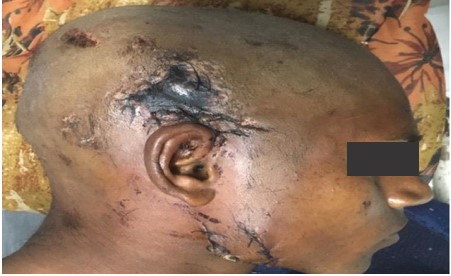
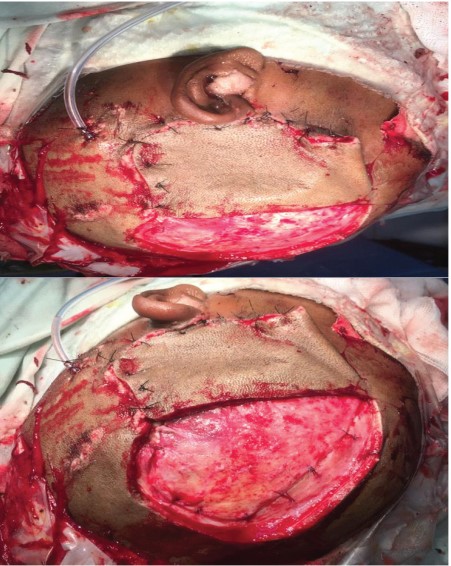
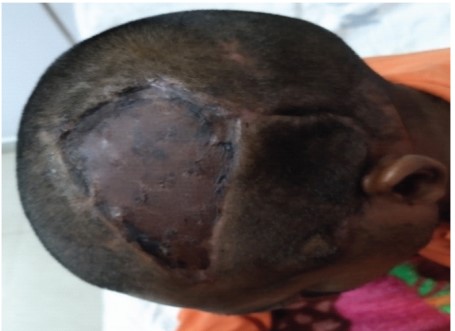
Introduction: Tiger population has been dwindling over years and incidences of tiger attack scalp and calvarial injuries have been reported rarely. These injuries are life threatening and requires combined urgent neurosurgical and plastic surgery intervention. Methods: This study retrospectively assessed cases of tiger attacks admitted in neurosurgery department from January 2016 to September 2019. Clinical, radiological and operative notes of these cases were retrieved from records and analysed. Results: Five patients were treated during the study period. All of them were males. Three patients had Bilateral scalp injury wheres two had unilateral injuries. Three patients had undergone debridement craniectomy and repair of dura and scalp. One patient had to undergo occipital artery based tranpostion flap with split skin grafting. Another patient had to undergo local wound debridement and galeal underscoring for scalp suturing. All patients were doing well at the time of discharge. Conclusion: Scalp and calvarial injury from tiger paw injury are rare and may cause substantial scalp loss along with depressed skull fracture. This type of injury requires team effort with plastic surgery team for flap transposition or skin grafting.
References
- 1. Knobel Freud H, Lopez Colomes JL, Serrano Sainz C, Hernandez Vidal P. Animal bites.study of 606 cases. Rev Clin Esp 1997; 197:560-3.
- 2. Ogunbedede EO, Arotiba JT. Camel bite injuries of the orofacial region: report of a case. J Oral Maxillofac Surg 1997; 55:1174–6.
- 3. Isotalo PA, Edgar D, Toye B. Polymicrobial tenosynovitis with Pasteurella multocida and other gram negative bacilli after a Siberian tiger bite. J Clin Pathol 2000; 53:871–2.
Data Sharing Statement
There are no additional data available.
Funding
This research received no funding.
Author Contributions
All authors contributed significantly to the work and approve its publication.
Ethics Declaration
This article does not involve any human or animal subjects, and therefore does not require ethics approval.
Acknowledgements
Information not provide.
Conflicts of Interest
The authors report no conflicts of interest in this work.
About this article

Cite this article
Rohan Digarse, Somil Jaiswal, Manish Jaiswal et al. Scalp and calvarial injury from tiger attacks: An untouched Realm. Journal of Plastic Surgery and Transplantation. 2021;1(1):11–13.
Licence:
Attribution-Non-commercial 4.0 International (CC BY-NC 4.0)This license enables reusers to distribute, remix, adapt, and build upon the material in any medium or format for noncommercial purposes only, and only so long as attribution is given to the creator.
| Received | Accepted | Published |
|---|---|---|
| April 06, 2021 | June 20, 2021 | June 30, 2021 |
DOI: Not provide
Keywords
Calvarial injuryGlascow coma scaleDepressed skull fractureSplit skin graftSearch for Similar Articles
Similar Articles
- Application of Amnion Allograft in Treatment of Thermal Burns
- Bio-cellulose Dressing in the Management of Deep Second-Degree Burns: Our Experi...
- Autologous Whole Blood Clot Matrix in the Management of SecondDegree Burns
- CT Image Reconstruction & 3D Reconstruction CT in Plastic Surgery: A Review
- Out of Love and Affection: A Medicolegal Paradox for Denying Gains Vs Pleading C...
Article Level Metrics
Last UpdatedMonday 26 October 2026, 01:10:00 (IST)
1127
Accesses
11
539
00
Citations
NA
NA
NA
Download citation
Article Keywords
Keyword Highlighting
Highlight selected keywords in the article text.
Timeline
| Received | April 06, 2021 |
| Accepted | June 20, 2021 |
| Published | June 30, 2021 |
licence
Attribution-Non-commercial 4.0 International (CC BY-NC 4.0)
This license enables reusers to distribute, remix, adapt, and build upon the material in any medium or format for noncommercial purposes only, and only so long as attribution is given to the creator.