Full Text (PDF)
Journal of Global Medical Education and Research 7(2):p 43-45, July-December 2024. | DOI: Not available
Original Article
Role of Topical Feracrylum in Management of Chemical Burns
Ravi Kumar Chittoria, Bharath Prakash
Author Information
Licence:
Attribution-Non-commercial 4.0 International (CC BY-NC 4.0)This license enables reusers to distribute, remix, adapt, and build upon the material in any medium or format for noncommercial purposes only, and only so long as attribution is given to the creator.
Journal of Global Medical Education and Research 7(2):p 43-45, July-December 2024. | DOI: Not available
How Cite This Article:
Prakash B, Chittoria RK. Role of Topical Feracrylum in Management of Chemical Burns. Jr of Glob Med Edu and Res. 2024;7(2):43-45.Timeline
Received : December 28, 2024
Accepted : February 03, 2025
Published : December 23, 2025
Abstract
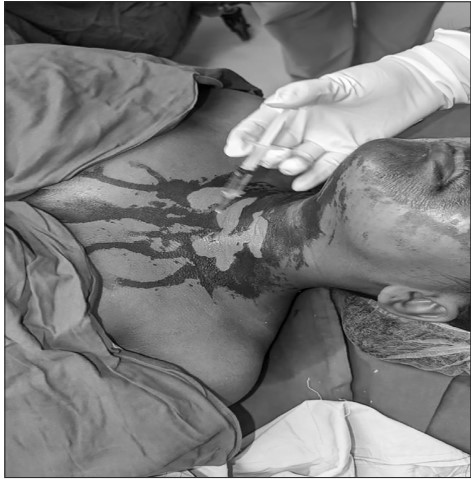
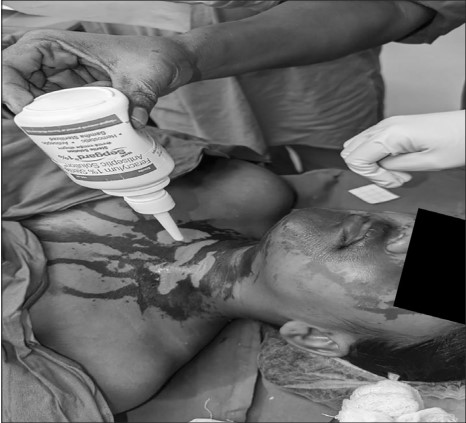
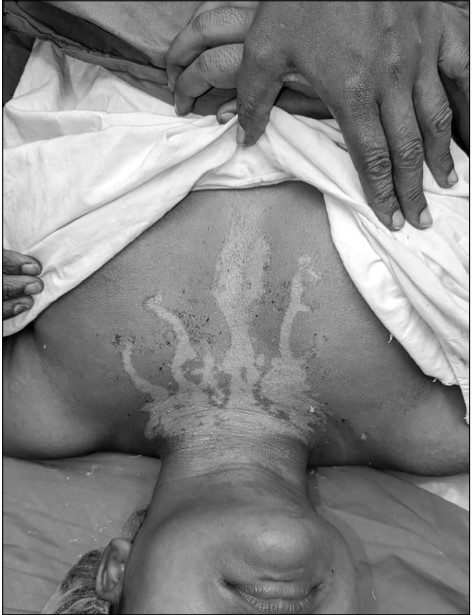
Chemical burns are prevalent and may inflict considerable physical, psychological, social, and economic burdens. Chemical burns can be life-threatening and lead to significant aesthetic and functional outcomes, representing 30% of all burn-related fatalities. Chemical burns result from corrosive substances (acids and alkalis) that cause extensive damage to tissues. Chemical burns still present various challenges for clinicians treating such cases. Feracrylum, a soluble mix of partial ferrous salts (II and III) of polyacrylic acid, is classified as a chemical hemostatic agent and an antimicrobial substance. Its molecular weight falls between 500,000 and 800,000 Daltons, which hinders systemic absorption and avoids adverse effects on the liver, kidneys, adrenal glands, cardiovascular system, or hemostatic systems. Feracrylum possesses antibacterial characteristics, reducing the likelihood of wound infections.
References
- 1. Friedstat J, Brown DA, Levi B. Chemical, Electrical, and Radiation Injuries. ClinPlast Surg. 2017 Jul; 44(3):657-669.
- 2. Baradaran-Rafii A, Eslani M, Haq Z, Shirzadeh E, Huvard MJ, Djalilian AR. Current and Upcoming Therapies for Ocular Surface Chemical Injuries. Ocul Surf. 2017 Jan; 15(1):48-64.
- 3. Malisiewicz B, Meissner M, Kaufmann R, Valesky E. [Physical and chemical emergencies in dermatology]. Hautarzt. 2018 May;69(5):376-383.
- 4. Maghsoudi H, Gabraely N. Epidemiology and outcome of 121 cases of chemical burn in East Azarbaijan province, Iran. Injury. 2008; 39:1042- 1046. 10.1016/j.injury.2008.03.019.
- 5. Dünser MW, Öhlbauer M, Rieder J, et al. Critical care management of major hydrofluoric acid burns: a case report, review of the literature, and recommendations for therapy. Burns. 2004; 30:391-398. 10.1016/j.burns.2004.01.005.
- 6. Laddha A.K., Mulla M., Sharma S.S., Lahoti B.K., Mathur R.A. prospective comparison of topical feracrylum citrate versus adrenaline as haemostatic agent in hypospadias surgery in children. Afr J Paediatr Surg. 2014; 11(3):215. doi: 10.4103/0189-6725.143191.
- 7. Sathyaki D.C, Roy M.S., Mohan M., Raghu N., Sheriff R.M. Feracrylum versus topical adrenaline for hemostasis in tonsillectomy. Int J. Sci Stud. 2017; 4(10):34–36. doi: 8.17354/ijss/2017/07.
- 8. Prabhu N.T., Munshi A.K. Clinical, radiographic and histological observations of the redicular pulp following “feracrylum” pulpotomy. J Clin Pediatr Dent. 1997; 21:151-6.
Data Sharing Statement
There are no additional data available.
Funding
This research received no funding.
Author Contributions
All authors contributed significantly to the work and approve its publication.
Ethics Declaration
This article does not involve any human or animal subjects, and therefore does not require ethics approval.
Acknowledgements
Information not provide.
Conflicts of Interest
The authors report no conflicts of interest in this work.
About this article

Cite this article
Prakash B, Chittoria RK. Role of Topical Feracrylum in Management of Chemical Burns. Jr of Glob Med Edu and Res. 2024;7(2):43-45.
Licence:
Attribution-Non-commercial 4.0 International (CC BY-NC 4.0)This license enables reusers to distribute, remix, adapt, and build upon the material in any medium or format for noncommercial purposes only, and only so long as attribution is given to the creator.
| Received | Accepted | Published |
|---|---|---|
| December 28, 2024 | February 03, 2025 | December 23, 2025 |
DOI: Not available
Keywords
feracrylummanagementChemical burnsSearch for Similar Articles
Similar Articles
- Knowledge of Antenatal Mothers on Breastfeeding: A Descriptive CrossSectional St...
- Consumer Law and the Medical Profession in India: Post–CPA Inclusion and the Tr...
- What Textbooks Taught Me - and What I Learnt Later
- Establishing the Pain Management Effect of Marma Tantra in Janu Sandhigatavata...
- Autologous Platelet Rich Plasma as an Adjunct for Enhanced Thermal Burn Wound He...
Article Level Metrics
Last UpdatedWednesday 09 September 2026, 02:52:33 (IST)
741
Accesses
20
107
00
Citations
NA
NA
NA
Download citation
Article Keywords
Keyword Highlighting
Highlight selected keywords in the article text.
Timeline
| Received | December 28, 2024 |
| Accepted | February 03, 2025 |
| Published | December 23, 2025 |
licence
Attribution-Non-commercial 4.0 International (CC BY-NC 4.0)
This license enables reusers to distribute, remix, adapt, and build upon the material in any medium or format for noncommercial purposes only, and only so long as attribution is given to the creator.