Full Text (PDF)
Journal of Plastic Surgery and Transplantation 4(1):p 17-19, January-June 2024. | DOI: NA
Original Article
Role of Regenerative Technology in Skin Graft Donor Site
Ravi Kumar Chittoria, Kada Sri Vidhul, Barath Kumar Singh P
Author Information
Licence:
Attribution-Non-commercial 4.0 International (CC BY-NC 4.0)This license enables reusers to distribute, remix, adapt, and build upon the material in any medium or format for noncommercial purposes only, and only so long as attribution is given to the creator.
Journal of Plastic Surgery and Transplantation 4(1):p 17-19, January-June 2024. | DOI: NA
How Cite This Article:
Kada SV, Chittoria RK, Singh BK. Role of Regenerative Technology in Skin Graft Donor Site. J Plast Surg Transplant. 2024;4(1):17-19.Timeline
Received : May 01, 2024
Accepted : June 15, 2024
Published : June 20, 2024
Abstract
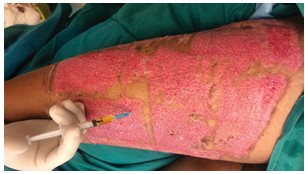
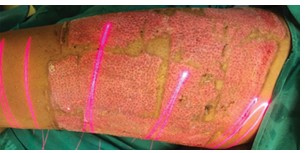
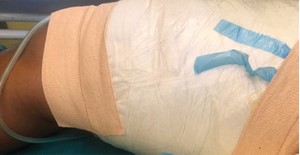
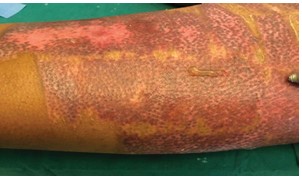
Skin grafting is one of the most common procedures done in the Departments of Plastic and General Surgery. The development of novel and inventive tissue regeneration strategies has been sparked by complex wound patterns.1,2 The surgical team has successfully adopted advanced regenerative medicine technologies to enhance the results of skin graft donor site healing. This review article provides a summary of the benefits of using a regenerative technology in skin graft donor site.
References
- 1. Mathes SJ, Nahai F. Reconstructive Surgery: Principles, Anatomy & Technique. Vol. 2. New York: Churchill Livingstone; St. Louis: Quality Medical; 1997.
- 2. Gottlieb LJ, Krieger LM. From the reconstructive ladder to the reconstructive elevator. Plast Reconstr Surg. 1994;93: 1503– 1504.
- 3. Wong CJ, Niranjan N. Reconstructive stages as an alternative to the reconstructive ladder. Plast Reconstr Surg. 2008;121: 362e–363e.
- 4. Erba P, Ogawa R, Vyas R, Orgill D. The reconstructive matrix: A new paradigm in reconstructive plastic surgery. Plast Reconstr Surg. 2010;126: 492–298.
- 5. Turner NJ, Badylak SF. Biologic scaffolds for musculotendinous tissue repair. Eur. Cell Mater. 25, 130–143 (2013).
- 6. Saurabgupta et al. Effect of LowLevel Laser Therapy (Lllt) On the Severity of Post-Burn Immature Scars: A Randomized Control Study. International Journal of Clinical and Diagnostic Research Volume 8, Issue 1, Jan-Feb 2020.
- 7. Chittoria R.K., Kumar S.H. (2018) Low level Laser Therapy (LLLT) in Wound Healing. In. Recent Clinical Techniques, Results, and Research in Wounds. Springer; 2018, Cham.
- 8. Mester E, Hazay L, Fenyo M, Kertész I, Toth N, Jàrànyi Z et al. The biostimulating effect of laser beam. In: Waidelich W, editor. Optoelectronics in Medicine. Berlin: Springer; 1982: 146-152.
- 9. Posten W, Wrone DA, Dover JS, Arndt KA, Silapunt S, Alam M. Low level laser therapy for wound healing: mechanism and efficacy. Dermatol Surg. 2005 Mar; 31 (3):334–40.
- 10. Morykwas MJ, Argenta LC, Shelton-Brown EI, Mc Guirt W. Vacuum-assisted closure: a new method for wound control and treatment: animal studies and basic foundation. Ann PlastSurg 1997;38: 553 62.
- 11. Venturi ML, Attinger CE, Mesbahi AN, Hess CL, Graw KS. Mechanisms and clinical applications of the vacuum-assisted closure (VAC) device: a review. Am J Clin Dermatol 2005;6: 18.
- 12. Dhurat R, Sukesh M. Principles and Methods of Preparation of Platelet-Rich Plasma: A Review and Author’s Perspective. J Cutan Aesthetic Surg. 2014;7(4):189–97.
Data Sharing Statement
There are no additional data available.
Funding
This research received no funding.
Author Contributions
All authors contributed significantly to the work and approve its publication.
Ethics Declaration
None
Acknowledgements
No Information provided
About this article

Cite this article
Kada SV, Chittoria RK, Singh BK. Role of Regenerative Technology in Skin Graft Donor Site. J Plast Surg Transplant. 2024;4(1):17-19.
Licence:
Attribution-Non-commercial 4.0 International (CC BY-NC 4.0)This license enables reusers to distribute, remix, adapt, and build upon the material in any medium or format for noncommercial purposes only, and only so long as attribution is given to the creator.
| Received | Accepted | Published |
|---|---|---|
| May 01, 2024 | June 15, 2024 | June 20, 2024 |
DOI: NA
Keywords
Regenerative TechnologySkin GraftDonor SiteManagementSearch for Similar Articles
Similar Articles
- Application of Amnion Allograft in Treatment of Thermal Burns
- Bio-cellulose Dressing in the Management of Deep Second-Degree Burns: Our Experi...
- Autologous Whole Blood Clot Matrix in the Management of SecondDegree Burns
- CT Image Reconstruction & 3D Reconstruction CT in Plastic Surgery: A Review
- Out of Love and Affection: A Medicolegal Paradox for Denying Gains Vs Pleading C...
Article Level Metrics
Last UpdatedSaturday 24 October 2026, 22:37:21 (IST)
1122
Accesses
6
539
00
Citations
NA
NA
NA
Download citation
Article Keywords
Keyword Highlighting
Highlight selected keywords in the article text.
Timeline
| Received | May 01, 2024 |
| Accepted | June 15, 2024 |
| Published | June 20, 2024 |
licence
Attribution-Non-commercial 4.0 International (CC BY-NC 4.0)
This license enables reusers to distribute, remix, adapt, and build upon the material in any medium or format for noncommercial purposes only, and only so long as attribution is given to the creator.