Full Text (PDF)
Journal of Dermatology 8(2):p 95-97, July-December 2023. | DOI: NA
Original Article
Role of Onion Extract in Preventing Abnormal Scarring in Scald Injury
Ravi Kumar Chittoria, Krithika Lakshmi Arumugam, Amrutha J S
Author Information
Licence:
Attribution-Non-commercial 4.0 International (CC BY-NC 4.0)This license enables reusers to distribute, remix, adapt, and build upon the material in any medium or format for noncommercial purposes only, and only so long as attribution is given to the creator
Journal of Dermatology 8(2):p 95-97, July-December 2023. | DOI: NA
How Cite This Article:
Arumugam KL, Chittoria RK, Amrutha JS. Role of Onion Extract in Preventing Abnormal Scarring in Scald Injury. RFP J Dermatol. 2023;8(2):95–97.Timeline
Received : May 26, 2023
Accepted : June 30, 2023
Published : December 30, 2023
Abstract
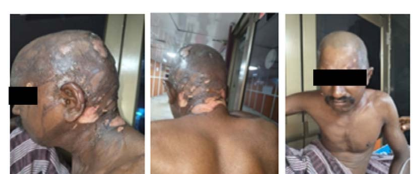
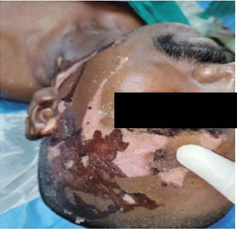
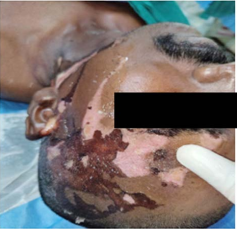
Use of silicone derivative and onion extract had been reported in the prevention of abnormal scarring. Our study showed the preventive use of silicone derivative plus onion extract gel on abnormal scars after scald burns. Next to silicone based products, onion extract or cepalin has been highlighted as one potential anti-scarring agent over recent years. Based on several studies, onion extract alone or in combination with allantoin and heparin seems to alleviate the wound healing process and appears beneficial for preventional application in fresh scars. During each visit, pain and itching scores were graded by the patients and scar characteristics were observed by surgeons using the Vancouver scar scale (Table 1). Pain and itch score values from patients' who applied silicone derivative plus onion extract gel. No adverse events were reported by any of the patients. A silicone derivative plus onion extract gel is safe and effective for the preventing the abnormal scarring after scald burn injury.
References
- 1. Draelos ZD. The ability of onion extract gel to improve the cosmetic appearance of postsurgical scars. J Cosmet Dermatol 2008;7:101– 4. [PubMed] [Google Scholar]
- 2. Li Tsang CW, Lau JC, Chan CC. Prevalence of hypertrophic scar formation and its characteristics among the Chinese population. Burns 2005;31:610–6. [PubMed] [Google Scholar]
- 3. Bock O, Schmid Ott G, Malewski P, Mrowietz U. Quality of life of patients with keloid and hypertrophic scarring. Arch Dermatol Res 2006;297: 433–8. [PubMed] [Google Scholar]
- 4. Stavrou D, Weissman O, Winkler E, Yankelson L, Millet E, Mushin OP, Liran A, Halk J. Silicone based scar therapy: a review of the literature. Aesth Plast Surg 2010;34:646–51. [PubMed] [Google Scholar]
- 5. Phan TT, Lim IJ, Sun L, Chan SY, Bay BH, Tan EK, et al. Quercetin inhibits fibronectin production by keloid-derived fibroblasts. Implication for the treatment of excessive scars. J Dermatol Sci. 2003;33(3):192–4. [PubMed] [CrossRef]
- 6. Augusti K. Therapeutic values of onion (Allium cepa L.) and garlic (Allium sativum L.). Indian J ExpBiol 1996;34:634–40. [PubMed] [Google Scholar]
- 7. Nedelec B, Shankowsky HA, Tredget EE. Rating the resolving hypertrophic scar: comparison of Vancouver scar scale and scar volume. J Burn Care Rehabil 2000;21:205. [PubMed] [Google Scholar]
- 8. Chung VQ, Kelley L, Marra D, Jiang SB. Onion extract gel versus petrolatum emollient on new surgical scars: prospective double-blinded study. Dermatol Surg. 2006;32(2):193–7. [PubMed]
- 9. Koc E, Arca E, Surucu B, Kurumlu Z. An open, randomized, controlled, comparative study of the combined effect of intralesional triamcinolone acetonide and onion extract gel and intralesional triamcinolone acetonide alone in the treatment of hypertrophic scars and keloids. Dermatol Surg. 2008;34(11):1507–14. [PubMed]
- 10. Ho WS, Ying SY, Chan PC, Chan HH. Use of onion extract, heparin, allantoin gel in prevention of scarring in chinese patients having laser removal of tattoos: a prospective randomized controlled trial. Dermatol Surg. 2006;32(7):891–6. [PubMed]
Data Sharing Statement
There are no additional data available
Funding
This research received no funding
Author Contributions
All authors contributed significantly to the work and approve its publication
Ethics Declaration
This article does not involve any human or animal subjects, and therefore does not require ethics approval
Acknowledgements
Information Not Provided
Conflicts of Interest
No conflicts of interest in this work.
About this article

Cite this article
Arumugam KL, Chittoria RK, Amrutha JS. Role of Onion Extract in Preventing Abnormal Scarring in Scald Injury. RFP J Dermatol. 2023;8(2):95–97.
Licence:
Attribution-Non-commercial 4.0 International (CC BY-NC 4.0)This license enables reusers to distribute, remix, adapt, and build upon the material in any medium or format for noncommercial purposes only, and only so long as attribution is given to the creator
| Received | Accepted | Published |
|---|---|---|
| May 26, 2023 | June 30, 2023 | December 30, 2023 |
DOI: NA
Keywords
Onion extractScarringScald injurySearch for Similar Articles
Similar Articles
- Role of Topical Cholecalciferol Granules in the Recovery and Management of Therm...
- Chitosan Liquid Wound Dressing in the Use of Deep Scald Burns
- Role of Biocellulose Occlusive Dressing in Partial Thickness Burn Wound Manageme...
- Artificial Intelligence in the Digital Transformation of Dermatology: Current E...
- Artificial Intelligence in Dermatology in India: A PRISMA-Compliant Systematic...
Article Level Metrics
Last UpdatedSaturday 05 September 2026, 18:22:26 (IST)
1128
Accesses
26
109
00
Citations
NA
NA
NA
Download citation
Article Keywords
Keyword Highlighting
Highlight selected keywords in the article text.
Timeline
| Received | May 26, 2023 |
| Accepted | June 30, 2023 |
| Published | December 30, 2023 |
licence
Attribution-Non-commercial 4.0 International (CC BY-NC 4.0)
This license enables reusers to distribute, remix, adapt, and build upon the material in any medium or format for noncommercial purposes only, and only so long as attribution is given to the creator