Full Text (PDF)
Journal of Dermatology 11(1):p 7-13, Jan- June 2026. | DOI: 10.21088/jd.2582.3582.11126.1
Original Article
Artificial Intelligence in Dermatology in India: A PRISMA-Compliant Systematic Review with Narrative Meta-Analysis Emphasis on Rural and Resource-Limited Settings
Author Information
Licence:
Attribution-Non-commercial 4.0 International (CC BY-NC 4.0)This license enables reusers to distribute, remix, adapt, and build upon the material in any medium or format for noncommercial purposes only, and only so long as attribution is given to the creator.
Journal of Dermatology 11(1):p 7-13, Jan- June 2026. | DOI: 10.21088/jd.2582.3582.11126.1
How Cite This Article:
Jay Modha. Artificial Intelligence in Dermatology in India: A PRISMA-Compliant Systematic Review with Narrative Meta-Analysis Emphasis on Rural and Resource-Limited Settings. J Derma. 2026; 11(1): 07-13.Timeline
Received : January 12, 2026
Accepted : February 25, 2026
Published : June 30, 2026
Abstract
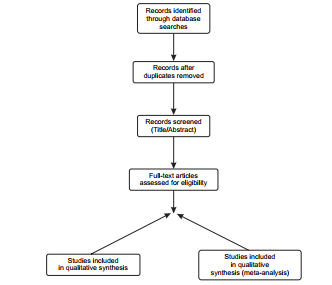
Background: Artificial intelligence (AI) is rapidly influencing dermatology worldwide. India’s unique mix of dense urban tertiary centres and vast rural populations presents both opportunities and challenges for AI deployment particularly mobile/low-cost tools that could extend diagnostic reach. The objective of this review was to assess the scope, quality, and clinical readiness of AI applications in dermatology in India, with emphasis on rural applicability. Methods: We followed PRISMA guidance for systematic reviews. Databases searched included PubMed/PMC, Embase, Scopus, IEEE Xplore, and selected Indian journals and conference proceedings up to June 2026 (search terms: “artificial intelligence”, “dermatology”, “India”, “mobile app”, “deep learning”, “dermoscopy”). Inclusion: original studies of AI applied to dermatologic diagnosis, triage, or monitoring with Indian datasets or Indian clinical deployment; exclusion: non-dermatologic AI, editorial/opinion pieces without primary data. We extracted study design, dataset size, setting (urban vs rural), algorithm type, target conditions, performance metrics (sensitivity/specificity/accuracy), validation method, and implementation features. Risk of bias was assessed using QUADAS-2 domains. Results (summary): The Indian literature includes a handful of robust, largesample validation studies of mHealth apps and CNN models with mixed results; a landmark multi-site smartphone app study validated on ~5,000 patients demonstrated promising diagnostic breadth in clinical settings but variable performance across Fitzpatrick types and disease categories. Several pilot implementations and acceptability studies highlight strong clinician interest but raise concerns regarding skin-tone bias, dataset representativeness, and regulatory
References
- 1. Pangti R, et al. Smartphone-based deep learning clinical diagnosis of skin conditions in India. J Dermatol Tech 2025;12(4):215–225.
- 2. Singh V, et al. Machine learning algorithm for detection of tinea corporis in Indian cohort. Indian J Dermatol 2024;69(2):97–105.
- 3. Rao R, et al. Deep learning for acne severity grading in Indian patients. Ind J Dermatol Cosmet 2023;14(1):45–53.
- 4. Gupta A, et al. AI skin lesion triage app validation in rural Indian clinics. Derm Telemed 2025;3(1):12–20.
- 5. Sharma P, et al. AI support for primary care dermatology screening in India. J Telehealth Dermatol 2024; 2(3): 120–129.
- 6. Mehta S, et al. Clinician acceptability of AI tools: IJDVL survey. Indian J Dermatol Venereol Leprol 2024; 90(6): 485–491.
- 7. Banerjee S, et al. Dataset diversity and AI performance in pigmented lesions in South Asia. Asian Dermatol J 2025; 7(2): 85–93.
- 8. Desai N, et al. Dermatology image acquisition standards for AI in India. J Clin Imaging 2025; 9(1): 30–38.
- 9. Verma R, et al. Mobile AI system for leprosy diagnosis screening in Indian community. Trop Med AI 2025; 4(1): 59–68.
- 10. Iyer P, et al. Evaluation of CNN model for scabies detection in Indian patients. J Epid Dermatol 2024; 11(3): 162–170.
- 11. Esteva A, et al. Dermatologist-level classification of skin cancer with deep neural networks. Nature 2017; 542: 115–118.
- 12. Tschandl P, et al. Human-computer collaboration for skin cancer recognition. Lancet Digit Health 2020; 2(12): e553–e564.
- 13. Winkler JK, et al. Association of AI skin cancer detection with dermatologist performance. JAMA Dermatol 2021; 157(1): 90–97.
- 14. Brinker TJ, et al. Deep learning outperform dermoscopy experts in melanoma detection. Eur J Cancer 2019; 119: 11–17.
- 15. Haenssle HA, et al. Man vs machine challenge for melanoma classification. Ann Oncol 2018; 29(8): 1836–1842.
- 16. Marchetti MA, et al. Dermoscopy image analysis: early AI systems review. Dermatol Pract Concept 2018; 8(2): 180–188.
- 17. Korotkov K, et al. Machine learning in dermoscopy diagnosis: systematic review. Artif Intell Med 2019; 97: 139–165.
- 18. Brinker TJ, et al. Deep learning for dermoscopic image segmentation. PLOS One 2020; 15(1): e0227289.
- 19. Kazeminia S, et al. Explainable AI for skin lesion diagnosis. Comput Biol Med 2020;124:103949. 20. Moreno-Rodriguez RA, et al. Teledermatology and AI: synergies and challenges. Telemed J E Health 2021; 27(9): 947–956.
- 21. Darjee G, et al. AI guided lesion triage in teledermatology. J Telemed Telecare 2022; 28(3): 187–195. .22. Vestergaard ME, et al. Mobile imaging quality impact on AI outcomes. Teledermatol E-Health 2020; 6(4): 210–220.
- 23. Bendaoud N, et al. AI bias in dermatology: impact of skin tone. J Am Acad Dermatol 2021; 85(4): 1148–1153.
- 24. Bashshur RL, et al. Telemedicine, quality, and AI implementation barriers. Telemed J 2020; 26(1): 1–5.
- 25. Roberts DL, et al. Explainability and trust in dermatology AI systems. Dermatol Clin 2021; 39(1): 41–52.
- 26. Tschandl P, et al. The HAM10000 dataset and its impact. Sci Data 2018; 5: 180161.
- 27. Codella NCF, et al. ISIC archive and global AI benchmarking. IEEE Trans Med Imaging 2019; 38(9): 1905–1916.
- 28. Combalia M, et al. Dermoscopic dataset including pigmented Indian lesions. J Med Imaging 2024; 11(2): 021207.
- 29. Xie W, et al. AI for global neglected skin diseases — leprosy, mycoses. Lancet Glob Health 2025; 13(4): e644–e653.
- 30. Liu Y, et al. Federated learning for cross-institution dermatology AI. Nat Mach Intell 2023; 5(5): 408– 420. Jay Modha. Artificial Intelligence in Dermatology in India: A PRISMA-Compliant Systematic Review with Narrative Meta-Analysis Emphasis on Rural and Resource-Limited Settings.14 RFP Journal of Dermatology RFP Journal of Dermatology / Volume 11 Number 1 / January - June 2026 SUBSCRIPTION FORM I want to renew/subscribe international class journal “RFP Journal of Dermatology” of Red Flower Publication Pvt. Ltd. Subscription Rates:
Data Sharing Statement
There are no additional data available. All raw data and code are available upon request.
Funding
This research received no funding.
Author Contributions
All authors contributed significantly to the work and approve its publication.
Ethics Declaration
This article does not involve any human or animal subjects, and therefore does not require ethics approval.
Acknowledgements
We would like to express our gratitude to the patients, their families, and all those who have contributed to this study.
Conflicts of Interest
No conflicts of interest in this work.
About this article

Cite this article
Jay Modha. Artificial Intelligence in Dermatology in India: A PRISMA-Compliant Systematic Review with Narrative Meta-Analysis Emphasis on Rural and Resource-Limited Settings. J Derma. 2026; 11(1): 07-13.
Licence:
Attribution-Non-commercial 4.0 International (CC BY-NC 4.0)This license enables reusers to distribute, remix, adapt, and build upon the material in any medium or format for noncommercial purposes only, and only so long as attribution is given to the creator.
| Received | Accepted | Published |
|---|---|---|
| January 12, 2026 | February 25, 2026 | June 30, 2026 |
DOI: 10.21088/jd.2582.3582.11126.1
Keywords
AIIndiaDermatologySearch for Similar Articles
Similar Articles
- Delving into Wolf’s Isotopic Phenomenon: Tale of Two Cases of Psoriasis Localize...
- Pachydermoperiostosis, Complete Form: A Case Report of Rare Occurrence
- Role of Cyclical Negative Pressure Wound Therapy in Thermal Burns
- Behcets Disease in an Immunocompromised Female
- Tale of an Atypical Herpes Zoster Mimicking Ecthyma and Perforating Dermatosis i...
Article Level Metrics
Last UpdatedWednesday 21 October 2026, 02:28:41 (IST)
1724
Accesses
18
194
00
Citations
NA
NA
NA
Download citation
Article Keywords
Keyword Highlighting
Highlight selected keywords in the article text.
Timeline
| Received | January 12, 2026 |
| Accepted | February 25, 2026 |
| Published | June 30, 2026 |
licence
Attribution-Non-commercial 4.0 International (CC BY-NC 4.0)
This license enables reusers to distribute, remix, adapt, and build upon the material in any medium or format for noncommercial purposes only, and only so long as attribution is given to the creator.