Full Text (PDF)
Journal of Global Public Health 5(2):p 79-83, July – December 2023. | DOI: na
Case Report
Role of Hybrid Reconstruction Ladder in Management of Lower limb Defect
Ravi Kumar Chittoria, Sure Navya Sri Sai Reddy, Barath Kumar Singh P
Author Information
Licence:
Attribution-Non-commercial 4.0 International (CC BY-NC 4.0)This license enables reusers to distribute, remix, adapt, and build upon the material in any medium or format for noncommercial purposes only, and only so long as attribution is given to the creator
Journal of Global Public Health 5(2):p 79-83, July – December 2023. | DOI: na
How Cite This Article:
Reddy SN, Chittoria RK, Singh PB. Role of hybrid reconstruction ladder in management of lower limb defect. J Glob Public Health. 2023;5(2):79–83.Timeline
Received : November 30, 2023
Accepted : December 25, 2023
Published : January 30, 2024
Abstract
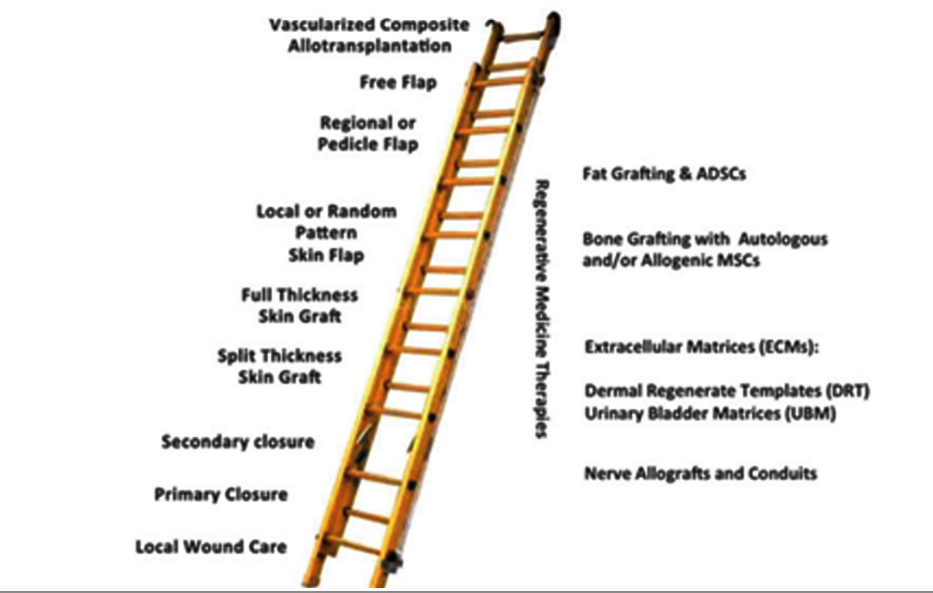
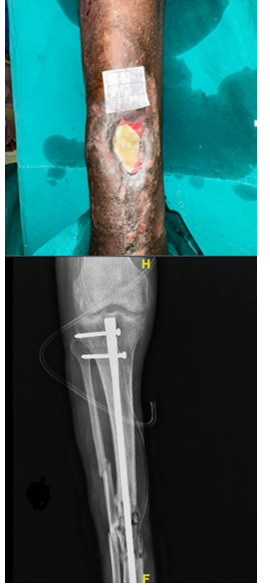
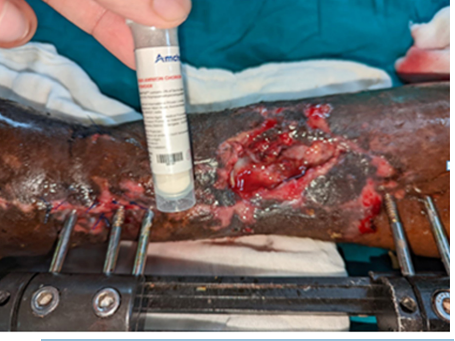
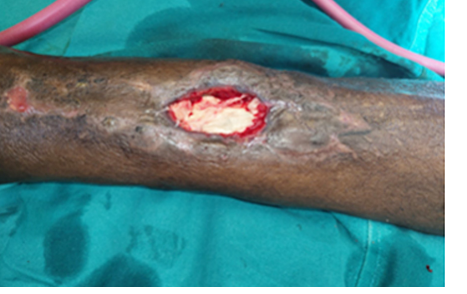
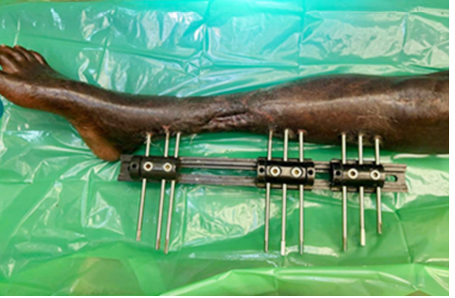
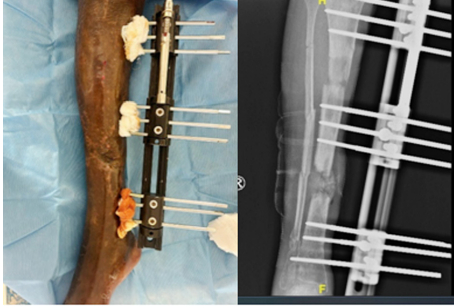
Lower limb Defects were encountered by the plastic surgeons most commonly in the practise. The management and reconstruction of complex lower limb defects needs a multidisciplinary team approach. A multidisciplinary team has successfully adopted advanced reconstructive methods combined with modalities from regenerative medicine to enhance the results of difficult reconstruction. These procedures, known as "Hybrid reconstruction ladder," combine conventional reconstruction techniques with regenerative medicine applications. This review article provides a summary of the benefits of using a hybrid reconstruction ladder to create a healthy wound bed and reconstruction in a case of Lower limb defect reconstruction.
References
- 1. Al-Hourani K, Pearce O, Kelly M. Standards of open lower limb fracture care in the United Kingdom. Injury. 2021;52(3):378–83.
- 2. Yarrow J, Rahman S, Marsden N, Pallister I, Hemington-Gorse S. Management of open lower limb injuries in South West England and Wales. Ann R Coll Surg Engl. 2015;97(1):35–9.
- 3. Court-Brown CM, Honeyman CS, Clement ND, Hamilton SA, McQueen MM. The role of primary plastic surgery in the management of open fractures. Injury. 2015;46(12):2443–7.
- 4. Harries L, Emam A, Khan U. Pain after ortho-plastic reconstruction of lower limb injuries: A snapshot study. Injury. 2018;49(2):414–9.
- 5. Mohapatra DP, Thiruvoth FM. Reconstruction 2.0: Restructuring the reconstructive ladder. Plast Reconstr Surg. 2021;147(3):572e–3e.
- 6. Vedder NB. Problem analysis in reconstructive surgery: Reconstructive ladders, elevators, and surgical judgment. In: Wei FC, Mardini S, editors. Flaps and Reconstructive Surgery. 2nd ed. Toronto: Elsevier; 2017. p. 1–5.
- 7. Gupta S, et al. Effect of Low-Level Laser Therapy (LLLT) on the severity of post-burn immature scars: A randomized control study. Int J Clin Diagn Res. 2020;8(1).
- 8. Turner NJ, Badylak SF. Biologic scaffolds for musculotendinous tissue repair. Eur Cell Mater. 2013;25:130–43.
- 9. Freeman JW, Empson YM, Ekwueme EC, Paynter DM, Brolinson PG. Effect of prolotherapy on cellular proliferation and collagen deposition in MC3T3-E1 and patellar tendon fibroblast populations. Transl Res. 2011;158(3):132–9.
- 10. Tenenhaus M, Rennekampff HO. Surgical advances in burn and reconstructive plastic surgery: New and emerging technologies. Clin Plast Surg. 2012;39(4):435–43.
- 11. Borgquist O, Ingemansson R, Malmsjö M. Wound edge microvascular blood flow during negative-pressure wound therapy: Examining the effects of pressures from -10 to -175 mmHg. Plast Reconstr Surg. 2010;125(2):502–9.
- 12. Salazar-Álvarez AE, Riera-del-Moral LF, García-Arranz M, Alvarez-García J, Concepción-Rodriguez NA, Riera-de-Cubas L. Use of platelet-rich plasma in the healing of chronic ulcers of the lower extremity. Actas Dermosifiliogr. 2014;105(6):597–604.
Data Sharing Statement
There are no additional data available. All raw data and code are available upon request.
Funding
This research received no funding.
Author Contributions
Whether all authors contributed significantly to the work and approve its publication.
Ethics Declaration
This article does not involve any human or animal subjects, and therefore does not require ethics approval.
Acknowledgements
We would like to express our gratitude to the patients, their families, and all those who have contributed to this study.
Conflicts of Interest
The authors report no conflicts of interest in this work.
About this article

Cite this article
Reddy SN, Chittoria RK, Singh PB. Role of hybrid reconstruction ladder in management of lower limb defect. J Glob Public Health. 2023;5(2):79–83.
Licence:
Attribution-Non-commercial 4.0 International (CC BY-NC 4.0)This license enables reusers to distribute, remix, adapt, and build upon the material in any medium or format for noncommercial purposes only, and only so long as attribution is given to the creator
| Received | Accepted | Published |
|---|---|---|
| November 30, 2023 | December 25, 2023 | January 30, 2024 |
DOI: na
Keywords
Hybrid reconstruction ladderRegenerative medicineLower limb defectmanagementSearch for Similar Articles
Similar Articles
- Nursing Informatics Applications: Transforming Clinical Documentation and Decis...
- Public Health Interventions for Reducing Screen-Induced Sleep Disruption in Sem...
- Mindfulness in the Digital Era: Leveraging Buddhist Philosophy for 21st Century...
- Mental Health Outcomes in Sickle Cell Anemia through a Qualitative Study
- E-Governance Practices in Indian Universities: A Study of Telangana and Andhra...
Article Level Metrics
Last UpdatedSunday 21 June 2026, 19:55:44 (IST)
245
Accesses
3
60
00
Citations
NA
NA
NA
Download citation
Article Keywords
Keyword Highlighting
Highlight selected keywords in the article text.
Timeline
| Received | November 30, 2023 |
| Accepted | December 25, 2023 |
| Published | January 30, 2024 |
licence
Attribution-Non-commercial 4.0 International (CC BY-NC 4.0)
This license enables reusers to distribute, remix, adapt, and build upon the material in any medium or format for noncommercial purposes only, and only so long as attribution is given to the creator