Full Text (PDF)
Journal of Global Public Health 7(2):p 61-65, July - Dec 2025. | DOI: n.a
Original Article
Mental Health Outcomes in Sickle Cell Anemia through a Qualitative Study
Sagar Ashok Bayaskar, Aishwarya A. Mahalle
Author Information
Licence:
Attribution-Non-commercial 4.0 International (CC BY-NC 4.0)This license enables reusers to distribute, remix, adapt, and build upon the material in any medium or format for noncommercial purposes only, and only so long as attribution is given to the creator.
Journal of Global Public Health 7(2):p 61-65, July - Dec 2025. | DOI: n.a
How Cite This Article:
Bayaskar SA, Mahalle AA. Mental Health Outcomes In Sickle Cell Anemia Through A Qualitative Study. J Glob Pub Health. 2025;7(2):61-5.Timeline
Received : July 03, 2025
Accepted : September 27, 2025
Published : December 30, 2025
Abstract
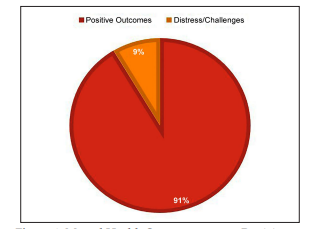
Background: Sickle cell disease (SCD) not only imposes physical health challenges but also contributes to significant mental health concerns among affected individuals and families. Genetic counselling has been proposed as a key strategy for improving psychological well-being in high-prevalence regions. Aim: To explore the mental health outcomes of individuals and families affected by SCD, with a focus on the role of genetic counselling in fostering emotional resilience and coping strategies. Objectives: 1. To assess the association between genetic counselling and mental health outcomes in SCD-affected families. 2. To compare psychological responses and coping strategies among participants with and without counselling. Material and Methods: A qualitative, cross-sectional study was conducted in a high-prevalence region for SCD, including urban and rural communities. Thirtyfive participants aged 20 to 44 years were purposively selected, omprising one patient, one caregiver, one community health worker, two healthcare professionals, and thirty community members. Data were collected through semi-structured indepth interviews and analyzed using hematic analysis. Results: Among 35 participants, 32 (91%) who had received genetic counselling reported positive mental health outcomes, including lower anxiety, reduced overthinking, better sleep, and stronger coping strategies. They expressed confidence in decision-making regarding disease management and family planning. In contrast, 3 (9%) participants without counselling reported heightened stress, disturbed sleep, feelings of isolation, and helplessness. Preventive awareness was noted in 11 (31.4%) participants, primarily among those who had undergone counselling. Conclusion: Genetic counselling significantly contributes to positive mental health outcomes by reducing anxiety and strengthening coping mechanisms in families affected by SCD. The findings emphasize the need to expand access to genetic counselling services in high-risk communities to address both awareness and psychological well-being.
References
- 1. Colah, R.B., Mukherjee, M.B., & Martin, S. (2015). Sickle cell disease in tribal populations in India. Indian Journal of Medical Research, 141(5), 509–515. https://doi.org/10.4103/0971- 5916.159294
- 2. Mohanty, D., Mukherjee, M.B., & Colah, R. B. (2013). Sickle cell disease in India. Current Opinion in Hematology, 20(3), 215–223. https:// doi.org/10.1097/MOH.0b013e32835fb45c
- 3. Anie, K.A. (2005). Psychological complications in sickle cell disease. British Journal of Haematology, 129(6), 723–729. https://doi. org/10.1111/j.1365-2141.2005.05500.x
- 4. Anie, K.A., & Green, J. (2015). Psychological therapies for sickle cell disease and pain. Cochrane Database of Systematic Reviews, (5), CD001916. https://doi.org/10.1002/14651858. CD001916.pub3
- 5. Biesecker, B.B., & Peters, K.F. (2001). Process studies in genetic counseling: Peering into the black box. American Journal of Medical Genetics, 106(3), 191–198. https://doi.org/10.1002/ ajmg.10004
- 6. Inusa, B.P.D., Hsu, L.L., Kohli, N., Patel, A., Ominu-Evbota, K., Anie, K.A., & Akinyanju, O. (2019). Sickle cell disease—genetic counselling and testing. International Health, 11(5), 331–341. https://doi.org/10.1093/inthealth/ihz015
- 7. Shah, N., Mishra, A., & Parikh, B. (2020). Advances in sickle cell screening and genetic counselling in India. Hemoglobin, 44(3), 174–180. https://doi.org/10.1080/03630269.2020.1775153
- 8. Rao, V.R., Ghosh, S., & Chopra, M. (2021). Community genetic services in India: Current status and future challenges. Indian Journal of Public Health, 65(Supplement), S25–S31. https://doi.org/10.4103/ijph.IJPH_744_20
- 9. Piel, F.B., Steinberg, M.H., & Rees, D.C. (2017). Sickle cell disease. New England Journal of Medicine, 376(16), 1561–1573. https://doi. org/10.1056/NEJMra1510865
- 10. Ministry of Health and Family Welfare. (2023). National Sickle Cell Anaemia Elimination Mission - 2023. Government of India. https://main. mohfw.gov.in
- 11. Patel, S., Deshmukh, S., & Kaur, G. (2022). Impact of genetic counselling on awareness and psychological well-being among sickle cell families: An Indian perspective. Journal of Community Genetics,
- 12. Treadwell, M., McClough, L., Vichinsky, E., & Smith, W.R. (2021). Improving the quality of genetic counselling for sickle cell disease: A systematic review. American Journal of Medical Genetics Part C, 187(1), 57–68. https://doi. org/10.1002/ajmg.c.31896
Data Sharing Statement
There are no additional data available. All raw data and code are available upon request.
Funding
This research received no funding.
Author Contributions
All authors contributed significantly to the work and approve its publication.
Ethics Declaration
This article does not involve any human or animal subjects, and therefore does not require ethics approval.
Acknowledgements
We would like to express our gratitude to the patients, their families, and all those who have contributed to this study.
Conflicts of Interest
No conflicts of interest in this work.
About this article

Cite this article
Bayaskar SA, Mahalle AA. Mental Health Outcomes In Sickle Cell Anemia Through A Qualitative Study. J Glob Pub Health. 2025;7(2):61-5.
Licence:
Attribution-Non-commercial 4.0 International (CC BY-NC 4.0)This license enables reusers to distribute, remix, adapt, and build upon the material in any medium or format for noncommercial purposes only, and only so long as attribution is given to the creator.
| Received | Accepted | Published |
|---|---|---|
| July 03, 2025 | September 27, 2025 | December 30, 2025 |
DOI: n.a
Keywords
Sickle cell diseaseMental healthGenetic counsellingQualitative studyEmotional resilienceArticle Level Metrics
Last UpdatedSaturday 05 September 2026, 13:31:40 (IST)
789
Accesses
18
120
00
Citations
NA
NA
NA
Download citation
Article Keywords
Keyword Highlighting
Highlight selected keywords in the article text.
Timeline
| Received | July 03, 2025 |
| Accepted | September 27, 2025 |
| Published | December 30, 2025 |
licence
Attribution-Non-commercial 4.0 International (CC BY-NC 4.0)
This license enables reusers to distribute, remix, adapt, and build upon the material in any medium or format for noncommercial purposes only, and only so long as attribution is given to the creator.