Full Text (PDF)
Journal of Global Public Health 7(2):p 73-77, July - Dec 2025. | DOI: n.a
Original Article
Public Health Interventions for Reducing Screen-Induced Sleep Disruption in Semi-Urban Populations
Author Information
Licence:
Attribution-Non-commercial 4.0 International (CC BY-NC 4.0)This license enables reusers to distribute, remix, adapt, and build upon the material in any medium or format for noncommercial purposes only, and only so long as attribution is given to the creator.
Journal of Global Public Health 7(2):p 73-77, July - Dec 2025. | DOI: n.a
How Cite This Article:
Mahalle A, Bayaskar S. Mental Public Health Interventions for Reducing Screen-Induced Sleep Disruption in Semi-Urban Populations. J Glob Pub Health. 2025;7(2):73-7.Timeline
Received : September 02, 2025
Accepted : December 16, 2025
Published : December 30, 2025
Abstract
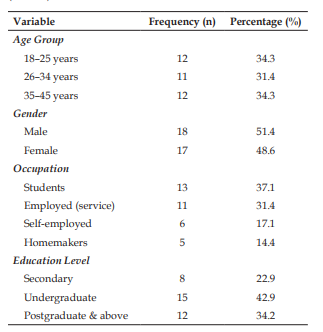
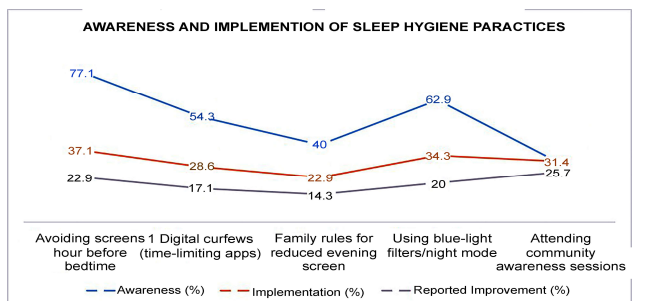
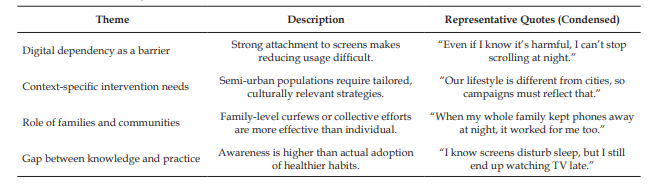
ABSTRACT Background: Screen-induced sleep disruption has emerged as a significant public health concern, particularly in semi-urban areas where digital adoption is rapid but awareness of sleep hygiene remains limited. Objective: This study aimed to explore digital behaviors contributing to sleep disruption, assess community perceptions, and evaluate potential public health interventions in semi-urban populations. Methods: A qualitative design was employed with 35 participants (18 males, 17 females) aged 18–45 years, purposively sampled from semi-urban communities. Semi-structured, in-depth interviews explored digital use, sleep patterns, and awareness of sleep hygiene. Data were thematically analyzed through open, axial, and selective coding. Results: Findings revealed that late-night smartphone and social media use delayed sleep onset, reduced total sleep duration, and caused next-day fatigue. While participants acknowledged the adverse impact of screen exposure, behavioral adherence to sleep hygiene was inconsistent. Community-based interventions such as digital curfews, family-supported routines, and awareness campaigns showed promise in improving sleep consistency and reducing fatigue. Conclusion: Screen-induced sleep disruption in semi-urban settings is strongly influenced by cultural and social contexts. Tailored, community-driven public health interventions are essential to reduce digital overuse at night and improve sleep health outcomes.
References
- 1. Cain, N., & Gradisar, M. (2010). Electronic media use and sleep in school-aged children and adolescents: A review. Sleep Medicine, 11(8), 735–742.
- 2. Chang, A.M., Aeschbach, D., Duffy, J.F., & Czeisler, C.A. (2015). Evening use of lightemitting eReaders negatively affects sleep, circadian timing, and next-morning alertness. PNAS, 112(4), 1232–1237.
- 4. Levenson, J.C., Shensa, A., Sidani, J.E., Colditz, J.B., & Primack, B.A. (2017). The association between social media use and sleep disturbance among young adults. Preventive Medicine, 85, 36–41.
- 6. Hale, L., & Guan, S. (2015). Screen time and sleep among school-aged children and adolescents: A systematic literature review. Sleep Medicine Reviews, 21, 50–58.
- 7. Przybylski, A.K. (2019). Digital screen time and subjective well-being in adolescents. Nature Human Behaviour, 3, 173–182.
- 8. Carter, B., Rees, P., Hale, L., Bhattacharjee, D., & Paradkar, M. S. (2016). Association between portable screen-based media device access or use and sleep outcomes: A systematic review and meta-analysis. JAMA Pediatrics, 170(12), 1202–1208.
- 9. Li, J., & Lepp, A. (2020). Time spent on smartphones and sleep quality among college students. Journal of American College Health, 68(6), 561–567.
- 10. Gradisar, M., Gardner, G., & Dohnt, H. (2011). Recent worldwide trends in adolescent sleep patterns: Technological influences and health outcomes. Sleep Medicine, 12(5), 431–439.
Data Sharing Statement
There are no additional data available. All raw data and code are available upon request.
Funding
This research received no funding.
Author Contributions
All authors contributed significantly to the work and approve its publication.
Ethics Declaration
This article does not involve any human or animal subjects, and therefore does not require ethics approval.
Acknowledgements
We would like to express our gratitude to the patients, their families, and all those who have contributed to this study.
Conflicts of Interest
No conflicts of interest in this work.
About this article

Cite this article
Mahalle A, Bayaskar S. Mental Public Health Interventions for Reducing Screen-Induced Sleep Disruption in Semi-Urban Populations. J Glob Pub Health. 2025;7(2):73-7.
Licence:
Attribution-Non-commercial 4.0 International (CC BY-NC 4.0)This license enables reusers to distribute, remix, adapt, and build upon the material in any medium or format for noncommercial purposes only, and only so long as attribution is given to the creator.
| Received | Accepted | Published |
|---|---|---|
| September 02, 2025 | December 16, 2025 | December 30, 2025 |
DOI: n.a
Keywords
Screen timeSleep hygieneSemi-urban healthPublic health interventionsDigital behaviorArticle Level Metrics
Last UpdatedSaturday 05 September 2026, 13:33:10 (IST)
789
Accesses
21
120
00
Citations
NA
NA
NA
Download citation
Article Keywords
Keyword Highlighting
Highlight selected keywords in the article text.
Timeline
| Received | September 02, 2025 |
| Accepted | December 16, 2025 |
| Published | December 30, 2025 |
licence
Attribution-Non-commercial 4.0 International (CC BY-NC 4.0)
This license enables reusers to distribute, remix, adapt, and build upon the material in any medium or format for noncommercial purposes only, and only so long as attribution is given to the creator.