Full Text (PDF)
Journal of Hospital Administration 9(2):p 87-92, July-December 2025. | DOI: 10.21088/jha.2582-3566.9225.5
Case Report
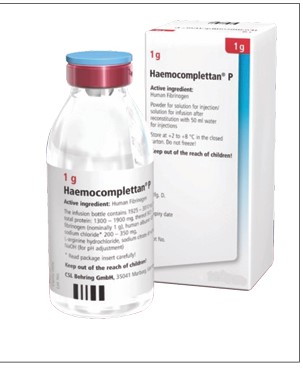
Role of Fibrinogen Concentrate and Its Effect on Blood Loss in on Pump Cardiac Surgeries: A Case Series
Samiksha Subhash Waghchaure, Manjula Sarkar
Author Information
Licence:
Attribution-Non-commercial 4.0 International (CC BY-NC 4.0)This license enables reusers to distribute, remix, adapt, and build upon the material in any medium or format for noncommercial purposes only, and only so long as attribution is given to the creator.
Journal of Hospital Administration 9(2):p 87-92, July-December 2025. | DOI: 10.21088/jha.2582-3566.9225.5
How Cite This Article:
Chakraborty U, Nagrale NV, Singh OG, et al. From sequencing to prediction: leveraging next generation sequencing & machine learning in microbiome-based postmortem interval estimation. RFP J Hosp Adm. 2025;9(2):79-85.Timeline
Received : October 14, 2025
Accepted : December 02, 2025
Published : December 24, 2025
Abstract
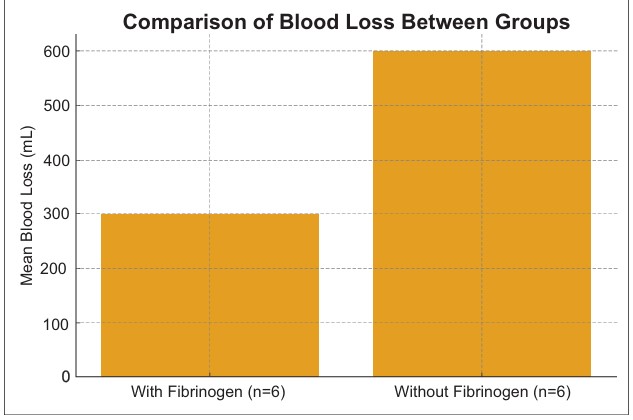
Background: Excessive bleeding is a common complication of cardiac surgery requiring cardiopulmonary bypass (CPB), often leading to increased transfusion requirements and postoperative morbidity. Fibrinogen plays a central role in coagulation, and Human Fibrinogen Concentrate (HFC) offers a targeted method to restore clot firmness Objective: To evaluate the effect of HFC administration on perioperative blood loss in patients undergoing cardiac surgery with CPB Methods: A case series of 12 patients undergoing cardiac surgery was analyzed. Patients were divided into two groups: Group A (n=6) received fibrinogen concentrate (40 mg/ kg) after CPB and before protamine administration, while Group B (n=6) did not. Blood loss and transfusion requirements were compared Results: Mean blood loss in patients receiving fibrinogen concentrate (Group A) was significantly reduced compared to controls (Group B). Statistical analysis demonstrated a highly significant difference (p < 0.001). Patients in Group A also required fewer transfusions of blood and blood products Conclusion: Administration of fibrinogen concentrate in cardiac surgery patients on CPB effectively reduced perioperative bleeding and the need for transfusion. This supports its use as a safe and effective adjunct in perioperative hemostatic management.
References
- 1. Sadeghi M, Atefyekta R, Azimaraghi O, Marashi SM, Aghajani Y, Ghadimi F, et al. A randomized, double blind trial of prophylactic f ibrinogen to reduce bleeding in cardiac surgery. Braz J Anesthesiol. 2014;64(4):253–7. doi:10.1016/j.bjane.2013.10.010
- 2. Zacharias A, Habib RH. Factors predisposing to median sternotomy complications: deep vs superficial infection. Chest. 1996;110(5):1173–8. doi:10.1378/chest.110.5.1173.
- 3. Unsworth-White MJ, Herriot A, Valencia O, Poloniecki J, Smith EE, Murday AJ, et al. Resternotomy for bleeding after cardiac operation: A marker for increased morbidity and mortality. Ann Thorac Surg. 1995;59(3): 664–7. doi:10.1016/0003-4975(94)00995-3.
- 4. Paparella D, Brister SJ, Buchanan MR. Coagulation disorders of cardiopulmonary bypass: A review. Intensive Care Med. 2004;30(10):1873–81. doi: 10.1007/s00134-004-2388-0.
- 5. Wahba A, Rothe G, Lodes H, Barlage S, Schmitz G, Birnbaum DE. Predictors of blood loss after coronary artery bypass grafting. J Cardiothorac Vasc Anesth. 1997;11(7):824–7.
- 6. Furie B, Furie BC. Mechanisms of thrombus formation. N Engl J Med. 2008;359(9):938–49. doi:10.1056/NEJMra0801082.
- 7. De Lorenzo C, Calatzis A, Welsch U, Heindl B. Fibrinogen concentrate reverses dilutional coagulopathy induced in vitro by saline but not by hydroxyethyl starch 6%. Anesth Analg. 2006;102(4):1194–200. doi:10.1213/01. ane.0000200297.98089.ce.
Data Sharing Statement
There are no additional data available.
Funding
This research received no funding
Author Contributions
All authors contributed significantly to the work and approve its publication.
Ethics Declaration
This article does not involve any human or animal subjects, and therefore does not require ethics approval
Acknowledgements
Information Not Provided
Conflicts of Interest
No conflicts of interest in this work.
About this article

Cite this article
Chakraborty U, Nagrale NV, Singh OG, et al. From sequencing to prediction: leveraging next generation sequencing & machine learning in microbiome-based postmortem interval estimation. RFP J Hosp Adm. 2025;9(2):79-85.
Licence:
Attribution-Non-commercial 4.0 International (CC BY-NC 4.0)This license enables reusers to distribute, remix, adapt, and build upon the material in any medium or format for noncommercial purposes only, and only so long as attribution is given to the creator.
| Received | Accepted | Published |
|---|---|---|
| October 14, 2025 | December 02, 2025 | December 24, 2025 |
DOI: 10.21088/jha.2582-3566.9225.5
Keywords
Fibrinogen ConcentrateCardiac SurgeryCardiopulmonary BypassBleeding ManagementBlood LossHemostasisSearch for Similar Articles
Similar Articles
- Cardiac Complication of Extrapulmonary Tuberculosis
- Post-Covid Prophylaxis in Adults: A Systematic Review
- Quantitative Study to Analyze the Discharge process among IP Patients in Sun Med...
- Transformation of Indian Healthcare Market from Reactive Service Model to a Pro...
- Examining The LASI Data on Mental Health among the Ageing Population: A Comparat...
Article Level Metrics
Last UpdatedSunday 04 October 2026, 06:26:36 (IST)
1117
Accesses
30
138
00
Citations
NA
NA
NA
Download citation
Article Keywords
Keyword Highlighting
Highlight selected keywords in the article text.
Timeline
| Received | October 14, 2025 |
| Accepted | December 02, 2025 |
| Published | December 24, 2025 |
licence
Attribution-Non-commercial 4.0 International (CC BY-NC 4.0)
This license enables reusers to distribute, remix, adapt, and build upon the material in any medium or format for noncommercial purposes only, and only so long as attribution is given to the creator.