Full Text (PDF)
Indian Journal of Obstetrics and Gynecology 13(2):p 7-14, April - June 2025. | DOI: 10.21088/ijog.2321.1636.13225.1
Original Article
Role of 25-Hydroxy Vitamin D Concentration in Early Pregnancy and Pregnancy Outcomes in Indian Population: A Prospective Observational Study
Karri Ramya Krishna, Aparajita Sophia D’souza, L Siva Kumar Reddy
Author Information
Licence:
Attribution-Non-commercial 4.0 International (CC BY-NC 4.0)This license enables reusers to distribute, remix, adapt, and build upon the material in any medium or format for noncommercial purposes only, and only so long as attribution is given to the creator.
Indian Journal of Obstetrics and Gynecology 13(2):p 7-14, April - June 2025. | DOI: 10.21088/ijog.2321.1636.13225.1
How Cite This Article:
Krishna KR, D’souza AS, Reddy LSK. Role of 25-hydroxyvitamin D concentration in early pregnancy and pregnancy outcomes in Indian population: a prospective observational study. Indian J Obstet Gynecol. 2025;13(2):47-54.Timeline
Received : March 05, 2025
Accepted : April 04, 2025
Published : June 18, 2025
Abstract
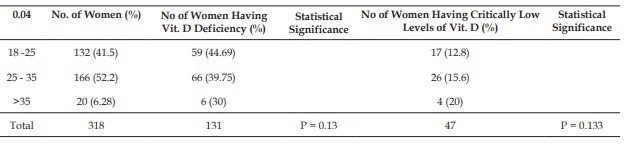
Background: Pregnancy-related low levels of 25-hydroxyvitamin D [25(OH)D] are a common but avoidable issue. Neonatal 25(OH) D levels and the related health effects are directly impacted by low pregnancy 25(OH) D levels. There is little information and comprehension on the therapeutic significance and ramifications of these correlations. Methods: This was a prospective observational study conducted among pregnant women over a period of 4 months. Serum vitamin D levels were measured in all the included subjects at the first interaction. Data on date of delivery, birth weight, length and gestational age were collected prospectively for all the patients at the time of delivery. Statistical analysis was performed using the SPSS 20 software database. The qualitative and quantitative data were presented as percentages and means ± SD, respectively. The risk factors were analysed univariately using the chisquare test and the student’s “t” test. For multivariate analysis, every variable that had a P value less than 0.05 in the univariate analysis was chosen. A significance threshold of p<0.05 was established. Results: The prevalence of vitamin D deficiency was 41%, of which nearly 14% had critically low levels, with a majority, 52%, belonging to the 25-35 years. Although the incidence of vitamin D deficiency (67/131), as well as critically low levels (23/47), was more frequent among gravida 2, the difference was not statistically significant (p = 0.13 and 0.09, respectively). There was no statistically significant difference in the maternal complications and outcomes between those with and without vitamin D deficiency. The maternal outcomes were not different even among women with critically low levels compared to those without. The incidence of low birth weight was significantly higher in the cohort with critically low levels of vitamin D (42% vs. 16%, p = 0.004). The incidence of other neonatal outcomes was not different. Conclusion: The prevalence of vitamin D deficiency was higher among pregnant women aged 25-35 years. A higher incidence of low birth weight was observed.
References
- 1. Özdemir A.A., Ercan Gündemir Y., Küçük M., Yıldıran Sarıcı D., Elgörmüş Y., Çağ Y., et al. Vitamin D deciency in pregnant women and their infants. J Clin Res Pediatr Endocrinol 2018; 10: 44-50.
- 2. Johnson D.D., Wagner C.L., Hulsey TC, McNeil R.B., Ebeling M., Hollis B.W. Vitamin D deciency and insufciency is common during pregnancy. Am J Perinatol 2011; 28: 7-12.
- 3. Wei SQ, Qi H.P., Luo Z.C., Fraser W.D. Maternal vitamin D status and adverse pregnancy outcomes: a systematic review and meta-analysis. J Matern Fetal Neonatal Med 2013; 26: 889-99.
- 4. Feng H., Xun P., Pike K., Wills A.K., Chawes BL, Bisgaard H., et al. In utero exposure to 25(OH) D and risk of childhood asthma, wheeze and respiratory tract infections: A meta-analysis of birth cohort studies. J Allergy Clin Immunol 2016; 139: 1508-17.
- 5. Aghajafari F., Nagulesapillai T., Ronksley P.E., Tough S.C., O’Beirne M., Rabi D.M. Association between maternal serum 25-hydroxyvitamin D level and pregnancy and neonatal outcomes: systematic review and meta-analysis of observational studies. BMJ 2013; 346: f1169.
- 6. Wagner C.L., Hollis B.W. The implications of Vitamin D status during pregnancy on mother and her developing child. Front Endocrinol 2018; 9: 500.
- 7. Kaushal M., Magon N. Vitamin D 23 in pregnancy: a metabolic outlook. Indian J Endocrinol Metab 2013; 17: 76-82.
- 8. Kaludjerovic J., Vieth R. Relationship between vitamin D during perinatal development and health. J Midwifery Womens Health 2010; 55: 550-60.
- 9. Madar A.A., Stene L.C., Meyer H.E. Vitamin D status among immigrant mothers from Pakistan, Turkey and Somalia and their infants attending child health clinics in Norway. Br J Nutr 2009; 101: 1052-8.
- 10. Li W., Green T.J., Innis S.M., Barr S.I., Whiting S.J., Shand A., von Dadelszen P. Suboptimal vitamin D levels in pregnant women despite supplement use. Can J Public Health Rev Can De Sante Publique 2011; 102: 308-12.
- 11. Figueiredo A.C.C., Cocate P.G., Adegboye A.R.A., Franco-Sena A.B., Farias D.R., de Castro MBT, et al. Changes in plasma concentrations of 25-hydroxyvitamin D and 1,25-dihydroxyvitamin D during pregnancy: a Brazilian cohort. Eur J Nutr 2018; 57: 1059-72.
- 12. Perampalam S., Ganda K., Chow K.A., Opie N., Hickman P.E., Shadbolt B., et al. Vitamin D status and its predictive factors in pregnancy in 2 Australian populations. Aust N Zealand J Obstet Gynaecol 2011; 51: 353-9.
- 13. Vandevijvere S., Amsalkhir S., Van Oyen H., Moreno-Reyes R. High prevalence of vitamin D deciency in pregnant women: anational crosssectional survey. PLoS One 2012; 7: e43868.
- 14. Hyppönen E., Hartikainen A.L., Sovio U., Järvelin M.R., Pouta A. Does vitamin D supplementation in infancy reduce the risk of pre-eclampsia? Eur J Clin Nutr 2007;61:1136-9.
- 15. Bener A., Al-Hamaq A.O., Saleh N.M. Association betweenvitaminDinsufciencyand adverse pregnancy outcome: Global comparisons. Int J Women’s Health 2013; 5: 523.
- 16. Scholl T.O., Chen X., Stein T.P. Maternal calcium metabolic stress and fetal growth. Am J Clin Nutr 2014; 99: 918-25.
- 17. Chu J., Gallos I., Tobias A., Tan B., Eapen A., Coomarasamy A. Vitamin D and assisted reproductive treatment outcome: a systematic review and meta-analysis. Hum Reprod 2018; 33: 65-80.
- 18. Abbasalizadeh S., Abam F., Mirghafourvand M., Abbasalizadeh F., Taghavi S., Hajizadeh K. Comparing levels of vitamin D, calcium and phosphorus in normotensive pregnant women and pregnant women with preeclampsia. J Obstet Gynaecol 2020; 40: 1069-73.
- 19. Fischer D., Schroer A., Lüdders D., Cordes T., Bücker B., Reichrath J., et al. Metabolism of vitamin D-3 in the placental tissue of normal and preeclampsia complicated pregnancies and premature births. Clin Exp Obstet Gynecol 2007; 34: 80-4.
- 20. Seely E.W. Calciotropic hormones in preeclampsia: A renewal of interest. J Clin Endocrinol Metab 2007; 92: 3402-3.
- 21. Jensen M.E., Camargo C.A., Harvey S.M., Gibson P.G., Murphy V.E. Serum 25 hydroxyvitamin D levels during pregnancy in women with asthma: associations with maternal characteristics and adverse maternal and neonatal outcomes. Nutrients 2020; 12(10): 2978.
- 22. Mirzakhani H., Litonjua A.A., McElrath T.F., O’Connor G., Lee-Parritz A., Iverson R., et al. Early pregnancy vitamin D status and risk of preeclampsia. J Clin Invest 2016;126:4702-15.
- 23. Zhang C., Qiu C., Hu F.B., David R.M., van Dam R.M., Bralley A., et al. Maternal plasma 25-hydroxyvitamin D concentrations and the risk for gestational diabetes mellitus. PLoS One 2008; 3: e3753.
- 24. Buchanan T.A., Xiang A.H. Gestational diabetes mellitus. J Clin Invest 2005; 115: 485-91.
- 25. Poel Y.H., Hummel P., Lips P., Stam F., van der Ploeg T., Simsek S. Vitamin D and gestational diabetes: a systematic review and metaanalysis. Eur J Intern Med 2012; 23: 465-9.
- 26. Zhou S.S., Tao Y.H., Huang K., Zhu B.B., Tao F.B. Vitamin D and risk of preterm birth: Up-to-date meta-analysis of randomized controlled trials and observational studies. J. Obstet Gynaecol Res 2017; 43: 783.
- 27. Fang K., He Y., Mu M., Liu K. Maternal vitamin DdeciencyduringpregnancyandLow birth weight: A systematic review and meta-analysis. J Matern Fetal Neonatal Med 2019: 1-161.
- 28. Aghajafari F., Nagulesapillai T., Ronksley P.E., Tough S.C., O’Beirne M., Rabi D.M. Association between maternal serum 25-hydroxyvitamin D level and pregnancy and neonatal outcomes: systematic review and meta-analysis of observational studies. BMJ 2013; 346: f1169.
- 29. Vasilyeva E.N., Maltseva L.I., Denisova T.G., Gerasimova L.I. Health features of newborns depending on vitamin D level of their mothers during pregnancy. Kazan. Meditsinskiy Zhurnal 2017; 98: 691-6.
- 30. Cooper C., Harvey N.C., Bishop N.J., Kennedy S., Papageorghiou A.T., Schoenmakers I., et al. Maternal gestational vitamin D supplementation and offspring bone health (MAVIDOS): A multicentre, double-blind, randomised placebo-controlled trial. Lancet Diabetes Endocrinol 2016; 4; 393-402.
- 31. Thorne-Lyman A., Fawzi W.W. Vitamin D during pregnancy and maternal, neonatal and infant health outcomes: a systematic review and meta-analysis. Paediatr Perinat Epidemiol 2012; 26 (Suppl 1): 75-90.
Data Sharing Statement
There are no additional data available.
Funding
This research received no funding.
Author Contributions
All authors contributed significantly to the work and approve its publication.
Ethics Declaration
None
Acknowledgements
Information Not Provided
Conflicts of Interest
No conflicts of interest in this work.
About this article

Cite this article
Krishna KR, D’souza AS, Reddy LSK. Role of 25-hydroxyvitamin D concentration in early pregnancy and pregnancy outcomes in Indian population: a prospective observational study. Indian J Obstet Gynecol. 2025;13(2):47-54.
Licence:
Attribution-Non-commercial 4.0 International (CC BY-NC 4.0)This license enables reusers to distribute, remix, adapt, and build upon the material in any medium or format for noncommercial purposes only, and only so long as attribution is given to the creator.
| Received | Accepted | Published |
|---|---|---|
| March 05, 2025 | April 04, 2025 | June 18, 2025 |
DOI: 10.21088/ijog.2321.1636.13225.1
Keywords
Vitamin D DeficiencyPregnancyMaternalNeonatalOutcomeSearch for Similar Articles
Similar Articles
- When Eclampsia Strikes the Brain Twice
- Emergency Management of Cesarean Scar Pregnancy: A Rare Case of Life-Threatenin...
- The Efficacy of Structured Teaching Programs in Enhancing Pregnancy Management...
- Audit of Caesarean Sections by the Robson Ten Group Classification: A Six-Month...
- A Cross-Sectional Study on the Epidemiology and Risk Factors of Uterine Fibroids
Article Level Metrics
Last UpdatedThursday 18 June 2026, 02:55:25 (IST)
1422
Accesses
5
152
00
Citations
NA
NA
NA
Download citation
Article Keywords
Keyword Highlighting
Highlight selected keywords in the article text.
Timeline
| Received | March 05, 2025 |
| Accepted | April 04, 2025 |
| Published | June 18, 2025 |
licence
Attribution-Non-commercial 4.0 International (CC BY-NC 4.0)
This license enables reusers to distribute, remix, adapt, and build upon the material in any medium or format for noncommercial purposes only, and only so long as attribution is given to the creator.