Full Text (PDF)
Indian Journal of Obstetrics and Gynecology 14(1):p 7-12, Jan - April 2026. | DOI: 10.21088/ijog.2321.1636.14126.1
Original Article
A Cross-Sectional Study on the Epidemiology and Risk Factors of Uterine Fibroids
Anoop Kaur, Zenith Goyal, Parneet Kaur, Satinder Pal Kaur, Sangeeta Rani
Author Information
Licence:
Attribution-Non-commercial 4.0 International (CC BY-NC 4.0)This license enables reusers to distribute, remix, adapt, and build upon the material in any medium or format for noncommercial purposes only, and only so long as attribution is given to the creator.
Indian Journal of Obstetrics and Gynecology 14(1):p 7-12, Jan - April 2026. | DOI: 10.21088/ijog.2321.1636.14126.1
How Cite This Article:
Zenith Goyal, Parneet Kaur, Satinder Pal Kaur et. al, A Cross-Sectional Study on the Epidemiology and Risk Factors of Uterine Fibroids. Indian J Obstet Gynecol. 2026; 14(1): 07-12Timeline
Received : February 24, 2026
Accepted : March 23, 2026
Published : May 30, 2026
Abstract
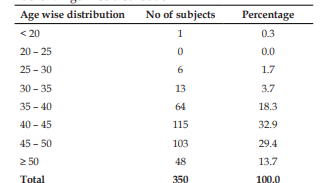
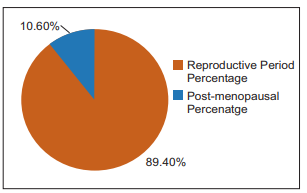
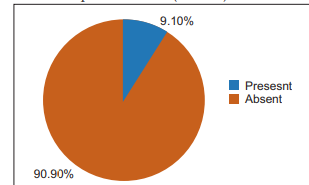
Introduction: Uterine fibroids are benign smooth muscle growths of the uterus commonly seen during the reproductive years. Despite their non-malignant nature, they contribute significantly to gynaecological morbidity and healthcare utilization. Aims & Objectives: To study the epidemiology of uterine fibroid & various risk factors contributing in the occurrence of uterine fibroids in our region. Material & Method: The cross-sectional study was done in Department of Obstetrics and Gynecology in GMC & Rajindra Hospital, Patiala from 2023 to 2024. Result: Mean age for uterine fibroid was 43.47±7.05 years. Majority of women diagnosed with leiomyomas were in their reproductive years (89.4%). Uterine fibroid were seen more in urban (70%) population. Obesity was observed as most prevalent risk factor (83.8%). Another significant risk factor was lack of Vitamin D intake (9.1%). A higher stress level which is considered to be a causative agent for myomas was present in 37.2% of study opulation. In our study we could not find any association of UFs with educational status, socioeconomic status, dietary preference (vegetarian/non-vegetarian), family history of fibroids, age of onset of menstruation, age at time of first childbirth, alcohol intake or smoking. Conclusion: The study emphasizes the need for lifestyle improvements regular physical activity, a nutritious diet consisting of Vitamin D, and effective weight control to lower fibroid risk, particularly among those with higher BMI. Promoting informed and appropriate use of oral contraceptives may also provide protective benefits and should be integrated into reproductive health education
References
- 1. Jolley S. An overview of uterine fibroids. Nurs Stand. 2009 Oct 14-20;24(6):44-8.
- 2. Stewart EA, Cookson CL, Gandolfo RA, Schulze-Rath R. Epidemiology of uterine fibroids: a systematic review. BJOG. 2017 Sep;124(10):1501-1512.
- 3. Sparic R, Mirkovic L, Malvasi A, Tinelli A. Epidemiology of Uterine Myomas: A Review. Int J Fertil Steril. 2016 Jan-Mar;9(4):424-35.
- 4. Mehine M, Mäkinen N, Heinonen HR, Aaltonen LA, Vahteristo P. Genomics of uterine leiomyomas: insights from high-throughput sequencing. Fertil Steril. 2014 Sep;102(3):621-9.
- 5. Zannotti A, Greco S, Pellegrino P, Giantomassi F, Delli Carpini G, Goteri G, et al. Macrophages and Immune Responses in Uterine Fibroids. Cells. 2021 Apr 22;10(5):982.
- 6. Parker WH. Etiology, symptomatology, and diagnosis of uterine myomas. Fertil Steril. 2007 Apr;87(4):725-36.
- 7. Yin P, Lin Z, Cheng YH, Marsh EE, Utsunomiya H, Ishikawa H et al. Progesterone receptor regulates Bcl-2 gene expression through direct binding to its promoter region in uterine leiomyoma cells. J Clin Endocrinol Metab. 2007 Nov;92(11):4459-66.
- 8. Pavone D, Clemenza S, Sorbi F, Fambrini M, Petraglia F. Epidemiology and Risk Factors of Uterine Fibroids. Best Pract Res Clin Obstet Gynaecol. 2018; 46:3-11. doi: 10.1016/ j.bpobgyn.2017.09.004.
- 9. Srilatha J, Malathi V. Prevalence of fibroids: a study in a semiurban area in Telangana, India. Int J Reprod Contracept Obstet Gynecol. 2017 Nov;6(12):5247-50.
- 10. Subramaniyam NK, Kandluri V, Chadeve A, Modapu D, Dumpala AJ, Gudise BR, et al. Prevalence of risk factors for uterine fibroids at tertiary care teaching hospital: a cross-sectional study. J Young Pharm. 2020;12(1):8.
- 11. Pandey V, Rani A, Dubey P. Uterine fibroid: isolation, culture and characterization. J Biol Eng Res Rev. 2019 Sept;6(2):27–31.
- 12. Goldy SN, Bhaurao BY, Anant AT. Epidemiological study of uterine fibroids: our experience from urban Maharashtra. Int J Reprod Contract Obstet Gynecol. 2022 July; 11(8):2101.
- 13. Kim S, Han K, Choi SY, Yang SY, Choi SH, Yim JY et al. Alcohol consumption and the risk of new-onset uterine leiomyomas: a nationwide population-based study in 2.5 million Korean women aged 20 to 39 years. Am J Obstet Gynecol. 2023 Jul;229(1):45.
- 14. Kumar CS, Anusha K, Priyanka R, Gowthami M, Fathima K, Riaz SS et al. A study on uterine fibroids effective treatment and associated risks factors in the tertiary care teaching hospital. Cell Mol Biomed Rep. 2023;3(3):137–144.
- 15. Samadi AR, Lee NC, Flanders WD, Boring JR 3rd, Parris EB. Risk factors for self-reported uterine fibroids: a case-control study. Am J Public Health. 1996;86(6):858–862.
- 16. Ismail N, El Sayed SLM. Relationship between diet, physical activity and the development of uterine fibroids. Alex Sci Nurs J. 2016;18(2): 15–32.
- 17. Xu F, Li F, Li L, Lin D, Hu H, Shi Q. Vitamin D as a risk factor for the presence of asymptomatic uterine fibroids in premenopausal Han Chinese women. Fertil Steril. 2021 May 1;115(5): 1288–93.
Data Sharing Statement
There are no additional data available. All raw data and code are available upon request.
Funding
This research received no funding.
Author Contributions
All authors contributed significantly to the work and approve its publication.
Ethics Declaration
This article does not involve any human or animal subjects, and therefore does not require ethics approval.
Acknowledgements
This article does not involve any human or animal subjects, and therefore does not require ethics approval.
Conflicts of Interest
No conflicts of interest in this work.
About this article

Cite this article
Zenith Goyal, Parneet Kaur, Satinder Pal Kaur et. al, A Cross-Sectional Study on the Epidemiology and Risk Factors of Uterine Fibroids. Indian J Obstet Gynecol. 2026; 14(1): 07-12
Licence:
Attribution-Non-commercial 4.0 International (CC BY-NC 4.0)This license enables reusers to distribute, remix, adapt, and build upon the material in any medium or format for noncommercial purposes only, and only so long as attribution is given to the creator.
| Received | Accepted | Published |
|---|---|---|
| February 24, 2026 | March 23, 2026 | May 30, 2026 |
DOI: 10.21088/ijog.2321.1636.14126.1
Keywords
Reproductive AgeUterine FibroidObesityVitamin D •OCPsSearch for Similar Articles
Similar Articles
- A Cross Sectional Study on Prevalence of Bacterial Vaginosis in Preterm and Term...
- Altered Placental Insulin Signaling in the Absence of Systemic Insulin Resistanc...
- Maternal and Perinatal Outcome in Severe Pre-eclampsia in a Tertiary Care Center
- Fibromyoma: A Clinical Dilemma
- Optimizing Obstetric Care: A Review of Indications and Outcomes for First-Time C...
Article Level Metrics
Last UpdatedTuesday 20 October 2026, 08:18:31 (IST)
5493
Accesses
48
652
00
Citations
NA
NA
NA
Download citation
Article Keywords
Keyword Highlighting
Highlight selected keywords in the article text.
Timeline
| Received | February 24, 2026 |
| Accepted | March 23, 2026 |
| Published | May 30, 2026 |
licence
Attribution-Non-commercial 4.0 International (CC BY-NC 4.0)
This license enables reusers to distribute, remix, adapt, and build upon the material in any medium or format for noncommercial purposes only, and only so long as attribution is given to the creator.