Full Text (PDF)
Indian Journal of Anesthesia and Analgesia 10(4):p 183-186, October-December 2023. | DOI: https://doi.org/10.21088/ijaa.2349.8471.10423.5
Case Report
Recreational Exposure of Liquified Petroleum Gas: Case report and Review of the Literature
Madhusudhana Ravi, Jala Ushasree, Jagadeesan Sindhu, Nagaiah Suresh Kumar
Author Information
Licence:
Attribution-Non-commercial 4.0 International (CC BY-NC 4.0)This license enables reusers to distribute, remix, adapt, and build upon the material in any medium or format for noncommercial purposes only, and only so long as attribution is given to the creator. Information not provided.
Indian Journal of Anesthesia and Analgesia 10(4):p 183-186, October-December 2023. | DOI: https://doi.org/10.21088/ijaa.2349.8471.10423.5
How Cite This Article:
Ushasree J, Sindhu J, Ravi M, et al. Recreational Exposure of Liquefied Petroleum Gas: Case Report and Review of the Literature. Indian J Anesth Analg. 2023;10(4):183–6.Timeline
Received : July 01, 2023
Accepted : August 30, 2023
Published : October 30, 2023
Abstract
Introduction: LPG, a combination of aliphatic hydrocarbon gases, is utilized as a source of fuel for cooking appliances and vehicles. LPG mainly comprises butane (80%) and propane (20%), which are combustible gases, along with small concentrations of propylene and butylene. Mercaptans are included in the mixture to enable easy detection of any gas leakage due to their unpleasant smell. Because propane gas is heavier than air, it tends to settle at floor level. Due to the non-specific and diverse nature of its signs and symptoms, the timely and accurate diagnosis of LPG poisoning remains challenging. Due to easy access to LPG, there has been an increase incidence of its use for suicidal purposes and abuse. The current case report focuses on the effects of the abuse potential of LPG and its toxic effects.
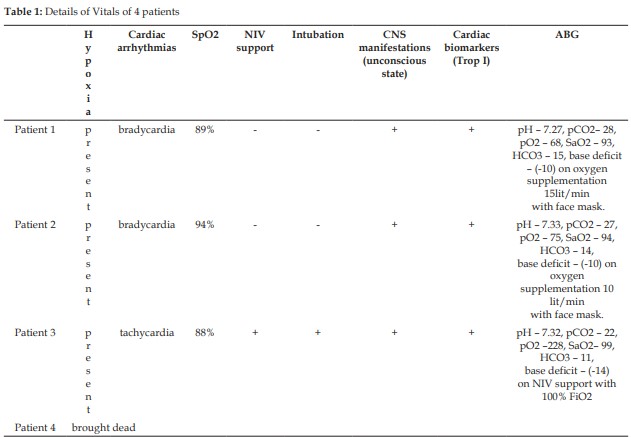
Case Report: In this case report, four individuals of same family (19 yrs, 23 yrs, 24 yrs, 25 yrs old brothers) who have abused LPG for recreational purpose under alcoholic intoxication and subsequently, of four of them three individuals showed acute toxic myocarditis with ECG changes and elevated cardiac biomarkers, hypoxia, neurological manifestations such as generalized weakness, unconsciousness. The fourth person was brought dead to casualty and it was determined that approximately 22% of the people who used inhalants died during their first use. Sudden deaths are usually caused by abuse of butane, propane, or butane/propane mixture and it is due to cardiac arrhythmia.
Conclusion: The gas mixture of propane butane is among the most lethal inhalant substances. The substance abuse is increasing especially in adolescents and young adults. The public population must be educated about dangers of this gas abuse and its bad outcomes and should be recommended to stay away from it.
References
- 1. Jafar N, Simin H, Mortaza S. A Case Report: Convulsion and Reduced Level of Consciousness in Two Children Following Liquefied Petroleum Gas Inhalation. J Environ Anal Toxicol. 2017;7:444.
- 2. Sugie H, Sasaki C, Hashimoto C, Takeshita H, Nagai T, Nakamura S, et al. Three cases of sudden death due to butane or propane gas inhalation: analysis of tissues for gas components. Forensic Sci Int. 2004;143(2-3):159-64.
- 3. Aldemir E, Akyel B, Altıktoprak AE, Aydın R, Coşkunol H. Case Report: LPG Dependence after a Suicide Attempt. Case Rep Psychiatry. 2015;2015:643253.
Data Sharing Statement
All raw data and code are available upon request.
Funding
This research received no funding.
Author Contributions
All authors contributed significantly to the work and approve its publication.
Ethics Declaration
This article does not involve any human or animal subjects, and therefore does not require ethics approval.
Acknowledgements
Information not provided.
Conflicts of Interest
The authors report no conflicts of interest in this work.
About this article

Cite this article
Ushasree J, Sindhu J, Ravi M, et al. Recreational Exposure of Liquefied Petroleum Gas: Case Report and Review of the Literature. Indian J Anesth Analg. 2023;10(4):183–6.
Licence:
Attribution-Non-commercial 4.0 International (CC BY-NC 4.0)This license enables reusers to distribute, remix, adapt, and build upon the material in any medium or format for noncommercial purposes only, and only so long as attribution is given to the creator. Information not provided.
| Received | Accepted | Published |
|---|---|---|
| July 01, 2023 | August 30, 2023 | October 30, 2023 |
DOI: https://doi.org/10.21088/ijaa.2349.8471.10423.5
Keywords
Butane AbuseCooking Stove FuelLiquefied Petroleum GasPropane AbuseSearch for Similar Articles
Similar Articles
- Awake Fibreoptic Intubation for Airway Management in Massive Thyroid Enlargement...
- A Case of Thoracotomy with One Lung Ventilation for Carcinoma Oesophagus
- A Case of Empyema for Thoracotomy and Decortication-Anaesthesia Management
- Full Mouth Rehabilitation in a 3-Year-Old Female Child with Repaired Tetralogy o...
- Do Gel Manicures Affect SpO2 Readings ? A Clinical Investigation
Article Level Metrics
Last UpdatedTuesday 14 July 2026, 07:49:21 (IST)
5689
Accesses
17
679
00
Citations
NA
NA
NA
Download citation
Article Keywords
Keyword Highlighting
Highlight selected keywords in the article text.
Timeline
| Received | July 01, 2023 |
| Accepted | August 30, 2023 |
| Published | October 30, 2023 |
licence
Attribution-Non-commercial 4.0 International (CC BY-NC 4.0)
This license enables reusers to distribute, remix, adapt, and build upon the material in any medium or format for noncommercial purposes only, and only so long as attribution is given to the creator. Information not provided.