Full Text (PDF)
Physiotherapy and Occupational Therapy Journal 18(1):p 19-25, Jan -March 2025. | DOI: 10.21088/potj.0974.5777.18125.3
Original Article
Prevalence of Work-Related Psychological Stress and Work Ability Among Physiotherapy Students
Amit Kumar Singh, Nayan Katkad, Arsalan Shaikh, Ridham Agrawal
Author Information
Licence:
Attribution-Non-commercial 4.0 International (CC BY-NC 4.0)This license enables reusers to distribute, remix, adapt, and build upon the material in any medium or format for noncommercial purposes only, and only so long as attribution is given to the creator.
Physiotherapy and Occupational Therapy Journal 18(1):p 19-25, Jan -March 2025. | DOI: 10.21088/potj.0974.5777.18125.3
How Cite This Article:
Singh AK, Agrawal R, et al. Prevalence of Work-Related Psychological Stress and Work Ability Among Physiotherapy Students. Physio. and Occ. Therapy Jr. 2025;18(1):19–25.Timeline
Received : January 02, 2025
Accepted : February 15, 2025
Published : March 21, 2025
Abstract
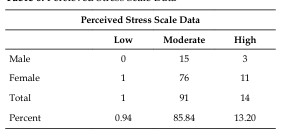
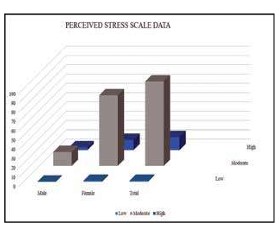
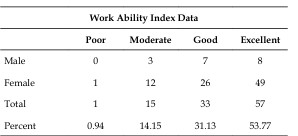
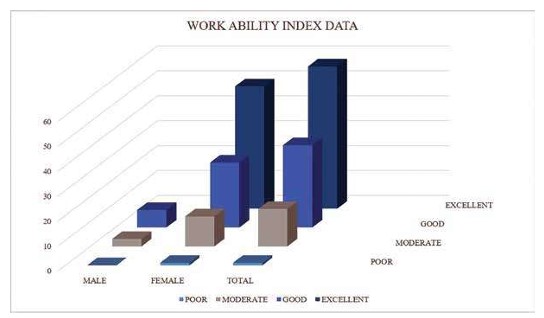
Background: The study of the health professions is extremely demanding and challenging which requires students to manage a complex learning and professional environment. For students to perform at their best in higher education settings, they need to be able to effectively deal with pressure. There is dearth of literature regardingstressandworkabilityamongnalyear, internsandpostgraduate students. So, we intend to determine the prevalence of work-related psychological stress and workability among physiotherapy students. Materials and Methods: A Google form questionnaire was created with survey related questions from the Work Ability Index (WAI) and Perceived Stress Scale (PSS). Based on inclusion and exclusion criteria, a total of 106 physiotherapy students (aged 19 to 26) were chosen (convenience sample) from different physiotherapy institutions in Gujarat. Result: there is persistence perceived stress and work ability among the physiotherapy colleges across Gujarat. Conclusion: Majority of the population reported to have moderate level of perceived stress and excellent work ability.
References
- 1. Sabih, F., Siddiqui, F.R., & Baber, M.N. (2013). Assessment of stress among physiotherapy students at Riphah Centre of Rehabilitation Sciences. J Pak Med Assoc, 63(3), 346-49.
- 2. Tucker B., Jones S., Mandy A., et al. Physiotherapy students’ sources of stress, perceived course difculty, and paid employment: comparison between Western Australia and the United Kingdom. Physiother Theory Pract. 2006; 85: 1301-1317
- 3. Jacob, Tamar P.T., Ph.D.; Gummesson, Christina P.T., Ph.D.; Nordmark, Eva P.T., Ph.D.; El-Ansary, Doa P.T., Ph.D.; Remedios, Louisa P.T., Ph.D.; Webb, Gillian DipPhysio, MClinEd, DEd. Perceived Stress and Sources of Stress Among Physiotherapy Students From 3 Countries. Journal of Physical Therapy Education 26(3): pp. 57-65, Fall 2012.
- 4. Maia M.S., Dos Santos G.L., Porto C.C. Work related stress among physiotherapists from the musculoskeletal area: An observational study. Work. 2022; 71(4): 1163-1173. doi: 10.3233/ WOR-205195. PMID: 35253689.
- 5. Walsh J.M., Feeney C., Hussey J., Donnellan C. Sources of stress and psychological morbidity among undergraduate physiotherapy students. Physiotherapy. 2010 Sep 1; 96(3): 206-12.
- 6. Seham M. Alyousef, Psychosocial stress factors among mental health nursing students in KSA, Journal of Taibah University Medical Sciences, Volume 14, Issue 1,2019, Pages 60-66, ISSN 1658-3612.
- 7. Radkiewich P., Widerszal-Bazyl M. Psychometric Properties of Work Ability Index in the Light of Comparative Survey Study. International Congress Series 1280. The Netherlands Elsevier 2005; 304-309.
- 8. De Zwart B., Frings-Dresen M. Test retest reliability of the Work Ability Index questionnaire, Occupational (London) 2002; 52: 177-181.
- 9. Ilmarinen J., Tuomi K. Past, present and future of work ability. People and work research reports. Finnish Institute of Occupational Health, Helsinki 2004; 65: 1-25.
- 10. Tuomi K., Ilmarinen J., Jahkola A., Katajarinne L., Tulkki A. Work Ability Index, 2nd revised edition Finnish Institute of Occupational Health, Helsinki 1998.
- 11. Cohen S., Kamarch, T. and Mermelstein, R.A. global measure of perceived stress. Journal of Health and Social Behavior 1983; 24: 386-396.
- 12. Cohen S. Perceived Stress in a probability sample of the United States. In S. Spacapan and S. Oskamp (Eds). The Social Psychology of Health. Sage Publications 1988; 31-67.
- 13. Brooke, T., Brown, M., Orr, R. et al. Stress and burnout: exploring postgraduate physiotherapy students’ experiences and coping strategies. BMC Med Educ 20, 433 (2020).
- 14. Vinit Mody, VrajBarot, Rucha Parolekar et al. Prevalence of Work-Related Psychological Stress and Work Ability among Nursing Students: A Cross Sectional Study. Indian Journal of Physiotherapy and Occupational Therapy 2022; 16(3): 98-102.
Data Sharing Statement
There are no additional data available. All raw data and code are available upon request.
Funding
None
Author Contributions
All authors contributed significantly to the work and approve its publication.
Ethics Declaration
Ethical clearance was obtained from Institutional Ethical Committee, KSPR, Vadodara as per ethical guidelines for biomedical research on Human subjects, 2000 ICMR, New Delhi.
Acknowledgements
No information provided
Conflicts of Interest
None
About this article

Cite this article
Singh AK, Agrawal R, et al. Prevalence of Work-Related Psychological Stress and Work Ability Among Physiotherapy Students. Physio. and Occ. Therapy Jr. 2025;18(1):19–25.
Licence:
Attribution-Non-commercial 4.0 International (CC BY-NC 4.0)This license enables reusers to distribute, remix, adapt, and build upon the material in any medium or format for noncommercial purposes only, and only so long as attribution is given to the creator.
| Received | Accepted | Published |
|---|---|---|
| January 02, 2025 | February 15, 2025 | March 21, 2025 |
DOI: 10.21088/potj.0974.5777.18125.3
Keywords
• Work Ability Index • Perceived Stress Scale • Physiotherapy • StudentsWork Ability IndexPerceived Stress ScalePhysiotherapyStudentsSearch for Similar Articles
Similar Articles
- Cross-Cultural Adaptation, Reliability, and Validity of the Gujarati Version of...
- Physiotherapy Management of Multiple Sclerosis: An Overview of Recent Technologi...
- Converging Technologies in Cardiopulmonary Physiotherapy: A Review of VR, AR, AI...
- Cross-Cultural Adaptation, Reliability, and Validity of the Gujarati Version of...
- Effects of Kinesiotaping in Lateral Epicondylitis: A Narrative Review
Article Level Metrics
Last UpdatedThursday 30 July 2026, 04:04:43 (IST)
1984
Accesses
8
429
00
Citations
NA
NA
NA
Download citation
Article Keywords
Keyword Highlighting
Highlight selected keywords in the article text.
Timeline
| Received | January 02, 2025 |
| Accepted | February 15, 2025 |
| Published | March 21, 2025 |
licence
Attribution-Non-commercial 4.0 International (CC BY-NC 4.0)
This license enables reusers to distribute, remix, adapt, and build upon the material in any medium or format for noncommercial purposes only, and only so long as attribution is given to the creator.