Full Text (PDF)
Physiotherapy and Occupational Therapy Journal 15(1):p 25-30, January-March 2022. | DOI: https://doi.org/10.21088/potj.0974.5777.15122.3
Original Article
Prevalence and Incidence of Upper Cross Syndrome in Paramedical Students Due to Electrical Learning: Cross Sectional Study
Zankhna D Patel, Amit S Patel, Twinkle N Chudgar, Jahnvi A Tailor, Naresh R Ray
Author Information
Licence:
Attribution-Non-commercial 4.0 International (CC BY-NC 4.0)This license enables reusers to distribute, remix, adapt, and build upon the material in any medium or format for noncommercial purposes only, and only so long as attribution is given to the creator.
Physiotherapy and Occupational Therapy Journal 15(1):p 25-30, January-March 2022. | DOI: https://doi.org/10.21088/potj.0974.5777.15122.3
How Cite This Article:
Amit S Patel, Zankhna D Patel, Twinkle N Chudgar, et. al., Prevalence and Incidence of Upper Cross Syndrome in Paramedical Students Due to Electrical Learning: Cross Sectional Study, Physiotherapy and Occupational Therapy Journal. 2022;15(1):25-30.Timeline
Received : January 12, 2022
Accepted : March 08, 2022
Published : March 30, 2022
Abstract
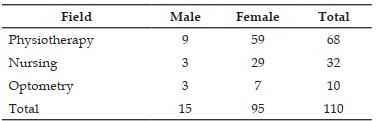
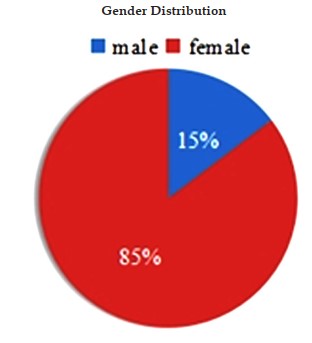
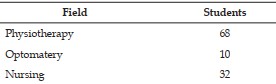
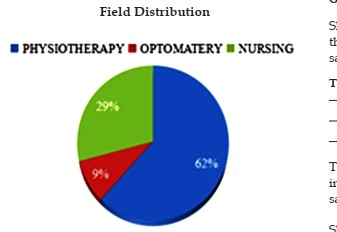
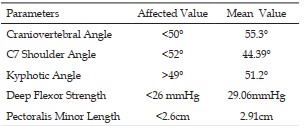
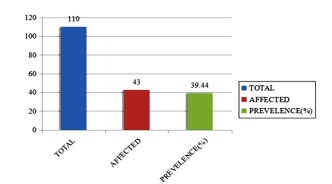
Background: Upper cross syndrome (UCS) refers to specific altered muscles activation and changed movement pattern along with some postural deviation in the upper quarter of the body. This syndrome contributes to the dysfunction of Craniovertebral angle, kyphotic angle, C7 shoulder angle, Deep flexor strength and Pectoralis minor length. Purpose of the Study: The aim of study is to evaluate the prevalence and incidence of the upper cross syndrome among the paramedical students due to electrical learning. Objective: This study shows the Prevalence and Incidence of the Upper Cross Syndrome among the various paramedical students of south Gujarat region due to electrical learning during this pandemic period. Subjects and Method: The cross sectional study with 121 samples was with age of 18-22 years. With minimum online study duration of 2hrs. Statistical Analysis Used: The data analysis was done by the Microsoft excel version and Acrobat reader. Result: The result shows that the prevalence and incidence of UCS in paramedical students is 63% the prevalence of UCS in male was 15% and in female was 85%. The prevalence of UCS in nursing students was 29%, physiotherapy students was 62%, optometry 9%. Conclusion: During this pandemic high prevalence of upper cross syndrome in paramedical students was found . It has been concluded that more use of electrical gadget can lead to adaptation of poor posture and so lead to upper cross syndrome. The results of the study suggest focusing more on postural awareness and proper use of electrical device in paramedical students.
References
- 1. Dr. pooja Dhage, Dr. Deepak Anap. Prevalence of an Upper Crossed Syndrome in Physiotherapy College Students–A CrossSectional study, March 2019.
- 2. Chaudary AA, Aslam F, Ali A, Asghar AR, Bashir H, Awais A et al. Frequency of Text Neck Syndrome in Medical Students due to Excessive Usage of Electronic Devices J Pak Orthop Assoc ,September 2019.
- 3. Junaid Chandsaheb Mujawar and javid hussain sagar et al. Prevalence of Upper Cross Syndrome in Laundry Workers, Indian journal of environment med, jan- apr 2019.
- 4. Dalia Marčiulionytė, Algė Daunoravičienė, Aurelijus Domeika, Milda Dubosienė et al. Athletes and non-athletes adolescents’ use of smart phones duration, habits and relationship between the Upper Cross Syndrome, august 2019.
- 5. Asad Ali Chaudary, Farjad Aslam, Arfa Ali, Arshman Rauf Asghar, Hamza Bashir, Arfa Awais, Ch. Zaid Riaz, Bismah Riaz , Maj. Gen® Ch. Ahmed < Brig® Dr. Shahid Majeed, Amna Shahab, Mudassar et. Al. frequency of Text Neck Syndrome in Medical Students Due to Excessive usage of Electronic Devices 2019.
- 6. Deepika Singla, Zubia Veqar and Mohammed Ejaz Hussain et al, Photogrammetric Assessment of Upper Body Posture Using Postural Angles: A Literature Review, January 24, 2017.
- 7. Arun V. Subbarayalu and Mariam A. Ameer et al, Relationships among head posture, pain intensity, disability and deep cervical flexor muscle performance in subjects with postural neck pain, August 2017.
- 8. Bader K AlZarea, Santosh R Patil et al, Mobile Phone Head and Neck Pain Syndrome: Proposal of a New Entity, October, 2015.
- 9. Jeremy S Lewis and Rachel E Valentine et al, The pectoralis minor length test: a study of the intra-rater reliability and diagnostic accuracy in subjects with and without shoulder Symptoms, july 2007.
- 10. Chris Ho Ting Yip, Thomas tai wing chiu, Anthony Tung Kuen Poon et al, The relationship between head posture and severity and disability of patients with neck pain, march 2007.
- 11. Iqra Mubeen, Salman Malik, Waseem Akhtar, Muneeb Iqbal, Muhammad Asif, Adil Arshad, Sobia Zia, Saifullah Khalid et al, Prevalence of Upper Cross Syndrome among the medical students of university of lahor, june 2016.
- 12. Kim MS. Influence of neck pain on cervical movement in the sagittal plane during smartphone use. Journal of physical therapy science. 2015; 27(1):15-7.
- 13. Kataria J. Text Neck-Its Effects on Posture. International Journal of Creative Research Thoughts. 2018; 6(1):817-9.
- 14. Gustafsson E, Thomée S, Grimby-Ekman A, Hagberg M. Texting on mobile phones and musculoskeletal disorders in young adults: a five-year cohort study. Applied ergonomics. 2017 Jan 1; 58:208-14.
- 15. Surendra Babu Darivemula, Kiran Goswami, Sanjeev Kumar Gupta, Harshal Salve, Upinder Singh,1 and Anil Kumar Goswami study on work related neck pain ( WRNP) among desk job workers for tertiary care hospital in new Delhi, India. 2016 jan.-march 41(1):50-54.
Data Sharing Statement
There are no additional data available. All raw data and code are available upon request.
Funding
This research received no funding.
Author Contributions
All authors contributed significantly to the work and approve its publication.
Ethics Declaration
This article does not involve any human or animal subjects, and therefore does not require ethics approval.
Acknowledgements
We would like to express our gratitude to the patients, their families, and all those who have contributed to this study.
Conflicts of Interest
No conflicts of interest in this work.
About this article

Cite this article
Amit S Patel, Zankhna D Patel, Twinkle N Chudgar, et. al., Prevalence and Incidence of Upper Cross Syndrome in Paramedical Students Due to Electrical Learning: Cross Sectional Study, Physiotherapy and Occupational Therapy Journal. 2022;15(1):25-30.
Licence:
Attribution-Non-commercial 4.0 International (CC BY-NC 4.0)This license enables reusers to distribute, remix, adapt, and build upon the material in any medium or format for noncommercial purposes only, and only so long as attribution is given to the creator.
| Received | Accepted | Published |
|---|---|---|
| January 12, 2022 | March 08, 2022 | March 30, 2022 |
DOI: https://doi.org/10.21088/potj.0974.5777.15122.3
Keywords
Upper cross syndromePrevalenceElectrical learningSearch for Similar Articles
Similar Articles
- Leadership in Physiotherapy: A Narrative Review
- Effectiveness of Low Level Laser Theapy in the Management of Temporomandibular J...
- The Impact of Air Pollution on Cardiopulmonary Health: Molecular Mechanisms, Pre...
- Efectiveness of Physiotherapy in Postpartum Women with Diastasis Recti: A Review
- Pain Neuroscience Education: Transforming Physiotherapy Practice
Article Level Metrics
Last UpdatedFriday 23 October 2026, 15:23:48 (IST)
4358
Accesses
11
739
00
Citations
NA
NA
NA
Download citation
Article Keywords
Keyword Highlighting
Highlight selected keywords in the article text.
Timeline
| Received | January 12, 2022 |
| Accepted | March 08, 2022 |
| Published | March 30, 2022 |
licence
Attribution-Non-commercial 4.0 International (CC BY-NC 4.0)
This license enables reusers to distribute, remix, adapt, and build upon the material in any medium or format for noncommercial purposes only, and only so long as attribution is given to the creator.