Full Text (PDF)
Journal of Nurse Midwifery and Maternal Health 8(1):p 9-12, January – April 2022. | DOI: https://doi.org/10.21088/jnmmh.2454.7506.8122.1
Original Article
Postpartum Depression in Rustic Areas of Madhya Pradesh State
Basil Varghese, Mansi Choudhary, Sumit Padihar
Author Information
Licence:
Attribution-Non-commercial 4.0 International (CC BY-NC 4.0)This license enables reusers to distribute, remix, adapt, and build upon the material in any medium or format for noncommercial purposes only, and only so long as attribution is given to the creator.
Journal of Nurse Midwifery and Maternal Health 8(1):p 9-12, January – April 2022. | DOI: https://doi.org/10.21088/jnmmh.2454.7506.8122.1
How Cite This Article:
Mansi Choudhary, Basil Varghese, Sumit Padihar/ Postpartum Depression in Rustic Areas of Madhya Pradesh State/J Nurse Midwifery Matern Health. 2022;8(1):9–12.Timeline
Received : December 27, 2021
Accepted : February 12, 2022
Published : April 30, 2022
Abstract
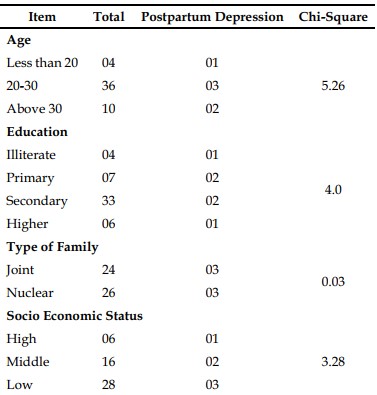
Postpartum depression is the most common postpartum complication affecting 10-15% of women, contributing greatly to maternal mortality and morbidity, but treatment is very poor in women who suffer from it. The aim is to study the prevalence of postpartum depression in women of recent birth in a rural population and the pattern of health care use for the condition in women. This is a cross-sectional study based on the population in a rural population served by a primary health center. All women in the study area who had a pregnancy outcome in the past 6 months and completed 30 days since their last childbirth were included in the study. Data on postpartum depression were collected using the Edinburgh Postpartum Depression Scale (EPDS).There were 50 postpartum women in the study area who participated in the study. The average age of the study participants was 24.5 years. The prevalence of depression in the women in the study (an EPDS score of 10 and above) was 11%. Among women with depression, a history of depression before the last childbirth was reported by 42.5% of women. Only 7.5% of the women had sought some form of health care for their problem. The study shows that the prevalence of depression in postpartum women is quite high and that the health pursuit for depression is verylow. Professional nurses should be trained to educate, detect and treat depression early in postpartum women.
References
- 1. Abraham Suzanne (2010) “Fundamental of Obstetrics and Gynaecology” 9th edition, Mosby Elsevier Limited. Page No. 75 – 76
- 2. Balakrishnan Sheila (2013) “Textbook of Obstetrics” 2nd edition, Paras medical publisher, India, Hyderabad New Delhi. Page No 424
- 3. Burgess, A. W., & Lazare, A. (1976). Psychiatric Nursing in the Hospital and the Community, Vol. 76, No. 11, Page No. 1859.
- 4. Daftary Shirish N (2005) “Manual of Obstetrics” 3rd edition, Elsevier a division of Reed Elsevier India (p). Ltd. Page No 335-339.
- 5. Dutta D.C. (1995) “Textbook of Obstetrics” 3rd edition, New central book agency (p) Ltd Calcutta, India. Page No. 411-422.
- 6. Elder, R., Evans, K., & Nizette, D. (2011). Psychiatric & Mental Health Nursing-E-Book. Elsevier Health Sciences, Page No. 46 – 48
- 7. Fairley Diana Hamilton (2004) “Obstetrics and Gynaecology” 2nd edition, published by Blackwell publishing Ltd. Page No. 211 – 212
- 8. Jacob Annamma “A Comprehensive Textbook of Midwifery & Gynaecology Nursing” 4th edition, published by Jaypee Brother’s Medical Publisher (p) Ltd. Page No. 677 – 679
- 9. Woods, P., & Kettles, A. M. (Eds.). (2009). Risk assessment and management in mental health nursing. John Wiley & Sons.
Data Sharing Statement
There are no additional data available. All raw data and code are available upon request.
Funding
This research received no funding.
Author Contributions
All authors contributed significantly to the work and approve its publication.
Ethics Declaration
This article does not involve any human or animal subjects, and therefore does not require ethics approval.
Acknowledgements
We would like to express our gratitude to the patients, their families, and all those who have contributed to this study.
Conflicts of Interest
No conflicts of interest in this work.
About this article

Cite this article
Mansi Choudhary, Basil Varghese, Sumit Padihar/ Postpartum Depression in Rustic Areas of Madhya Pradesh State/J Nurse Midwifery Matern Health. 2022;8(1):9–12.
Licence:
Attribution-Non-commercial 4.0 International (CC BY-NC 4.0)This license enables reusers to distribute, remix, adapt, and build upon the material in any medium or format for noncommercial purposes only, and only so long as attribution is given to the creator.
| Received | Accepted | Published |
|---|---|---|
| December 27, 2021 | February 12, 2022 | April 30, 2022 |
DOI: https://doi.org/10.21088/jnmmh.2454.7506.8122.1
Keywords
DepressionPostpartum depressionPostpartum depression scaleRustic areaNurse roleSearch for Similar Articles
Similar Articles
- Psychological Distress and Quality of Life Among Parents of Children with Cancer...
- We Must be Aware about Water Birth: An Overview
- Digital Health Literacy Among Mothers and Its Impact on Neonatal Outcomes: An In...
- Effectiveness of Vedio assisted Technique Programme on knowledge regarding Techn...
- A Comprehensive review of Uterine Prolapse: Etiology, Diagnosis of Management
Article Level Metrics
Last UpdatedTuesday 29 September 2026, 16:32:08 (IST)
1780
Accesses
6
293
00
Citations
NA
NA
NA
Download citation
Article Keywords
Keyword Highlighting
Highlight selected keywords in the article text.
Timeline
| Received | December 27, 2021 |
| Accepted | February 12, 2022 |
| Published | April 30, 2022 |
licence
Attribution-Non-commercial 4.0 International (CC BY-NC 4.0)
This license enables reusers to distribute, remix, adapt, and build upon the material in any medium or format for noncommercial purposes only, and only so long as attribution is given to the creator.