Full Text (PDF)
Indian Journal of Medical and Health Sciences 12(2):p 121-124, July - Dec. 2025. | DOI: https://doi.org/10.21088/ijmhs.2347.9981.12225.7
Case Report
Optimising Split-Thickness Skin Graft Take in a Paediatric Electrical Burn Wound Using an Autologous Lipoaspirate-Enriched Regenerative Scaffold: A Case Report
Ravi Kumar Chittoria, Sriram V. S., Amrutha J. S.
Author Information
Licence:
Attribution-Non-commercial 4.0 International (CC BY-NC 4.0)This license enables reusers to distribute, remix, adapt, and build upon the material in any medium or format for noncommercial purposes only, and only so long as attribution is given to the creator.
Indian Journal of Medical and Health Sciences 12(2):p 121-124, July - Dec. 2025. | DOI: https://doi.org/10.21088/ijmhs.2347.9981.12225.7
How Cite This Article:
Sriram V. S, Ravi Kumar Chittoria, Amrutha J. S. Optimising Split-Thickness Skin Graft TakeinaPaediatricElectrical Burn Wound Using an Autologous Lipoaspirate-Enriched Regenerative Scaffold: ACaseReport. Jr. Med. & Health Sci. 2025; 12(2): 121–124.Timeline
Received : April 23, 2025
Accepted : June 05, 2025
Published : December 30, 2025
Abstract
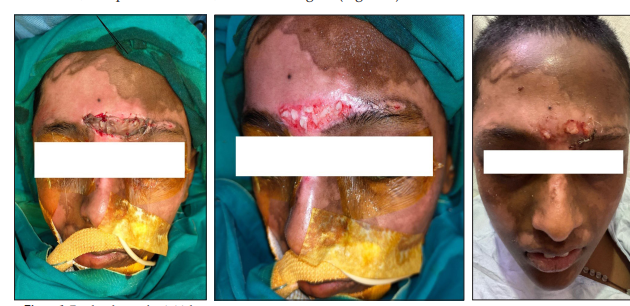
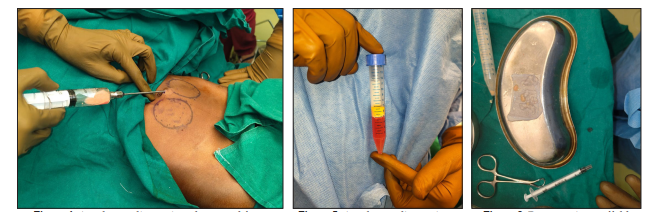
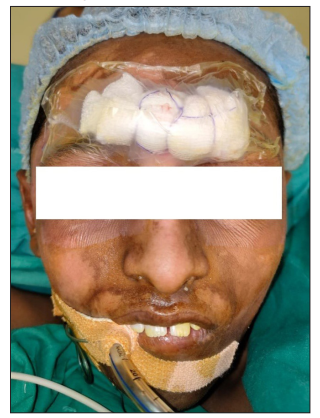
Electrical burns in paediatric patients pose unique challenges due tothe deep, irregular nature of tissue damage and often poor vascularity of the woundbed. These factors can compromise the success of split-thickness skin grafting(SSG), leading to partial graft loss, delayed healing, and increased risk of hypertrophicscarring or contractures. Regenerative approaches using biologicallyactivematerials are gaining interest as adjuncts to improve graft take. Autologouslipoaspirate, a minimally processed fat graft containing adipose-derivedstemcells (ADSCs), growth factors, and cytokines, has shown potential inenhancingtissue repair. Combined with a biocompatible scaffold such as collagen, it maycreate a pro-healing microenvironment supporting graft integrationandwoundregeneration. We used lipoaspirate harvested fromthe lower abdomen, whichwasminimally processed, andcombinedwitha collagen-basedscaffoldintraoperativelyto facilitate wound healing at the SSG site, which failed to heal satisfactorilywithconventional management. Such regenerative strategies may reduce complications, enhance healing, and improve long-term results, warranting further investigationthrough larger studies.
References
- 1. Patil SB, Khare NA, Jaiswal S, Jain A, Chitranshi A, Math M. Changing patterns in electrical burn injuries in a developing country: should prevention programs focus on the rural population? J Burn Care Res Off Publ Am Burn Assoc. 2010;31:931–4.
- 2. Ennis WJ, Sui A, Bartholomew A. Stem Cells and Healing: Impact on Inflammation. Adv Wound Care. 2013;2:369–78.
- 3. Lei J, Sun L, Huang S, Zhu C, Li P, He J, et al. The antimicrobial peptides and their potential clinical applications. Am J Transl Res. 2019;11:3919–31.
- 4. Marrazzo P, Crupi AN, Alviano F, Teodori L, Bonsi L. Exploring the roles of MSCs in infections: focus on bacterial diseases. J Mol Med Berl Ger. 2019;97:437–50.
- 5. Kastrinaki MC, Andreakou I, Charbord P, Papadaki HA. Isolation of human bone marrow mesenchymal stem cells using different membrane markers: comparison of colony/cloning efficiency, differentiation potential, and molecular profile. Tissue Eng Part C Methods. 2008;14:333–9.
- 6. Guo X, Wang J, Zou W, Wei W, Guan X, Liu J. Exploring Microenvironment Strategies to Delay Mesenchymal Stem Cell Senescence. Stem Cells Dev. 2022;31:38–52.
- 7. Brett D. A Review of Collagen and Collagen-based Wound Dressings. Wounds CompendClin Res Pract. 2008;20:347–56
Data Sharing Statement
There are no additional data available. All raw data and code are available upon request.
Funding
This research received no funding.
Author Contributions
All Authors contributed significantly to the work and approve its publication.
Ethics Declaration
This article does not involve any human or animal subjects, and therefore does not require ethics approval.
Acknowledgements
We would like to express our gratitude to the patients, their families, and all those who have contributed to this study.
Conflicts of Interest
The authors report no conflicts of interest in this work.
About this article

Cite this article
Sriram V. S, Ravi Kumar Chittoria, Amrutha J. S. Optimising Split-Thickness Skin Graft TakeinaPaediatricElectrical Burn Wound Using an Autologous Lipoaspirate-Enriched Regenerative Scaffold: ACaseReport. Jr. Med. & Health Sci. 2025; 12(2): 121–124.
Licence:
Attribution-Non-commercial 4.0 International (CC BY-NC 4.0)This license enables reusers to distribute, remix, adapt, and build upon the material in any medium or format for noncommercial purposes only, and only so long as attribution is given to the creator.
| Received | Accepted | Published |
|---|---|---|
| April 23, 2025 | June 05, 2025 | December 30, 2025 |
DOI: https://doi.org/10.21088/ijmhs.2347.9981.12225.7
Keywords
Autologous lipoaspirateRegenerative scaffoldCAMPPaediatric burnsElectrical burnsSSGSearch for Similar Articles
Similar Articles
- Wound Assessment using a Smartphone-based Application: Imitomeasure in Pressure...
- Emerging Pandemic and Silent Killer – Non Aloholic Fatty Liver Disease: A Compr...
- Prenatal and Postnatal Healthcare in Odisha
- Assessment of Diabetic Foot Ulcers: A Review
- IBS – Irritable Bowel Syndrome – Management through Comprehensive Non-Pharmacolo...
Article Level Metrics
Last UpdatedTuesday 08 September 2026, 05:41:36 (IST)
1394
Accesses
18
326
00
Citations
NA
NA
NA
Download citation
Article Keywords
Keyword Highlighting
Highlight selected keywords in the article text.
Timeline
| Received | April 23, 2025 |
| Accepted | June 05, 2025 |
| Published | December 30, 2025 |
licence
Attribution-Non-commercial 4.0 International (CC BY-NC 4.0)
This license enables reusers to distribute, remix, adapt, and build upon the material in any medium or format for noncommercial purposes only, and only so long as attribution is given to the creator.