Full Text (PDF)
Journal of Nurse Midwifery and Maternal Health 9(2):p 64-66, May-August 2023. | DOI: https://doi.org/10.21088/jnmmh.2454.7506.9223.3
Review Article
Menstural Cups
Sarita null, Ritu null, S P Subashini
Author Information
Licence:
Attribution-Non-commercial 4.0 International (CC BY-NC 4.0)This license enables reusers to distribute, remix, adapt, and build upon the material in any medium or format for noncommercial purposes only, and only so long as attribution is given to the creator.
Journal of Nurse Midwifery and Maternal Health 9(2):p 64-66, May-August 2023. | DOI: https://doi.org/10.21088/jnmmh.2454.7506.9223.3
How Cite This Article:
Ritu, Sarita, S P Subashini/Menstural Cups/J Nurse Midwifery Matern Health. 2023;9(2):64–66.Timeline
Received : May 05, 2023
Accepted : June 15, 2023
Published : August 30, 2023
Abstract
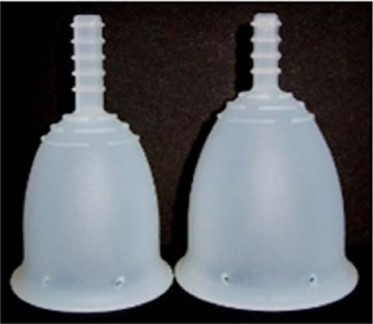
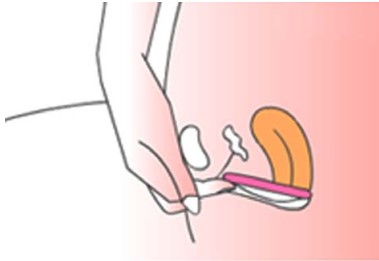
A menstrual cup is a menstrual hygiene tool which is inserted into the vagina in the course of menstruation. Its motive is to accumulate menstrual fluid (blood from the uterine lining mixed with different fluids). Menstrual cups are typically product of flexible medical grade silicone, latex, or a thermoplastic isomer. They are formed like a bell with a stem or a hoop. The stem is used for insertion and elimination, and the bell-formed cup seals against the vaginal wall simply below the cervix and collects menstrual fluid. This is unlike tampons and menstrual pads, which take in the fluid rather every four 12 hours (relying on the quantity of float), the cup is eliminated, emptied, rinsed, and reinserted. After every period, the cup requires cleaning. One cup may be reusable for up to 10 years,making their lengthy term value decrease than that of disposable tampons or pads, although the initial price is higher. As menstrual cups are reusable, they generate less strong waste than tampons and pads, each from the goods themselves and from their packaging maximum menstrual cup manufacturers promote a smaller and a larger length. A few menstrual cups are bought colorless and translucent, but several manufacturers also offer coloured cups.
References
- 1. Elizabeth Gunther Stewart, Paula Spencer: The V ebook: A physician’s guide to finish Vulvovaginal fitness, Bantam Books, 2002, Seiten ninety six und 97, ISBN 0-553-38114-eight.
- 2. Leslie Garrett, Peter Greenberg: The Virtuous consumer: Your critical buying guide for a better, Kinder and more healthy world, New global Library, 2007, Seiten 17 bis 19,
- 3. Hillard, Paula J. Adams; Hillard, Paula Adams (2008). The five-minute Obstetrics and Gynecology consult. Lippincott Williams & Wilkins. p. 322. ISBN 978-0-7817-6942-6.
- 4. van Eijk AM, Zulaika G, Lenchner M, Mason L, Sivakami M, Nyothach E, et al. (August 2019). “Menstrual cup use, leakage, acceptability, protection, and availability: a systematic evaluation and meta-analysis”. The Lancet. Public fitness.
- 5. Parker, Erin (28 July 2020). “these length Cup opinions might convince You to Ditch Pads and Tampons for top”. Glamour. Retrieved 2021- 04-10.
- 6. Vagina Anatomy - analyze Your elements. Lunette united kingdom. Retrieved 2018-08-31.
- 7. CARE international and WoMena Uganda., 2018. Ruby Cups: girls in Imvepi Refugee agreement Taking manage. available from: http://womena.dk/wp-content material/ uploads/2018/12/Ruby-Cups-ladies-inImvepi-Refugee-agreement-Taking-manage- 03.12.18-final-file.pdf
- 8. Phillips-Howard PA, Nyothach E, TerKuile FO, Omoto J, Wang D, Zeh C, et al. (November 2016). “Menstrual cups and sanitary pads to reduce college attrition, and sexually transmitted and reproductive tract infections: a cluster randomised managed feasibility observe in rural Western Kenya”. BMJ Open. 6 (eleven): e013229. doi:10.1136/bmjopen-2016-013229. percent 5168542. PMID 27881530. CC by icon. svg text become copied from this source, which is available below a innovative Commons Attribution 4.zero global License.
- 9. Mason L, Laserson k, Oruko okay, Nyothach E, Alexander k, Odhiambo F, Eleveld A, Isiye E, Ngere I, Omoto J, Mohammed A (2015). “Adolescent schoolgirls’ reviews of menstrual cups and pads in rural western Kenya: a qualitative observe”. Waterlines. 34 (1): 15–30. doi:10.3362/1756-3488.2015.003.
- 10. Crofts, T. (2012). Menstruation hygiene control for schoolgirls in low-profits countries. Loughborough: Water, Engineering and development middle (WEDC), Loughborough university.
Data Sharing Statement
There are no additional data available. All raw data and code are available upon request.
Funding
This research received no funding.
Author Contributions
All authors contributed significantly to the work and approve its publication.
Ethics Declaration
This article does not involve any human or animal subjects, and therefore does not require ethics approval.
Acknowledgements
We would like to express our gratitude to the patients, their families, and all those who have contributed to this study.
Conflicts of Interest
No conflicts of interest in this work.
About this article

Cite this article
Ritu, Sarita, S P Subashini/Menstural Cups/J Nurse Midwifery Matern Health. 2023;9(2):64–66.
Licence:
Attribution-Non-commercial 4.0 International (CC BY-NC 4.0)This license enables reusers to distribute, remix, adapt, and build upon the material in any medium or format for noncommercial purposes only, and only so long as attribution is given to the creator.
| Received | Accepted | Published |
|---|---|---|
| May 05, 2023 | June 15, 2023 | August 30, 2023 |
DOI: https://doi.org/10.21088/jnmmh.2454.7506.9223.3
Keywords
UterusVaginaHydrogen PeroxideTamponsSiliconSearch for Similar Articles
Similar Articles
- Psychological Distress and Quality of Life Among Parents of Children with Cancer...
- We Must be Aware about Water Birth: An Overview
- Digital Health Literacy Among Mothers and Its Impact on Neonatal Outcomes: An In...
- Effectiveness of Vedio assisted Technique Programme on knowledge regarding Techn...
- A Comprehensive review of Uterine Prolapse: Etiology, Diagnosis of Management
Article Level Metrics
Last UpdatedTuesday 29 September 2026, 16:31:02 (IST)
1780
Accesses
3
293
00
Citations
NA
NA
NA
Download citation
Article Keywords
Keyword Highlighting
Highlight selected keywords in the article text.
Timeline
| Received | May 05, 2023 |
| Accepted | June 15, 2023 |
| Published | August 30, 2023 |
licence
Attribution-Non-commercial 4.0 International (CC BY-NC 4.0)
This license enables reusers to distribute, remix, adapt, and build upon the material in any medium or format for noncommercial purposes only, and only so long as attribution is given to the creator.